Infección torácica
Revisado por pares por Dra. Toni Hazell, MRCGPÚltima actualización por Dr Colin Tidy, MRCGPLast updated 6 Oct 2024
Cumple con las directrices editoriales
- DescargarDescargar
- Compartir
- Language
- Discusión
- Versión en audio
- Add to preferred sources on Google
En esta serie:Bronquitis agudaNeumoníaNeumonía por aspiraciónInfección torácica postoperatoriaBroncoscopia
A chest infection is an infection that affects your lower large airways (bronchi) and your lungs. Pneumonia and bronchitis are the most common chest infections. Bronquitis is usually caused by a viral infection, with between 1% and 10% of cases being caused by bacteria. Neumonía is usually due to bacterial infection. Pneumonia may be serious and need hospital admission.
En este artículo:
Video picks for Infecciones de pecho y pulmón
Continúa leyendo abajo
Chest infection symptoms
The main chest infection symptoms are:
A chesty cough.
Breathing difficulties (including shortness of breath and sibilancias).
Dolor en el pecho or tightness.
Muscle aches and pains.
Sentirse muy cansada.
A rapid heartbeat.
A cold - often called an upper respiratory tract infection (URTI) - usually starts with a combination of blocked and/or runny nose and sneezing, sometimes with a mild high temperature (fever).
You will usually get a cough, which is often dry and harsh but it can also sound like you have a lot of phlegm (sputum), which you may bring up. You may also feel tired and achy, but with the help of over-the-counter medications you'll be able to keep going with everyday activities.
Chest infections can start with these symptoms too, but you don't need to see a doctor if these are the only symptoms you have. The only exceptions are people with long-term health conditions affecting the lungs, like enfermedad pulmonar obstructiva crónica (EPOC) y bronquiectasias. People with these conditions are more likely to develop serious complications.
What causes a chest infection?
Volver al contenidoThe vast majority of URTIs are caused by viral infections. Your immune system will fight these off without any help within a few days. Because URTIs are caused by viruses rather than bacteria, antibiotics won't help in any way. See the separate leaflet called Antibiotics.
Respiratory tract infections
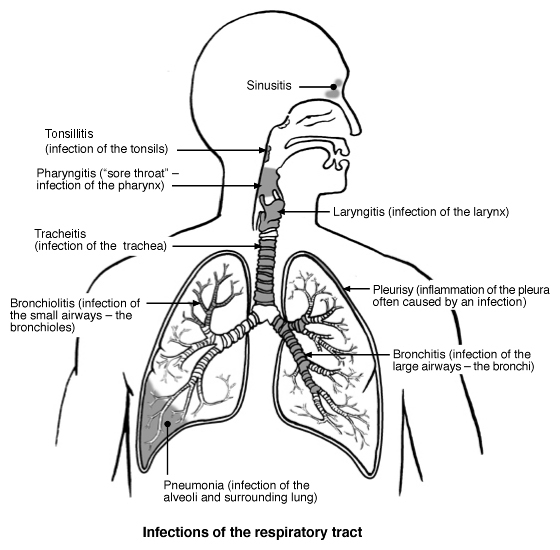
Read about sinusitis, amigdalitis, pharyngitis, laryngitis, tracheitis, pleuresía, bronquitis y neumonía.
Sometimes an infection in the upper airways can spread deeper, causing a chest infection. Sometimes germs (bacteria) already living in your lungs can multiply, with the same result.
Types of a chest infection
There are two main types of chest infection - acute bronchitis and pneumonia.
Bronquitis aguda
Bronchitis is inflammation due to infection of the bronchi. '-itis' is the medical term for inflammation. It can be acute or chronic. Acute means lasting a short time and chronic means lasting a long time.
Acute bronchitis is common and is often due to a viral infection. Infection with a germ (bacterium) is a less common cause. See the separate leaflet called Acute bronchitis for more details.
Neumonía
This is usually a bacterial infection of the lung (bacterial chest infection) and may be serious. Treatment with antibiotics is usually needed. See the separate leaflet called Pneumonia for more details.
Continúa leyendo abajo
Chest infection recovery time
Volver al contenidoA bout of infection of the large airways (bronchi) in the lungs (acute bronchitis) usually gets better on its own within 7-10 days without any medicines. If you suspect that you have a severe infection of the lung (pneumonia), you should see a GP.
Are chest infections contagious?
Volver al contenidoYou can pass a chest infection on to others through coughing and sneezing. So if you have a chest infection, it's important to cover your mouth when you cough or sneeze and to wash your hands regularly. You should throw away used tissues immediately.
Continúa leyendo abajo
Chest infection treatment
Volver al contenidoAlthough most chest infections are mild and improve on their own, some cases can be very serious, even life-threatening.
When to see a doctor?
Infection of the large airways (bronchi) in the lungs (acute bronchitis) usually gets better by itself, so there is often no need to see a GP. However, you should contact a GP if you feel very unwell, particularly if you are feeling breathless.
If you have asma o EPOC you should take your doctor's advice.
They may have given you recommendations about increasing your inhaler medication or taking a 'rescue pack' of antibiotics and steroid tablets at the first sign of an infection (much more common for those with COPD than asthma).
If not, speak with them for advice if you develop chest infection symptoms.
You should also speak with a doctor or arrange a face-to-face consultation if you have a weakened immune system as it is more likely that you will need antibiotic treatment.
Warning signs of a chest infection
There are a number of chest infection symptoms that mean you should see a GP even if you do not have any other lung problems. If your symptoms get worse, you should look out for these warning signs. They include:
If a fever, wheezing or headache becomes worse or severe.
If you develop fast breathing, shortness of breath, or chest pains.
If you cough up blood or if your phlegm becomes dark or rusty-coloured.
If you become drowsy or confused.
If a cough lasts for longer than 3-4 weeks.
If you have repeated bouts of acute bronchitis.
If any other symptom develops that you are concerned about.
Antibiotics for a chest infection
Antibióticos are medicines used for infections caused by germs (bacteria) and don't work on viruses. Unless you have a long-term condition affecting your chest, your doctor is unlikely to prescribe antibiotics unless your symptoms and examination suggest you may have pneumonia.
Chest infection treatment at home
If you have a chest infection, you should:
Have plenty of rest.
Drink lots to prevent your body becoming lacking in fluids (dehydrated) and to help loosen the mucus in your lungs and make it easier to cough up.
Inhale steam vapour, perhaps with added menthol. Breathe in steam from a bowl of hot water - this can help to clear the mucus from your chest. Never use a bowl of hot water for a child's cough, in case they get scalded by accident; however, you could run a very hot bath to make the bathroom steamy and sit in the room with the child, safely away from the hot water.
Sleeping with an extra pillow to avoid lying flat at night to help keep your chest clear of mucus and make it easier to breathe.
Take paracetamol, ibuprofeno o aspirina to reduce high temperature and to ease any aches, pains and headaches. (Nota: children aged less than 16 years should not take aspirin.)
You should try to dejar de fumar for good if you smoke. Bronchitis, chest infections and serious lung diseases are more common in smokers as well as the long-term consequences such as lung disease, heart disease and cancer.
If your throat is sore from coughing, you can relieve the discomfort with a warm drink of honey and lemon.
What about cold and cough medicines for a chest infection?
You can buy many cold and flu remedies and cough medicines at pharmacies. These will help to make you feel better and help you to carry on with normal activities, but won't make the infection go away more quickly.
How is a chest infection diagnosed?
Your doctor will be able to make a diagnosis of a chest infection by listening to your story and examining you.
Often no tests are needed if you have infection of the large airways (bronchi) in the lungs (acute bronchitis) and your symptoms are mild. If your chest infection symptoms are more severe and you need to go to hospital then you may need to have the following tests:
A radiografía de tórax may be taken to be sure of the diagnosis and to see how bad the infection is.
Análisis de sangre and phlegm (sputum) tests may be taken to find which germ (bacterium) is causing the serious lung infection (pneumonia). This helps to decide which antibiotic medicine is best to use. Sometimes the germ (bacterium) that is causing the pneumonia is resistant to the first antibiotic. A switch to another antibiotic is sometimes needed.
Are chest infections common?
Chest infections are very common, especially during the autumn and winter. They often occur after a resfriado o gripe. Anyone can get a chest infection but they are more common in:
Young children and the elderly.
People who fumar.
Mujeres embarazadas.
People with long-term chest problems such as asma, EPOC, fibrosis quística, enfermedades del corazón, diabetes, enfermedad renal o hepática grave.
People with an immune system that's weakened either by conditions such as some cancers (including linfoma, mieloma y leucemia) or SIDA; or by treatments such as high-dose esteroides, quimioterapia or other medicines that can suppress your immune system.
How to prevent a chest infection
There are measures you can take to help prevent chest infections and to stop the spread of it to others. For instance, washing your hands regularly reduces the chance of germs getting into your system.
¿Cuál es la perspectiva?
Infection of the large airways (bronchi) in the lungs (acute bronchitis) usually clears without any complications. Occasionally, the infection travels to the lung tissue to cause a serious lung infection (pneumonia).
If you have pneumonia and are well enough to be looked after at home, your outlook is very good. If you need to be looked after in hospital, the outlook is still usually good - but not quite as good. The outlook is also not as good for people who also have long-term illnesses such as lung disease, heart failure or diabetes.
Patient picks for Infecciones de pecho y pulmón

Pecho y pulmones
Bronquitis aguda
Acute bronchitis is a common chest infection that causes inflammation of the airways. It is usually caused by viral infections and often gets better on its own within a few weeks. See a doctor if symptoms don't improve or you have trouble breathing. This leaflet explains the symptoms to look out for and how to manage them.
por la Dra. Toni Hazell, MRCGP

Pecho y pulmones
Virus SARS y MERS
Síndrome respiratorio agudo severo (SARS) y síndrome respiratorio de Oriente Medio (MERS) son infecciones virales. Ambas infecciones pueden causar enfermedades muy graves que afectan especialmente los pulmones. El SARS causó muchas infecciones, especialmente en Asia, en 2002-2004, pero no se supo de él durante un tiempo. Un brote de SARS-CoV-2 (COVID-19) surgió en Wuhan, China, en diciembre de 2019. Esto se propagó rápidamente y fue declarado pandemia mundial en 2020. El MERS fue reconocido por primera vez en Oriente Medio en 2012. La mayoría de las infecciones iniciales fueron en Oriente Medio. Sin embargo, para febrero de 2018, la Organización Mundial de la Salud (OMS) había reportado casos en muchos otros países.
by Dr Hayley Willacy, FRCGP
Lecturas adicionales y referencias
- Infecciones del pecho - adulto; NICE CKS, mayo 2024 (acceso solo en el Reino Unido)
- Antibiotic awareness resources: key messages on antibiotic use; Public Health England (now UK Health Security Agency)
Continúa leyendo abajo
About the author

Dr Colin Tidy, MRCGP
Médico General, Autor Médico
MBBS, MRCGP, MRCP (Paediatrics), DCH
Dr Colin Tidy is an NHS Doctor, based in Oxfordshire.
About the reviewerView full bio

Dra. Toni Hazell, MRCGP
MBBS, BSc, MRCGP, DFSRH, Dip GU med, DRCOG, DCH (London, UK, 2000)
Dr. Toni Hazell qualified from St. Mary’s Hospital Medical School and did her VTS at Northwick Park Hospital.
Historial del artículo
La información en esta página está escrita y revisada por pares por clínicos calificados.
Next review due: 5 Oct 2027
6 Oct 2024 | Última versión
7 May 2013 | Publicado originalmente
Escrito por:
Dr Colin Tidy, MRCGP

Pregunta, comparte, conecta.
Navega por discusiones, haz preguntas y comparte experiencias en cientos de temas de salud.

¿Te sientes mal?
Evalúa tus síntomas en línea de forma gratuita
Suscríbete al boletín de Patient
Tu dosis semanal de consejos de salud claros y confiables, escritos para ayudarte a sentirte informado, seguro y en control.
By subscribing you accept our Política de Privacidad. Puedes darte de baja en cualquier momento. Nunca vendemos tus datos.