Varicela en adultos y adolescentes
Revisado por pares por Dr Doug McKechnie, MRCGPÚltima actualización por Dr Colin Tidy, MRCGPÚltima actualización 15 Abr 2025
Cumple con las directrices editoriales
- DescargarDescargar
- Compartir
- Language
- Discusión
- Versión en audio
- Agregar a fuentes preferidas en Google
En esta serie:Erupciones viralesSarampiónVaricela en niñosFiebre escarlatinaEnfermedad mano-pie-bocaExclusión escolar por infecciones
Chickenpox causes spots (a rash) and can make you feel unwell. Symptoms tend to be worse in adults than in children. Treatments can ease the symptoms until the illness goes. An antiviral medicine may limit the severity of the illness if the medicine is started within 24 hours of the rash first starting.
Full recovery is usual. Serious complications are rare, but are more common in adults than in children. They are more likely to occur in pregnant women and in people with a weakened immune system, such as those on chemotherapy. If you are pregnant and have not had chickenpox (or been immunised) and come into contact with a person with chickenpox - see your doctor urgently, as treatment may prevent chickenpox from developing.
De un vistazo
La varicela es una infección causada por el virus varicela-zóster.
Los síntomas en adultos pueden incluir fiebre alta, dolores, dolor de cabeza y una erupción cutánea con picazón y manchas.
Los tratamientos incluyen paracetamol para la fiebre y el dolor, y cremas calmantes para la picazón.
El medicamento antiviral puede usarse si se inicia dentro de las 24 horas posteriores al desarrollo del sarpullido.
Los adultos tienen más probabilidades de tener complicaciones por la varicela que los niños.
Debe buscar consejo médico si desarrolla síntomas preocupantes como problemas respiratorios o dolor severo.
Ciertos grupos, incluidas las mujeres embarazadas y aquellas con sistemas inmunológicos débiles, deben consultar a un médico urgentemente si contraen varicela.
¿Qué es la varicela?
¿Qué es la varicela?
Chickenpox on an adult's back
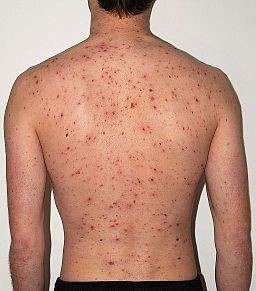
© F malan, CC BY-SA 3.0, via Wikimedia Commons
The chickenpox infection is caused by the varicella-zoster virus (VZV). The immune system makes proteins called anticuerpos during the infection. These fight the virus and then provide lifelong protection against it (immunity). Therefore, it is uncommon to have more than one bout of chickenpox in a lifetime.
Most people have chickenpox as a child. Most children get chickenpox before the age of 10 years. About 9 in 10 people have had it by the age of 15 years. It is uncommon for adults to have chickenpox.
What are the symptoms of chickenpox in adults?
Chickenpox symptoms are usually more severe in adults than in children. Expect to have a few uncomfortable days.
High temperature (fever), aches and headache
This will often start a day or so before a rash starts.
Spots (a rash)
Spots appear in crops. The spots develop into small blisters and are itchy. They can be anywhere on the body and sometimes also in the mouth. Several crops may develop over several days. Some people are covered in spots; others have only a few.
Loss of appetite and tiredness
Feeling sick is common as well. The fever and generally feeling unwell can last several days. The blisters gradually dry up and scab. They slowly fade over a week or so, but may take 2-3 weeks to go completely.
How to treat chickenpox in adults
Treatments to help adult chickenpox symptoms
Adult chickenpox treatments that may ease symptoms whilst your immune system deals with the virus include the following:
Tener mucho para beber to avoid a lack of fluid in the body (dehydration).
Tomar paracetamol to ease high temperature (fever), headaches, and aches and pains. Ibuprofeno and other medicamentos antiinflamatorios no esteroideos should be avoided unless advised by a doctor.
Soothing creams (emollients) put on the spots (rash) may ease itching. Calamine lotion is the most used, although it is not known how effective it is.
Tabletas antihistamínicas taken at bedtime may help you to sleep if itch is a problem at night. You can buy these at pharmacies, or get them on prescription.
Antiviral medication for adult chickenpox
Antiviral pills such as aciclovir can limit the severity of chickenpox. These pills do not kill the virus, but stop the virus from multiplying. Adults or teenagers over the age of 14 with chickenpox may be advised to take an antiviral medicine - but only if it can be started within 24 hours of the rash first developing. If it is started after this time it is not likely to have much of an effect. So, if started on time, an antiviral medicine may help to reduce the severity of the illness.
Antiviral medication is especially useful in situations where chickenpox in adults can be more serious. For example, for people who have a poor immune system, for newborn babies and for pregnant women. (Nota: antiviral medication is not normally advised for healthy children who develop chickenpox.)
Is chickenpox dangerous in adults?
Adults are more likely than children to have complications from chickenpox.
Las manchas generalmente no dejan cicatriz a menos que se rasquen mucho.
In some cases of chickenpox, some spots become infected with germs (bacteria). If this occurs, the surrounding skin becomes red and sore. Antibiotic medication may then be needed.
Inflamación del pulmón (neumonía) is a complication affecting about 1 in 10 adults with chickenpox. People who smoke are more likely to get this.
Inflammation of the brain (encephalitis) and ataxia (problems co-ordinating movements) are very rare complications.
Muy raramente, se desarrollan otras complicaciones graves. Por ejemplo:
Inflammation of joints (arthritis).
Inflamación de varias partes del ojo.
Therefore, although serious complications are rare, it is best to be watchful. Seek medical advice if you develop any worrying symptoms that you are unsure about, such as:
Problemas respiratorios.
Debilidad.
Somnolencia.
Convulsions.
Pains or headaches which become worse despite paracetamol or ibuprofen.
Incapaz de ingerir líquidos, debido a una erupción severa en la boca.
A very severe rash, or a rash which bruises or bleeds into the skin ('haemorrhagic rash').
Empeorando cada vez más en general.
In general, complications are uncommon. However, some people have a higher risk of developing complications from chickenpox in adults. Anyone in the following groups should see a doctor urgently if they have symptoms of adult chickenpox:
Mujeres embarazadas.
People with a poor immune system. For example, people with leucemia, with VIH/SIDA, taking medicación con esteroides or having quimioterapia.
People with heart or lung disease.
People with severe skin conditions.
Very young babies - especially those less than 1 month old (neonates).
How do you get shingles?
Shingles is caused by the same virus that causes chickenpox and so is a delayed complication of chickenpox. Anyone who has had chickenpox in the past may develop shingles. Shingles is an infection of a nerve and the area of skin supplied by the nerve. It causes a rash and pain in a band-like local area along the affected nerve. About 1 in 5 people have shingles at some time in their lives. It can occur at any age, but it is most common in people over the age of 50.
The reason why shingles may occur is because the virus does not completely go after you have chickenpox. Some virus particles remain inactive in the nerve roots next to your spinal cord. They do no harm there, and cause no symptoms. For reasons that are not clear, the virus may begin to multiply again (reactivate). This is often years later. The reactivated virus travels along the nerve to the skin to cause shingles. See the separate leaflet called Shingles (Herpes zoster) for details.
Nota: puedes contraer varicela al estar expuesto a una persona con herpes zóster si no has tenido varicela antes. Sin embargo, no puedes contraer herpes zóster de una persona con varicela, ni contraer herpes zóster de una persona con herpes zóster.
Adult chickenpox and pregnancy
If you are pregnant and have not had chickenpox (or been immunised) and come into contact with a person with chickenpox - see your doctor urgently. Chickenpox can be more serious if you develop chickenpox whilst pregnant. However, a treatment with a product called human varicella-zoster immunoglobulin (VZIG) may prevent chickenpox from developing. See the separate leaflet that deals with this in more detail, called Chickenpox contact in pregnancy.
Is chickenpox in adults contagious?
Una persona con varicela es muy contagiosa. El virus se propaga por el aire de persona a persona. Por ejemplo, si no has tenido varicela antes, tienes una buena probabilidad de contagiarte si:
You are in the same room as someone with chickenpox for more than 15 minutes; o
Has tenido algún contacto cara a cara con alguien con varicela, como una conversación.
Nueve de cada diez personas que no han tenido varicela la contraerían después de ser expuestas de esta manera.
Se tarda entre 7 y 21 días (más comúnmente 10-14 días) en desarrollar síntomas después de contraer el virus (el período de incubación).
Protecting others from adult chickenpox
A person with adult chickenpox is infectious from two days before the rash and spots first appear until they have all crusted over (commonly about five days after the onset of the illness). You can usually return to work after this time if you feel well enough. (A child with chickenpox should stay off school for five days from the onset of the rash.) Whilst you are infectious, keep away from people who have an increased chance of having a severe illness if they get chickenpox. These people are listed above under 'Are there any complications?'.
Healthy people who have not had chickenpox as a child may also want to avoid catching it. So, friends and family who have not had chickenpox may wish avoid you whilst you are infectious. However, most adults and many children have already had chickenpox, and so are immune.
Nota: people with adult chickenpox should not travel by air until the spots have all crusted.
Treatment can also be provided to protect those at high risk of suffering from severe chickenpox and those who may pass on infection to those at high risk (for example, healthcare workers).
Aciclovir for recommended for those at high risk, except neonates, who may be given human varicella-zoster immunoglobulin (VZIG).
¿Eres un trabajador de la salud?
Healthcare workers come into contact with people with poor immune systems, pregnant women and newborn babies. They should be aware that if they catch chickenpox, they can be infectious for two days before a rash or illness appears, and be a risk to patients. So, if you are a healthcare worker and come into contact with someone who has chickenpox (or who develops it within the next two days), then:
Si has sido inmunizado contra la varicela, o definitivamente has tenido varicela en el pasado, es probable que seas inmune. Debes continuar trabajando, pero contacta a tu departamento de salud ocupacional si te sientes mal o desarrollas un sarpullido.
Si no está seguro de si ha tenido varicela o ha sido inmunizado, debe hacerse una prueba para ver si es inmune. Si no es inmune, debe:
Avoid contact with high-risk patients for 8-21 days after contact with chickenpox.
Report to occupational health before patient contact if you feel unwell or develop a high temperature (fever) or itchy rash.
Get immunised against the varicella-zoster virus (chickenpox virus).
Whether you have been exposed to chickenpox or not, if you are a healthcare worker and you have never had chickenpox you should have a test to see if you are immune. If you are not immune you may need to be immunised.
Is there a vaccine against chickenpox in adults?
Yes - there is an effective vaccine (sometimes known as the varicella vaccine) that protects against the virus that causes chickenpox. It has become part of the routine childhood immunisation programme in certain countries such as the United States, Canada and Australia.
Currently, there are no plans to make immunisation against chickenpox routine for children in the UK. In the UK, the vaccine is offered by the NHS to certain special groups. For example, to healthcare workers who are not immune to chickenpox. Also, to people who are not immune to chickenpox and who are in close contact with people with a poor immune system - for example, brothers and sisters of children who are on chemotherapy. The vaccine is widely available privately in the UK.
Selecciones del paciente para Infecciones de la piel

Infecciones
Infecciones virales de la piel
Las infecciones virales de la piel son un amplio grupo de afecciones. Pueden ser una reacción a un virus dentro de tu cuerpo, o pueden ser una infección real de tu piel. Van desde las completamente inofensivas hasta las bastante graves (pero generalmente no mortales). Algunas son contagiosas; otras puedes tocarlas sin contagiarte.
por la Dra. Toni Hazell, FRCGP

Infecciones
Sarna
La sarna es una infestación cutánea muy pruriginosa causada por un ácaro diminuto. Se transmite por contacto cercano, como vivir con alguien o compartir la cama.
por la Dra. Toni Hazell, FRCGP
Preguntas frecuentes
¿Pueden los adultos contraer varicela incluso si la tuvieron de niños?
No, es poco común contraer varicela más de una vez. Una vez que has tenido varicela, tu sistema inmunológico desarrolla anticuerpos que proporcionan protección de por vida contra el virus.
¿Cuánto tiempo suele durar la varicela en adultos?
En adultos, la fiebre y la sensación general de malestar pueden durar varios días. Las ampollas se secan gradualmente y forman costras en aproximadamente una semana, pero pueden tardar de 2 a 3 semanas en desaparecer por completo.
¿Cuál es la mejor manera de manejar la picazón intensa causada por la varicela en adultos?
Para ayudar con la picazón severa, puedes probar cremas calmantes como la loción de calamina. Si la picazón interfiere con tu sueño, las tabletas de antihistamínicos tomadas a la hora de dormir pueden ayudar. Estas se pueden comprar en farmacias o obtener con receta médica.
¿Hay actividades o entornos específicos que deba evitar si tengo varicela en adultos?
Si tienes varicela en adultos, no debes viajar en avión hasta que todas las manchas hayan formado costras. También debes mantenerte alejado de personas que tienen un mayor riesgo de enfermedad grave si contraen varicela, como mujeres embarazadas, personas con sistemas inmunológicos débiles o bebés muy pequeños.
¿Cuándo puede un trabajador de la salud volver al trabajo después de haber estado expuesto a la varicela o desarrollar síntomas?
Si un trabajador de la salud ha estado expuesto a la varicela y es inmune (ya sea por vacunación o infección previa), puede continuar trabajando, pero debe contactar a salud ocupacional si se siente mal o desarrolla un sarpullido. Si no es inmune, debe evitar el contacto con pacientes de alto riesgo durante 8-21 días después del contacto y reportarse a salud ocupacional antes de tener contacto con pacientes si se siente mal o desarrolla fiebre o sarpullido con picazón.
Lecturas adicionales y referencias
- Chickenpox: public health management and guidance; UK Health Security Agency. July 2014, last updated April 2022.
- Inmunización contra enfermedades infecciosas - el Libro Verde (última edición); Agencia de Seguridad Sanitaria del Reino Unido.
- Guía sobre el control de infecciones en escuelas y otros entornos de cuidado infantil; Agencia de Seguridad Sanitaria del Reino Unido (septiembre de 2017 - última actualización febrero de 2023)
- Varicela; NICE CKS, noviembre 2023 (acceso solo en el Reino Unido)
Sobre el autorVer biografía completa

Dr Colin Tidy, MRCGP
Médico General, Autor Médico
MBBS, MRCGP, MRCP (Paediatrics), DCH
El Dr. Colin Tidy es un médico del NHS, con sede en Oxfordshire.
Acerca del revisorVer biografía completa

Dr Doug McKechnie, MRCGP
Redactor Médico
MA, MBBS, MSc, DRCOG, MRCP(UK), MRCGP(2021), FHEA
El Dr. Doug McKechnie es un médico de cabecera del NHS que trabaja en Londres. Trabaja a tiempo completo en la práctica clínica y también es el Subdirector del módulo de Práctica Clínica y Profesional en la Escuela de Medicina del University College London.
Historial del artículo
La información en esta página está escrita y revisada por pares por clínicos calificados.
Artículo también disponible en Inglés, Alemán, Español, Francés, Italiano, Portugués, Hindi, Hebreo, Árabe, y Sueco.
Próxima revisión: 14 Abr 2028
15 Abr 2025 | Última versión

Pregunta, comparte, conecta.
Navega por discusiones, haz preguntas y comparte experiencias en cientos de temas de salud.

¿Te sientes mal?
Evalúa tus síntomas en línea de forma gratuita
Suscríbete al boletín de Patient
Tu dosis semanal de consejos de salud claros y confiables, escritos para ayudarte a sentirte informado, seguro y en control.
Al suscribirte aceptas nuestros Política de Privacidad. Puedes darte de baja en cualquier momento. Nunca vendemos tus datos.
Más en infecciones
- Bronquitis aguda
- Amebiasis
- Medicamento antifúngico
- Infección torácica
- COVID-19
- Intoxicación alimentaria en niños
- vacuna contra el VPH
- Inmunización
- Inmunización contra la gripe
- Punción lumbar
- Vacuna meningocócica para la meningitis
- Infección torácica postoperatoria
- Neuralgia posherpética
- Fiebre reumática
- Shigella
- Vacuna contra la fiebre tifoidea
- Neuritis vestibular y laberintitis
- Vacuna contra la fiebre amarilla