Vestibular neuritis and labyrinthitis
Peer reviewed by Dr Philippa Vincent, MRCGPLast updated by Dr Surangi Mendis, MRCGPLast updated 29 Jan 2024
Meets Patient’s editorial guidelines
- DownloadDownload
- Share
- Language
- Discussion
- Audio Version
- Add to preferred sources on Google
In this series:DizzinessVertigoBenign paroxysmal positional vertigoFaintingFall prevention in the elderly
Vestibular neuritis and labyrinthitis are thought to be caused by a viral infection that affects the inner ear. These two conditions typically cause vertigo, often with sickness (vomiting).
Vertigo is the sensation that you or your surroundings are moving. In most cases the symptoms gradually ease and go within a few days or weeks. Medication may help to ease symptoms.
At a glance
Vestibular neuritis and labyrinthitis are inner ear conditions causing vertigo.
Vestibular neuritis affects the balance nerve, while labyrinthitis affects the inner ear's labyrinth.
Both conditions cause vertigo and often vomiting.
Labyrinthitis can also affect hearing, unlike vestibular neuritis.
Symptoms are usually worst for 1-2 weeks but can last longer for some people.
A common cause of these conditions is a viral infection.
Seek urgent medical help if you have sudden vertigo and deafness in one ear.
What is vestibular neuritis and labyrinthitis?
Vestibular neuritis and labyrinthitis are types of inner ear infection that cause vertigo.
These names were previously used interchangeably. However, they are in fact different conditions:
Vestibular neuritis (sometimes called vestibular neuronitis) means inflammation of the vestibular nerve. This is the nerve that takes messages from the balance organ within the inner ear to the brain.
Labyrinthitis is a condition that is due to inflammation of the labyrinth in the inner ear.
The causes and symptoms of vestibular neuritis and labyrinthitis are similar; both cause vertigo and vomiting.
However, the hearing is also affected in cases of labyrinthitis. This is because inflammation of the labyrinth in the cochlea affects hearing. Inflammation of the vestibular nerve alone does not affect hearing.
Symptoms of vestibular neuritis and labyrinthitis
Vertigo
The main symptom of vestibular neuritis and labyrinthitis is vertigo. Vertigo is the sensation that you or your surroundings are moving. If you have vertigo you may feel as if the world is spinning and you may feel very unsteady.
Often you will also feel sick or vomit. Typically, if a viral infection is the cause, you develop vertigo quite quickly.
Vertigo occurs because the inflamed labyrinth or vestibular nerve sends conflicting signals to the brain compared with the normal ear. The brain becomes very confused about your head posture and reacts to cause vertigo.
The vertigo is usually intense and constant for the first few days and you simply have to lie down until the symptoms ease. The vertigo may be less intense if you lie down and close your eyes but doesn't go away completely.
It is often made worse by sitting up, moving your head, or moving around. In milder cases the vertigo is less intense but you feel unsteady when moving or walking around.
Other symptoms
You may also have:
Hearing loss on the affected side if you have labyrinthitis.
Nystagmus. This is a 'shaking' of the eyes from side to side or in a rotating movement. You may not notice this but a doctor will look for it as it is often present when the vertigo starts. (Vestibular neuritis and labyrinthitis are both causes of nystagmus. There are other causes.)
Other symptoms of a viral infection such as a sore throat, flu symptoms or a cold.
How long do symptoms last?
Symptoms of a viral vestibular neuritis or viral labyrinthitis can last anything from a few days to several weeks.
A typically symptoms are bad for 1-2 weeks and then gradually settle down over several days. There may be some slight unsteadiness for 2-3 months before symptoms clear completely.
However, in a very small number of cases, symptoms can persist for months or years. In these cases, the viral infection will have gone but the inflammation and damage caused by the infection may cause persistant, milder unsteadiness.
Causes of vestibular neuritis and labyrinthitis
Viral infection
A common cause of vestibular neuritis and labyrinthitis is infection with a virus. There are various viruses that can cause viral vestibular neuritis and viral labyrinthitis.
The infection may occur at the same time as, or just after, you have a common viral illness such as:
The cold sore virus may also be a cause. The virus that causes shingles can be a cause too. Sometimes you may not be aware of any other viral infection and just develop symptoms of vestibular neuritis and labyrinthitis.
Other causes of vestibular neuritis and labyrinthitis
Other causes of vestibular neuritis and labyrinthitis are uncommon. However, the following conditions will all have other symptoms and problems but may also cause vestibular neuritis and labyrinthitis as a complication:
Infection with a bacterial infection in the middle ear. Most ear infections do not spread into the inner ear but a vestibular neuritis or labyrinthitis is an uncommon complication.
Meningitis: the infection may spread from the brain to the inner ear.
Stroke: blockage of the blood circulation to part of the brain.
Injury to the ear.
Tumours.
An uncommon side-effect of some medicines.
Diagnosing vestibular neuritis or labyrinthitis
If you have a typical episode of vestibular neuritis due to infection with a virus, then your doctor will usually be able to diagnose this on the basis of your symptoms and the examination. Tests are not usually needed or helpful.
You may be referred for other tests; hearing tests, balance tests, etc, if you have symptoms that suggest anything other than a viral infection, or if symptoms are not settling within 3-4 weeks.
However, if you develop sudden onset vertigo with hearing loss for the first time, assessment in the emergency department is required to perform a scan to ensure this has not been caused by interruption to the blood supply of the inner ear.
Treatment for vestibular neuritis and labyrinthitis
If you have a sudden attack of vertigo accompanied by deafness in one ear you should seek urgent medical help, as this could be a sign of blockage of the blood vessels to part of the brain and you may need urgent treatment.
Treatment options for vestibular neuritis and labyrinthitis include:
No treatment
No treatment will completely take away the symptoms - especially the main symptom of vertigo. You may simply have to accept that you will be dizzy and may need to stay in bed until the vertigo runs its course and the worst of the symptoms subside.
Anti-sickness medication
A doctor may prescribe anti-sickness medication if you are troubled by being sick (vomiting). Some medicines also help to quieten the nerve messages from the inner ear and may ease vertigo - for example, prochlorperazine.
Occasionally, some people become so lacking in fluid in the body (dehydrated) due to the vomiting that goes with vertigo that they need to be admitted to hospital. In hospital, a 'drip' (fluid through a vein) can be put in place until the vomiting stops.
Vestibular rehabilitation therapy
If symptoms do not clear within a few weeks then you may be referred to a physical therapy (physiotherapy) specialist who may recommend vestibular rehabilitation. This treatment uses physical and occupational therapy techniques to treat vertigo and balance disorders.
Treatment of other causes
Treatment of other less common causes depends on the cause. Your doctor will advise. For example, if you have an infection with a germ (bacterium) in your middle ear you may be prescribed antibiotic medication.
What is the outcome (prognosis)?
In most cases, the cause is infection with a germ (a viral infection) and this usually clears up on its own. Therefore, symptoms in most cases clear completely but this may take several weeks. Some cases are milder and you just feel slightly unsteady on your feet for a short time.
In a small number of cases, symptoms following a viral vestibular neuritis or viral labyrinthitis can persist for months or years. Also, there are more serious causes of vestibular neuritis and labyrinthitis but these are much less common. Therefore, tell your doctor if you do not improve, or if you develop other symptoms, in addition to those described above.
What is the labyrinth and what does it do?
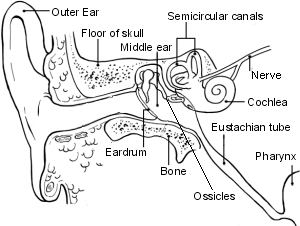
The labyrinth is in the inner ear. The inner ear includes the cochlea, vestibule and semicircular canals. These are small shell-like structures in which there is a system of narrow fluid-filled channels called the labyrinth. The semicircular canals sense movement of your head and help to control balance and posture. The cochlea is concerned with hearing.
There are three semicircular canals (anterior, lateral and posterior). These are roughly at right angles to each other and sense movement in different directions - left-right, forward-back and up-down head movements. The semicircular canals are connected to a larger fluid-filled chamber called the vestibule which in turn is connected to the fluid-filled canal in the cochlea.
Cross-section of the ear
Inner ear diagram
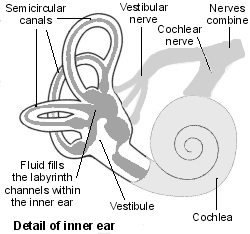
Head movements are sensed because when you move your head, the fluid in the labyrinth within the semicircular canals moves too. The movement of the fluid moves tiny hairs on the inside lining of the labyrinth.
When the hairs move, this triggers nerve messages to be sent to the brain via a nerve called the vestibular nerve. This gives the brain and nervous system information about the movement and position of your head, even when your eyes are closed.
What you can see and nerve messages from the joints and muscles of the body, also help to tell your brain about your position and posture. However, a properly working labyrinth in each ear is needed for a good sense of posture and balance.
Patient picks for Ear infections

Ear, nose and throat
Fungal ear infection
Fungal ear infection is an infection of the ear with a fungus. It normally involves the ear canal that runs from the ear hole to the eardrum (the external auditory canal). The medical term for it is otomycosis.
by Dr Surangi Mendis, MRCGP
/og.png)
Ear, nose and throat
Outer ear infection (otitis externa)
Otitis externa, more commonly known as an outer ear infection, is an inflammation of the ear canal. The inflammation is usually caused by infection, although it can sometimes be due to allergy or irritation. Treatment with ear drops is usually effective. Further episodes of the condition can often be prevented using the tips given below. Otitis externa usually clears within a week or so. When it is short-lasting, this is described as 'acute otitis externa'. However, occasionally it may persist for three months or more - this is described as 'chronic otitis externa'.
by Dr Colin Tidy, MRCGP
Frequently asked questions
Can I do anything to prevent vestibular neuritis or labyrinthitis?
The most common causes of vestibular neuritis and labyrinthitis are viral infections, similar to those that cause a common cold, flu, or sore throat. As these are common infections, it is generally not possible to prevent them entirely or specifically prevent them from leading to inner ear inflammation.
If I experience vertigo, how can I tell if it's vestibular neuritis or labyrinthitis?
The main difference between vestibular neuritis and labyrinthitis lies in whether your hearing is affected. Both conditions cause vertigo and vomiting. However, if you have labyrinthitis, you will also experience hearing loss on the affected side because the inflammation impacts the cochlea, which is responsible for hearing. In vestibular neuritis, only the balance nerve is inflamed, so hearing is not affected.
Can bacterial infections cause vestibular neuritis or labyrinthitis?
While viral infections are the most common cause, bacterial infections can also lead to vestibular neuritis or labyrinthitis, though this is less common. For instance, a middle ear bacterial infection can sometimes spread to the inner ear. Meningitis can also cause these conditions if the infection spreads from the brain to the inner ear.
What should I do if my vertigo doesn't improve after a few weeks?
If your symptoms do not improve within 3-4 weeks, or if they persist for months, you should inform your doctor. While many cases resolve on their own, persistent symptoms may require referral for further tests or treatments like vestibular rehabilitation therapy. It's also important to tell your doctor if you develop any new or additional symptoms.
Why does moving my head or sitting up make the vertigo worse?
Vertigo from vestibular neuritis or labyrinthitis occurs because the inflamed inner ear or nerve sends incorrect signals to your brain, causing confusion about your head's position. Any movement of your head, or even sitting up, can exacerbate this conflicting information, making the sensation of spinning or unsteadiness more intense.
Further reading and references
- Vertigo; NICE CKS, December 2022 (UK access only)
- Vestibular neuronitis; NICE CKS, January 2023 (UK access only)
- Agarwal K, Harnett J, Mehta N, et al; Acute vertigo: getting the diagnosis right. BMJ. 2022 Aug 12;378:e069850. doi: 10.1136/bmj-2021-069850.
About the authorView full bio

Dr Surangi Mendis, MRCGP
Consultant and Medical Author
MBBS, BSc (1st), MRCGP (2014), DFSRH, PGcert otology and audiology
Surangi Mendis is a consultant in Audiovestibular Medicine and Neuro-otology at The Royal National ENT and Eastman Dental Hospitals, UCLH.
About the reviewerView full bio

Dr Philippa Vincent, MRCGP
General Practitioner, Medical Author
MB BS, Bsc, MRCGP (2000), DCH, DFSRH, DRCOG
Dr Philippa Vincent is an NHS GP working in North London.
Article history
The information on this page is written and peer reviewed by qualified clinicians.
Article also available in English, German, Spanish, French, Italian, Portuguese, Hindi, Hebrew, Arabic, and Swedish.
Next review due: 6 Nov 2028
29 Jan 2024 | Latest version
Join the conversation
Share your thoughts or experiences with others in our patient communities.

Ask, share, connect.
Browse discussions, ask questions, and share experiences across hundreds of health topics.

Feeling unwell?
Assess your symptoms online for free
Sign up to the Patient newsletter
Your weekly dose of clear, trustworthy health advice - written to help you feel informed, confident and in control.
By subscribing you accept our Privacy Policy. You can unsubscribe at any time. We never sell your data.
More in ear, nose and throat
- Acute sinusitis
- Barotrauma to the ear
- Blocked nose in babies
- Chronic sinusitis
- Decongestants
- Earache
- Eustachian tube dysfunction
- Globus sensation
- Glue ear
- Hearing loss of older people
- Hearing tests
- Laryngitis
- Ménière's disease
- Otosclerosis
- Outer ear infection (otitis externa)
- Persistent rhinitis
- Steroid nasal sprays
- Stopping a nose bleed
- Tonsillectomy
- Tonsillitis