Exclusión escolar por infecciones
Revisado por pares por Dr Doug McKechnie, MRCGPÚltima actualización por Dr Colin Tidy, MRCGPÚltima actualización 6 Mar 2025
Cumple con las directrices editoriales
- DescargarDescargar
- Compartir
- Language
- Discusión
- Versión en audio
- Agregar a fuentes preferidas en Google
En esta serie:Erupciones viralesSarampiónVaricela en niñosVaricela en adultos y adolescentesFiebre escarlatinaEnfermedad mano-pie-boca
Este folleto ofrece información breve sobre las infecciones infantiles más comunes y si los niños deben asistir o no a la escuela, guardería u otro cuidado infantil.
De un vistazo
El tiempo de incubación es el período desde el contacto con la infección hasta la aparición de los síntomas.
La infectividad es el período de tiempo durante el cual una persona puede propagar una infección.
Los períodos de exclusión de la escuela o guardería varían según la enfermedad.
Las mujeres embarazadas expuestas a ciertas infecciones deben consultar a un médico de inmediato.
Los niños con sistemas inmunológicos debilitados pueden necesitar consultar a su médico.
Doctors are often asked about incubation times for the common childhood infections, so that they can advise whether the child should go to school, nursery or other childcare. Incubation time is the time between coming into contact with the source of the infection and the symptoms showing. Infectivity is the length of time that you are infectious. Both of these can be variable, so the following is only a guide. More detailed information and links to public health documents are in the further reading section.
This leaflet can only give general principles - the parents of children whose immune systems are weak (due to disease or due to taking immunosuppressive medication) may want to speak to their doctor. This is particularly important if the weakened immune system has prevented full vaccination - for example, with the MMR vaccine.
Pregnant women (for example, those working in a school or nursery) who are exposed to chickenpox, German measles, parvovirus or measles should consult their doctor immediately - in some cases an urgent blood test will be needed to check for immunity.
Nota: * indicates a notifiable disease. In the UK these are required (by law) to be reported to government authorities.
Disease and | Infectivity | Exclude Until | Comments |
Varicela | Up to 4 days before (usually only 1 day) to 5 days after. Cases often transmit before appearance of rash. | At least 5 days from the onset of the rash and until all blisters have crusted over. | Exclude until all lesions have crusted over and it is at least five days from the start of the rash. Contacts with a weak immune system or who are pregnant should speak to their GP in case they need preventative treatment. |
Herpes labial | While lesions are moist. | Ninguno. | Highly infectious, especially amongst young children. Avoid kissing. |
Conjuntivitis | While active (direct contact). Infective up to 2 weeks. | Ninguno. | Transmission more likely in young children by direct contact - very few data. |
Cryptosporidiosis* | 12-14 days (may be as long as 1 month). | 48 hours from last episode of diarrhoea. | Exclusion from swimming for 14 days after diarrhoea has settled. |
Diarrhoea and vomiting | 6-16 days. | 48 hours from last episode of diarrhoea or vomiting. | Exclude for 48 hours after the last episode of diarrhoea or vomiting. |
Fiebre glandular | At least 2 months. | Ninguno. | Ninguno. |
Enfermedad mano-pie-boca | Up to 50% in homes and nurseries. | Ninguno. | Children can return to school once they feel better: they do not need to be excluded until blisters have healed. Stool excretion continues for some weeks. Avoid infection in pregnant women. If large numbers of children in one setting are affected then public health should be contacted as they may consider exclusion. |
Piojos | While harbouring lice. | Ninguno. | Treatment needed for cases and contacts shown to have live head lice. |
Hepatitis A* | From 2 weeks before to 1-2 weeks after jaundice onset. | Exclude until 7 days after onset of jaundice (or 7 days after symptom onset if no jaundice). | Good hygiene needs emphasising. |
See comment. NB. People with an undetectable viral load cannot transmit the virus to others. | Ninguno. | These are blood-borne viruses and are not infectious through casual contact. | |
Impetigo | High (streptococci). Low (staphylococci). Variable infectivity depending on causative bacteria. | Until lesions have healed or crusted or 48 hours after starting antibiotic treatment. | Antibiotics speed healing and shorten the infectious period. |
Sarampión* | Highly contagious in the non-immune population. A few days before to 6-18 days after onset of rash. | 4 days from onset of rash. | Check immunisation. |
Meningitis | Depends on which bacteria are causing it but can be highly infectious. | Until the child has recovered. | Public health will advise - in some cases school/nursery contacts may need preventative antibiotics. Siblings or household contacts do not need to be excluded. |
MRSA | Low. | Ninguno. | Good hygiene, in particular handwashing, is important. |
Paperas* | 10-29 days. Moderately infective in the non-immunised population. | 5 days from onset of swelling. | Preventable by vaccination. |
Tiña | Until lesions resolve. | Exclusion not usually required. | Good hygiene helps. Treatment is required and can usually be bought over the counter. |
Rubéola* | 1 week before to approximately 4 days after onset of rash. | 4 days from onset of rash. | Preventable by immunisation. Check all female contacts are immune - non-immune pregnant contacts should see their GP. |
Sarna | Until mites and eggs are dead. | Can return after first treatment. | Risk of transmission is low in schools but outbreaks do occur. Close contacts should also be treated. |
Fiebre escarlatina* | Moderate within families. Low elsewhere. Infective first 3 days of treatment. | 24 hours after starting antibiotic treatment. | Moderate within families. If there is more than one case in a setting, public health should be informed. |
Herpes zóster | Reactivation of the virus that causes chickenpox but lower infectivity. | 5 days from the onset of the rash. | If the rash can be covered, exclusion is not usually necessary. Contacts with a weak immune system or those who are pregnant should contact their GP to see if they need preventative treatment. |
Enfermedad de la bofetada | 30% in families. 10-60% in schools. | Ninguno. | Avoid infection in pregnant women and people with a weak immune system. |
Oxiuros | Until all worms are dead. | Ninguno. | Good hygiene helps. Case and family contacts should be treated. |
Amigdalitis | Risk is similar to other colds and flu | Ninguno | Most cases are viral and do not need antibiotics. |
Tuberculosis* | Until 14th day of treatment. | Variable. Always consult the local health protection unit. | Public health should always be contacted - spread is most likely where there is prolonged close contact. |
Ninguno. | Ninguno. | Care needed with verrucas in swimming pools, gymnasiums and changing rooms. | |
Tos ferina* | Mainly early catarrhal stage, but until 4 weeks after onset of cough paroxysms. Shorten to 7 days if given antibiotics. | 48 hours from commencing antibiotic treatment, or 21 days from onset of illness if no antibiotic treatment. | Preventable by vaccination. Check immunisation of contacts. |
Selecciones del paciente para Infecciones infantiles
Salud infantil
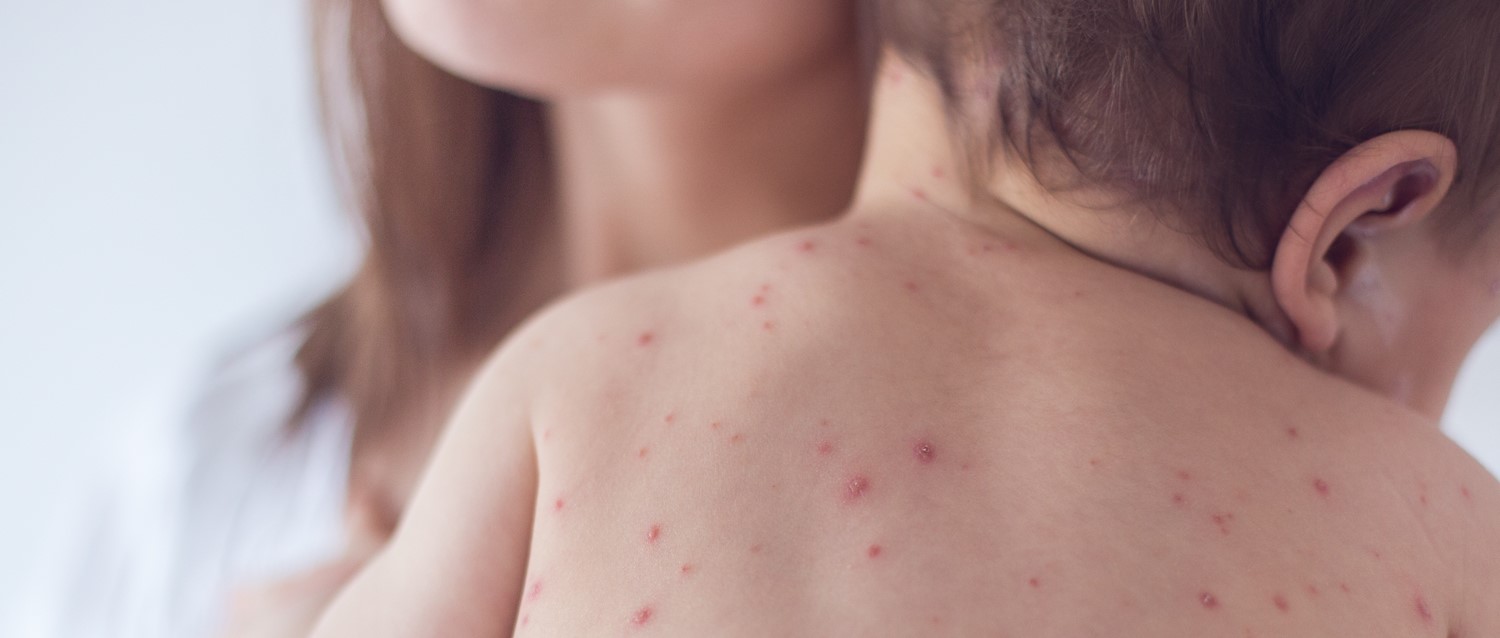
Varicela en niños
La varicela causa manchas (un sarpullido) y puede hacer que un niño se sienta generalmente mal. El tratamiento tiene como objetivo aliviar los síntomas hasta que la enfermedad desaparezca. La recuperación completa es habitual en niños menores de 12 años. Las complicaciones graves son raras, pero son más probables en niños con un sistema inmunológico deficiente, como aquellos que están en quimioterapia.
por el Dr. Colin Tidy, MRCGP

Salud infantil
Crup
Croup is an infection of the voice box (larynx) and windpipe (trachea). These are the upper and lower parts of the breathing tube that connects the mouth to the top of the lungs. The usual cause of croup is a viral infection.
por la Dra. Toni Hazell, FRCGP
Preguntas frecuentes
¿Cuál es el período de exclusión recomendado para un niño con criptosporidiosis de las actividades de natación?
Un niño con criptosporidiosis debe ser excluido de nadar durante 14 días después de que su diarrea haya desaparecido.
¿Existen precauciones específicas para mujeres embarazadas en relación con la enfermedad de manos, pies y boca?
Sí, las mujeres embarazadas deben evitar la infección por la enfermedad de manos, pies y boca. Si un gran número de niños en un entorno está afectado, puede ser necesario contactar a las autoridades de salud pública para considerar medidas de exclusión.
¿Cuál es el período de infectividad de la rubéola?
La rubéola es contagiosa desde una semana antes de la aparición del sarpullido hasta aproximadamente cuatro días después de que aparece el sarpullido.
¿Cuánto tiempo se considera contagiosa a una persona con fiebre escarlatina después de comenzar el tratamiento con antibióticos?
Alguien con fiebre escarlatina es contagioso durante los primeros tres días de tratamiento, pero el período de exclusión para la escuela o guardería es de 24 horas después de comenzar el tratamiento con antibióticos.
¿Cuál es el período típico de exclusión para un niño con culebrilla?
Si la erupción puede cubrirse, generalmente no es necesario excluir a la persona. Sin embargo, las personas con un sistema inmunológico débil o aquellas que están embarazadas deben contactar a su médico de cabecera para ver si necesitan tratamiento preventivo.
¿Cuánto tiempo debe un niño con oxiuros ser excluido de la escuela o guardería?
No hay período de exclusión para los oxiuros. El niño puede regresar a la escuela una vez que todos los gusanos estén muertos. Las buenas prácticas de higiene y el tratamiento tanto para el caso como para los contactos familiares son importantes.
¿Cómo se pueden transmitir la Hepatitis B y C en un entorno de cuidado infantil?
La hepatitis B y C son virus transmitidos por la sangre y no son infecciosos a través del contacto casual. Los entornos de cuidado infantil deben tener procedimientos establecidos para incidentes que involucren derrames de sangre.
Lecturas adicionales y referencias
- Inmunización contra enfermedades infecciosas - el Libro Verde (última edición); Agencia de Seguridad Sanitaria del Reino Unido.
- Guía sobre el control de infecciones en escuelas y otros entornos de cuidado infantil; Agencia de Seguridad Sanitaria del Reino Unido (septiembre de 2017 - última actualización febrero de 2023)
- Health Prevention and Control in Childcare Settings (Day Care and Childminding Settings); Health Protection Scotland
- Infection Prevention and Control for Childcare Settings (0-5 years) Nurseries Child Minders and Playgroups; Public Health Wales. October 2024.
- Guía sobre el control de infecciones en escuelas y otros entornos de cuidado infantil; Health and Social Care Public Health Agency Northern Ireland (September 2024).
Sobre el autorVer biografía completa

Dr Colin Tidy, MRCGP
Médico General, Autor Médico
MBBS, MRCGP, MRCP (Paediatrics), DCH
El Dr. Colin Tidy es un médico del NHS, con sede en Oxfordshire.
Acerca del revisorVer biografía completa

Dr Doug McKechnie, MRCGP
Redactor Médico
MA, MBBS, MSc, DRCOG, MRCP(UK), MRCGP(2021), FHEA
El Dr. Doug McKechnie es un médico de cabecera del NHS que trabaja en Londres. Trabaja a tiempo completo en la práctica clínica y también es el Subdirector del módulo de Práctica Clínica y Profesional en la Escuela de Medicina del University College London.
Historial del artículo
La información en esta página está escrita y revisada por pares por clínicos calificados.
Artículo también disponible en Inglés, Alemán, Español, Francés, Italiano, Portugués, Hindi, Hebreo, Árabe, y Sueco.
Next review due: 5 Mar 2028
6 Mar 2025 | Última versión

Pregunta, comparte, conecta.
Navega por discusiones, haz preguntas y comparte experiencias en cientos de temas de salud.

¿Te sientes mal?
Evalúa tus síntomas en línea de forma gratuita
Suscríbete al boletín de Patient
Tu dosis semanal de consejos de salud claros y confiables, escritos para ayudarte a sentirte informado, seguro y en control.
Al suscribirte aceptas nuestros Política de Privacidad. Puedes darte de baja en cualquier momento. Nunca vendemos tus datos.
Más sobre la salud infantil
- Manejo de la ira
- Acoso escolar
- - el daño cerebral causa problemas con las funciones musculares.
- Leucemias infantiles
- Hiperplasia suprarrenal congénita
- Muerte súbita del lactante
- Eritema tóxico del recién nacido
- Alimentando a tu niño pequeño
- Enfermedad de Hirschsprung
- Hidrocele en bebés
- Hemorragia intraventricular en bebés
- Síndrome de Marfan
- Paperas
- Dermatitis del pañal
- Náuseas y vómitos
- Estenosis pilórica
- Retinopatía del prematuro
- Dermatitis seborreica en bebés
- Tratamiento de problemas de salud en recién nacidos