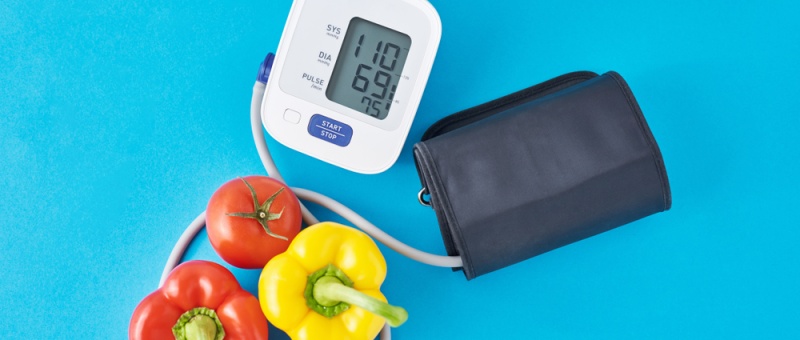
Dieta DASH - alimentación saludable que ayuda a reducir la presión arterial
Revisado por pares por Dr Colin Tidy, MRCGPÚltima actualización por Lynn StephenÚltima actualización 7 Sept 2025
Cumple con las directrices editoriales
- DescargarDescargar
- Compartir
- Language
- Discusión
- Versión en audio
- Agregar a fuentes preferidas en Google
La dieta DASH es una dieta saludable para el corazón que reduce la presión arterial y el colesterol. Lejos de ser especializada, este plan de alimentación puede beneficiar a muchas personas, ya sea que busques mejorar la salud cardíaca deficiente, manejar una condición relacionada o protegerte contra futuros problemas de salud.
Patrocinado
El paciente recomienda... Hilo
Monitorea tu presión arterial de manera continua, día y noche, sin un manguito inflable. Los manguitos tradicionales capturan solo un momento, si recuerdas usarlos. Hilo realiza alrededor de 25 lecturas al día, revelando cómo el estrés, las comidas y la actividad afectan tu presión arterial para que puedas tomar decisiones informadas para tu bienestar.

What is the DASH diet?
The DASH diet - which stands for Dietary Approaches to Stop Hypertension - is a flexible eating plan that helps lower blood pressure (hipertensión) and reduce your chances of enfermedades del corazón.
Developed over 20 years ago with support from the National Heart, Lung, and Blood Institute (NHLBI), this diet involves no special foods or strict plan. Instead, it puts emphasis on weekly nutritional goals, portion sizes, and eating a colourful variety of healthy foods including lots of vegetables and fruits.
DASH diet food list
Foods to include on the DASH diet and serving sizes based on a 2000 calories-per-day diet.
Foods to include | Daily/weekly servings | One serving size equals |
Vegetables - from all subgroups, including dark greens and starchy vegetables, such as kale and sweet potatoes | 4 to 5 a day | 75 grams (1 cup) of raw, leafy veg, or 85 grams (½ cup) of cooked vegetables |
Fruits - especially whole fruit skins, flesh, and pulp | 4 to 5 a day | 1 medium piece of fruit, or 75 grams (½ cup) of fresh or frozen fruit |
A variety of grains - at least half of which whole grains, such as brown rice and quinoa | 7 to 8 a day | 1 slice of wholemeal bread, or 125 grams (½ cup) of cooked brown rice or pasta |
Lean meats, poultry and fish | Up to 2 a day | 5 grams (3 ounces) of cooked meat, skinless chicken, or fish |
Low-fat or fat-free dairy - including milk, yoghurt, and cheese | 2 to 3 a day | 235 millilitres (8 ounces) of milk, or 235 millilitres (1 cup) of yoghurt, or 45 grams (1 ½ cups) of cheese |
Nuts, seeds and beans | 4 to 5 a week | 1 tablespoon of seeds, or 2 tablespoons of peanut butter, or 43 grams (1/3 cup) of mixed nuts, or 115 grams (½ cup) of cooked kidney beans |
Foods to limit | Daily/weekly servings | One serving size equals |
Dietary salt (sodium) | Up to 2,300 milligrams a day | 1 teaspoon of salt - including that in processed foods and added in cooking |
Fats and oils – especially saturated and trans fats found in butter, fried foods, and highly processed meals | 2 to 3 a day | 1 teaspoon of soft margarine, or 1 teaspoon of low-fat mayonnaise, or 2 tablespoons of light salad dressing |
Added sugar and sweets | Limited to less than 5 per week | 1 tablespoon of sugar, or 1 tablespoon of jam |
Alcohol | Up to 1 drink for women and men a day | Maximum 14 units a week 1.5 units is a small glass of wine 1 unit is 1/2 pint of 4% beer |
On the DASH diet, limiting your consumption of dietary salt, added azúcares, y unhealthy fats while focussing on healthy foods rich in lean protein, fibre, and minerals can help protect your heart and control your blood pressure.
This diet isn't just for people with high blood pressure or conditions that increase their chances of heart issues - anyone can benefit.
At the same time, you can tailor a DASH diet to suit your goals. For example, if you have high blood pressure - a reading of 135/85 or higher - and consume too much salt, the low-sodium DASH diet limits salt intake to no more than 1500 milligrams a day, which is three-quarters of a teaspoon. This is slightly lower than the one teaspoon of recommended salt intake per day - and it results in a substantially bigger drop in blood pressure.
There's nothing unusual about this eating plan. It's based on established alimentación saludable knowledge and portion guidelines, and for this reason is similar to many other health-promoting diets, such as the dieta mediterránea.
However, its emphasis on limiting salt has earned it a place among the top heart healthy diets.
Benefits of the DASH diet
Reduce la presión arterial
Your blood pressure is the force at which your blood travels around the body through your blood vessels. Having high blood pressure means that this force is placing a dangerous amount of strain on your heart to push out the blood - causing damage to your blood vessels, heart muscle, and other organs and increasing your chances of life-threatening heart problems.
By following the DASH diet, you can significantly lower your blood pressure within weeks - whether it's already dangerously high or at healthier levels.
Here's why:
Limits salt intake - salt pulls water into your bloodstream, increasing the force placed on blood vessel walls, raising blood pressure.
Limits added sugars - these can block the production of nitric oxide (NO) in blood vessels, a chemical that allows blood vessels to expand and reduce pressure.
Focusses on fruits and vegetables - which contain potasio, which relieves tension in blood vessels and helps your body flush out more salt through your pee.
Lowers bad cholesterol
High levels of unhealthy colesterol - known to scientists as low-density lipoprotein (LDL) cholesterol - also increase your chance of heart problems, such as enfermedades del corazón y accidente cerebrovascular. This is because LDL cholesterol, a fatty substance, can build up on your blood vessel walls, slow down blood flow, and prevent oxygen from reaching essential organs.
The DASH diet can significantly reduce the build-up of LDL cholesterol, and if fighting high cholesterol levels is your aim, adopting a higher-good fat, lower-carb version of the eating plan can be even more effective.
Here's why:
Limits saturated and trans fats - foods containing these types of fats raise LDL cholesterol in the blood.
Increases fibre - which slows digestion, keeping blood sugars from spiking, and prevents fats from being absorbed in the bloodstream.
Limits added sugars - which lowers high-density lipoprotein (HDL) cholesterol, the good cholesterol that helps flush other cholesterol out of the body.
A higher-fat DASH diet - as well as lowering LDL cholesterol, this modification of DASH also reduces triglycerides, fats that combined with high LDL cholesterol to increase your chances of heart issues.
Other potential benefits
The DASH diet can benefit anyone, whether healthy or in poor heart health. But it may also help people with particular health conditions or goals.
Por ejemplo:
Diabetes management - lowering blood pressure is an important goal for people with diabetes. What's more, it could also improve insulin resistance, cholesterol, and weight management - all of which help to either manage or reverse diabetes.
Healthy weight loss - given that the DASH diet cuts down on high-fat and sugary foods, some people can reach a healthy weight on the DASH diet, so long as they’re creating calorie deficit.
Lowering the chance of cancer - following this diet may lower your chance of getting some cancers, including cáncer colorrectal y cáncer de mama.
Lowering the chance of metabolic syndrome - the DASH diet may reduce your chance of developing síndrome metabólico by up to 81%.
Selecciones del paciente para Presión arterial
Dieta y nutrición
Las proteínas de origen vegetal podrían ayudar a prevenir la hipertensión
Eating a greater amount of minimally processed plant-based proteins - such as beans, nuts and lentils - may lower your chance of developing high blood pressure, according to new research.
por Laura Williamson

Salud del corazón y vasos sanguíneos
6 hábitos laborales que mantienen tu corazón saludable
It's one thing knowing that you could be doing more to keep your heart healthy - and another finding the time. Whether you're a 9-to-5 desk worker, a long-distance commuter, or a parent juggling it all, we've assembled 6 heart-healthy habits for you to slot into your busy workday schedule.
por Lawrence Higgins
Preguntas frecuentes
Beyond heart health, what other health conditions might benefit from adopting the DASH diet?
The DASH diet has potential benefits for several other health conditions. It can support diabetes management by helping to lower blood pressure, improve insulin resistance, manage cholesterol, and aid in weight management. It may also contribute to healthy weight loss when combined with a calorie deficit, and has been linked to a reduced chance of developing certain cancers, such as colorectal and breast cancer. Additionally, it could lower the risk of metabolic syndrome.
How does potassium contribute to blood pressure control in the DASH diet?
The DASH diet emphasizes fruits and vegetables, which are good sources of potassium. Potassium plays a role in relieving tension in blood vessels, which helps to lower blood pressure. It also assists the body in flushing out excess salt through urine, further contributing to blood pressure regulation.
How does the DASH diet limit salt intake to help lower blood pressure?
The DASH diet helps lower blood pressure by limiting salt (sodium) intake. Salt pulls water into your bloodstream, which increases the force exerted on blood vessel walls, thereby raising blood pressure. By reducing salt consumption, the diet directly addresses this mechanism.
How do added sugars affect blood pressure and cholesterol levels according to the DASH diet principles?
Added sugars can negatively impact both blood pressure and cholesterol. They can block the production of nitric oxide (NO) in blood vessels, a chemical that helps blood vessels expand and reduce pressure. Regarding cholesterol, limiting added sugars can prevent the lowering of high-density lipoprotein (HDL) cholesterol, which is the 'good' cholesterol that helps remove other forms of cholesterol from the body.
Sobre el autorVer biografía completa

Amberley Davis
Escritora senior
BA (Hons), CPD
Amberley es una escritora senior en Patient y ha escrito extensamente sobre una variedad de temas de salud y bienestar.
Acerca del revisorVer biografía completa

Dr Colin Tidy, MRCGP
Médico General, Autor Médico
MBBS, MRCGP, MRCP (Paediatrics), DCH
El Dr. Colin Tidy es un médico del NHS, con sede en Oxfordshire.
Historial del artículo
La información en esta página es revisada por pares por clínicos calificados.
Artículo también disponible en Inglés, Alemán, Español, Francés, Italiano, Portugués, Hindi, Hebreo, Árabe, y Sueco.
Next review due: 7 Sept 2028
7 Sept 2025 | Última versión
28 Jul 2023 | Publicado originalmente
Escrito por:
Amberley Davis

Pregunta, comparte, conecta.
Navega por discusiones, haz preguntas y comparte experiencias en cientos de temas de salud.

¿Te sientes mal?
Evalúa tus síntomas en línea de forma gratuita
Suscríbete al boletín de Patient
Tu dosis semanal de consejos de salud claros y confiables, escritos para ayudarte a sentirte informado, seguro y en control.
Al suscribirte aceptas nuestros Política de Privacidad. Puedes darte de baja en cualquier momento. Nunca vendemos tus datos.
Más sobre la salud del corazón y los vasos sanguíneos
- ¿Estoy teniendo un ataque de pánico o un ataque al corazón?
- Anatomía del corazón y los vasos sanguíneos
- ¿Están aumentando los niveles de presión arterial en el Reino Unido?
- Causas de la miocardiopatía dilatada: ¿cuáles son los factores de riesgo?
- Tener un ataque al corazón cuando eres joven
- Videos de corazón y sangre
- La presión arterial alta en los 30 años podría reducir el tamaño de tu cerebro
- ¿Qué tan saludable es tu corazón?
- Cómo reducir tu colesterol
- ¿La cardiomiopatía se hereda genéticamente?
- Una nueva prueba de sangre podría diagnosticar la insuficiencia cardíaca más temprano
- Recuperación después de un infarto
- Reseña: Kits de prueba de colesterol en casa
- Comprendiendo tus niveles de colesterol
- Video: ¿Qué sucede durante un ataque al corazón?
- ¿Qué es la miocardiopatía alcohólica?
- ¿Qué debes hacer si alguien sufre un paro cardíaco?
- Cuando sube el calor, también aumentan los riesgos cardíacos: Lo que necesitas saber
- ¿Quién debería tomar aspirina todos los días?
- Tu guía para la prevención de accidentes cerebrovasculares