
Cómo ayudar a su hijo con la ansiedad de volver a la escuela
Revisado por pares por Dr Colin Tidy, MRCGPÚltima actualización por Heather AinsworthÚltima actualización 17 Aug 2025
Cumple con las directrices editoriales
- DescargarDescargar
- Compartir
- Language
- Discusión
- Versión en audio
- Agregar a fuentes preferidas en Google
After the freedom of the summer holidays, it’s usual for kids to be reluctant to head back to the classroom. But sometimes, not wanting to go back to school can be a sign of anxiety.
Here we look at ways to recognise the signs of stress, providing support, and using strategies to settle your kids back into school life.

Why your child might feel anxious about going back to school?
Lisa Bruton, Counselling Directory member, psychotherapist, and guest tutor at the University of Oxford, says there are many reasons why your child may feel anxious about going back to school after the holidays.
"Your child might feel anxious about seeing their friends again, or they may worry about a change in academic expectations or schedule," she says. "They might have spent a lot of time with their family and feel anxious about the separation."
Some children may find lessons confusing or feel pressured to learn in a certain way. And those starting a new school - or moving into secondary school - may be worried about making friends or fitting in.
Even experiences outside of school, such as a duelo, trauma, or illness in the family, can make it difficult for a child to settle at school. Acoso escolar can also be a problem - a child may feel like they’re heading back into their bully’s lair after the summer break.
For some young people, the typical school environment, which is often tailored to neurotypical children - those without a condition such as autismo - can feel challenging. Children who have autism, TDAH o dyslexia may feel stressed, especially if they aren’t properly supported or their condition is undiagnosed.
Signs of school anxiety
Sometimes, your child may tell you that they’re feeling anxious, but they may find it difficult to talk about how they’re feeling. Because your child may be reluctant to speak up, it can help to be able to identify the signs of anxiety. Here are some of the main signs of anxiety:
School refusal
If your child is anxious about school, they may refuse to go, struggle to get there on time or leave before the school day ends.
Being sick or unwell
Anxiety can also cause stomach upsets. If you’ve ever felt stressed or anxious, you may have had an upset stomach. This is because our brain and gastrointestinal system are connected via the gut-brain axis. It works like a two-way street - the brain is able to send signals to the gut and vice versa.
When we are stressed, it can trigger our fight-or-flight response - releasing stress hormones such as cortisol. Our digestion slows down so our body can focus on what is worrying us - this disruption can lead to issues such as stomach aches and cramps. Anxiety can also lead to changes in our eating habits, such as eating less or more.
Being clingy
If a child is anxious, it’s usual for them to be clingy. They may also be restless or fidgety.
Trouble sleeping
The stress hormones cortisol and adrenaline - which are released when we feel anxious - prevent us from falling asleep and can mean we wake up more frequently in the night. An anxious child may have trouble sleeping - and it may be more obvious if they were sleeping better before.
Negative thoughts or worries
Your child may not be able to explain exactly how they feel, but they may tell you they feel funny, sad or worried. They may say they’re worried about making friends or make negative comments about themselves. For example, a child may say they’re not clever enough - which may mean they’re worried about grades or schoolwork, or struggling with their autoestima.
Get upset or angry more quickly
Tantrums are a normal part of a child’s development - they simply don’t have the reasoning skills or emotional regulation that adults have. However, the hormonal changes caused by stress can lead to behavioural issues, such as getting upset or angry more quickly, or unexplained crying1.
Struggle to concentrate
Anxiety can make it difficult for a child to focus or concentrate on their work. They may be easily distracted.
What should you do if your child is anxious about going back to school?
If you think your child might be struggling, it’s important to try to find out what the problem may be. "You could have a chat with your child - ask them how they feel and what might help them," says Bruton.
They might not know what the problem is - only that they’re anxious. If this is the case, you may have to help them work it out. A gentle approach is usually best, which can mean talking to your child about school, their friends, their work or how they feel about themselves.
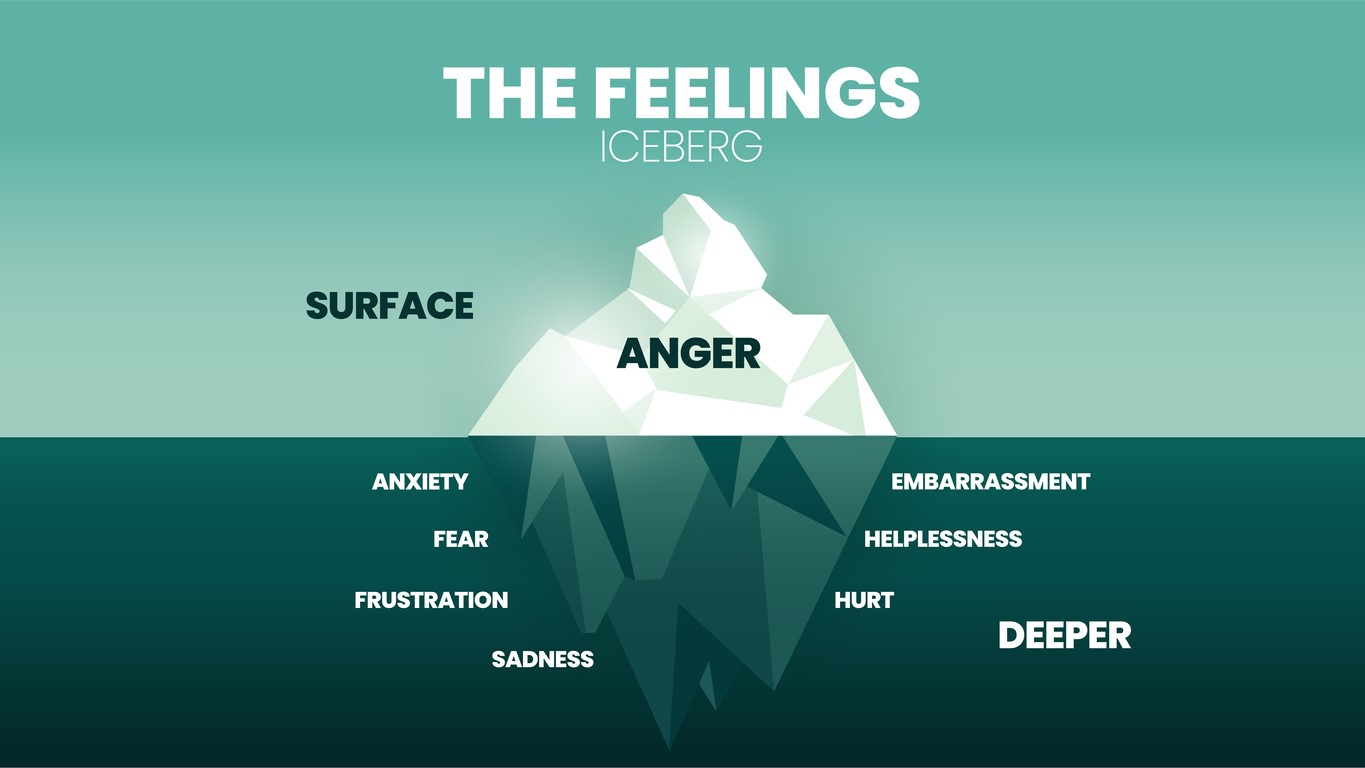
Anxiety iceberg
Some therapists recommend using an ‘anxiety iceberg’ metaphor to think about how anxiety can present itself. The obvious signs of anxiety - like anger, freezing up or feeling irritable - are at the tip of the iceberg. Then the more subtle signs are below the surface, such as feeling confused or out of control. You can talk to your child using the anxiety iceberg metaphor to explore what is bothering them together.
Anxiety iceberg
Get your child used to school
As the school year approaches, it's important to help your child feel more comfortable about their new school environment. Not knowing what to expect can lead to anxiety.
"Some of this is age-dependent, but you could arrange a playdate with some of their school friends," says Bruton. "You could go for a walk or drive around the school to acclimatise them to the buildings again. You could also speak with them about other beginnings they have had, that they have managed well."
Reintroduce a school routine
Getting back into the habit of a school routine can also help. "You could start moving back towards a school-based schedule, for example, going to bed and waking up earlier."
Find a comfort item
"You could give them an object that is comforting to bring with them - something small like a keyring, a stone or a photo," says Bruton.
Normalise talking about anxiety
Remind your kids that they're not the only ones who may be nervous about starting school again.
"You could also normalise those feelings and talk about your own experiences of feeling anxious at the beginning of something," says Bruton. "You could talk through with them what they could do if they felt anxious at school. For example, speaking to a teacher if they feel upset or stressed."
What support can you get for your child if they are anxious about school?
It’s also important to know when to get outside help. Listen to your instincts, if you think your child has an trastorno de ansiedad or may have additional needs, you should speak to your doctor, who will be able to offer advice regarding suitable support and terapia. If you think your child is being bullied, speak to their teacher or other school staff members.
Lectura adicional
Selecciones del paciente para Salud mental y comportamiento

Salud infantil
Cómo detectar las señales de que tu hijo está deprimido
Las personas a veces pueden descartar las dificultades de salud mental en los niños, diciendo que "lo superarán" o que sus problemas son "frívolos" en comparación con los de los adultos. Sin embargo, la depresión en los niños es un problema muy real, y es importante que puedas detectar las señales para que pueda tratarse lo antes posible.
por Emily Jane Bashforth
Vida saludable
Cómo conseguir el apoyo adecuado para tu hijo en la escuela
Muchos alumnos necesitarán ayuda adicional o tranquilidad en ocasiones, especialmente durante su primer trimestre en un lugar nuevo. Y algunos pueden requerir apoyo emocional o físico adicional para ayudarles a prosperar en el entorno escolar.
por Gillian Harvey
Sobre el autorVer biografía completa

Lydia Smith
Escritora de artículos
BA, MA, MSc
Lydia Smith es una periodista galardonada y escritora de reportajes que ha escrito extensamente sobre la salud de las mujeres y la salud mental. Actualmente está estudiando una maestría en psicología.
Acerca del revisorVer biografía completa

Dr Colin Tidy, MRCGP
Médico General, Autor Médico
MBBS, MRCGP, MRCP (Paediatrics), DCH
El Dr. Colin Tidy es un médico del NHS, con sede en Oxfordshire.
Historial del artículo
La información en esta página es revisada por pares por clínicos calificados.
Artículo también disponible en Inglés, Alemán, Español, Francés, Italiano, Portugués, Hindi, Hebreo, Árabe, y Sueco.
Próxima revisión: 17 de agosto de 2028
17 Aug 2025 | Última versión
30 de agosto de 2023 | Publicado originalmente
Escrito por:
Lydia Smith

Pregunta, comparte, conecta.
Navega por discusiones, haz preguntas y comparte experiencias en cientos de temas de salud.

¿Te sientes mal?
Evalúa tus síntomas en línea de forma gratuita
Suscríbete al boletín de Patient
Tu dosis semanal de consejos de salud claros y confiables, escritos para ayudarte a sentirte informado, seguro y en control.
Al suscribirte aceptas nuestros Política de Privacidad. Puedes darte de baja en cualquier momento. Nunca vendemos tus datos.
Más sobre la salud infantil
- Lactancia materna: ¿Qué es el calostro y cuáles son los beneficios?
- ¿Puede la asesoría ayudarte a decidir cuándo o si tener hijos?
- ¿Cómo pueden los perros ayudar a apoyar a las familias con niños autistas?
- Cómo elegir bocadillos saludables para ti y tus hijos
- Cómo lograr que tu hijo coma saludablemente en la escuela secundaria
- Cómo mantener a tus hijos seguros del sol este verano
- Cómo cuidar el asma de tu hijo este verano
- Cómo hablar con los niños sobre la muerte
- ¿Está su hijo consumiendo demasiado azúcar?
- Más evidencia de que las redes sociales están asociadas con la depresión adolescente
- PANDAS: lo que sabemos y lo que no
- ¿Deberían las escuelas o los padres combatir los piojos?
- ¿Debería su hijo recibir la vacuna contra la varicela?
- Señales de tinnitus a tener en cuenta en los niños
- Señales de que tu hijo está teniendo dificultades con su salud mental
- Lo que necesitas saber sobre la crianza con un problema de salud mental
- ¿Cuándo deberías preocuparte por un comensal quisquilloso?
- ¿Por qué ha habido un aumento de hepatitis en niños?
- Bebés nacidos en invierno tienen mayor riesgo de problemas de salud mental