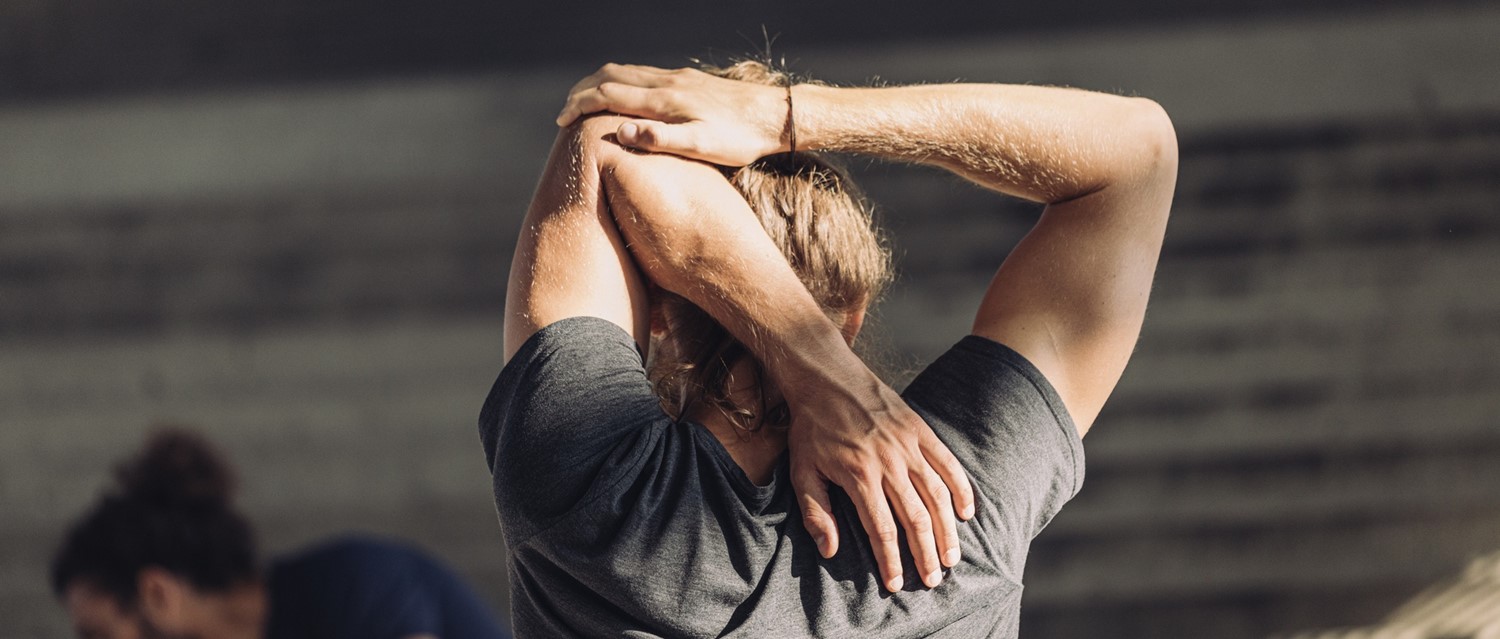
Can exercise help you feel less stressed?
Peer reviewed by Dr Sarah JarvisLast updated by Abi MillarLast updated 24 Mar 2021
Meets Patient’s editorial guidelines
- DownloadDownload
- Share
- Language
- Discussion
- Audio Version
- Add to preferred sources on Google
Most people are aware of the wisdom that exercise helps stress - but, too often, pressuring yourself to exercise can become a source of stress in itself. Here's how to get past that barrier.

After a year of coronavirus restrictions, we've all had to get used to dealing with stresses that weren't there before. Whether we've been struggling with our livelihoods, home-schooling our children, or simply missing our friends and families, this is a period of collective, prolonged stress rarely seen before in our lifetimes.
Simple self-care strategies have become critical - staying as socially connected as possible, getting enough sleep, eating well and staying active. Many of us know from experience what kind of difference this can make to our mental health.
However, the advice to stay active can so often degenerate into what feels like an unhelpful pressure. At a time when you may be juggling work and caring responsibilities, you probably don't want to hear about how to 'get perfectly shredded abs in a month', or why 'lockdown is the perfect time to train for a marathon'.
Although a big training goal may suit some people, for others it may become a source of stress in itself. It's important to look at how exercise can be integrated into your life in a way that will reap the most mental health benefits.
"If you struggle with high stress levels or have demanding commitments, you can benefit from taking even 10 to 15 minutes out of your day to focus on movement," says Siri Andersen, personal trainer for Human Health by The Clinic. "We all have very different stress responses. Someone may feel less stressed from a short run; others benefit more from doing stretches or meditation. The 'little and often' approach is a useful tool when there is simply not enough time in the day."
How exercise relieves stress
There's little doubt that, when done in a way that fits your lifestyle, exercise can be an incredible stress-reliever. A large 2018 study, involving 1.2 million people, found that physically active adults experienced two days of poor mental health every month. This compared to 3.4 days for non-exercisers. The optimum benefits in the study were seen at around 45 minutes of exercise every other day - more than that wasn't necessarily better.
There are a number of reasons why this might be. For one thing, exercise encourages the release of feelgood hormones, like serotonin, while balancing stress hormones like adrenaline. It can regulate your appetite and sleep cycles. It can also have a meditative effect, taking you out of your head and into your body.
"There's evidence to show the more physically active you are, the more emotional well-being improves," says Marc Holl, head of physiotherapy & clinical development lead at Nuffield Health. "The relationship between mind and body is reciprocal, so if one is neglected, it can have negative repercussions on the other."
When you make it into a habit, the stress-relieving effects of exercise extend far beyond the exercise session itself. Regular exercise has even been shown to increase the volume of certain brain regions, with implications for brain health.
"By moving your body, muscles feel more pliable and you experience less stiffness or soreness in joints and muscles from improved blood circulation," says Andersen. "Improvements in how your body feels makes you feel good about yourself too, which positively impacts other aspects of your day."
How to get started if you struggle with movement
So how should you approach exercise if the thought of it feels daunting - for instance, if you're a complete beginner or have mobility issues that rule out anything too intense?
"It’s important to consider the mental health of those who aren't physically able to move or who struggle with regular movement," says Holl. "An estimated 18.8 million people in the UK live with a musculoskeletal condition, and these often go hand in hand with poor mental health, with pain and discomfort being linked to increased stress and anxiety."
If that applies to you, low-impact exercises like yoga and Pilates (or swimming, once pools reopen) may be more appropriate than taking up a contact sport! Andersen suggests using resistance bands or hand weights as a form of strength training.
"Walking the stairs or holding on to a chair whilst doing body-weight movements is a free and easy form of exercise you can do in your own time, perhaps guided by an online trainer or video. It may be trial and error before you find what works for you but enjoy the process!" she says.
Online classes for different ability levels
There are also plenty of online classes you can try. Jo and Luke Gray designed the Feelnoo programme as a way to help the 40+ demographic stay healthy - this 'online health studio' offers low-impact, functional classes that won't put any strain on your joints.
As Luke Gray points out, older demographics often require a more sophisticated approach to exercise - many people have back, knee and shoulder problems, and need exercise sessions that are sympathetic to these issues.
"Everyone has to start somewhere! Often from the very beginning," he says. "I've been working with people of all ages for over 35 years and a good percentage have welcomed me taking them metaphorically by the hand and showing them that they can achieve results even if they have never exercised before. I was determined when I designed Feelnoo that the classes would have various levels, so that there was something for everyone."
He refers to exercise as 'medication in motion': short-term it feels great; long-term it pushes the blues away.
Finding an activity that's right for you
Andersen feels that exercise is accessible and valuable for everyone - it's just about finding what's right for you.
"Do you like music? If so, chances are you would like dancing; a fun and mood-boosting form of movement," she says. "Do you like gardening? Pottering about in the garden or taking walks in scenic surroundings also benefits your fitness levels. It may be worth looking into personal training if you are unsure what is suitable - they can help you set realistic goals and an appropriate exercise programme."
You could also recruit a friend or partner to join you in your exploration of different forms of exercise, which is particularly good advice if you struggle with motivation. It doesn't have to feel like a chore or an obligation. Take things at your own pace, and have some fun.
"Lockdown has changed the way we exercise, with classes and personal training available at your fingertips, without the need to spend time travelling to and from a gym," says Andersen. "What about setting your alarm ten minutes earlier for an energising morning stretch? Or blocking your diary at lunchtime for an online class you can do at home? We all crawl before we walk, walk before we run - a step-by-step approach that helps keep motivation high and injuries at bay."
Patient picks for Stress management

Mental health
Can hugging be good for your health?
There are a number of reasons why we like to hug others. Sometimes it's for comfort in times of sadness, sometimes it's an expression of joy, or perhaps as a romantic gesture. Hugs can be an integral part of our everyday lives, but did you know there are health benefits of hugging?
by Emily Jane Bashforth

Mental health
Which foods can reduce your stress and anxiety?
Anxiety can be complex and hard to navigate, but by making small swaps to what you eat, you could see big improvements in your mental wellbeing. With the help of a food scientist and nutrition coach, we unpack the best foods for anxiety to help put you back in control.
by Lynn Stephen
About the authorView full bio

Abi Millar
Freelance Journalist
BA (Hons), MA
Abi is a freelance journalist with a special interest in health and medicine writing.
About the reviewerView full bio

Dr Sarah Jarvis
Clinical Consultant
MA (Cantab), BM, BCh (Oxon), DRCOG, FRCGP, MBE
After training in medicine at Cambridge and Oxford, Dr Sarah Jarvis MBE became a GP.
Article history
The information on this page is peer reviewed by qualified clinicians.
Article also available in English, German, Spanish, French, Italian, Portuguese, Hindi, Hebrew, Arabic, and Swedish.
24 Mar 2021 | Latest version
24 Mar 2021 | Originally published
Join the conversation
Share your thoughts or experiences with others in our patient communities.

Ask, share, connect.
Browse discussions, ask questions, and share experiences across hundreds of health topics.

Feeling unwell?
Assess your symptoms online for free
Sign up to the Patient newsletter
Your weekly dose of clear, trustworthy health advice - written to help you feel informed, confident and in control.
By subscribing you accept our Privacy Policy. You can unsubscribe at any time. We never sell your data.
More in mental health
- Alarming' rise in self-harm in young people
- Can 'prescribed' laughter help people recover from trauma?
- Can stress cause heart attacks?
- Can watching horror films reduce stress?
- CBT for insomnia: how does it work?
- Could you benefit from music therapy?
- Eating disorders in athletes: how can we tackle them?
- How to combat winter depression and increase your serotonin
- How to deal with back to work anxiety
- How to manage stress when living with cardiomyopathy
- How to support someone with depression
- Is crying good for you?
- Meal plan tips for eating disorder recovery
- Should I switch antidepressants?
- The link between anxiety and insomnia
- What is serotonin syndrome and what causes it?
- What is the difference between mental health and mental illness?
- What mental health support is available to veterans?
- What you need to know about intrusive thoughts and OCD
- Why is anorexia on the rise?