Shoulder pain
Peer reviewed by Dr Colin Tidy, MRCGPLast updated by Dr Philippa Vincent, MRCGPLast updated 10 Aug 2023
Meets Patient’s editorial guidelines
- DownloadDownload
- Share
- Language
- Discussion
- Audio Version
- Add to preferred sources on Google
Shoulder pain is very common. Some causes of shoulder pain resolve within a few weeks without any treatment apart from simple medicines for pain relief. However, some causes of shoulder pain can last for a long time and further tests and treatment might be needed. Medical attention should be sought if the pain is severe, if it follows an injury or if it doesn't get better after a few weeks.
At a glance
Shoulder pain is common and has many causes, including frozen shoulder and rotator cuff disorders.
Causes can also include problems in the neck, osteoarthritis, and various injuries.
Pain felt in the shoulder may sometimes originate from other body areas.
See a doctor urgently if pain is severe, follows an injury, or the shoulder is hot or red.
Medical attention is also needed if pain affects both shoulders, or doesn't improve with painkillers.
Initial treatments may include pain relief medicines, ice packs, and avoiding aggravating activities.
Shoulder pain causes
See also the separate leaflet called Joint Pain. Shoulder pain is a common problem with a number of different causes which include (starting with the four most common):
Frozen shoulder
Frozen shoulder is sometimes called adhesive capsulitis of the shoulder. It is a condition where a shoulder becomes painful and stiff. Without treatment, symptoms usually settle but this may take up to 2-3 years.
Rotator cuff disorders
The rotator cuff is a group of muscles and tendons that surround the shoulder joint and help to keep it stable. Rotator cuff disorders are one of the most common causes of shoulder pain. Most people can be successfully treated and have complete recovery.
Pain coming from a problem in the neck.
See the separate leaflets called Neck Pain and Whiplash Neck Sprain.
Acromioclavicular joint disorders
Some conditions (such as a shoulder injury or osteoarthritis) may affect the acromioclavicular joint, which is the joint at the top of the shoulder (see the diagram at the end of this leaflet). Problems with this joint are usually due to wear and tear of the joint or because of injury.
Osteoarthritis
Osteoarthritis due to general wear and tear in the shoulder joint is a very common cause of shoulder pain.
Septic arthritis
Septic arthritis is an infection in the joint. Symptoms include pain and tenderness over a joint, pain on moving the joint, and feeling unwell. Septic arthritis is uncommon but needs urgent hospital treatment.
Arthritis
Arthritis which affects a number of other different joints as well - eg, rheumatoid arthritis - can cause shoulder pain, but would rarely cause shoulder pain on its own.
Polymyalgia rheumatica
Polymyalgia rheumatica is a condition which causes pain, stiffness and tenderness in large muscles, typically around the shoulders, upper arms and hips.
Injury (trauma):
A broken bone (fracture), such as a fracture of the upper arm bone (humerus) or a broken collarbone (clavicle) can cause shoulder pain.
Shoulder pain can be caused by a soft tissue injury such as an injury to a ligament, tendon or muscle around the shoulder joint. This may be caused in many different ways, such as a sports injury, a road traffic accident or a shoulder strain following heavy lifting or carrying.
Shoulder dislocation, where the ball of the joint has moved out of its socket, can cause severe shoulder pain. See the separate leaflet called Joint Dislocations.
Shoulder instability
The shoulder is unstable because the joint does not keep the bones close together. The humerus often 'pops out' of position.
Referred pain
This is a pain which is felt in the shoulder due to the nerve pathways, but is actually caused by a problem elsewhere in the body. The neck is the most common source of referred pain. (See the links above for more information).
Occasionally pain may be felt in the shoulder when the source is the heart or the diaphragm (the muscle which separates the thorax - chest area - from the abdomen - tummy area. A problem within the abdomen can cause an irritation of the diaphragm which can sometimes be felt in the shoulder. Usually in these cases, there is pain in the abdomen or chest as well.
What causes shoulder pain?
How do I know what is causing my shoulder pain?
Some general guidelines which may help are as follows. However, remember there are always exceptions to every rule!
A shoulder pain usually - but not always - comes from a problem with the shoulder. It is more likely to be due to the shoulder itself if it hurts more when moving the shoulder, when touching the shoulder or if the shoulder looks abnormal, for example, if the shape looks different to the other side or if it is hot or red.
If the shoulder hurts when lifting the arm, it is likely to be due to a problem with the shoulder joint itself, such as a frozen shoulder, rotator cuff problem or shoulder injury.
If the pain started following a fall or injury of some type, it is likely that the trauma is causing the pain. A bone, joint, ligament, muscle or tendon may be damaged in some way.
Shoulder pain is very common and can affect all ages. Some causes of shoulder pain, such as osteoarthritis, frozen shoulder and rotator cuff disorders, mainly affect middle-aged and older people. Shoulder pain caused by sports injuries is more common in younger age groups. Sports that more commonly cause shoulder injuries include sports with repeated throwing or bowling, or contact sports such as rugby. Shoulder instability and acromioclavicular joint disorders often affect people who play regular sport.
If there are pains in other joints as well as the shoulder, it is more likely to be a generalised problem.
Pain and stiffness in both shoulders which is worse in the mornings or overnight may be due to polymyalgia rheumatica.
Clues that suggest shoulder pain is coming from some other problem than the shoulder itself include:
If there is a blistery painful or itchy rash, it might be shingles.
If the shoulder pain is coming from the neck, there is likely to be some neck pain and/or stiffness as well.
If the pain is in the left shoulder, and if it comes with a pain or tightness in the chest, it may be coming from the heart. Usually with angina or a heart attack, there are other symptoms as well as or instead of shoulder pain. See the separate leaflets called Angina and Heart Attack (Myocardial Infarction) for details.
If many joints are achy and if feeling hot one minute and cold the next, this may be due to a high temperature (fever) due to an infection - for example a cold or flu.
If there is tummy pain and pain at the tip of the shoulder blade, it might be coming from the liver or gall bladder in the abdomen.
If there is chest pain or shortness of breath or a persisting cough, with pain in the shoulder, it might be due to a problem with the lungs rather than the shoulder.
Should I see a doctor about shoulder pain?
Generally speaking:
It is sensible to seek medical attention urgently (straightaway) if:
The pain follows an injury or trauma and is a severe pain or the shoulder cannot be moved at all.
If the shoulder is hot to touch or red.
If there is chest pain or difficulty breathing or a feeling of being generally very unwell (call 999/112/911).
Medical attention should be sought soon if:
The pain is affecting both shoulders and is worse in the mornings or overnight.
The pain is not improving with simple painkillers for a couple of weeks.
The pain is affecting your daily activities.
There are other symptoms as well as shoulder pain, such as:
Tummy pain.
A persisting cough.
Night sweats.
Weight loss.
A blistery rash.
There is a high temperature (fever) which is not responding to simple measures such as paracetamol, or if there is no obvious simple cause.
There is a past history of cancer and a persisting pain in the bone area of the shoulder.
There is new pain in more than one joint.
There is swelling of the shoulder.
How to relieve shoulder pain?
Initial treatment for some of the more common shoulder problems include:
Taking simple medicines for pain relief, such as ibuprofen or paracetamol.
Ice packs can also be used to reduce or relieve pain.
Avoiding activities that may cause more pain in the shoulder, such as heavy lifting and carrying.
If these measures are not working, see a health professional.
Shoulder pain treatment
This will depend on the cause of the pain.
Treatments may include:
Physiotherapy
A physiotherapist might advise exercises, perform manipulation and/or recommend a steroid injection into your shoulder.
Referral
In some cases, a referral to a bone and joint specialist (orthopaedic specialist or rheumatology specialist) might be advised to see if any further treatment is required, such as a surgical operation to treat the cause of the shoulder pain. Surgery is not needed for most causes of shoulder pain.
Surgery
In a few cases an operation may be required. Most commonly, this is done through a 'keyhole' procedure - an arthroscopy. During an arthroscopy, the parts of the shoulder joint can be examined to see what is the cause of the problem. Damaged tissues may be repaired or removed.
Decompression is one surgical option for shoulder tip (subacromial) pain. Decompressing means removing bone spurs and soft tissue through a thin telescope introduced through the keyhole cut. Evidence suggests that there is little value in this particular operation for pain for most people and this should be discussed during the decision-making process.
Occasionally, shoulder joints can be replaced with an artificial joint, particularly if the problem is wear and tear (osteoarthritis).
Medicines
If the pain is thought to be due to inflammation, such as in rheumatoid arthritis or polymyalgia rheumatica, then medicines are used. A rheumatologist is needed to prescribe drugs called disease-modifying-drugs for rheumatoid or other inflammatory arthritis. Steroids are usually used for polymyalgia rheumatica and these are usually prescribed in general practice. See the specific leaflets about these conditions for more information about treatment options.
Acupuncture
Recent evidence is that acupuncture may reduce shoulder pain but that more investigation into this is needed.
Shoulder pain tests
Investigations might be advised and these will depend on an initial examination to determine the most likely cause of the shoulder pain. Investigations may include:
Blood tests to look for underlying arthritis such as rheumatoid arthritis.
X-rays may be needed to diagnose a bone problem or joint problems.
An ultrasound scan may be needed to assess whether there is a problem with the soft tissues of the shoulder.
Referral might be needed for further investigations, such as an MRI scan. Specialists include:
A doctor specialising in bones and joints (an orthopaedic specialist).
A doctor specialising in diagnosis and treatment of arthritis and musculoskeletal conditions (a rheumatology specialist).
A physiotherapist.
What is the outcome (prognosis)?
The outcome will depend on the underlying cause. Shoulder pain may only last for up to a few weeks, may last a few years or may be a lifelong problem. However, if the cause of the shoulder pain is diagnosed and treated early then this can often help to resolve or greatly reduce the pain in the shoulder.
The shoulder joint
Rotator cuff
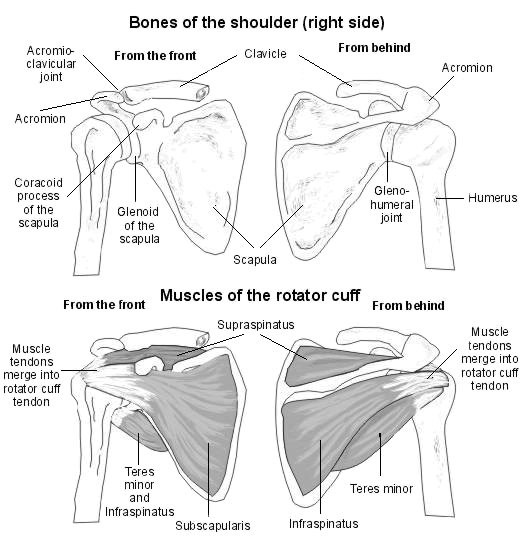
There are three bones in the shoulder region - the collarbone (clavicle), the shoulder blade (scapula) and the upper arm bone (humerus). The scapula is a triangular-shaped bone that has two important parts to it: the acromion and the glenoid. The three bones in the shoulder region form part of two main joints:
The acromioclavicular joint between the acromion of the scapula and the clavicle.
The glenohumeral joint between the glenoid of the scapula and the humerus.
There are also a number of muscles, ligaments and tendons around the shoulder. Ligaments are fibres that link bones together at a joint. Tendons are fibres that attach muscle to bone.
Patient picks for Joint pain

Bones, joints and muscles
Dislocation
A dislocation is an injury in which the bones in a joint are forced apart and out of their usual positions. To dislocate the bones of a large joint usually needs considerable force (although there are exceptions to this).
by Dr Philippa Vincent, MRCGP

Bones, joints and muscles
Tennis elbow
Tennis elbow is a condition where there is pain on the outer side of the elbow. It is often caused by overuse strain, causing damage to tendons around the elbow. In many people, symptoms improve over time just by stopping activities that bring on the symptoms. Studies have not yet confirmed the best way to treat tennis elbow. Painkillers may help to ease the pain until the condition improves. A steroid injection may also ease pain in the short term. However, the pain often returns. Physiotherapy is another treatment option. Other treatments are sometimes used if symptoms persist.
by Dr Philippa Vincent, MRCGP
Frequently asked questions
Which medical specialists treat shoulder pain?
Depending on the cause of your shoulder pain, you might be referred to a bone and joint specialist (an orthopaedic specialist), a doctor specialising in arthritis and musculoskeletal conditions (a rheumatology specialist), or a physiotherapist.
What is the expected recovery time for shoulder pain?
The duration of shoulder pain varies greatly depending on its underlying cause. Some types of shoulder pain might resolve within a few weeks, while others could last for several years or even be a lifelong issue. Early diagnosis and treatment can often help to significantly reduce or resolve the pain.
Can shoulder pain affect daily activities?
Yes, shoulder pain can significantly impact your daily activities. If you find that the pain is interfering with your routine tasks, it's advisable to seek medical attention.
Could my shoulder pain be connected to underlying health conditions?
Yes, shoulder pain can sometimes be a symptom of conditions elsewhere in the body. For example, if you have current or past cancer and experience persistent pain in the bone area of your shoulder, or if you have new pain in multiple joints, these could indicate underlying health issues. Other symptoms like persistent cough, night sweats, or unexplained weight loss alongside shoulder pain also warrant medical investigation.
What happens during shoulder decompression surgery?
Shoulder decompression is a surgical option sometimes considered for shoulder tip pain. It involves removing bone spurs and soft tissue using a thin telescope inserted through a 'keyhole' incision. However, current evidence suggests that this specific operation has limited value for pain relief in most people, and this should be discussed during the decision-making process for treatment.
Can shoulder joints be replaced with an artificial joint?
Yes, in some cases, shoulder joints can be replaced with an artificial joint. This is particularly considered when the problem is due to significant wear and tear, such as in advanced osteoarthritis.
Further reading and references
- Buchbinder R, Green S, Youd JM; Corticosteroid injections for shoulder pain. Cochrane Database Syst Rev. 2003;(1):CD004016.
- Green S, Buchbinder R, Hetrick S; Physiotherapy interventions for shoulder pain. Cochrane Database Syst Rev. 2003;(2):CD004258.
- Page MJ, Green S, Kramer S, et al; Manual therapy and exercise for adhesive capsulitis (frozen shoulder). Cochrane Database Syst Rev. 2014 Aug 26;8:CD011275. doi: 10.1002/14651858.CD011275.
- Beard DJ, Rees JL, Cook JA, et al; Arthroscopic subacromial decompression for subacromial shoulder pain (CSAW): a multicentre, pragmatic, parallel group, placebo-controlled, three-group, randomised surgical trial. Lancet. 2018 Jan 27;391(10118):329-338. doi: 10.1016/S0140-6736(17)32457-1. Epub 2017 Nov 20.
- Artus M, Holt TA, Rees J; The painful shoulder: an update on assessment, treatment, and referral. Br J Gen Pract. 2014 Sep;64(626):e593-5. doi: 10.3399/bjgp14X681577.
- Shoulder pain; NICE CKS, November 2022 (UK access only)
- Ben-Arie E, Kao PY, Lee YC, et al; The Effectiveness of Acupuncture in the Treatment of Frozen Shoulder: A Systematic Review and Meta-Analysis. Evid Based Complement Alternat Med. 2020 Sep 25;2020:9790470. doi: 10.1155/2020/9790470. eCollection 2020.
About the authorView full bio

Dr Philippa Vincent, MRCGP
General Practitioner, Medical Author
MB BS, Bsc, MRCGP (2000), DCH, DFSRH, DRCOG
Dr Philippa Vincent is an NHS GP working in North London.
About the reviewerView full bio

Dr Colin Tidy, MRCGP
General Practitioner, Medical Author
MBBS, MRCGP, MRCP (Paediatrics), DCH
Dr Colin Tidy is an NHS Doctor, based in Oxfordshire.
Article history
The information on this page is written and peer reviewed by qualified clinicians.
Article also available in English, German, Spanish, French, Italian, Portuguese, Hindi, Hebrew, Arabic, and Swedish.
Next review due: 8 Aug 2028
10 Aug 2023 | Latest version
Join the conversation
Share your thoughts or experiences with others in our patient communities.

Ask, share, connect.
Browse discussions, ask questions, and share experiences across hundreds of health topics.

Feeling unwell?
Assess your symptoms online for free
Sign up to the Patient newsletter
Your weekly dose of clear, trustworthy health advice - written to help you feel informed, confident and in control.
By subscribing you accept our Privacy Policy. You can unsubscribe at any time. We never sell your data.
More in bones, joints and muscles
- Axial spondyloarthritis
- Back pain in children
- Bisphosphonates
- Broken upper arm
- Calcium pyrophosphate deposition
- Cervical spondylosis
- Chondrocalcinosis
- Disease-modifying antirheumatic drugs
- Frozen shoulder
- Groin strain
- Hypermobility spectrum disorders
- Knee and kneecap pain
- Knee ligament injuries
- Multiple sclerosis
- Pelvic fractures
- Recovering from a pelvic fracture
- Systemic sclerosis
- Tennis elbow
- Thoracic back pain
- Torticollis