Lupus
Lupus eritematoso sistémico
Revisado por pares por Dr Hayley Willacy, FRCGP Última actualización por Dr Doug McKechnie, MRCGPÚltima actualización 10 Feb 2023
Cumple con las directrices editoriales
- DescargarDescargar
- Compartir
- Language
- Discusión
- Versión en audio
Lupus is the short name for the condition called systemic lupus erythematosus (SLE). It can cause various symptoms, the most common being joint pains, skin rashes and tiredness. Problems with kidneys and other organs can occur in severe cases. Lupus is an autoimmune condition. Treatment includes anti-inflammatory painkillers to ease joint pains. An antimalarial, called hidroxicloroquina, can help to prevent flares. Steroids and/or other medication to control the immune system are sometimes also needed.
En este artículo:
Videos seleccionados para Problemas autoinmunes
Continúa leyendo abajo
What is lupus?
Lupus is a persistent (chronic) disease that causes inflammation in various parts of the body. The severity of lupus ranges from mild to severe. There are two main types of lupus. Discoid lupus only affects the skin and is not discussed in this leaflet. The other form is systemic lupus, which involves the skin and joints and may involve internal organs such as the heart or kidney as well.
Lupus symptoms
Volver al contenidoLupus can cause symptoms in any of the many parts of the body it affects. You can find out more detail later in this leaflet. The most common symptoms include:
A red rash over the nose and cheeks.
Úlceras bucales.
Tiredness due to anaemia (reduced number of red blood cells).
Swollen glands (lymph nodes).
Hair loss or thinning.
Depression and anxiety.
Dolor en el pecho.
Joint pain.
Dolores de cabeza.
Continúa leyendo abajo
Who can get lupus?
Volver al contenidoLupus affects about 1 in 1,000 people in the UK. It is about six times more common in women than in men. It most typically develops in women between the ages of 15 and 49. However, anyone at any age can be affected. It is more common in people of Afro-Caribbean, Asian, or Chinese descent.
Is lupus hereditary?
Volver al contenidoLupus does tend to run in families. People who have a parent or sibling with lupus are more likely to get it too. However, this risk is still low. Even in identical twins, if one twin has lupus the other only has a 1 in 4 chance of developing it too. So although there is some hereditary factor, clearly other factors are involved in whether a person develops the condition or not.
Continúa leyendo abajo
What causes lupus?
Volver al contenidoLupus is an autoimmune disease. This means that the immune system (which normally protects the body from infections) mistakenly attacks healthy cells. This can cause symptoms and may damage the affected parts of the body.
It is not known why lupus occurs. Possible triggers of lupus include infections, smoking, or sunlight. Hormonal changes may play a role in lupus, which could explain why it is much more common in women.
Drug-induced lupus is a condition where lupus-like symptoms develop as a reaction to certain medications (such as minocycline or hydralazine). Drug-induced lupus tends to be milder than other forms of lupus, and usually goes away after the drug is stopped.
Symptoms of lupus in detail
Volver al contenidoThe symptoms and severity of lupus vary tremendously between people. Many people have tiredness (fatigue), weight loss and a mild raised temperature (fever). In addition, one or more of the following may develop.
Joint and muscle pains
Most people with lupus develop some joint and muscle pains. Sometimes only a few joints are affected, whereas other people have many joints affected. The small joints of the hands and feet tend to be the ones affected most. The pains may 'flit' from joint to joint. Joint stiffness is common and is usually worse first thing in the morning. Mild joint swelling may occur but severe arthritis with joint damage is unusual.
Lupus rash and skin changes
The butterfly rash of lupus
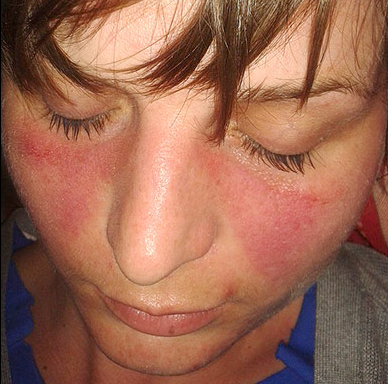
© By Doktorinternet (Own work) [CC-BY-4.0], via Wikimedia Commons
A red rash which develops over the cheeks and nose is common (the 'butterfly rash'). Other areas of skin exposed to sunlight (hands, wrists, etc) may also develop a rash. About 6 in 10 people with lupus find that their skin is very sensitive to sunlight (called 'photosensitivity'). Various other rashes may develop. The blood vessels just under the skin may also be affected and cause poor circulation to the fingers and toes (Raynaud's phenomenon).
Úlceras bucales
Mouth ulcers are more common in people with lupus.
Lupus and hair loss
Some hair may fall out (alopecia). Any hair loss tends to be minor and cause hair 'thinning' rather than bald patches. However, quite serious hair loss sometimes develops, although the hair often grows back when lupus is less active.
Blood and lymph
A mild anaemia is common. Other blood problems, such as reduced numbers of white blood cells or platelets (the cells that help with blood clotting), are less common. A tendency to form blood clots is an uncommon complication. Some lymph glands may swell.
Heart and lungs
The tissues that cover the heart and lung (the pleura and pericardium) may become inflamed. This can cause pains in the side of the chest (pleurisy) o central chest pains (pericarditis). The actual heart or lung tissue is less commonly affected.
Kidneys
Around 1 in 3 people with lupus may develop inflammation of the kidneys, which can lead to the kidneys leaking protein and blood into the urine. This does not usually cause problems unless the disease is very severe. Enfermedad renal crónica is an uncommon complication.
Brain and nervous system
Mental health problems in lupus are fairly common and include depresión y ansiedad. Although mild depression can be part of the disease itself, it can also be due to your reaction to having a serious illness.
It is not uncommon for people to have difficulties in coping with having lupus. It is important to share any feelings you have with your doctor, as treatment can be really beneficial. Occasionally, inflammation of the brain can lead to epilepsia, dolores de cabeza, migrañas and other conditions.
How lupus affects the body
Volver al contenidoIn some cases, the symptoms develop quite slowly. At first they may be confused with other problems, as there are many possible causes of joint pains and tiredness. Sometimes several symptoms occur together. Symptoms range from mild to severe. For example:
Mild lupus. People with mild lupus have mainly joint and/or skin symptoms. These are unpleasant symptoms but are not serious or life-threatening. There may be any combination of the following:
Joint pains
Muscle pains
Skin symptoms
Cansancio
Mild hair loss
Moderate lupus. This includes some inflammation of other parts of the body apart from joints and skin. This may include:
Inflammation of the lungs - pleurisy.
Inflammation of the heart - pericarditis.
Inflammation of the liver - hepatitis.
Inflammation of the joints - arthritis.
Mild kidney inflammation.
Inflammation of the scalp with hair loss.
Severe lupus. In some cases, severe inflammation develops which can cause damage to organs such as the heart, lung, brain or kidneys. This can even be life-threatening.
Typically, there are times when the disease flares up (relapses) and symptoms become worse for a few weeks, sometimes longer. These relapses tend to alternate with times when symptoms settle down (remission). The reason why symptoms flare up or settle down is not yet fully understood.
How is lupus diagnosed?
Volver al contenidoLupus is often a difficult condition to diagnose, as the symptoms can be very similar to many other conditions.
If your symptoms suggest lupus then your doctor will usually do some blood tests. Most people with lupus have an antibody called antinuclear antibody (ANA) in their blood. (Antibodies are small proteins that are part of the immune system.) Another antibody called anti-double-stranded DNA (anti-dsDNA) is often present in people with lupus.
Various other antibodies are also associated with lupus. However, these antibodies can also be found in perfectly well people who do not have lupus, so the results must be considered in the context of your symptoms, and how likely lupus is otherwise. Typical symptoms combined with high levels of certain antibodies usually indicate that you have developed lupus.
People with suspected lupus should be referred to see a rheumatologist (a specialist who deals in certain autoimmune problems, particularly ones causing joint problems). Rheumatologists use their expertise, alongside your symptoms, signs, and test results, to make the final diagnosis of lupus.
Once lupus is diagnosed, you will normally be advised to have regular checks and tests. For example, regular blood tests to check for anaemia, and urine tests to check for kidney problems. A blood test to measure a blood chemical called 'complement' (another part of the immune system) can assess the activity of the disease. The level of this chemical reflects how 'active' the disease is.
Other tests including scans and X-rays may be advised to check on the function of the heart, kidneys and other organs if the disease is thought to be affecting these areas of the body.
Lupus treatment
Volver al contenidoAlthough there is no cure for lupus, this condition can usually be controlled and symptoms eased. Most people with lupus are seen regularly by a specialist who advises on treatment. The treatments may vary from time to time, depending on the severity of the disease or flare-up of symptoms and also which parts of the body are affected. Treatment options include the following:
Antiinflamatorios no esteroideos (AINEs), which can help with muscle and joint pain.
Hydroxychloroquine for skin problems, tiredness and joint pains.
Steroid tablets to reduce inflammation if symptoms are severe.
Immunosuppressants which work by damping down the immune system. These include azatioprina, ciclosporina, cyclophosphamide, metotrexato y mycophenolate mofetil, y biological medicines.
What is the outlook (prognosis) for people with lupus?
Volver al contenidoLupus is a long-term disease. However, most people with lupus lead active, normal lives. The outlook for people with lupus is much better than it was in the past. Modern treatments are more effective. For many people with lupus, symptoms are mild or moderate with little risk to life. The joint and skin symptoms may continue, but can usually be eased with treatment.
For a few people, lupus is severe and can be life-threatening. Severe inflammation of the kidneys, leading to kidney damage, can (rarely) occur. Severe brain involvement is also rare but can be very serious.
However, modern immunosuppressive treatments have improved the outlook, even for people with severe disease. Some people find that symptoms settle in their middle age and that they can, on advice from their specialist, reduce or stop some of their medications.
Lupus and pregnancy
Volver al contenidoAlthough fertility is not usually affected in people with lupus, some women with lupus have a higher chance of miscarriage. Women who have badly inflamed kidneys, due to lupus, may have high blood pressure in pregnancy. Most women with mild or well-controlled lupus at the start of pregnancy are likely to go through pregnancy with few problems. Women with very severe lupus might be advised against becoming pregnant, but this is rare.
Some medicines used to control lupus can cause serious harm to the fetus. If you are considering becoming pregnant, and you have lupus, plan ahead and see your specialist to discuss this; different medicines that are safe in pregnancy can be used. Extra blood tests can also be done prior to pregnancy to help give you an idea of how likely there are to be complications or problems due to lupus.
Some contraceptive pills may not be advised depending on disease severity. A doctor or nurse will advise on the best method of contraception.
Living with lupus: tips
Volver al contenidoAvoid the sun. Strong sunlight can aggravate symptoms of lupus. Long-sleeved clothing and wide-brimmed hats are best in sunny weather. On hot sunny days you should wear a sunblock on exposed skin, with a protection factor of 25 or above that protects against UVA and UVB.
Evita o deja de fumar. Smoking makes lupus worse.
Try to avoid infections. If you have lupus you are more prone to infection, particularly if you take steroids or immunosuppressant medication. Avoid contact with people who have infections.
Other autoimmune diseases such as Sjögren's syndrome y thyroid problems are more common than average if you have lupus. These are sometimes tested for in people with lupus.
Selecciones del paciente para Problemas autoinmunes

Alergias, sangre y sistema inmunológico
Granulomatosis con poliangeítis
En la condición llamada granulomatosis con poliangeítis, las paredes de los vasos sanguíneos pequeños y medianos se inflaman. Afecta principalmente a los adultos. Puede comenzar con síntomas similares a los de la gripe, pero pueden desarrollarse muchos otros síntomas, dependiendo de qué partes del cuerpo estén afectadas. El tratamiento con medicamentos para reducir la actividad del sistema inmunológico y el tratamiento con esteroides han mejorado considerablemente el pronóstico.
por el Dr. Colin Tidy, MRCGP

Alergias, sangre y sistema inmunológico
Síndrome antifosfolípido
Antiphospholipid syndrome is sometimes called Hughes' syndrome. It is a disease that affects the blood and makes it more likely to clot than normal - a thrombophilia.
por la Dra. Toni Hazell, MRCGP
Lecturas adicionales y referencias
- Anic F, Zuvic-Butorac M, Stimac D, et al; Los nuevos criterios de clasificación para el lupus eritematoso sistémico se correlacionan con la actividad de la enfermedad. Croat Med J. 2014 Oct;55(5):514-9.
- Gordon C, Amissah-Arthur MB, Gayed M, et al; La guía de la Sociedad Británica de Reumatología para el manejo del lupus eritematoso sistémico en adultos. Reumatología (Oxford). 6 de octubre de 2017. doi: 10.1093/rheumatology/kex286.
- Yurkovich M, Vostretsova K, Chen W, et al; Overall and cause-specific mortality in patients with systemic lupus erythematosus: a meta-analysis of observational studies. Arthritis Care Res (Hoboken). 2014 Apr;66(4):608-16. doi: 10.1002/acr.22173.
- Tunnicliffe DJ, Palmer SC, Henderson L, et al; Tratamiento inmunosupresor para la nefritis lúpica proliferativa. Cochrane Database Syst Rev. 2018 Jun 29;6:CD002922. doi: 10.1002/14651858.CD002922.pub4.
- Rees F, Doherty M, Grainge MJ, et al; The worldwide incidence and prevalence of systemic lupus erythematosus: a systematic review of epidemiological studies. Rheumatology (Oxford). 2017 Nov 1;56(11):1945-1961. doi: 10.1093/rheumatology/kex260.
- LUPUS UK
Continúa leyendo abajo
Historial del artículo
La información en esta página está escrita y revisada por pares por clínicos calificados.
Próxima revisión: 9 de febrero de 2028
10 Feb 2023 | Última versión

Pregunta, comparte, conecta.
Navega por discusiones, haz preguntas y comparte experiencias en cientos de temas de salud.

¿Te sientes mal?
Evalúa tus síntomas en línea de forma gratuita
Suscríbete al boletín de Patient
Tu dosis semanal de consejos de salud claros y confiables, escritos para ayudarte a sentirte informado, seguro y en control.
Al suscribirte aceptas nuestros Política de Privacidad. Puedes darte de baja en cualquier momento. Nunca vendemos tus datos.