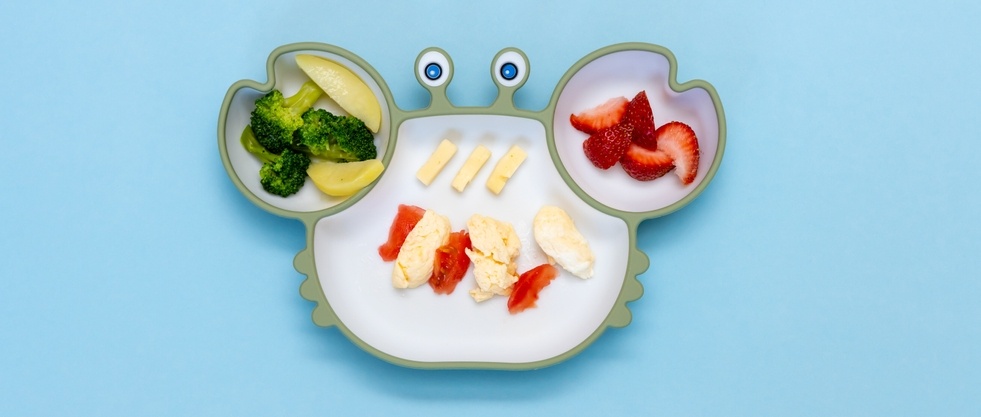
How to wean a baby with a cow's milk allergy
Peer reviewed by Dr Colin Tidy, MRCGPLast updated by Lawrence HigginsLast updated 10 Jun 2026
Meets Patient’s editorial guidelines
- DownloadDownload
- Share
- Language
- Discussion
- Audio Version
- Add to preferred sources on Google
Introducing your baby to solids can be challenging. From tummy troubles to fussy eaters and cleaning pureed vegetables off the floor, weaning can be both fun and difficult. Adding a cow's milk allergy into the mix can be an additional stress, but there are steps you can take to make weaning a baby with an allergy easier.
What is a cow's milk allergy?
A cow's milk allergy (CMA), otherwise known as a cow's milk protein allergy (CMPA), is a common food allergy in children. “Cow's milk protein allergy is a hypersensitivity reaction to cow's milk that involves the immune system response, and that can be reproduced each time the child has cow's milk," says Eugenia Grand, Registered Dietician, member of the Health & Care Professions Council (HCPC) and the British Dietetic Association (BDA).
This reaction can manifest in a variety of symptoms, from gastrointestinal (digestive system) problems to skin issues and breathing problems. Babies can have an immediate reaction or a delayed reaction, or both.
If your baby is diagnosed with CMA, you'll be offered advice by your doctor or an allergy specialist on how to manage their condition. This may mean giving your baby specialist formula if your baby is formula-fed or removing cow's milk from your diet if you are breastfeeding.
How do you wean a baby with a cow milk allergy?
From around six months, babies can start trying out solid foods alongside their usual breast milk or formula in a process called weaning. All babies are different, so some may be ready to start solids earlier and some may not be ready until later.
It's not always easy to work out when babies are ready to start weaning, but signs can include being able to sit up, coordinating their eyes, hands and mouth, and swallowing food rather than spitting it out.
Milk - either breastmilk or specialist formula - will remain the mainstay of your baby's diet, so weaning is mostly about trying new flavours and textures, as well as getting used to eating solids.
"The weaning of a baby with cow's milk allergy is nearly the same as a baby without an allergy, but with a slight difference. Foods containing milk and dairy products should not be given until you seek medical advice from your dietitian, paediatrician, and doctor. Check all food labels for the presence of dairy or milk protein.
If breastfeeding, Grand says: "you must follow a milk-free diet and consider taking a vitamin D and calcium supplement. It’s important to speak to a medical professional before starting any supplements."
Your healthcare professional may provide you with more individualised advice depending on whether your baby has immediate CMA or delayed CMA.
Fruit and vegetables
"Start with pureed fruit or vegetables," Grand advises. "A couple of teaspoons once or twice daily will be a good start. Try introducing new foods at the beginning of the day and observe how your baby reacts to them. Stop feeding when the baby is showing you the signs they have had enough. For example, keeping their mouth closed or turning away."
The best weaning foods are homemade without the addition of salt and sugar. Cooking fruit in water is a good way to soften it before blending or mashing it.
To help your baby get used to different textures and tastes, try moving on to mashed and finger foods - from purees or blended - as soon as they're ready. As your baby progresses, you can try different recipes that don't contain cow’s milk. There are also milk-free recipes on the Allergy UK website.
Use formula or breast milk
"You can mix your breast milk or formula milk into the weaning food at the beginning to make the food more familiar to your baby," says Grand. "Please don't worry if your baby does not eat much at the beginning and in one day. Their intake will pick up and how much they eat in a week is more important."
Use dairy-free alternatives
Emily Else, a specialist paediatric dietitian at City Dietitians, says it's important to substitute milk products with milk-free alternatives. This is to ensure you are still providing the essential nutrients including protein, fat, calcium, vitamin D, and iodine - and always check the label.
Oat alternatives to milk are great for savoury and sweet recipes as they don't have a strong taste and many are fortified with calcium and iodine. You can get higher fat versions and can add it to mashed potato, white sauces, custard, rice pudding.
There are many dairy-free spreads available which can be used for baking too. "Original custard powder is milk-free so just add your plant-based milk," Else says. "White sauces are easy to make with your plant-based milk and corn flour."
There are also a growing number of plant-based yoghurts available in supermarkets that are fortified with calcium and iodine.
Be aware of other allergens
Research has shown that some babies who are allergic to cow's milk may also react to soya. However, not all babies with a cow's milk allergy have allergies to other foods. Introduce the foods that can trigger allergic reactions - eggs, gluten, nuts, seeds, soya, shellfish, and fish - one at a time and in very small amounts so that you can spot any reaction.
Speak to health professionals
If you are struggling with weaning or worried about your baby's food intake or growth, it's important to speak to your doctor. Your dietitian can also support and advise you.
Grand says that most babies will grow out of cow's milk allergy by school age. However, professional support can make this journey smoother.
Patient picks for Food allergy and intolerance
Allergies, blood and immune system
Cow's milk allergy in babies: What is the milk ladder?
It can be worrying if your baby is diagnosed with a cow’s milk allergy, but there’s a good chance your child will grow out of it. Most children will become tolerant to cow’s milk before the age of five, if they are gradually reintroduced to it in a process called the milk ladder.
by Lawrence Higgins

Allergies, blood and immune system
Could you have a nightshade allergy?
Do you have a sneaking suspicion that meals containing aubergines, peppers, or potatoes don't quite agree with you? We explore the difference between a nightshade allergy and a nightshade intolerance, plus the symptoms these foods can trigger in those who are susceptible.
by Elizabeth Sulis Kim
About the authorView full bio
Updated by

Lawrence Higgins
Managing editor
BSc, Post Graduate Diploma
Lawrence has worked as both Managing Editor of Patient.info and a contributing author. He is also a member of the Guild of Health Writers.
Authored by

Lydia Smith
Feature writer
BA, MA, MSc
Lydia Smith is an award-winning journalist and feature writer who has written extensively on women's health and mental health. She is currently studying for an MSc in psychology.
About the reviewerView full bio

Dr Colin Tidy, MRCGP
General Practitioner, Medical Author
MBBS, MRCGP, MRCP (Paediatrics), DCH
Dr Colin Tidy is an NHS Doctor, based in Oxfordshire.
Article history
Article also available in English, German, Spanish, French, Italian, Portuguese, Hindi, Hebrew, Arabic, and Swedish.
Next review due: 10 Jun 2029
10 Jun 2026 | Latest version
28 Oct 2022 | Originally published
Authored by:
Lydia Smith
Join the conversation
Share your thoughts or experiences with others in our patient communities.

Ask, share, connect.
Browse discussions, ask questions, and share experiences across hundreds of health topics.

Feeling unwell?
Assess your symptoms online for free
Sign up to the Patient newsletter
Your weekly dose of clear, trustworthy health advice - written to help you feel informed, confident and in control.
By subscribing you accept our Privacy Policy. You can unsubscribe at any time. We never sell your data.