Hiatus hernia
Peer reviewed by Dr Toni Hazell, FRCGPLast updated by Dr Colin Tidy, MRCGPLast updated 10 Oct 2024
Meets Patient’s editorial guidelines
- DownloadDownload
- Share
- Language
- Discussion
- Audio Version
- Add to preferred sources on Google
In this series:Acid reflux and oesophagitisBarrett's oesophagusBarium tests
Hiatus hernia is the term used to describe a condition where part of the stomach pushes up into the lower chest through a weakness in the diaphragm.
Not everyone with a hiatus hernia develops symptoms. However, if you have a hiatus hernia you are more prone to reflux acid into your gullet (oesophagus), which can cause heartburn and other symptoms. If symptoms do occur, treatment with acid-suppressing medication usually works well.
At a glance
A hiatus hernia is when part of an organ in your tummy pushes through your diaphragm.
The most common type is a sliding hiatus hernia, where part of the stomach and gullet sphincter protrude.
Many people with a hiatus hernia have no symptoms, but it can increase the risk of acid reflux.
Symptoms of acid reflux include heartburn, stomach pain, feeling sick, and an acid taste in the mouth.
Lifestyle changes and medicines like proton pump inhibitors can help manage symptoms.
See your doctor if your symptoms are not controlled by medicine, or if you have pain or difficulty swallowing.
What is a hiatus hernia?
A hiatus hernia occurs when part of one of the organs in the tummy protrudes through the diaphragm. Most commonly this is a part of the stomach; however, it may be other organs, such as the pancreas, spleen or the upper gut (small intestine).
What is a hernia?
A hernia occurs when part of an organ pushes (protrudes) through a muscular wall that holds it in place. There are different types of hernia.
Types of hiatus hernia
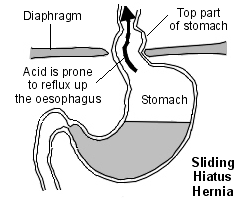
Sliding hiatus hernias
This is the most common type. In this situation, the sphincter muscle at the bottom of the gullet (oesophagus) and the top of the stomach protrudes through the hole (hiatus) opening in the diaphragm. This is the muscle separating the lungs from the tummy (abdomen).
The hernia may slide up and down, in and out of the lower chest. It is often quite small. This type of hiatus hernia tends to be associated with symptoms of acid reflux (see below.)
Diagram of sliding hiatus hernia
Para-oesophageal hiatus hernia
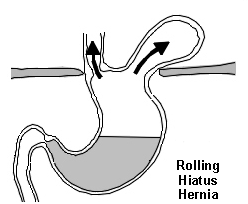
Also known as a rolling hiatus hernia, this type is less common. In this situation, a part of the stomach pushes (protrudes) up through the hole in the diaphragm next to the oesophagus.
Other organs from the tummy can also protrude through the hole in some cases. This could be the pancreas, the spleen or the upper gut (small intestine).
This is not the normal type of hiatus hernia and it is much less common than a sliding hiatus hernia. It is more risky, as there is more chance the organ protruding can get stuck, causing a blockage (obstruction).
Diagram of rolling hiatus hernia
You may also see hiatus hernias referred to as types 1-4 depending on where the stomach and oesophagus are in relation to the diaphragm.
Hiatus hernia symptoms
Often, many people have no hiatal hernia symptoms. However, if you have a hiatus hernia you are more prone to acid reflux (gastro-oesophageal reflux).
Acid reflux symptoms
Symptoms of acid reflux (gastro-oesophageal reflux disease or GORD) include:
Heartburn: this is the main symptom. This is a burning feeling which rises from the upper tummy (abdomen) or lower chest up towards the neck.
Pain in the upper abdomen and chest.
Feeling sick.
An acid taste in the mouth.
Bloating.
Belching.
Difficulty swallowing(dysphagia).
A burning pain when you swallow hot drinks.
These symptoms tend to come and go and tend to be worse after a meal.
See also Acid reflux and oesophagitis.
Uncommon symptoms
Some uncommon symptoms may occur. If any of these symptoms occur, it can make the diagnosis difficult, as these symptoms can mimic other conditions. For example:
A persistent cough, particularly at night, sometimes occurs. This is due to the refluxed acid irritating the windpipe (trachea). Asthma-like symptoms of cough and wheeze can sometimes be due to acid reflux.
Other mouth and throat symptoms sometimes occur such as gum problems, bad breath, sore throat, hoarseness and a feeling of a lump in the throat.
Severe chest pain develops in some cases (and may be mistaken for a heart attack).
Rarely, in people with a para-oesophageal hernia, the symptoms can be those of a part of the bowel being blocked (obstructed). In this case there would be severe tummy pain or chest pain, with retching or being sick (vomiting).
Note: many people with acid reflux do not have a hiatus hernia. Also, many people with a hiatus hernia do not have symptoms of acid reflux. If you have a hiatus hernia it does not necessarily mean that the sphincter between the oesophagus and stomach does not work so well. It is just that having a hiatus hernia makes you more prone to having a poorly functioning sphincter and more prone to developing acid reflux symptoms.
However, people with a hiatus hernia who do get reflux, on average, tend to get more severe symptoms and problems associated with acid reflux. This may be because with a hiatus hernia any acid that gets into the oesophagus is more likely to remain in contact with the lining of the oesophagus for longer compared with people without a hiatus hernia.
What causes a hiatus hernia?
The cause of hiatus hernia is not clear. It is thought that most develop in people over the age of 50 years. It may be that the diaphragm muscle weakens with age. This allows part of the stomach to protrude through the hole in the diaphragm.
Risk factors
Factors which increase the pressure in the tummy (abdomen), and may increase the risk of developing a hiatus hernia include:
Regular coughing.
Repeated lifting of heavy objects.
Family history of hiatus hernias.
Operations around the stomach and gullet can make you more likely to get the para-oesophageal type of hiatus hernia. You are also more likely to get this type if your spine or rib cage is more curved than usual. For example, people with scoliosis or kyphosis.
There is a rare type of hiatus hernia which occurs in newborn babies, due to a congenital defect of the stomach or diaphragm. 'Congenital' means that the condition is present from birth. This rare type is not dealt with further in this leaflet.
How common is a hiatus hernia?
The exact number of people with a hiatus hernia is not known, as many people with a hiatus hernia do not have symptoms. However, they are thought to be common. Some studies suggest that up to half of people having tests for indigestion (dyspepsia) are discovered to have a hiatus hernia.
How is a hiatus hernia diagnosed?
The standard tests used to diagnose a hiatus hernia are now endoscopy with or without manometry. A hiatus hernia may be seen on incidentally on a chest X-ray or on a CT scan.
Endoscopy
Endoscopy is increasingly being used for diagnosis. An endoscope is a thin, flexible telescope which is passed down the gullet (oesophagus) into the stomach. This allows a clinician to look inside. A hiatus hernia may be seen. Occasionally other tests are needed.
Manometry
Manometry is a test to measure muscle contractions of the oesophagus. The test measures the rhythmic muscle contractions in the oesophagus when you swallow. Manometry also measures the coordination and force used by the muscles of the oesophagus.
Barium swallow test
A hiatus hernia may be diagnosed if you have tests for symptoms of reflux. A special X-ray test called a barium swallow is sometimes used to confirm the presence of a hiatus hernia.
Hiatus hernia treatment
If you have no symptoms, in most cases you do not need any treatment for a hiatus hernia. The hernia usually causes no harm. However, if you have symptoms of acid reflux or your hernia is causing discomfort you be advised or offered the following:
Lifestyle changes
If you have reflux symptoms, you should aim to lose weight if you are overweight.
Avoid anything that causes pressure on your stomach, such as tight clothing and corsets.
If you are a smoker you should aim to stop. If you drink a lot of alcohol, it also helps to cut down on alcohol.
Avoid laying your head flat. Raising the head of your bed may help with symptoms at night.
Avoiding eating your dinner too close to bedtime may also help with symptoms at night. Aim to have your dinner at least three hours before you go to bed ideally.
Smaller meals may be helpful, as may avoiding foods which you find make the reflux worse.
Medication
If changing your lifestyle does not help, you may need medication. Medicines which reduce the action or production of stomach acid may help.
The most effective medicines are proton pump inhibitors (PPIs). PPIs often used are:
If these do not suit you, your doctor will offer other options.
The current advice is to take PPIs at the lowest dose and for the shortest period of time possible; some people find they can get by taking them occasionally rather than every day. However, if other medicines do not help and your symptoms cause persistent problems, you should carry on with them for as long as required.
Surgery
Rarely, a hiatus hernia causes severe symptoms of reflux which are not helped so well with medication. Therefore, an operation is occasionally advised. It may also be advisable if you cannot tolerate the medication for some reason.
During this operation the stomach is put back into the correct position and the weakened diaphragm muscle around the lower gullet (oesophagus) is tightened.
The operation is usually done these days using a laparoscope (a telescope inserted into the stomach). The operation quite often needs repeating in due course.
Complications of a hiatus hernia
Possible complications may occur if you have long-term reflux of acid into the gullet (oesophagus), which occurs in some cases. These include:
Oesophagitis
This is an inflammation of the lining of the gullet, caused by the acid washing against it over time. This can usually be treated with PPIs as mentioned above.
Cough
Sometimes the acid reflux can go back up and affect the voice box area (larynx) and give you a constant tickly cough and/or sore throat/hoarse voice. This can also usually be treated successfully with anti-reflux medicines.
Narrowing (a stricture)
If you have severe and long-standing inflammation it can cause scarring and narrowing of the lower oesophagus. This is uncommon.
Twisting (volvulus)
This is also known as a strangulated hernia (trapping of the hernia with blockage of the blood supply). This is a rare complication which can occur with the uncommon para-oesophageal type of hiatus hernia.
Barrett's oesophagus
The lining of the oesophagus is made up of a number of units called cells. In Barrett's oesophagus the cells that line the lower oesophagus change. The changed cells are more prone than usual to becoming cancerous. (About 1 in 20 men and 1 in 33 women with Barrett's oesophagus develop cancer of the oesophagus.)
Cancer
Your risk of developing cancer of the oesophagus is slightly increased compared with the normal risk if you have long-term acid reflux.
This small increased risk is slightly higher still in people with reflux plus a hiatus hernia. This is because reflux problems, on average, tend to be more severe in people with a hiatus hernia compared to those without a hiatus hernia.
Note: it has to be stressed that most people with reflux or hiatus hernia do not develop any of these complications. They are uncommon. Tell your doctor if you have pain or difficulty when you swallow (food sticking), which may be the first symptom of a complication. See your doctor if your symptoms aren't being controlled by the medicines you have been prescribed, or if there is any change.
Understanding the upper gut
The gut (gastrointestinal tract) is the tube that starts at the mouth and ends at the back passage (anus).
The upper gut includes the gullet (oesophagus), stomach and the first part of the small intestine (the duodenum). Food passes down the oesophagus into the stomach. The stomach makes acid which helps to digest food. After being mixed in the stomach, food passes into the duodenum to be digested by the digestive system.
Diagram of upper gut and nearby organs
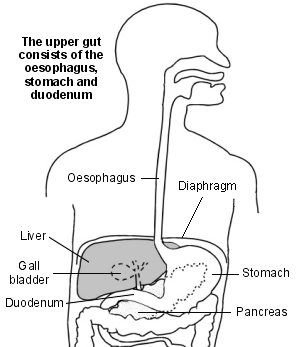
Diagram of normal stomach
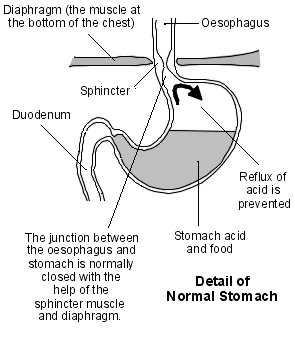
The walls of the stomach contain muscle. At the junction of the stomach and the oesophagus there is a thickened area of muscle which is called a sphincter. The sphincter acts like a valve. When food comes down the oesophagus into the stomach, the sphincter relaxes. However, it closes at other times to stop food and acid in the stomach going back up (refluxing) into the oesophagus.
The diaphragm is a large flat muscle that separates the lungs from the tummy (abdomen). It helps us to breathe.
The oesophagus comes through an opening (hiatus) in the diaphragm just before it joins to the stomach. Normally, all of the stomach is below the diaphragm. The muscle fibres in the diaphragm around the lower oesophagus help the sphincter to keep the oesophagus closed to prevent reflux of acid and food.
Patient picks for Other digestive conditions

Digestive health
Acute pancreatitis
Acute pancreatitis is an inflammation of the pancreas that develops quickly. The main symptom is abdominal pain. It usually settles in a few days but sometimes it becomes severe and very serious. The most common causes of acute pancreatitis are gallstones and drinking alcohol above recommended limits.
by Dr Philippa Vincent, MRCGP

Digestive health
Gastroparesis
Gastroparesis is now more commonly known as delayed gastric emptying. It is a chronic condition in which food passes through the stomach and into the gut (intestine) more slowly than usual. The nerves that usually trigger the stomach muscles to move food out of the stomach and into the intestine don't work as effectively as normal. This is not caused by an obstruction or structural abnormality but by a failure of the normal mechanisms.
by Dr Philippa Vincent, MRCGP
Frequently asked questions
Can a hiatus hernia be hereditary?
Yes, a family history of hiatus hernias is listed as one of the risk factors. The cause of hiatus hernia is otherwise not clear, but it is thought that most develop in people over the age of 50 years, possibly due to the diaphragm muscle weakening with age.
Can a hiatus hernia cause breathing problems?
While not directly causing breathing problems, a persistent cough or asthma-like symptoms like wheezing, particularly at night, can sometimes occur due to acid reflux irritating the windpipe. Acid reflux is a common symptom associated with hiatus hernias.
Where would I feel pain if I had a hiatus hernia?
If you experience symptoms of acid reflux, which is common with a hiatus hernia, you might feel a burning sensation (heartburn) rising from the upper tummy or lower chest towards the neck. You might also experience pain in the upper abdomen and chest.
Can I feel a hiatus hernia move?
The article states that in a sliding hiatus hernia, the most common type, the hernia may slide up and down, in and out of the lower chest. However, it does not specify if this movement is something a person can feel.
Does taking lansoprazole help with a hiatus hernia?
Lansoprazole is a type of proton pump inhibitor (PPI), which are effective medicines used to reduce the action or production of stomach acid. If lifestyle changes aren't enough to manage symptoms, medication like lansoprazole may be prescribed to help with acid reflux symptoms associated with a hiatus hernia. The advice is to take PPIs at the lowest dose and for the shortest period possible, but they can be continued for as long as needed if symptoms are persistent.
Can a hiatus hernia lead to cancer?
Your risk of developing cancer of the oesophagus is slightly increased if you have long-term acid reflux. This small increased risk is slightly higher still in people with reflux plus a hiatus hernia, as reflux problems tend to be more severe in those with a hiatus hernia. There is also a condition called Barrett's oesophagus, where cells lining the lower oesophagus change due to long-term acid reflux, making them more prone to becoming cancerous.
Can a hiatus hernia cause dry mouth?
The article mentions that other mouth and throat symptoms can sometimes occur, such as gum problems, bad breath, sore throat, hoarseness, and a feeling of a lump in the throat. However, dry mouth is not specifically listed as a symptom of a hiatus hernia or the associated acid reflux.
Further reading and references
- Gastro-oesophageal reflux disease and dyspepsia in adults: investigation and management; NICE Clinical Guideline (Sept 2014 - last updated October 2019)
- Smith RE, Shahjehan RD; Hiatal Hernia. StatPearls, Aug 2023.
About the authorView full bio

Dr Colin Tidy, MRCGP
General Practitioner, Medical Author
MBBS, MRCGP, MRCP (Paediatrics), DCH
Dr Colin Tidy is an NHS Doctor, based in Oxfordshire.
About the reviewerView full bio

Dr Toni Hazell, FRCGP
MBBS, BSc, FRCGP, DFSRH, Dip GU med, DRCOG, DCH (London, UK, 2000)
Dr. Toni Hazell qualified from St. Mary’s Hospital Medical School and did her VTS at Northwick Park Hospital.
Article history
Article also available in English, German, Spanish, French, Italian, Portuguese, Hindi, Hebrew, Arabic, and Swedish.
Next review due: 9 Oct 2027
10 Oct 2024 | Latest version
Join the conversation
Share your thoughts or experiences with others in our patient communities.

Ask, share, connect.
Browse discussions, ask questions, and share experiences across hundreds of health topics.

Feeling unwell?
Assess your symptoms online for free
Sign up to the Patient newsletter
Your weekly dose of clear, trustworthy health advice - written to help you feel informed, confident and in control.
By subscribing you accept our Privacy Policy. You can unsubscribe at any time. We never sell your data.
More in digestive health
- Acid reflux and oesophagitis
- Antispasmodics
- Diverticula
- Duodenal ulcer
- Gallstones
- Hepatitis
- Hepatitis B
- Hernia
- Hirschsprung's disease
- Indigestion
- Indigestion medicine
- Irritable bowel syndrome
- Jaundice
- Left-side abdominal pain in children
- Local preparations for anal disorders
- Norovirus
- Preventing infection after splenectomy
- Primary sclerosing cholangitis
- Rectal prolapse
- Symptoms of appendicitis