Reflujo ácido y esofagitis
Acidez
Revisado por Dr Rosalyn Adleman, MRCGPÚltima actualización por Dr Doug McKechnie, MRCGPÚltima actualización 29 Dic 2024
Cumple con las directrices editoriales
- DescargarDescargar
- Compartir
- Language
- Discusión
- Versión en audio
- Agregar a fuentes preferidas en Google
En esta serie:Hernia de hiatoesófago de BarrettPruebas de bario
Cuando el ácido del estómago se filtra hacia el esófago (tubo que transporta la comida desde la boca hasta el estómago), la condición se conoce como reflujo ácido. Esto puede causar acidez y otros síntomas. Un medicamento que reduce la cantidad de ácido producido en el estómago es un tratamiento común y generalmente funciona bien. Algunas personas toman cursos cortos de medicación cuando los síntomas se agravan. Algunas personas necesitan medicación diaria a largo plazo para mantener los síntomas alejados.
De un vistazo
Acid reflux is when stomach acid leaks into the gullet (oesophagus).
Oesophagitis is inflammation of the gullet lining, often due to acid reflux.
Symptoms include heartburn, upper abdominal pain, sickness, and an acid taste.
Some medicines can reduce stomach acid,
Lifestyle changes, such as weight loss or quitting smoking, may help symptoms.
Explore acid reflux treatment options
Reciba asesoramiento sanitario experto desde la comodidad de su hogar. Complete una consulta rápida en línea, disponible las 24 horas del día, los 7 días de la semana, y un profesional sanitario colegiado en el Reino Unido revisará su solicitud. Hay entrega al día siguiente disponible para los tratamientos que cumplan los requisitos.

What are acid reflux and oesophagitis?
Reflujo ácido means that some acid leaks up (refluxes) into the oesophagus.
Oesophagitis means inflammation of the lining of the oesophagus. Most cases of oesophagitis are due to reflux of stomach acid which irritates the inside lining of the oesophagus.
The lining of the oesophagus can cope with a certain amount of acid. In some people their oesophagus lining is more sensitive than others, so some people will develop symptoms with only a small amount of reflux whilst other people may have higher levels of acid reflux without developing oesophagitis or other symptoms.
This leaflet is about acid reflux and oesophagitis in adults. For information about reflux in children, see the Reflujo gastroesofágico en la infancia .
Enfermedad por reflujo gastroesofágico (ERGE)
This is a general term which describes the range of this condition - acid reflux, with or without oesophagitis or other symptoms.
Symptoms of acid reflux and oesophagitis
Acidez: this is the main symptom. This is a burning feeling which rises from the upper tummy (abdomen) or lower chest up towards the neck. (It is a confusing term as it has nothing to do with the heart!)
Other common symptoms: these include pain in the upper abdomen and chest, feeling sick, an acid taste in the mouth, bloating, belching, indigestion (dyspepsia) and a burning pain when swallowing hot drinks. Like heartburn, these symptoms tend to come and go and are often worse after a meal.
Some uncommon symptoms: these may occur and if they do, can make the diagnosis difficult, as these symptoms can mimic other conditions. For example:
A persistent cough, particularly at night, sometimes occurs. This is due to the refluxed acid irritating the windpipe (trachea). Symptoms of cough and wheeze can be due to acid leaking up (reflux) but can sometimes be confused with asthma.
Other mouth and throat symptoms sometimes occur, such as gum problems, bad breath, sore throat, hoarseness and a feeling of a lump in the throat.
Severe chest pain develops in some cases (and may be mistaken for a heart attack).
What causes acid reflux?
There is a circular band of muscle (sphincter) at the bottom of the oesophagus which normally prevents acid leaking up (reflux). Problems occur if the sphincter is not working as well as it should. This is common but in most cases it is unclear why it does not work as well.
Sometimes the cause is obvious, for example when the pressure in the stomach rises higher than the sphincter can withstand - often during pregnancy, after a large meal, or when bending forward. With a hiatus hernia (a condition where part of the stomach protrudes into the chest through the diaphragm), there is also an increased chance of developing reflux. See the separate leaflet called Hiatus hernia for more details.
How common is acid reflux?
Most people have heartburn at some time, perhaps after a large meal. However, about one adult in three has some heartburn every few days, and nearly one adult in ten has heartburn at least once a day. In many cases it is mild and soon passes. However, it is quite common for symptoms to be frequent or severe enough to affect someone's quality of life.
Regular heartburn is more common in smokers, pregnant women, people who drink more than the recommended levels of alcohol, those who are overweight and those aged between 35 and 64 years.
How is acid reflux and oesophagitis diagnosed?
Tests are not always necessary if the symptoms are typical. Many people experiencing acid leaking up (refluxing) into the oesophagus are diagnosed with 'presumed acid reflux'. In this situation they have typical symptoms and the symptoms are eased by treatment. Tests may be advised if symptoms are severe, do not improve with treatment or are not typical of GORD.
Gastroscopy (endoscopy) is the common test. A thin, flexible telescope is passed down the oesophagus into the stomach. This allows a clinician to look inside. With inflammation of the lining of the oesophagus (oesophagitis), the lower part of the oesophagus looks red and inflamed. However, if it looks normal, it does not rule out acid reflux. Some people are very sensitive to small amounts of acid and can have symptoms with little or no inflammation to see. Two terms that are often used after an endoscopy are:
Oesophagitis. This term is used when the oesophagus can be seen to be inflamed.
Endoscopy-negative reflux disease. This term is used when someone has typical symptoms of reflux but endoscopy is normal.
A test to check the acidity inside the oesophagus may be done if the diagnosis is not clear.
Other tests such as heart tracings, chest X-ray, etc, may be done to rule out other conditions if the symptoms are not typical.
Treatments for acid reflux and oesophagitis
Antiácidos
Antiácidos are alkaline liquids or tablets that reduce the amount of acid. A dose usually gives quick relief. There are many brands which can be bought over the counter or can be prescribed. Antacids can be used 'as required' for mild or infrequent bouts of heartburn.
Medicamentos supresores de ácido
Clinical advice should be sought if there are frequent symptoms. An acid-suppressing medicine will usually be advised. Two groups of acid-suppressing medicines are available - inhibidores de la bomba de protones (IBP) y histamine receptor blockers (H2 blockers). They work in different ways but both reduce (suppress) the amount of acid that the stomach makes.
PPIs include omeprazol, lansoprazol, pantoprazole, rabeprazole y esomeprazol. H2 blockers include cimetidina, famotidine y nizatidine.
In general, a PPI is used first, as these medicines tend to work better than H2 blockers. A common initial plan is to take a full-dose course of a PPI for a month or so. This often settles symptoms down and allows any inflammation in the oesophagus to clear. After this, all that may be needed is to go back to antacids 'as required' or to take a short course of an acid-suppressing medicine 'as required'.
However, some people need long-term daily acid-suppressing treatment because, without medication, their symptoms return quickly. The aim is to take a full-dose course for a month or so to settle symptoms. After this, it is common to 'step down' the dose to the lowest dose that prevents symptoms. However, the maximum dose taken each day is needed by some people.
Recent research has found a link between long-term treatment with PPIs and gastric cancer, although further studies are needed. H2 blockers may therefore be preferred for long-term use. Some people find that only PPIs control their symptoms. Each individual needs to weigh up the risks and benefits. With some conditions, like esófago de Barrett, PPIs may be recommended for longer term protection and to prevent the condition getting worse.
Cirugía
An operation can 'tighten' the lower oesophagus to prevent acid leaking up from the stomach. It can be done by laparoscopic or "keyhole" surgery. In general, the success of surgery is no better than acid-suppressing medication. However, surgery may be an option for some people whose quality of life remains significantly affected by their condition and where treatment with medicines is not working well or not wanted long-term.
Another procedure being used involves placing a small magnetic device around the lower oesophagus. The device allows swallowing but then tightens to stop acid reflux. This is not often used in the UK at the moment but there are several centres (mainly in London) offering this procedure.
Lifestyle changes for acid reflux and oesophagitis
The following are commonly advised. There is good evidence that some lifestyles (being overweight, smoking, eating more than needed to feel full) make acid reflux and oesophagitis more likely to occur and that managing these can reduce symptoms.
Fumar. The chemicals from cigarettes relax the circular band of muscle (sphincter) at the bottom of the gullet (oesophagus) and make acid leaking up (refluxing) more likely. Symptoms may ease if smokers dejar de fumar.
Some foods and drinks may make reflux worse in some people. It is thought that some foods may relax the sphincter and allow more acid to reflux. It is difficult to be certain how much foods contribute but if it seems that a food is causing symptoms then it is sensible to try avoiding it for a while to see if symptoms improve. There is no test for this. Foods and drinks that have been suspected of making symptoms worse in some people include peppermint, tomatoes, chocolate, spicy foods, hot drinks, coffee and alcoholic drinks. Also, avoiding large-volume meals may help. Some people find an alkaline diet beneficial. This can be achieved by increasing intake of fibre, vegetables and non-acidic fruits. There is also evidence that eating too quickly or eating more than is needed to feel comfortably full can make acid reflux worse. See the separate leaflet called Oesophageal reflux diet sheet for more details.
Some medicines may make symptoms worse. They may irritate the oesophagus or relax the sphincter muscle and make acid reflux more likely. The most common culprits are anti-inflammatory painkillers (such as ibuprofen or aspirin). Others include diazepam, theophylline, bloqueadores de los canales de calcio (such as nifedipine) and nitrates. But this is not a complete (exhaustive) list. It is sensible to seek medical advice if it is suspected that a medicine is causing the symptoms, or making symptoms worse.
Peso. People who are overweight have extra pressure on their stomach which encourages acid reflux. Losing some weight may ease the symptoms.
Postura. Lying down or bending forward a lot during the day encourages reflux. Sitting hunched or wearing tight belts may put extra pressure on the stomach, which may make any reflux worse.
Hora de dormir. If symptoms recur most nights, the following may help:
Ir a la cama con el estómago vacío y seco: no comer en las últimas tres horas antes de acostarse y no beber en las últimas dos horas antes de acostarse.
Trying to raise the head of the bed by 10-20 cm (for example, with books or bricks under the bed's legs). This helps gravity to keep acid from refluxing into the oesophagus. It is best not to use additional pillows as this may increase abdominal pressure overnight.
Complications from oesophagitis
Scarring and narrowing (stricture). If there is severe and long-standing inflammation due to the acid reflux and oesophagitis, it can cause a stricture of the lower oesophagus. This is uncommon.
esófago de Barrett. In this condition the cells that line the lower oesophagus become changed. The changed cells are more prone than usual to becoming cancerous. (About 1 or 2 people in 100 with Barrett's oesophagus develop cancer of the oesophagus.)
Cáncer. The risk of developing cancer of the oesophagus is slightly increased compared to the normal risk with long-term acid reflux.
Most people with reflux do not develop any of these complications. It is important to seek medical attention if there is pain or difficulty (food 'sticking') on swallowing which may be the first symptom of a complication.
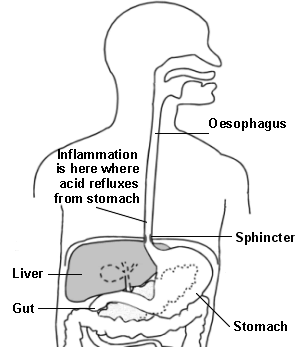
Comprender el esófago y el estómago
When eating, food passes down the oesophagus into the stomach. Cells in the lining of the stomach make acid and other chemicals which help to digest the food. Stomach cells also make mucus which protects them from damage from the acid. The cells lining the oesophagus are different and have little protection from acid.
There is a circular band of muscle (a sphincter) at the junction between the oesophagus and stomach. This relaxes to allow food down but then normally tightens up and stops food and acid leaking up (refluxing) into the oesophagus. In effect, the sphincter acts like a valve.
Inflamación por reflujo ácido
Explore acid reflux treatment options
Reciba asesoramiento sanitario experto desde la comodidad de su hogar. Complete una consulta rápida en línea, disponible las 24 horas del día, los 7 días de la semana, y un profesional sanitario colegiado en el Reino Unido revisará su solicitud. Hay entrega al día siguiente disponible para los tratamientos que cumplan los requisitos.
Selecciones del paciente para Indigestión y acidez
Salud digestiva
Dispepsia funcional
La dispepsia funcional (dispepsia no ulcerosa) causa dolor y a veces otros síntomas en la parte superior del abdomen. La causa a menudo no está clara. La medicación para reducir el ácido estomacal ayuda en algunos casos. La infección por Helicobacter pylori (H. pylori) puede causar un pequeño número de casos. Eliminar esta infección, si está presente, ayuda a algunas personas.
por la Dra. Rosalyn Adleman, MRCGP

Salud digestiva
Indigestión
La dispepsia (indigestión) es un término que describe el dolor y, a veces, otros síntomas que provienen de la parte superior del aparato digestivo (el estómago, el esófago o el duodeno). Hay varias causas (descritas a continuación). El tratamiento depende de la causa probable.
por la Dra. Philippa Vincent, MRCGP
Preguntas frecuentes
What is endoscopy-negative reflux disease?
Endoscopy-negative reflux disease is a term used when a person experiences typical symptoms of acid reflux, such as heartburn, but a gastroscopy (endoscopy) shows that the lining of their oesophagus appears normal and not inflamed. This indicates that symptoms can occur even without visible inflammation.
How can gravity help reduce acid reflux?
Gravity can assist in preventing acid reflux by raising the head of your bed by 10-20 cm. This helps to keep stomach acid from leaking up into the oesophagus, particularly if you experience symptoms mostly at night. It's recommended to achieve this by placing books or bricks under the bed's legs rather than using extra pillows, as pillows might increase abdominal pressure.
Are there certain medications that can worsen acid reflux?
Yes, some medications can worsen acid reflux symptoms either by irritating the oesophagus or by relaxing the sphincter muscle at the bottom of the oesophagus, which allows more acid to reflux. Common culprits include anti-inflammatory painkillers such as ibuprofen or aspirin. Other examples can include diazepam, theophylline, calcium-channel blockers (like nifedipine), and nitrates. If you suspect a medication is making your symptoms worse, it's advisable to seek medical advice.
What is a gastric stricture and how does it relate to acid reflux?
A gastric stricture, specifically narrowing (stricture) of the lower oesophagus, can be an uncommon complication if there is severe and long-standing inflammation due to acid reflux and oesophagitis. This means prolonged irritation from stomach acid can cause scarring that narrows the food pipe.
Can emotional stress cause acid reflux?
The article does not mention emotional stress as a direct cause or contributing factor to acid reflux or oesophagitis.
Does drinking water help acid reflux?
The article does not specifically mention whether plain water helps acid reflux. It advises not drinking in the last two hours before bedtime if symptoms recur nightly.
What is an alkaline diet and how might it help acid reflux?
An alkaline diet involves increasing the intake of fibre, vegetables, and non-acidic fruits. Some people find this type of diet beneficial for managing acid reflux symptoms, though the article does not specify how it helps beyond broadly being mentioned in the context of food choices that may affect reflux.
Is it possible to have acid reflux without experiencing heartburn?
Heartburn is the main symptom of acid reflux, described as a burning feeling that rises from the upper tummy or lower chest. However, the article also lists other common symptoms such as upper abdominal and chest pain, feeling sick, an acid taste in the mouth, bloating, belching, and indigestion. Uncommon symptoms like a persistent cough, mouth and throat issues, or severe chest pain can also occur, which may mean heartburn isn't always the primary or most noticeable symptom.
Lecturas adicionales y referencias
- Enfermedad por reflujo gastroesofágico y dispepsia en adultos: investigación y manejo; Guía Clínica NICE (septiembre 2014 - última actualización octubre 2019)
- Laparoscopic Insertion of a Magnetic Ring for GORD; NICE UK Jan 2023
- Ness-Jensen E, Hveem K, El-Serag H, et al; Lifestyle Intervention in Gastroesophageal Reflux Disease. Clin Gastroenterol Hepatol. 2016 Feb;14(2):175-82.e1-3. doi: 10.1016/j.cgh.2015.04.176. Epub 2015 May 6.
- Yuan LZ, Yi P, Wang GS, et al; Lifestyle intervention for gastroesophageal reflux disease: a national multicenter survey of lifestyle factor effects on gastroesophageal reflux disease in China. Therap Adv Gastroenterol. 2019 Sep 25;12:1756284819877788. doi: 10.1177/1756284819877788. eCollection 2019.
Sobre el autorVer biografía completa
Actualizado por

Dr Doug McKechnie, MRCGP
Redactor Médico
MA, MBBS, MSc, DRCOG, MRCP(UK), MRCGP(2021), FHEA
El Dr. Doug McKechnie es un médico de cabecera del NHS que trabaja en Londres. Trabaja a tiempo completo en la práctica clínica y también es el Subdirector del módulo de Práctica Clínica y Profesional en la Escuela de Medicina del University College London.
Acerca del revisorVer biografía completa
Dr Rosalyn Adleman, MRCGP
MRCGP
La Dra. Rosalyn Adleman es una médica de cabecera del NHS que trabaja en el norte de Londres.
Únete a la conversación
Comparte tus pensamientos o experiencias con otros en nuestro comunidades de pacientes.

Pregunta, comparte, conecta.
Navega por discusiones, haz preguntas y comparte experiencias en cientos de temas de salud.

¿Te sientes mal?
Evalúa tus síntomas en línea de forma gratuita
Suscríbete al boletín de Patient
Tu dosis semanal de consejos de salud claros y confiables, escritos para ayudarte a sentirte informado, seguro y en control.
Al suscribirte aceptas nuestros Política de Privacidad. Puedes darte de baja en cualquier momento. Nunca vendemos tus datos.