What are the benefits of a plant-based diet?
Peer reviewed by Dr Sarah JarvisAuthored by Natalie HealeyOriginally published 1 Mar 2018
Meets Patient’s editorial guidelines
- DownloadDownload
- Share
- Language
- Discussion
- Audio Version
- Add to preferred sources on Google
It could be time to shift the focus on our plates and make room for plants. Research suggests if more people could favour flora over fauna, healthcare costs would be significantly reduced. That's because such eating habits would lower the risks of diseases like type 2 diabetes, heart disease, stroke and certain cancers.
What is plant-based eating?
But what does plant-based eating even mean? Don't worry, you don't necessarily have to get back on the Veganuary wagon to qualify, reveals dietician Tanya Haffner. Having said that, she admits such campaigns have boosted public interest in a move away from meat. UK supermarkets reported a surge in sales of vegan food at the start of 2018.
Haffner explains that a plant-based diet is defined more by what it includes than what it restricts. Some people choose to go completely vegan while others will simply make an effort to eat more vegetables.
"Plant-based eating really means 'put plants first'. Instead of planning meals around meat, plan meals around plants instead," she simplifies.
It's something GP Dr Rupy Aujila can heartily agree with. In his recipe book The Doctor’s Kitchen, he reveals: "People often mistake me for a vegetarian or vegan because I get so excited about vegetables. I do actually eat all types of meat and fish but I focus my diet on plants."
Haffner believes plant-based eating is a good entry point to a healthier lifestyle for most of us. It’s not another fad diet; it's just about including more vegetable sources of protein (such as nuts and legumes), good-quality fats and eating a little less meat.
What are the benefits?
Scientists have been studying the benefits of the Mediterranean diet for decades. And while you might think that means piles of pasta and bread, the lifestyle actually involves a lot of plant-based sources of protein and provides plenty of fibre. In fact, it was one of the diets studied in the aforementioned study, along with a high soya diet.
The researchers looked at the evidence and concluded that Mediterranean and soya eating patterns both reduce the risk of conditions such a type 2 diabetes, heart disease, stroke and certain cancers. This could be because plant-based meals are generally low in saturated fat, high in fibre and full of vitamins and minerals. And compounds from plants, called phytochemicals, are believed to protect our bodies from damage that could lead to cancer.
Haffner says: "Choosing a plant-based diet is good for the planet too - think less land, less water and less CO2. Recent research is also suggesting that if the UK could go plant-based it would save the NHS billions."
But are there drawbacks?
Haffner reveals that a key barrier to including more plant foods in the diet is a lack of knowledge about how to prepare and incorporate more vegetables into an established routine. Another big concern is losing out on protein. But you don't have to fear; there are plenty of vegetable sources of this important food group. And preparation doesn't have to be hard.
She suggests the following:
Vegetarian protein sources
Breakfast
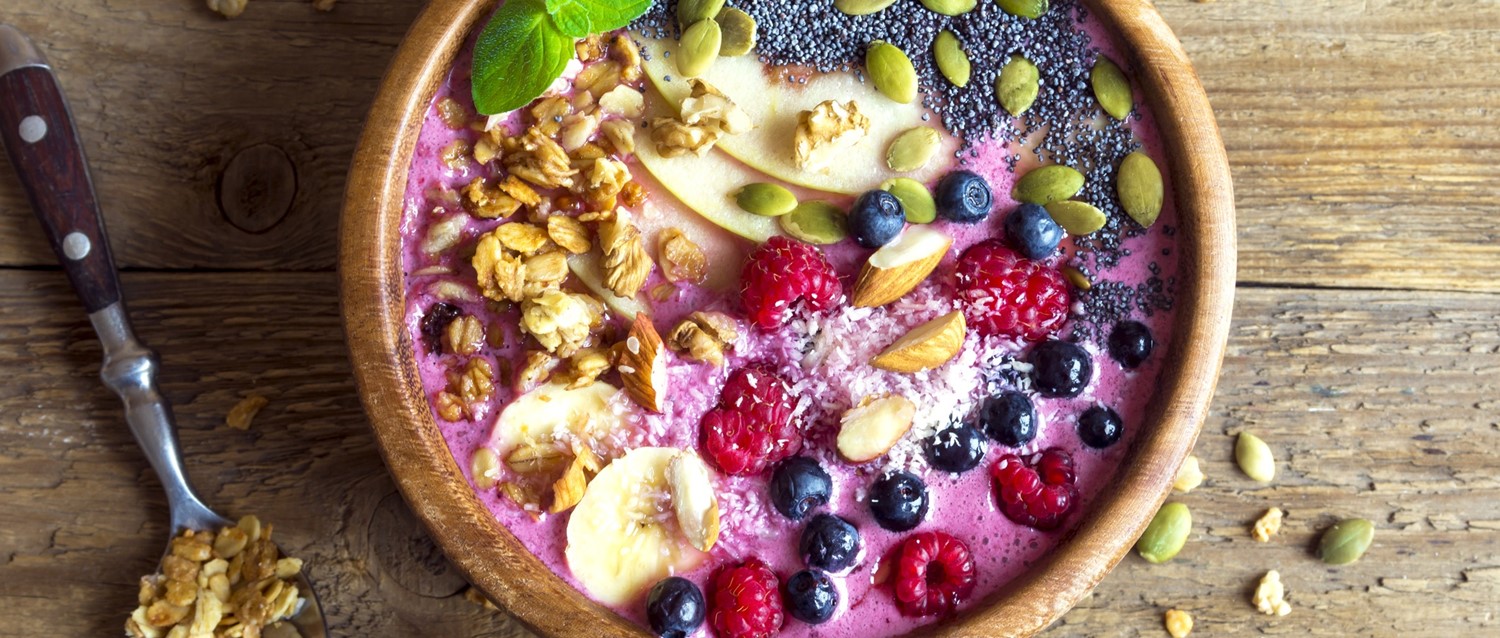
Try beans on toast, or porridge topped with nuts. Soya or nut-based milk or yoghurts will also provide a plant-based protein source if you're looking for a dairy alternative.
Lunch
A tomato and lentil soup. Or try chickpea and carrot falafel with salad, hummus and a wholewheat pitta bread.
Dinner
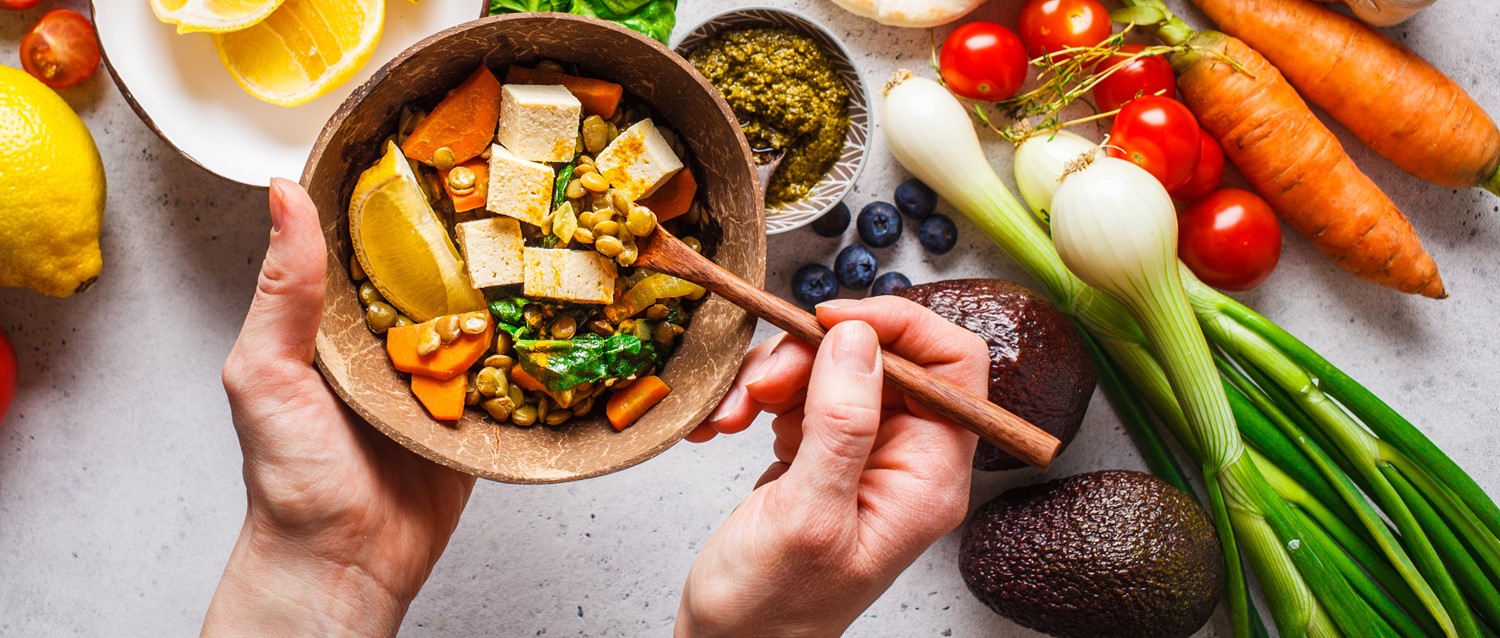
There are so many options! From spaghetti with soya mince, tofu stir-fries, vegetarian chilli, or bean burgers. Try our recipe for wholewheat pasta with rocket and almond pesto.
Minerals to watch
One thing you do need to watch out for if you're cutting down on meat is getting enough iron and vitamin B12. Sadly red meat is the richest source of dietary iron but you can get it from plant sources such as lentils, fortified breakfast cereals, bread and leafy green vegetables. Vitamin B12 is found in eggs and dairy but not plant-based sources, so it's wise to take a supplement if you're vegan.
And if you're ditching dairy, you need to be aware of the importance of calcium for keeping your bones healthy. Luckily, many soya milk brands are now enriched with this mineral (to about the same level as dairy milk), so look out for this on the label.
Clean eating
And it would be wrong to mention plant-based eating without its connection to 'clean eating' and the possible implications of orthorexia. Adding more vegetables to your diet is rarely cause for concern, but studies have shown that eating disorders do occasionally manifest from an initial motivation to eat more healthily.
Journalist Laura Dennison is the co-founder of Not Plant Based - a website full of honest, non-judgemental advice to help those who are prone to disordered eating. While she points out that the name of her site is absolutely tongue in cheek, having suffered an eating disorder herself, she cautions that no one should make big restrictions to their diet lightly.
"We believe that a plant-based diet can be a wonderful thing but sometimes people can adopt these diets in order to add more restriction into their diet without anyone noticing. I would ask people to question their own motives for going plant-based, and if it is to mask an eating disorder, I would advise they seek professional help."
And ultimately, no one should be shamed for their eating choices. The way to get more people eating plant-based is to make it as accessible as possible.
Dennison adds: "It's all about balance and variety and moderation. If ready meals are all you can afford, or all you have time to make, there is no shame in this. Eat within your means and eat what you want. All you can do is try your best. The sooner we stop vilifying food, the sooner we can all relax into our meals, thus being healthier as a result."
How to add more plants to your plate
But if you have been persuaded to make your meals more plant-based, here are some initial steps Haffner suggests you try:
Put plants first and pile them high
"Don't plan your meals around meat; start with plants. Bring vegetables, fruits, pulses and nuts from the side of plate to the front and centre."
Start small
"Try Meat-free Monday. Or choose a plant-based protein-rich lunch instead of your usual ham sandwich."
Easy additions
"Boost your fibre and protein intake with a handful of rainbow vegetables in your stir-fry, or chopped nuts and berries added to your morning porridge."
"The point is to put plants first - because it's good for health, and good for the planet," Haffner concludes.
Patient picks for Vegan and vegetarian
Diet and nutrition
What's the difference between vegan and vegetarian diets?
Each year in Britain, a growing number of us are choosing to cut out meat and follow a plant-based diet. What's the difference between vegan and vegetarian diets, and how can we make sure we're getting all the nutrients we need?
by Amberley Davis
Diet and nutrition
How to avoid ultra processed foods when you're vegan
More people are cutting out meat in favour of plant-based diets for ethical, environmental and health reasons. But not all plant-based foods - either vegetarian or vegan - are as healthy as we think they are. In fact, some are classed as ultra-processed foods, which have been linked to heart disease and cancer.
by Victoria Raw
About the authorView full bio

Natalie Healey
Freelance journalist
BSc (Hons) Biomedical Science
She is a London-based health journalist who has been writing about science and medicine for several years. She is the former head of editorial at Patient.
About the reviewerView full bio

Dr Sarah Jarvis
Clinical Consultant
MA (Cantab), BM, BCh (Oxon), DRCOG, FRCGP, MBE
After training in medicine at Cambridge and Oxford, Dr Sarah Jarvis MBE became a GP.
Article history
Article also available in English, German, Spanish, French, Italian, Portuguese, Hindi, Hebrew, Arabic, and Swedish.
1 Mar 2018 | Originally published
Authored by:
Natalie HealeyPeer reviewed by
Dr Sarah Jarvis
Join the conversation
Share your thoughts or experiences with others in our patient communities.

Ask, share, connect.
Browse discussions, ask questions, and share experiences across hundreds of health topics.

Feeling unwell?
Assess your symptoms online for free
Sign up to the Patient newsletter
Your weekly dose of clear, trustworthy health advice - written to help you feel informed, confident and in control.
By subscribing you accept our Privacy Policy. You can unsubscribe at any time. We never sell your data.
More in diet and nutrition
- 5 quick and healthy meals for students
- 10 everyday foods high in vitamin D
- A hybrid approach to eating: your guide to the pegan diet
- Biotin: do vitamins for hair growth really work?
- Can a plant-based diet improve your migraines?
- DASH diet - healthy eating that helps lower blood pressure
- Do gummy vitamins work?
- Do you need to drink eight glasses of water a day?
- Do ZMA supplements really work?
- Everything you should know about the 3-day sardine fast
- Feeling hangry? Why we get angry when we are hungry
- Health benefits of garlic
- How AI can give you ideas for healthy meals
- How to avoid snacking when you are bored
- Is the food traffic light labelling system useful?
- Size matters: why our oversized portions are contributing to the obesity crisis
- What happens to your body after giving up caffeine?
- What is fibremaxxing - and how healthy is it really?
- What is the Eatwell Guide? A balanced diet explained
- Why you don't need to detox