Pancreatic cancer
Peer reviewed by Dr Colin Tidy, MRCGPLast updated by Dr Toni Hazell, FRCGPLast updated 7 Aug 2023
Meets Patient’s editorial guidelines
- DownloadDownload
- Share
- Language
- Discussion
- Audio Version
- Add to preferred sources on Google
Pancreatic cancer (cancer of the pancreas) is largely a disease of older age - 47% of UK cases occur in those aged 75 or over and the most common age to be diagnosed is 85 - 89. If it is diagnosed at an early stage then an operation to remove the cancer gives some chance of a cure. In general, the more the cancer has grown and spread (the more advanced the cancer), the less chance that treatment will be curative. However, treatment can often slow the progress of the cancer.
At a glance
Pancreatic cancer is a cancerous growth in the pancreas, a gland behind the stomach.
Over 9 in 10 cases are pancreatic adenocarcinoma, developing from cells in the pancreatic duct.
Symptoms can include yellow skin (jaundice), dark urine, pale stools, itch, and tummy pain.
Risk factors include age, smoking, diet high in fat and meat, obesity, and chronic pancreatitis.
Diagnosis involves scans and blood tests, and sometimes a biopsy.
Treatment options include surgery, chemotherapy, and radiotherapy, depending on the cancer's stage.
There is no general screening programme, but screening is available for high-risk individuals.
What is pancreatic cancer?
Pancreatic cancer is a cancerous growth in the pancreas. The pancreas is a gland located behind the stomach and in the upper part of your tummy (abdomen).
For more information about the pancreas, including pancreas location, see What does the pancreas do?
Types of pancreatic cancer
There are several types of pancreatic cancer but more than 9 in 10 of all cases are caused by a pancreatic adenocarcinoma.
Ductal adenocarcinoma of the pancreas
This type of cancer develops from a cell which becomes cancerous in the pancreatic duct. This multiplies and a tumour then develops in and around the duct. As the tumour enlarges:
It can block the bile duct or the main pancreatic duct. This stops the drainage of bile and/or pancreatic fluid into the first part of the gut, known as the duodenum.
It invades deeper into the pancreas. In time it may pass through the wall of the pancreas and invade nearby organs such as the duodenum, stomach or liver.
Some cells may break off into the lymph channels or bloodstream. The cancer may then spread to nearby lymph nodes or spread to other areas of the body (metastasise).
Other types of pancreatic cancer
There are some rare types of cancer which arise from other types of cells within the pancreas. For example, cells in the pancreas that make insulin or glucagon can become cancerous (insulinomas and glucagonomas). These behave differently to ductal adenocarcinoma. For example, they may produce too much insulin or glucagon.
See the separate leaflet called Cancer for more general information about cancer.
The rest of this leaflet only discusses pancreatic adenocarcinoma.
Pancreatic cancer symptoms
Symptoms of a blocked bile duct
In about 7 in 10 cases the tumour first develops in the head of the pancreas. A small tumour often causes no symptoms at first. As the tumour grows it may block the bile duct. This stops the flow of bile into the first part of the gut, known as the duodenum, which leads to:
Yellow skin (jaundice) - caused by bile seeping into the bloodstream due to the blockage.
Dark urine - caused by the jaundiced blood being filtered by the kidneys.
Pale stools (faeces) - as the faeces contain no bile which causes their normal brown colour.
Generalised itch - caused by the bile in the bloodstream.
Pain is often not a feature at first. Therefore, a painless jaundice that becomes worse is often the first sign of pancreatic cancer, by which point the cancer may be very advanced. Feeling sick (nausea) and being sick (vomiting) are also fairly common symptoms.
Other symptoms
As the cancer grows in the pancreas, further symptoms that may develop include:
Pain in the upper tummy (abdomen). Pain can also pass through to the back.
You may feel generally unwell and lose weight. These symptoms are often the first to develop if the cancer develops in the body or tail of the pancreas (when the bile duct is not blocked).
You may not digest food very well, as the amount of pancreatic fluid will be reduced. This can cause smelly pale faeces and weight loss.
Rarely, diabetes develops if nearly all the pancreas is damaged by the tumour.
Rarely, a tumour can trigger inflammation of the pancreas (acute pancreatitis). This can cause severe abdominal pain.
If the cancer spreads to other parts of the body, various other symptoms can develop, depending on where the cancer spreads to - eg, liver, lungs, bone or brain.
Editor’s note
Dr Krishna Vakharia, 16th October 2023
The National Institute for Health and Care Excellence (NICE) has recommended that a person should receive a diagnosis or ruling out of cancer within 28 days of being referred urgently by their GP for suspected cancer.
How common is pancreatic cancer?
Pancreatic cancer is the 10th most common cancer in the UK. It accounts for 3 in 100 of all new cancer cases. There are about 10,500 new pancreatic cancer cases every year, which is 29 new cases per day. It is getting more common, with rates increasing by one-sixth since the early 1990s.
Pancreatic cancer causes
A cancerous tumour starts from one abnormal cell. The exact reason why a cell becomes cancerous is unclear. It is thought that something damages or alters certain genes in the cell. This makes the cell abnormal and multiply out of control. See the separate leaflet called Causes of Cancer for more details.
Many people develop cancer of the pancreas for no apparent reason. However, certain risk factors for pancreatic cancer may increase the chance of it developing, and it is thought that 31% of cases are preventable. These risk factors include:
Ageing. It is more common in older people.
Smoking is thought to cause 22% of cases of pancreatic cancer.
Diet. Eating a diet high in fat and meat seems to increase the risk.
Obesity or being overweight is thought to cause12% of cases of pancreatic cancer.
Persistent inflammation of the pancreas (chronic pancreatitis). Most cases of chronic pancreatitis are due to drinking a lot of alcohol. There are other less common causes. There is no increased risk if you drink less than three units of alcohol per day.
Diabetes. Note: diabetes is common and the vast majority of people with diabetes do not develop pancreatic cancer.
Chemicals. Heavy exposure at work to certain pesticides, dyes and chemicals used in metal refining may increase the risk.
Genetic and hereditary factors. Most cases of pancreatic cancer do not run in families. However, some families have a higher incidence of pancreatic cancer than average. It is thought that about 1 in 10 pancreatic cancers are due to inheriting an abnormal gene. See below for information about screening for people who are at higher risk of pancreatic cancer.
Gallstones - the risk of pancreatic cancer is 25% more in those who have gallstones compared to those who don't; this may be because gallstones cause pain and the person therefore has tests, including scans which may incidentally find a pancreatic cancer.
How is pancreatic cancer diagnosed?
Initial assessment
There are many causes of yellow skin (jaundice) and of the other symptoms listed above - for example, a blockage caused by a gallstone or liver inflammation (hepatitis). Therefore, some initial tests are usually arranged if you develop jaundice or the other symptoms listed above.
Typically, these include an ultrasound scan of the tummy (abdomen) and various blood tests. These initial tests can usually give a good idea if the cause of jaundice is a blockage from the head of the pancreas. However, many smaller pancreatic cancers will not show up on an ultrasound.
Pancreatic cancer stages
If you are confirmed to have pancreatic cancer, or it is strongly suspected from the initial tests or symptoms, further tests may be done to assess if it has spread. For example:
A computerised tomography (CT)
A CT scan is a commonly used test to assess pancreatic cancer. It is a specialised X-ray test that can give clear pictures of the inside of your body.
A magnetic resonance imaging (MRI)
An MRI scan is sometimes done. An MRI scan uses a strong magnetic field and radio waves to create computer pictures of tissues, organs and other structures inside your body.
An endoscopic ultrasound scan (EUS)
An endoscope (gastroscope) is a thin, flexible, telescope. It is passed through the mouth, into the gullet (oesophagus) and stomach and on into the first part of the gut, known as the duodenum. The endoscope contains fibre-optic channels which allow light to shine down so the doctor or nurse can see inside. Some endoscopes are fitted with a tiny ultrasound scanner at their tip, which can obtain pictures of structures behind the gut, such as the pancreas.
A chest X-ray
A chest X-ray is sometimes used as a further test to identify the stage of pancreatic cancer.
A laparoscopy
A laparoscopy is a procedure to look inside your abdomen by using a laparoscope. A laparoscope is like a thin telescope with a light source. It is used to light up and magnify the structures inside the abdomen. A laparoscope is passed into the abdomen through a small cut (incision) in the skin.
Fluorodeoxyglucose positron-emission tomography/CT (FDG-PET/CT)
The NICE guideline on the diagnosis and management of pancreatic cancer recommends the use of a different type of CT scan, called PET-CT. The scan will speed up diagnosis and more accurately determine the stage of pancreatic cancer.
Using these scans will mean that more people whose cancer has spread and is inoperable will not have unnecessary surgery that cannot cure their disease. Increasing the use of this scan will limit the damaging side-effects of surgery for patients and ensure those with inoperable cancer can get earlier access to other treatments such as chemotherapy.
This assessment is called staging of the cancer. The aim of staging is to find out:
How much the tumour in the pancreas has grown and whether it has grown partially or fully through the wall of the pancreas.
Whether the cancer has spread to local lymph nodes.
Whether the cancer has spread to other areas of the body (metastasised).
By finding out the stage of the cancer, it helps doctors to advise on the best treatment options. It also gives a reasonable indication of outlook (prognosis). See the separate leaflet called Stages of Cancer for more details.
Biopsy
A biopsy is a procedure in which a small sample of tissue is removed from a part of the body. The sample is then examined under the microscope to look for abnormal cells. If a biopsy is thought to be needed then one way to obtain a sample from the pancreas is to take the biopsy sample when you have an endoscopy.
This is done by passing a thin grabbing instrument down a side channel of the endoscope (gastroscope). Alternatively, sometimes a biopsy is done at the same time as having a scan. It can take two weeks for the result of a biopsy.
Screening for pancreatic cancer
Screening can help to diagnose pancreatic cancer early when it's more likely to be curable. In the UK, there is no screening programme for pancreatic cancer that is available for everyone. However screening is available for people who are at higher-than-average risk of pancreatic cancer.
The European Registry of Hereditary Pancreatitis and Familial Pancreatic Cancer (EUROPAC) is an organisation based in Liverpool that is involved in researching pancreatic cancer. It runs a screening programme for people who may be at high risk. However this is a study and the recruitment end date is 30 September 2022.
The screening is available for people over 40 years old who have:
Hereditary pancreatitis (a rare inherited condition causing inflammation of the pancreas).
A high incidence of pancreatic cancer in their family (familial pancreatic cancer).
A family history of at least one person with pancreatic cancer, and have a linked cancer syndrome - eg, BRCA2 gene fault (mutation).
People as young as 30 are also occasionally considered for screening, depending on their family history.
The exact method and frequency of screening is considered individually, but screening includes a CT scan, an endoscopic ultrasound scan, a blood test to check for the CA19-9 tumour marker, and a blood test to check the level of sugar in your blood. The screening tests are repeated every 1-3 years, depending on your risk.
Talk to your doctor if you think you are at higher-than-average risk of pancreatic cancer.
Pancreatic cancer treatment
Treatment options that may be considered include:
Surgery.
Chemotherapy.
Radiotherapy.
Pancreatin, a medicine which replaces the enzymes that your pancreas usually produces.
Support for any psychological needs.
The treatment advised for each case depends on various factors, such as how large the cancer is and whether it has spread (the stage of the cancer) and your general health.
You should have a full discussion with a specialist who knows your case. He or she will be able to give the pros and cons, likely success rate, possible side-effects and other details about the various possible treatment options for your type of cancer. In order to do this, a discussion will have been had at a multi-disciplinary team meeting, involving various different types of professional with experience in this area.
You should also discuss with your specialist the aims of treatment. For example:
Cure the cancer
Treatment may aim to cure the cancer. Some pancreatic cancers can be cured if they are treated in the early stages of the disease. (Doctors tend to use the word remission rather than the word cured. Remission means there is no evidence of cancer following treatment. If you are in remission, you may be cured. However, in some cases a cancer returns months or years later. This is why doctors are sometimes reluctant to use the word cured.)
Control the cancer
Treatment may aim to control the cancer. If a cure is not realistic, with treatment it is often possible to limit the growth or spread of the cancer so that it progresses less rapidly. This may keep you free of symptoms for some time.
Ease cancer symptoms
Treatment may aim to ease symptoms. If a cure is not possible, treatments may be used to reduce the size of a cancer, which may ease symptoms such as pain. If a cancer is advanced then you may require treatments such as nutritional supplements, painkillers, or other techniques to help keep you free of pain or other symptoms.
Surgery for pancreatic cancer
If the cancer is at an early stage then there is a modest chance that surgery can be curative. (An early stage means a small tumour which is confined within the pancreas and has not spread to the lymph nodes or other areas of the body).
If the tumour is in the head of the pancreas then an operation to remove the head of the pancreas may be an option. This is a long and involved operation, as the surrounding structures, such as the first part of the gut, known as the duodenum, the stomach, the bile duct, etc, need to be rearranged once the head of the pancreas is removed.
If the tumour is in the body or tail of the pancreas then removal of the affected section of the pancreas is sometimes an option.
The reason why the chance of cure is only modest is because in a number of cases thought to be in an early stage, some cells have already spread to other parts of the body but are not yet detectable by scans or other staging tests. In time they grow into secondary tumours.
If the cancer is at a later stage then surgery is not an option to cure the disease. Some surgical techniques may still have a place to ease symptoms. For example, it may be possible to ease the yellow skin (jaundice) caused by a blocked bile duct.
A bypass procedure may be used, or a stent may be inserted into the bile duct. (A stent is a small rigid tube made of plastic or metal which aims to keep a duct or channel open. It is usually inserted by instruments attached to an endoscope.)
Chemotherapy for pancreatic cancer
Chemotherapy is a treatment of cancer by using anti-cancer medicines which kill cancer cells or stop them from multiplying. See the separate leaflet called Chemotherapy for more details. When chemotherapy is used in addition to surgery it is known as adjuvant chemotherapy. For example, following surgery you may be given a course of chemotherapy. This aims to kill any cancer cells which may have spread away from the primary tumour.
Radiotherapy
Radiotherapy is a treatment which uses high-energy beams of radiation which are focused on cancerous tissue. This kills cancer cells, or stops cancer cells from multiplying. See the separate leaflet called Radiotherapy for more details. Radiotherapy is not commonly used to treat pancreatic cancer.
Pancreatic cancer prognosis
If a pancreatic cancer is diagnosed and treated at an early stage then there is a modest chance of a cure with surgery. As a rule, the smaller the tumour, and the earlier the tumour is diagnosed, the better the outlook. Some tumours which develop in the head of the pancreas are diagnosed very early, as they block the bile duct and cause yellow skin (jaundice) fairly early on. This obvious symptom is then investigated and surgery to remove a small tumour may be curative
However, most pancreatic cancers are advanced before they cause symptoms and are diagnosed. A cure is unlikely in most cases. However, treatment may slow down the progression of the cancer.
What is the survival rate of pancreatic cancer?
Only 5 in 100 people diagnosed with pancreatic cancer in England and Wales survive their disease for ten years or more. 8 in 100 survive their disease for five years or more. Pancreatic cancer survival in England is higher for people diagnosed aged under 50 years.
Pancreatic cancer research
The treatment of cancer is a developing area of medicine. New treatments continue to be developed and the information on outlook above is very general. The specialist who knows your case can give more accurate information about your particular outlook and how well your type and stage of cancer are likely to respond to treatment.
Patient picks for Gastrointestinal cancers
Cancer
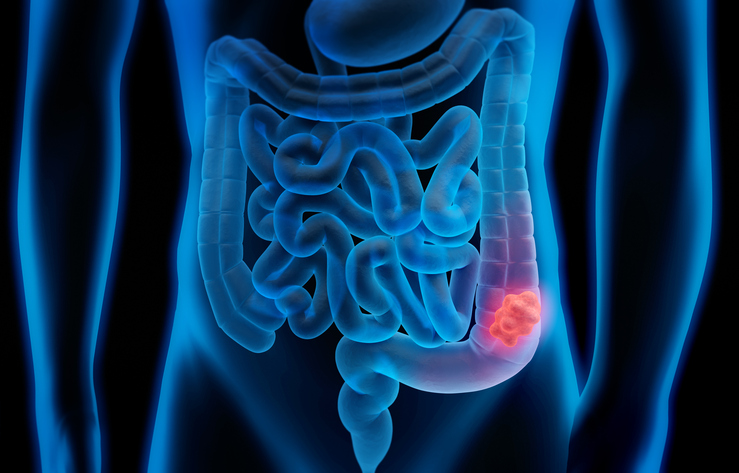
Bowel cancer
Colon cancer and rectal cancer (also called colorectal cancer) are common in the UK. The colon and rectum are parts of your bowel. Most cases occur in people aged over 50. If bowel cancer is diagnosed at an early stage, there is a good chance of a cure. In general, the more advanced the cancer (the more it has grown and spread), the less chance that treatment will be curative. However, treatment can often slow the progress of the cancer.
by Dr Doug McKechnie, MRCGP
Cancer
Oesophageal cancer
Oesophageal cancer is cancer of the gullet (oesophagus). There are over 8,000 new cases diagnosed every year in the UK and two thirds of new diagnoses are in men.t is the 7th most common cause of cancer death in the UK and accounts for 5% of all cancer deaths. Most cases occur in people over the age of 55, although younger people are sometimes affected. Those diagnosed at an early stage have the best chance of a cure. The earliest symptom is often difficulty with swallowing (dysphagia).
by Dr Toni Hazell, FRCGP
Frequently asked questions
What is the difference between ductal adenocarcinoma and other types of pancreatic cancer?
Ductal adenocarcinoma is the most common type, making up over 90% of all pancreatic cancer cases. It develops from cells in the pancreatic duct and a tumor grows within or around it. Other, rarer types of pancreatic cancer can arise from different cells, such as those that produce insulin or glucagon (e.g., insulinomas and glucagonomas), and they behave differently.
If I experience yellow skin (jaundice) without pain, what does this mean?
Painless jaundice that worsens is often one of the first signs of pancreatic cancer, particularly when the tumour develops in the head of the pancreas and blocks the bile duct. While there are other causes of jaundice, this specific presentation can indicate a more advanced stage of cancer.
Can developing diabetes be a sign of pancreatic cancer?
Rarely, new-onset diabetes can develop if a pancreatic tumour damages nearly all of the pancreas. However, it's important to remember that diabetes is a common condition, and the vast majority of people with diabetes do not go on to develop pancreatic cancer.
What is the significance of the CA19-9 tumour marker in pancreatic cancer screening?
The CA19-9 tumour marker is one of the tests used in screening programmes for individuals at higher risk of pancreatic cancer. It is typically checked through a blood test. This is part of a series of tests that help monitor for the disease.
What does 'remission' mean in the context of pancreatic cancer treatment?
Remission means there is no evidence of cancer after treatment. While it may indicate that the cancer is cured, doctors often prefer this term because cancer can sometimes return months or even years later. It signifies a period where the disease is not detectable.
What is a stent and how is it used in pancreatic cancer treatment?
A stent is a small, rigid tube, typically made of plastic or metal, inserted to keep a duct or channel open. In the context of pancreatic cancer, a stent might be inserted into the bile duct to ease symptoms like jaundice caused by a blockage.
Further reading and references
- Cancer Types; Cancer Research UK
- Suspected cancer: recognition and referral; NICE guideline (2015 - last updated April 2026)
- Cancer of the pancreas: ESMO Clinical Practice Guidelines for diagnosis, treatment and follow-up; European Society for Medical Oncology (2015 - last updated March 2019)
- Gurusamy KS, Kumar S, Davidson BR, et al; Resection versus other treatments for locally advanced pancreatic cancer. Cochrane Database Syst Rev. 2014 Feb 27;2:CD010244. doi: 10.1002/14651858.CD010244.pub2.
- Pancreatic cancer in adults: diagnosis and management; NICE Guideline (Feb 2018)
- Pancreatic Cancer Treatment (Patient Version). PDQ Cancer Information Summaries. National Cancer Institute (US). 2018.
- Matsubayashi H, Takaori K, Morizane C, et al; Familial pancreatic cancer: Concept, management and issues. World J Gastroenterol. 2017 Feb 14;23(6):935-948. doi: 10.3748/wjg.v23.i6.935.
- Pancreatic cancer; NICE Quality standard, December 2018
- EUROPAC trial; Pancreatic Cancer UK
About the authorView full bio

Dr Toni Hazell, FRCGP
MBBS, BSc, FRCGP, DFSRH, Dip GU med, DRCOG, DCH (London, UK, 2000)
Dr. Toni Hazell qualified from St. Mary’s Hospital Medical School and did her VTS at Northwick Park Hospital.
About the reviewerView full bio

Dr Colin Tidy, MRCGP
General Practitioner, Medical Author
MBBS, MRCGP, MRCP (Paediatrics), DCH
Dr Colin Tidy is an NHS Doctor, based in Oxfordshire.
Article history
The information on this page is written and peer reviewed by qualified clinicians.
Article also available in English, German, Spanish, French, Italian, Portuguese, Hindi, Hebrew, Arabic, and Swedish.
Next review due: 5 Aug 2028
7 Aug 2023 | Latest version
Join the conversation
Share your thoughts or experiences with others in our patient communities.

Ask, share, connect.
Browse discussions, ask questions, and share experiences across hundreds of health topics.

Feeling unwell?
Assess your symptoms online for free
Sign up to the Patient newsletter
Your weekly dose of clear, trustworthy health advice - written to help you feel informed, confident and in control.
By subscribing you accept our Privacy Policy. You can unsubscribe at any time. We never sell your data.
More in cancer
- Bowel cancer
- Bowel cancer screening
- BRCA genes
- Breast cancer
- Cancer of the uterus
- Cancer symptoms
- Cervical cancer
- Cervical screening
- Diagnosing cancer
- Faecal immunochemical test
- Mammogram
- Mucositis
- Palliative care
- Preventing skin cancer
- Primary liver cancer
- Rhabdomyosarcoma
- Testicular cancer
- Throat cancer
- Types of cancer