Hepatitis
Peer reviewed by Dr Hayley Willacy, FRCGP Last updated by Dr Doug McKechnie, MRCGPLast updated 9 Mar 2023
Meets Patient’s editorial guidelines
- DownloadDownload
- Share
- Language
- Discussion
- Audio Version
- Add to preferred sources on Google
In this series:Hepatitis AHepatitis BHepatitis CAutoimmune hepatitis
Hepatitis is the medical term for inflammation of the liver. It has a number of causes, leading to different types of hepatitis, which are treated and managed differently. This leaflet signposts to leaflets with more information on some of the more common types of hepatitis.
At a glance
Hepatitis is inflammation of the liver with various causes.
Common symptoms include yellow skin or eyes, tiredness, tummy pain, and nausea.
Viral infections are a common cause, including hepatitis A, B, C, D, and E.
Other causes include alcohol, certain medicines, and some medical conditions.
Some types of hepatitis can be prevented by vaccination, safer sex, or avoiding alcohol.
What is hepatitis?
'Hepatitis' is a medical term describing inflammation of the liver. There are a number of types and a number of causes of hepatitis. The type and cause will affect how serious an illness it is. In some cases it can be very mild, in others a more serious condition.
What are the symptoms of hepatitis?
For the specifics, go to the leaflets of the individual types of hepatitis linked below. The illness varies depending on the type of hepatitis, and may be mild or very severe. Symptoms will also depend on whether the illness is acute (lasting, or developing over, a short time) or chronic (lasting for a long time). Common symptoms include:
A yellow tinge to the skin or eyes (jaundice).
Feeling tired.
Muscle or joint aches and pains.
Tummy (abdominal pain).
A poor appetite.
Feeling sick (nausea).
Darker-coloured urine and pale-coloured stools.
A high temperature (fever).
What are the causes of hepatitis?
Each cause of hepatitis results in a rather different illness, which is obtained differently, behaves differently and is treated differently. The main causes are:
Viral hepatitis
The most common cause of hepatitis is infection with a virus. There are five different viruses which can cause five different types of hepatitis. They are:
Hepatitis A
This tends to be a short-term (acute) illness. It is usually spread by eating or drinking something contaminated with the hepatitis A virus. It can also be spread through sex, if tiny amounts of poo (faeces) get on to the fingers and mouth of someone else - for example, through rimming or anal sex without a condom.
Hepatitis A is rare in the UK, but is more common in other parts of the world, such as some parts of Asia, the Middle East, Africa, and Central and South America. There is a hepatitis A vaccine - in the UK, this is only given to people at higher risk of catching the infection, and not to everyone. See the separate leaflet Hepatitis A for more information.
Hepatitis B
This is acquired through blood or body fluids. So it can be passed on from another person during sex, or by use of contaminated needles (for example, by sharing needles whilst injecting drugs). It can also be passed from a pregnant woman to her baby at birth - though this can be prevented with treatment.
Hepatitis B can cause an acute illness. About 95% of people with normal immune systems get rid of the virus completely after the initial infection, but other people carry hepatitis B for much longer, developing into a chronic illness that can cause liver damage. Hepatitis B is not very common in the UK, but is more common in some parts of the world, such as parts of Asia, Africa, the Middle East, and Eastern Europe.
There is a vaccine against hepatitis B. Since 2017, hepatitis B vaccination has been part of the routine immunisations for all babies in the UK, as part of the 6-in-1 vaccine. In adults, it's only given to people at higher risk of being exposed to the virus. See the separate leaflet Hepatitis B for more information.
Hepatitis C
This is also spread through blood-to-blood contact. It can be spread via sex, but this is rare; it's much more common to be spread by sharing needles, such as when injecting drugs.. This is more likely to become a chronic illness and cause long-term liver problems. It is the most common type of viral hepatitis in the UK, and is most common in people who have injected drugs. There is no vaccine for hepatitis C, but very effective treatments have been developed in recent years which can cure the infection. See the separate leaflet Hepatitis C for more information.
Hepatitis D
This is spread in the same way as hepatitis B and hepatitis C. However, it can only affect people who also have been infected with hepatitis B. It's uncommon in the UK. There is no vaccine for hepatitis D, although hepatitis B vaccination can help protect against it.
Hepatitis E
This is a similar illness to hepatitis A. It is also spread through contaminated food and drink, and also usually causes a short-term illness, from which people usually recover fully. However, it can be more severe in pregnant women and people with weakened immune systems. There is no vaccine for hepatitis E licensed for use in the UK, although a vaccine is in use in China.
Other viruses
Others can cause inflammation of the liver as part of the general illness they cause. However, the hepatitis is not the main part of the illness (for example the Epstein-Barr virus which causes glandular fever). Germs other than viruses, such as certain bacteria and parasites, can also cause hepatitis.
See the separate feature Why has there been an increase in hepatitis in children? for more details on the causes of hepatitis in children.
If you're travelling abroad, you can find out if immunisation against hepatitis is recommended for any countries you are planning to visit from the NHS website Fitfortravel.
Hepatitis caused by toxins
The most common cause is excessive alcohol over a prolonged time. Alcoholic hepatitis is reversible if alcohol is reduced, but can go on to cause longer-term liver damage (cirrhosis) and liver failure.
Medication - some medicines can cause liver inflammation as a side-effect. (For example, paracetamol, statin medicines which lower cholesterol levels, and certain antibiotics.)
Anabolic steroids can damage the liver.
Herbal medicines and teas can cause liver damage. Liver damage has been reported from using green tea extract, ginseng, black cohosh, and Chinese herbal medicines.
Haemochromatosis - an unusual condition where the body stores too much iron, can cause hepatitis.
Wilson's disease - an unusual condition where liver damage is caused by copper excess in the body.
Non-alcoholic fatty liver disease
This is a range of conditions caused by a build-up of fat in the liver. Hepatitis is one effect this can have. See the separate leaflet called Non-alcoholic Fatty Liver Disease.
Autoimmune hepatitis
This tends to be a chronic - longer-lasting - type of hepatitis. The body's own immune system is thought to attack and damage the liver. Treatment is with medication to suppress this excessive immune response. See the separate leaflet called Autoimmune Hepatitis for more information.
How is hepatitis spread?
The only type of hepatitis that spreads is infectious hepatitis. Viral hepatitis is the most important cause of infectious hepatitis. Each virus spreads in different ways:
Hepatitis A spreads when tiny particles of faeces (poo) from a person with the infection get into the mouth of another person. Ways in which this might happen include:
Eating food or drinking water that has been contaminated with infected faeces. It's very rare for this to happen in the UK.
Any type of sex that has the potential for faeces to get on to a finger or into the mouth. For example, oral-anal sex (rimming), fingering, or anal sex without a condom. There have been outbreaks of hepatitis A in men who have sex with men in the UK; the hepatitis A vaccine is available for men who have sex with men to prevent this.
Hepatitis B is spread through contact with the blood, semen, or vaginal fluids of someone with the infection. Ways this can happen include:
Sexual contact with someone with the infection, by having unprotected sex, particularly anal and vaginal sex. It can also spread through oral sex, although this is less likely.
A mother with hepatitis B giving birth; the infection can spread to the baby at the time of birth. There are treatments to reduce the risk of this happening. Every pregnant woman in the UK should be offered a hepatitis B test as part of their standard pregnancy care.
Sharing needles, syringes, or anything else used to prepare an injectable drug with someone who has hepatitis B; for example, sharing needles when injecting drugs.
Re-using a contaminated needle, sharp instrument, or other object from someone with hepatitis B on another person. For example, there have been cases of hepatitis B spread by using contaminated needles when getting tattoos. Regulated tattoo artists in the UK must use single-use equipment or otherwise completely disinfect reusable equipment to prevent this happening; however, getting a tattoo from someone who does not follow these rules can be risky.
Sharing a razor, toothbrush, or other equipment that might have blood on it (eg, blood glucose monitors) with someone who has hepatitis B.
Having a blood transfusion that is contaminated with hepatitis B. The risk of this happening now in the UK is very, very low, but may be higher in countries where the blood supply is not as well-regulated.
Hepatitis C is spread through blood-to-blood contact with someone who has the infection. The ways of it spreading are similar to hepatitis B, although it's less commonly spread by sex - vaginal and oral sex seem to be very low-risk, but any type of sex that increases the risk of exposure to blood (like unprotected anal sex or rough unprotected vaginal sex) may be higher-risk. In the UK, sharing needles is the most common way for people to have caught hepatitis C.
Hepatitis D is spread through contact with the blood, semen, or vaginal fluids of someone with the infection. It spreads in the same ways as hepatitis B. It can only infect people who also have hepatitis B.
Hepatitis E spreads when tiny particles of faeces (poo) from a person with the infection get into the mouth of another person. It spreads in similar ways to hepatitis A, although direct spread between person to person (such as through sex) is rare.
What are the types of hepatitis?
Hepatitis is divided into:
Acute - a short-lasting illness.
Chronic - when the illness has lasted for longer: six months or more.
Acute hepatitis can sometimes go on to become chronic. People with chronic hepatitis can suffer with long-term liver damage.
Rarely, both acute and chronic hepatitis can cause liver failure. Liver transplants might be needed for people with very severe hepatitis.
What is the liver and what does it do?
Liver function
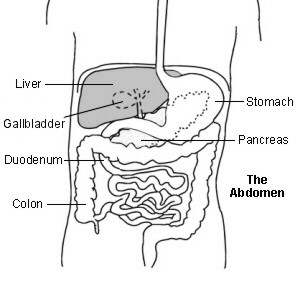
The liver is a large organ in the upper right part of the tummy (abdomen). You cannot normally feel it as it is tucked under your ribs. It has many functions which include:
Storing fuel for the body (glycogen) which is made from sugars. When required, glycogen is broken down into glucose which is released into the bloodstream.
Helping to process fats and proteins from digested food.
Making bile which passes from the liver to the gut down the bile duct. Bile breaks down the fats in food so that they can be absorbed from the bowel.
Making proteins that are essential for blood to clot (clotting factors).
Processing many medicines which you may take.
Helping to remove or process alcohol, poisons and toxins from the body.
What is the treatment for hepatitis?
This depends on the type of hepatitis - see the individual leaflets.
Can hepatitis be prevented?
This also depends on the individual type. Some viral types of hepatitis (hepatitis A and B) can be prevented with a vaccination. Safer sex and using clean needles when injecting drugs can reduce the risk of hepatitis B, C, and D. Alcoholic hepatitis can be prevented by not drinking alcohol. Refer to the individual leaflets linked above for further detail.
Patient picks for Hepatitis

Digestive health
Hepatitis C
Hepatitis C is a blood-borne virus that infects the cells of the liver. Most cases occur in people who share needles or injecting equipment contaminated with traces of blood to inject 'street drugs'. Some people clear the infection naturally. Some people with persistent infection remain free of symptoms, although others have symptoms. Persistent hepatitis C infections can lead to 'scarring' of the liver (cirrhosis) and may lead to liver cancer. Treatment can clear the infection in around 9 out of 10 cases.
by Dr Rosalyn Adleman, MRCGP

Digestive health
Hepatitis B
The hepatitis B germ (virus) can cause a short-term (acute) infection, which may or may not cause symptoms. Following an acute infection, a minority of infected adults develop a persistent infection called chronic hepatitis B. Many people with chronic hepatitis B remain well, but can still pass on the virus to others. Some develop serious liver problems. The virus is mainly passed on by sexual contact, by sharing needles to inject drugs, and from mother to baby.
by Dr Toni Hazell, FRCGP
Frequently asked questions
If I have hepatitis, can it damage other parts of my body besides my liver?
The article focuses on the liver as the primary organ affected by hepatitis, describing it as 'inflammation of the liver'. It does not discuss damage to other organs, only referring to the potential for 'long-term liver damage' or 'liver failure' if the illness becomes chronic.
Can I get hepatitis from food prepared by someone who has the virus?
Hepatitis A and E can be spread through contaminated food or drink when tiny particles of faeces from an infected person get into the mouth of another person. The article mentions that this is 'very rare' in the UK for hepatitis A, but still highlights the potential for spread via contaminated food, particularly when discussing hepatitis A and E.
What happens if I don't get vaccinated against hepatitis B, and I'm at high risk?
The article states that for adults, the hepatitis B vaccine is 'only given to people at higher risk of being exposed to the virus.' It doesn't explicitly detail the consequences of not getting vaccinated in this scenario, but implies increased susceptibility to the virus if at high risk and unprotected.
Is it possible to have hepatitis and not know it?
The article states that symptoms 'may be mild or very severe' depending on the type and whether it's acute or chronic. It also notes that about 95% of people with normal immune systems get rid of hepatitis B after initial infection, but others 'carry hepatitis B for much longer', suggesting that some individuals could be asymptomatic or have very mild, unnoticed symptoms, especially in the early stages, or become chronic carriers.
Are there any natural remedies or dietary changes that can help treat hepatitis?
The article mentions that 'herbal medicines and teas can cause liver damage,' and specifically lists green tea extract, ginseng, black cohosh, and Chinese herbal medicines as examples. It does not suggest any natural remedies or dietary changes as treatments for hepatitis, instead focusing on conventional medical treatments based on the type of hepatitis.
About the authorView full bio

Dr Mary Harding, MRCGP
General Practitioner, Medical Author
BA, MA, MB, BChir, MRCGP, DFFP
Dr Mary Harding qualified from Cambridge University medical school in 1989.
About the reviewerView full bio

Dr Hayley Willacy, FRCGP
General Practitioner, Medical Author
MBChB (1992), DRCOG, DFFP, MRCOG (Part 1) MRCGP (2007), DFSRH (2013), MSc - medical education (2020)
Dr Hayley Willacy was an NHS GP working in northwest England, who retired from clinical practice in 2022 after 30 years.
Article history
The information on this page is written and peer reviewed by qualified clinicians.
Article also available in English, German, Spanish, French, Italian, Portuguese, Hindi, Hebrew, Arabic, and Swedish.
Next review due: 7 Mar 2028
9 Mar 2023 | Latest version
1 Mar 2018 | Originally published
Authored by:
Dr Mary Harding, MRCGP
Join the conversation
Share your thoughts or experiences with others in our patient communities.

Ask, share, connect.
Browse discussions, ask questions, and share experiences across hundreds of health topics.

Feeling unwell?
Assess your symptoms online for free
Sign up to the Patient newsletter
Your weekly dose of clear, trustworthy health advice - written to help you feel informed, confident and in control.
By subscribing you accept our Privacy Policy. You can unsubscribe at any time. We never sell your data.
More in digestive health
- Acute diarrhoea in children
- Acute pancreatitis
- Antispasmodics
- Appendicitis
- Barium enema
- Bowel polyps
- Coeliac disease
- Constipation
- Food poisoning in children
- Gastrointestinal malabsorption
- Hepatitis C
- Indigestion medicine
- Left upper quadrant pain
- Oesophageal cancer
- Piles
- Right lower quadrant pain in pregnancy
- Shigella
- Spleen pain
- Stomach cancer
- Symptoms of appendicitis