Brain tumours
Peer reviewed by Dr Philippa Vincent, MRCGPLast updated by Dr Toni Hazell, FRCGPLast updated 22 May 2023
Meets Patient’s editorial guidelines
- DownloadDownload
- Share
- Language
- Discussion
- Audio Version
- Add to preferred sources on Google
This leaflet aims to give a brief overview of the various types of brain tumours. The treatment and survival rates vary greatly, depending on factors such as the type of tumour and the location in the brain.
At a glance
A brain tumour is an abnormal growth of cells in the brain.
Tumours are either non-cancerous (benign) or cancerous (malignant).
Symptoms can include headaches, sickness, and problems with movement or vision.
The cause of most brain tumours is unknown, but a few cases are linked to genetic factors.
Diagnosis involves brain scans and sometimes a tissue sample (biopsy).
Treatments include surgery, radiotherapy, chemotherapy, and medication to manage symptoms.
Understanding the brain
Cross-section diagram of the brain
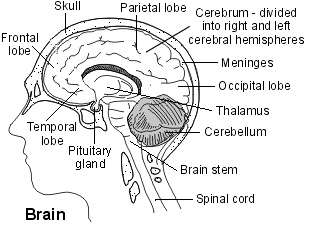
The main parts of the brain include:
The cerebrum. This is divided into the right side (right hemisphere) which controls the left side of the body, and the left hemisphere which controls the right side of the body. Each hemisphere is divided into various subsections, the main divisions being the frontal lobe, temporal lobe, parietal lobe and occipital lobe. The cerebrum is also where you think and store your memory.
The cerebellum. This lies behind and below the cerebrum. One of its main functions is to help control balance and co-ordination.
The brain stem. This helps to control basic bodily functions such as the heartbeat, breathing and blood pressure. Nerves from the cerebrum also pass through the brainstem to the spinal cord.
The meninges. These are thin layers of tissue which separate the skull from the brain. The outer layer next to the skull is called the dura. The next layer is called the arachnoid. Under the arachnoid tissue is the cerebrospinal fluid (CSF) which bathes the brain and spinal cord.
The pituitary gland. This releases various hormones into the bloodstream.
The main type of cell in the brain is called a neuron. There are millions of neurons in the brain. Neurons have long thin nerve fibres which enable them to send messages to other parts of the brain and down the spinal cord to all parts of the body. The brain also contains glial cells. These provide support, nourishment and protection for neurons. There are various types of glial cells, including astrocytes, oligodendrocytes and ependymal cells.
What causes brain tumours?
The cause of most non-cancerous (benign) brain tumours and primary cancerous (malignant) brain tumours is not known.
Genetic factors may be a risk for some people - perhaps in about 1 in 20 cases. For example, people with the hereditary diseases called neurofibromatosis type 1, Turcot's syndrome, Li-Fraumeni cancer syndrome, and tuberous sclerosis have a higher-than-average risk of developing a glioma.
When people with these diseases develop a glioma, it tends to occur in childhood or early adult life. However, these cases are only a small proportion of all glioma tumours.
Note:
Most gliomas occur in older adults and inherited (genetic) factors are not thought to be involved.
Previous radiotherapy to the brain is thought to increase the risk of a brain tumour.
There is no strong evidence that using mobile phones increases the risk of brain tumours.
Secondary (metastatic) brain tumours arise from various cancers of the body. These have various causes. See the separate leaflets about these other cancers.
Different types of brain tumour
There are many types of non-cancerous (benign) brain tumours and primary cancerous (malignant) brain tumours. Many are very rare. The following is a brief description of the most common types.
Meningioma
Meningiomas are usually benign. They grow from cells in the tissues that surround the brain (the meninges).
Medulloblastoma
These are high-grade malignant tumours that grow in the cerebellum. They are uncommon in adults but are one of the two most common brain tumours in children. The other is astrocytoma in the cerebellum.
Gliomas
These are malignant primary brain tumours that arise from glial cells. There are various types, depending on the cell of origin - for example:
Astrocytomas (originating from astrocyte cells.) There are various types of astrocytoma. They include:
Low-grade astrocytomas.
Anaplastic astrocytoma. This is a high-grade tumour.
Glioblastoma multiforme. This is a high-grade tumour which tends to grow quite quickly. It is the most common type of primary malignant brain tumour in adults.
Oligodendrogliomas (originating from oligodendrocytes). These can vary in their grade.
Ependymoma (originating from ependymal cells). These are rare but are usually low-grade.
Primitive neuroectodermal tumours (PNETs)
These are very similar to medulloblastomas and mainly occur in children.
Pituitary tumours
There are various types of tumour which arise from the different cells in the pituitary gland. They tend to be benign. However, the cells of the tumour may produce large quantities of hormones which can cause various symptoms. As they grow, they may also cause pressure symptoms. The nerves of sight (optic nerves) are near to the pituitary gland and so a growing pituitary gland tumour may press on an optic nerve and affect vision.
Acoustic neuroma
An acoustic neuroma (schwannoma) is a benign tumour which arises from Schwann cells which cover the nerve that goes to the ear. Symptoms can include deafness on the affected side and dizziness with a spinning sensation (vertigo).
Other
There are various other rare types of benign and primary malignant brain tumours.
How common are brain tumours?
Non-cancerous (benign) brain tumours and cancerous (malignant) primary brain tumours are uncommon. Overall they occur in about 12 in 100,000 people each year.
The most common types in adults are benign meningioma and a glioma called glioblastoma multiforme. Some types are very rare.
Brain tumours can occur at any age. Some types (such as medulloblastoma) are more common in children and some are more common in adults. Generally, the tumours that tend to occur in adults become more common with increasing age.
Secondary (metastatic) brain tumours are more common than benign brain tumours and malignant primary brain tumours.
What are the symptoms of a brain tumour?
General symptoms
Early symptoms may include headaches and feeling sick. These are due to increased pressure within the skull (raised intracranial pressure). These symptoms may come and go at first and tend to be worse in the morning.
Coughing, sneezing and stooping may make the headaches worse. Epileptic seizures (convulsions) sometimes occur. Increasing drowsiness may occur as the tumour enlarges.
Note: most people who have headaches or epilepsy do not have a brain tumour.
Symptoms due to the location in the brain
As a tumour grows it can damage the nearby brain tissue. The functions of the different parts of the body are controlled by different parts of the brain. Therefore, the symptoms vary from case to case, depending on which part of the brain is affected and on the size of the affected area. For example, one or more of the following may develop:
Weakness of muscles in an arm, leg, part of the face, or eyes.
Problems with balance, co-ordination, vision, hearing, speech, communication or swallowing.
Numbness or weakness in a part of the body.
Confusion.
Personality changes.
Symptoms related to hormonal changes if you have a pituitary tumour.
These symptoms tend to develop gradually.
Primary or secondary tumours?
The original site where a tumour first develops is called a primary tumour. Cancerous (malignant) tumours may also spread to other parts of the body to form secondary tumours (metastases). These secondary tumours may then grow, invade and damage nearby tissues and spread again.
Primary malignant brain tumours
A primary malignant brain tumour is a cancer which arises from a cell within the brain. The cells of the tumour grow into and damage normal brain tissue. Also, like non-cancerous (benign) brain tumours, they can increase the pressure inside the skull. However, unlike most other types of malignant tumours, primary brain tumours rarely spread (metastasise) to other parts of the body.
There are various types of primary malignant brain tumour. The different types develop from different types of cell in the brain. As a general guide, each type is graded on a scale of 1-4. Grade 1 and grade 2 tumours are said to be low-grade; grade 3 and grade 4 are termed high-grade.
The higher the grade, the more aggressive the tumour tends to be and the faster it tends to grow. The treatment options and outlook (prognosis) can vary depending on the type and grade of the tumour.
Secondary malignant brain tumours
A secondary malignant brain tumour means that a cancer which started elsewhere in the bodybody has spread to the brain. Many types of cancer can spread to the brain. The most common types that do this are cancers of the breast, lung, bowel, kidney and skin (melanoma).
See the separate leaflet called Cancer for more general information about cancer
How are brain tumours diagnosed and assessed?
A doctor will examine you if a brain tumour is suspected from the symptoms. This will include checking on the functions of the brain and nerves (movements, reflexes, vision, etc).
A magnetic resonance imaging (MRI) scan or computerised tomography (CT) scan of the head is the common test done to confirm or rule out the presence of a brain tumour. See the separate leaflets called MRI Scan and CT Scan for more details. If a tumour is identified, further more detailed scans and tests may be done. For example, a PET scan or a cerebral angiogram are sometimes done to obtain more information about the tumour.
A small tissue sample (a biopsy) may be needed to be sure of the type of tumour. The sample is then examined under the microscope to look for abnormal cells. To obtain a biopsy from a brain tumour you need to have a small operation, usually done under anaesthetic. A small hole is bored in the skull to allow a fine needle through to obtain a small sample of tissue. By examining the cells obtained by the biopsy, the exact type of tumour can be identified. If it is cancerous (malignant), the tumour grade can be determined (see above).
Blood tests, including specialist molecular markers for some types of tumour, and other tests on other parts of the body may be done if the tumour is thought to be a secondary (metastatic) tumour. For example, it is quite common for a lung cancer to spread to the brain. Therefore, a chest X-ray may be done if this is suspected. Various hormone tests may be done if a pituitary gland tumour is suspected.
What are the treatments for brain tumours?
Once you are diagnosed with a brain tumour, the main treatments used for are surgery, chemotherapy, radiotherapy and medication to control symptoms such as seizures. You should always be looked after by a specialist multidisciplinary team who is used to caring for people with a brain tumour. For some types of tumours, for example if the risks of surgery are very high, and/or the tumour is thought to be very slow-growing, the initial treatment might be 'active monitoring' where no surgery or other treatment is done but scans are regularly repeated to look for growth. The pros and cons of active monitoring versus treatment would always be discussed with the patient, and the decision would be made by both the patient and the doctors together. The treatment or combination of treatments advised in each case depends on various factors - for example:
The type of brain tumour.
The grade of the tumour if it is cancerous (malignant).
The exact site of the tumour.
Your general health.
Surgery
Surgery is often the main treatment for non-cancerous (benign) brain tumours and primary cancerous (malignant) tumours. The aim of surgery is to remove the tumour (or even some of the tumour) whilst doing as little damage as possible to the normal brain tissue. Your specialist will advise on whether surgery is a possible option. Surgery always carries a risk as healthy brain, nerves or blood vessels can be damaged.
Radiotherapy
Radiotherapy is a treatment which uses high-energy beams of radiation which are focused on cancerous tissue. This kills cancer cells or stops cancer cells from multiplying. See the separate leaflet called Radiotherapy for more details.
Radiotherapy is sometimes used instead of surgery when an operation is not possible for a malignant brain tumour. Sometimes it is used in addition to surgery if it is not possible to remove all the tumour with surgery or to kill cancerous cells which may be left behind following surgery.
Chemotherapy
Chemotherapy is a treatment which uses anti-cancer medicines to kill cancer cells, or to stop them from multiplying. It may be used in addition to other treatments such as surgery or radiotherapy; again, depending on various factors such as the type of tumour.
Medication to control symptoms
If you have seizures caused by the tumour then anticonvulsant medication will usually control the seizures. Painkillers may be needed to ease any headaches. Steroid medication is also commonly used to reduce inflammation around a brain tumour. This reduces the pressure inside the skull, which helps to ease headaches and other pressure symptoms.
You should have a full discussion with a specialist who knows your case. They will be able to give the pros and cons, likely success rate, possible side-effects and other details about the possible treatment options for your type of brain tumour.
Aims of treatment
You should also discuss with your specialist the aims of treatment. For example:
In some cases, treatment aims for a cure. If a benign tumour can be removed by surgery then a cure is likely. The chance of a cure for malignant tumours varies, depending on the type of tumour, grade and other factors such as the location in the brain. Note: when dealing with malignant tumours, doctors tend to use the word remission rather than the word cured. Remission means there is no evidence of cancer following treatment. If you are in remission, you may be cured. However, in some cases a cancer returns months or years later. This is why doctors are sometimes reluctant to use the word cured.
In some cases, treatment aims to control the cancer. If a cure is not realistic, with treatment it may be possible to limit the growth or spread of the cancer so that it progresses less rapidly. This may keep you free of symptoms for some time.
In some cases, treatment aims to ease symptoms (palliative treatment). For example, if a cancer is advanced then you may require painkillers or other treatments to help keep you free of pain or other symptoms. Some treatments may be used to reduce the size of a cancer, which may ease symptoms such as pain.
What is the outlook?
It is difficult to give an overall outlook (prognosis). Every case is different. For example, if you have a non-cancerous (benign) meningioma which is in a suitable place for surgery, the outlook is excellent.
For primary cancerous (malignant) brain tumours, the outlook will vary, depending on the type, grade and location in the brain.
The outlook is often poor if you have a secondary (metastatic) malignant brain tumour.
The treatment of cancer is a developing area of medicine. New treatments continue to be developed and the information on outlook above is very general. The specialist who knows your case can give more accurate information about your particular outlook and how well your type and stage of cancer is likely to respond to treatment.
Patient picks for Other cancer types
Cancer
Paget's disease of bone
Paget's disease of bone affects the structure of parts of one or more bones. In most cases it causes no symptoms and does not need treatment. Symptoms develop in some cases and pain in the affected part of bone is the most common symptom. Affected bones are weaker than normal and may become deformed and may break (fracture) more easily than normal. Treatment with a bisphosphonate medicine is used in some cases to ease pain and to help treat complications.
by Dr Colin Tidy, MRCGP

Cancer
Mesothelioma
Mesothelioma is an uncommon type of cancer that occurs in the tissues covering internal organs, particularly your lungs or less commonly your tummy (abdomen). Past exposure to asbestos is the main risk factor for mesothelioma. The first symptoms are variable but can include shortness of breath, chest pain or abdominal swelling. It is not usually possible to cure mesothelioma but there are different treatments to help with symptoms.
by Dr Colin Tidy, MRCGP
Frequently asked questions
What is the difference between primary and secondary brain tumours?
A primary brain tumour is a growth that originates within the brain itself. A secondary brain tumour, also called a metastatic brain tumour, occurs when cancer cells from another part of the body spread to the brain. Secondary brain tumours are generally more common than primary ones.
Are all brain tumours cancerous?
No, brain tumours can be either non-cancerous (benign) or cancerous (malignant). Many types of benign and primary malignant brain tumours exist, with some being very rare. The most common types in adults are benign meningioma and a type of glioma called glioblastoma multiforme.
Can brain tumours affect my vision or hearing?
Yes, depending on where the tumour is located in the brain, it can affect various functions. For example, a growing pituitary gland tumour might press on the optic nerves, leading to vision problems. An acoustic neuroma, which forms on the nerve leading to the ear, can cause deafness on the affected side and a spinning sensation (vertigo).
What does the 'grade' of a brain tumour mean?
For primary malignant brain tumours, cells are graded on a scale of 1-4. Grade 1 and 2 tumours are considered low-grade, while grade 3 and 4 are high-grade. A higher grade indicates a more aggressive tumour that tends to grow faster. The grade helps determine treatment options and the probable outcome.
What is 'active monitoring' for a brain tumour?
Active monitoring is an initial approach for some brain tumours, particularly if the risks of surgery are high or the tumour is believed to be very slow-growing. Instead of immediate treatment, regular scans are performed to check for any growth. The decision for active monitoring is made jointly between the patient and doctors after discussing the pros and cons compared to other treatments.
Can primary malignant brain tumours spread to other parts of the body?
Unlike most other types of malignant tumours, primary brain tumours rarely spread to other parts of the body. Their main impact comes from growing within and damaging normal brain tissue, and increasing pressure inside the skull.
How do doctors determine the exact type of brain tumour I have?
After initial scans like an MRI or CT, a small tissue sample, called a biopsy, is often needed. This involves a minor operation, usually under anaesthetic, where a fine needle is guided through a small hole in the skull to obtain a sample. This sample is then examined under a microscope to identify the specific type of tumour and, if malignant, its grade.
Further reading and references
- High-grade gliomas: ESMO Clinical Practice Guidelines for diagnosis treatment and follow up; European Society of Medical Oncology (2014)
- Wilne SH, Dineen RA, Dommett RM, et al; Identifying brain tumours in children and young adults. BMJ. 2013 Oct 9;347:f5844. doi: 10.1136/bmj.f5844.
- Perkins A, Liu G; Primary Brain Tumors in Adults: Diagnosis and Treatment. Am Fam Physician. 2016 Feb 1;93(3):211-7.
- Brain tumours (primary) and brain metastases in adults; NICE Guideline (July 2018, updated Jan 2021)
- Brain and central nervous system cancers - recognition and referral; NICE CKS, February 2021 (UK access only)
About the authorView full bio

Dr Toni Hazell, FRCGP
MBBS, BSc, FRCGP, DFSRH, Dip GU med, DRCOG, DCH (London, UK, 2000)
Dr. Toni Hazell qualified from St. Mary’s Hospital Medical School and did her VTS at Northwick Park Hospital.
About the reviewerView full bio

Dr Philippa Vincent, MRCGP
General Practitioner, Medical Author
MB BS, Bsc, MRCGP (2000), DCH, DFSRH, DRCOG
Dr Philippa Vincent is an NHS GP working in North London.
Article history
The information on this page is written and peer reviewed by qualified clinicians.
Article also available in English, German, Spanish, French, Italian, Portuguese, Hindi, Hebrew, Arabic, and Swedish.
Next review due: 12 May 2028
22 May 2023 | Latest version
Join the conversation
Share your thoughts or experiences with others in our patient communities.

Ask, share, connect.
Browse discussions, ask questions, and share experiences across hundreds of health topics.

Feeling unwell?
Assess your symptoms online for free
Sign up to the Patient newsletter
Your weekly dose of clear, trustworthy health advice - written to help you feel informed, confident and in control.
By subscribing you accept our Privacy Policy. You can unsubscribe at any time. We never sell your data.
More in cancer
- Acute myeloid leukaemia
- Bone marrow biopsy and aspiration
- Bowel cancer
- BRCA genes
- Breast cancer
- Breast cancer facts and risk factors
- Cancer of the uterus
- Cancer treatment
- Cervical cancer
- Cervical screening
- Chemotherapy
- Chronic lymphocytic leukaemia
- Diagnosing cancer
- Faecal immunochemical test
- Melanoma skin cancer
- Primary bone cancer
- Prostate cancer
- Rhabdomyosarcoma
- Types of cancer
- Wilms' tumour