Trastornos de la glándula pituitaria
Revisado por Dr Colin Tidy, MRCGPÚltima actualización por Dr Hayley Willacy, FRCGP Última actualización 21 Ago 2023
Cumple con las directrices editoriales
- DescargarDescargar
- Compartir
- Language
- Discusión
- Versión en audio
- Agregar a fuentes preferidas en Google
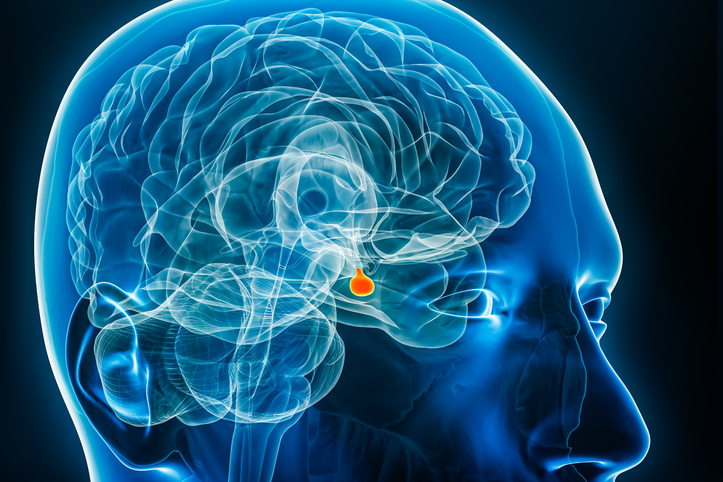
Este folleto ofrece una visión general de la glándula pituitaria y las hormonas que produce. La glándula pituitaria se encuentra en la base del cerebro y tiene un tamaño similar a una arveja. La glándula pituitaria es un controlador general de varias otras glándulas en el cuerpo, supervisando la función de estos órganos a través de hormonas.
De un vistazo
La glándula pituitaria es una glándula del tamaño de un guisante en la base del cerebro que produce hormonas.
Los trastornos de la pituitaria ocurren cuando la glándula es hiperactiva o hipoactiva.
Los síntomas de los trastornos de la hipófisis pueden incluir problemas de visión o problemas relacionados con las hormonas.
El diagnóstico implica análisis de sangre para hormonas y una resonancia magnética cerebral.
El tratamiento para los trastornos de la hipófisis depende de la causa y puede implicar cirugía o reemplazo hormonal.
Some of the pituitary gland disorders
Pituitary disorders generally occur when the pituitary gland is either too active or not active enough. Often there is a discrete piece of pituitary gland which leads to the problems, this is called a pituitary adenoma (if it is large it may be called pituitary macroadenoma). These are usually benign, non-cancerous tumours. Pituitary adenomas can cause problems through:
Releasing excess of one or more hormone.
Not releasing any hormones but pressing on the normal pituitary tissue and thus interfering with normal function; y/o
Causing pressure on nearby structures - for example, pressing on the nerve of the eye, leading to blurred vision or loss of part of the vision.
Conditions where the pituitary gland produces too much of one or more of its hormones include:
Conditions where the pituitary gland fails to produce enough hormones include:
Adult growth hormone deficiency.
Hypopituitarism.
Pituitary tumours.
Tumours of, or injury to, the hypothalamus, having a knock-on effect on the pituitary gland.
How are pituitary gland disorders diagnosed?
The diagnosis usually involves hormone blood tests and also brain scans. Hormone blood tests can be taken randomly for some hormones, but others may require specialised testing with substances that should provoke the release or prevent release in certain conditions.
This may require attendance at a day unit and having several hormone blood tests throughout the day. Usually an resonancia magnética of the pituitary gland is undertaken to look for pituitary abnormalities - eg, pituitary adenoma or cysts.
What is the treatment for pituitary gland disorders?
This will depend upon the cause. If there is hormone deficiency then this may need replacement with tablets. If a tumour is discovered as the cause of the problems then pituitary surgery may be required.
This is usually via the nose. If there is a pituitary tumour which is found to be cancerous then radioterapia may be needed after surgery. There may also be a need for lifelong hormone replacement following any treatment.
What is the pituitary gland?
The pituitary gland is located in the brain and is an endocrine gland. This means that it produces chemicals called hormones. Hormones are chemical messengers which help different organs in the body communicate with each other. The pituitary gland is one part of a messenger system.
The pituitary gland helps to control the body's functions by releasing hormones into the bloodstream. These hormones are transported in the blood to their target. Here they usually cause the release of a second hormone.
The target can either be specialised endocrine glands or other types of body tissue such as groups of cells.
The pituitary gland is sometimes called the master gland because it controls several other hormone-releasing glands. Some of the glands the pituitary gland controls are the thyroid gland, the ovaries, the testicles (testes) and the adrenal glands.
Where is the pituitary gland located?
About the size of a pea, the pituitary gland is found at the base of the brain, behind the bridge of your nose. The pituitary gland is very close to another part of the brain, called the hypothalamus.
The pituitary
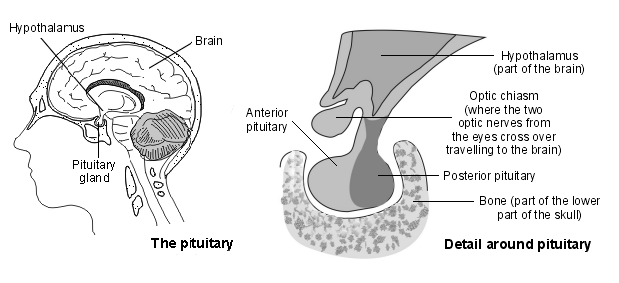
The pituitary gland has two main parts:
The part of the pituitary gland at the front, called the anterior pituitary.
The part of the pituitary gland at the back, called the posterior pituitary.
These two parts release different hormones which are aimed at different parts of the body.
There is also a section between the two main parts, called the intermediate part, which releases a single hormone. The final part of the pituitary gland is the stalk, which connects the posterior pituitary to the hypothalamus.
How does the pituitary gland work?
The body is in a constant state of change. Heart rate, blood pressure and body temperature all change in response to what you do and your surroundings. The body has systems that constantly monitor these and other vital functions. Not only must these systems monitor changes, they must also respond to the changes and help the body to restore balance.
Some of these systems involve the hypothalamus and the pituitary gland. The hypothalamus and the pituitary gland are part of several loops or circuits. The loops include other glands. The hormones produced by each gland complete the loops by travelling in the bloodstream between them.
The hypothalamus receives information from many sources about the basic functions of the body. It uses the information it receives to help regulate these functions. One of the ways the hypothalamus does this involves controlling the pituitary gland. The hypothalamus does this by using its own hormones to communicate with the pituitary gland.
Among the information monitored by the hypothalamus is the level of various hormones in the blood. The hypothalamus has special cells which receive information from the body indicating how much of each hormone is present in the bloodstream.
When these hormones drop below a particular level this stimulates the hypothalamus to release hormones. These hormones travel to the pituitary gland, acting as the signal to the pituitary gland to produce one or more of its hormones.
The hormones produced by the pituitary gland are released into the bloodstream. The bloodstream transports the pituitary hormones to other endocrine glands, such as the thyroid gland.
The pituitary gland hormones may then stimulate their target endocrine glands to produce their own hormones. These locally produced hormones do the actual work of regulating your body.
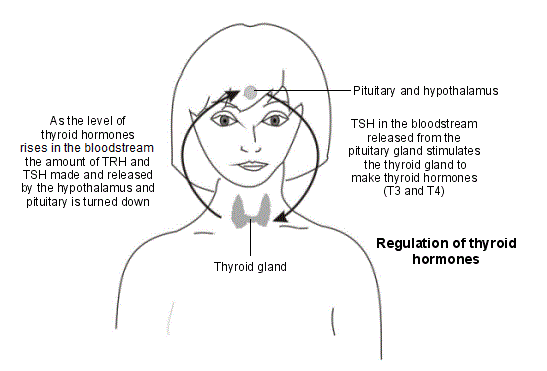
Take the example of the control of thyroid hormones from the thyroid gland in the neck. The hypothalamus produces a hormone called thyrotropin-releasing hormone (TRH). TRH travels to the pituitary gland and stimulates it to release thyroid-stimulating hormone (TSH).
TSH travels to the thyroid gland and stimulates it to release thyroid hormones, T3 and T4. When levels of T3 and T4 get high enough, levels in the bloodstream are detected by the hypothalamus.
The hypothalamus then knows to stop releasing more TRH. This last part of the loop is called negative feedback and prevents hormone levels from rising too high.
Regulation of thyroid hormones
The anterior pituitary produces hormones that regulate a wide range of bodily activities, from growth to reproduction. Whether a hormone is released by the anterior pituitary is governed by the hypothalamus. There are at least seven different hormones secreted by the anterior pituitary. The posterior pituitary produces just two hormones.
The anterior pituitary hormones
Hormone released | Main target | Function |
|---|---|---|
Adrenocorticotrophic hormone (ACTH) | Adrenal glands | Stimulates the adrenal glands to produce cortisol. Cortisol is important in controlling your metabolism, blood sugar levels and blood pressure. It is also an anti-inflammatory agent and helps your body to resist certain stresses such as bleeding or fasting. |
Follicle-stimulating hormone (FSH) | Ovaries -women Testicles (testes) - men | Stimulates the ovaries to produce an egg (ovum) for fertilisation. Also causes an increase in the hormone oestrogen. Stimulates the testicles to produce sperm. |
Growth hormone (GH) | Many different cells of the body | The most well-known effect in children is to increase height. In adults and children it helps to control the amount of muscle and fat in the body. It also helps to heal injuries and it promotes your immune system. |
Luteinising hormone (LH) | Ovaries - women Testicles - men | Triggers ovulation - the release of an egg (ovum) ready for fertilisation. Stimulates cells in the testes to produce testosterone. |
Melanocyte-stimulating hormone (MSH) | Brain (not known for sure) | The exact role in humans is unknown. It may influence brain activity. When too much is present, it may cause darkening of the skin. This is also produced in the intermediate part of the pituitary gland. |
Prolactin | Breasts | Together with other hormones, prolactin stimulates the breasts to produce milk. It is also found in women who aren't pregnant. Men also have prolactin but its function is not understood well. |
Hormona estimulante de la tiroides (TSH) | Thyroid gland | TSH stimulates the thyroid gland to produce its own hormones, triiodothyronine (T3) and thyroxine (T4). These hormones help to control many bodily functions, including heart rate, temperature and metabolism. |
The posterior pituitary makes and releases just two hormones
Hormone released | Main target | Function |
Antidiuretic hormone (ADH) | Kidneys | Decreases urine production. (It causes more water filtered by the kidneys to be returned to the blood. This reduces the amount of urine.) ADH also causes a rise in blood pressure. |
Oxytocin | Breasts and womb (uterus) | Stimulates contraction of the womb during childbirth. Helps breasts to release milk. |
Further more detailed information available free online
The Hypophysis Cerebri
From Gray's Anatomy Online
Human Physiology/The endocrine system
From Wikibooks, the open-content textbooks collection
Additional reading information can be found in the 'Further reading' section, below.
Selecciones del paciente para Desequilibrio hormonal

Hormonas
Acromegalia
La acromegalia es una condición rara y progresiva en la que produces demasiada hormona del crecimiento. Esto provoca una serie de síntomas que se desarrollan gradualmente, a menudo durante varios años. Los síntomas más notorios son que tus manos y pies se agrandan y que las características de tu rostro pueden volverse más prominentes. La causa suele ser un pequeño crecimiento no canceroso (tumor) en la glándula pituitaria. Las opciones de tratamiento incluyen cirugía para eliminar el crecimiento y medicamentos para bloquear la liberación o los efectos de la hormona del crecimiento.
por el Dr. Mohammad Sharif Razai, MRCGP
Hormonas
Prolactinoma
Un prolactinoma es un crecimiento benigno en la glándula pituitaria que produce una hormona llamada prolactina.
por la Dra. Hayley Willacy, FRCGP
Preguntas frecuentes
¿En qué se diferencia la glándula pituitaria anterior de la glándula pituitaria posterior en términos de liberación de hormonas?
La glándula pituitaria anterior libera al menos siete hormonas diferentes que regulan una amplia gama de actividades corporales, desde el crecimiento hasta la reproducción, con su liberación de hormonas controlada por el hipotálamo. En contraste, la glándula pituitaria posterior produce y libera solo dos hormonas específicas: la hormona antidiurética (ADH) y la oxitocina.
¿Cuál es la función de la parte intermedia de la glándula pituitaria?
Hay una sección llamada la parte intermedia ubicada entre las secciones anterior y posterior de la glándula pituitaria. Esta parte libera una sola hormona, la hormona estimulante de melanocitos (MSH). Aunque su papel exacto en los humanos no se comprende completamente, puede influir en la actividad cerebral, y un exceso de ella puede causar oscurecimiento de la piel.
¿Cómo contribuye la glándula pituitaria a mantener un ambiente interno estable en el cuerpo?
La glándula pituitaria, en conjunto con el hipotálamo, desempeña un papel vital en el mantenimiento del equilibrio interno del cuerpo al responder a los cambios y restaurar la estabilidad. Es parte de un sistema de bucle donde el hipotálamo monitorea los niveles hormonales y señala a la glándula pituitaria para que libere sus propias hormonas. Estas hormonas pituitarias luego estimulan a otras glándulas endocrinas para que produzcan sus hormonas, asegurando que funciones corporales como la frecuencia cardíaca, la presión arterial y la temperatura corporal se regulen a través de un sistema de retroalimentación negativa.
¿Cuáles son algunas de las implicaciones a largo plazo después del tratamiento de un trastorno de la glándula pituitaria?
Dependiendo del tratamiento, algunas personas pueden necesitar reemplazo hormonal de por vida después de cualquier intervención por un trastorno de la glándula pituitaria. Esto es particularmente relevante si la cirugía u otros tratamientos afectan la capacidad de la glándula para producir las hormonas necesarias.
¿Pueden los trastornos de la glándula pituitaria afectar partes del cuerpo que no están directamente involucradas en la producción de hormonas?
Sí, los trastornos de la glándula pituitaria pueden afectar otras partes del cuerpo. Por ejemplo, un adenoma pituitario puede causar problemas al presionar estructuras cercanas, como el nervio óptico, lo que lleva a síntomas como visión borrosa o pérdida parcial de la visión. Esto ocurre independientemente de la actividad hormonal del tumor.
Lecturas adicionales y referencias
- La Fundación Pituitaria
- El Sayed SA, Fahmy MW, Schwartz J; Physiology, Pituitary Gland.
- Reeves RA, Parekh M; Pituitary Gland Imaging.
Sobre el autorVer biografía completa
Actualizado por

Dr Hayley Willacy, FRCGP
Médico General, Autor Médico
MBChB (1992), DRCOG, DFFP, MRCOG (Part 1) MRCGP (2007), DFSRH (2013), MSc - medical education (2020)
La Dra. Hayley Willacy fue una médica general del NHS que trabajaba en el noroeste de Inglaterra, quien se retiró de la práctica clínica en 2022 después de 30 años.
Acerca del revisorVer biografía completa

Dr Colin Tidy, MRCGP
Médico General, Autor Médico
MBBS, MRCGP, MRCP (Paediatrics), DCH
El Dr. Colin Tidy es un médico del NHS, con sede en Oxfordshire.
Únete a la conversación
Comparte tus pensamientos o experiencias con otros en nuestro comunidades de pacientes.

Pregunta, comparte, conecta.
Navega por discusiones, haz preguntas y comparte experiencias en cientos de temas de salud.

¿Te sientes mal?
Evalúa tus síntomas en línea de forma gratuita
Suscríbete al boletín de Patient
Tu dosis semanal de consejos de salud claros y confiables, escritos para ayudarte a sentirte informado, seguro y en control.
Al suscribirte aceptas nuestros Política de Privacidad. Puedes darte de baja en cualquier momento. Nunca vendemos tus datos.