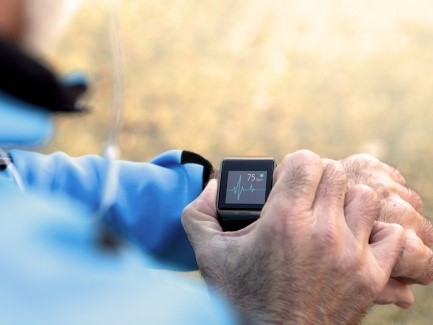
Palpitaciones del corazón
Bradicardia, taquicardia
Revisado por Dr Toni Hazell, FRCGPÚltima actualización por Dr Hayley Willacy, FRCGP Última actualización 30 Ene 2023
Cumple con las directrices editoriales
- DescargarDescargar
- Compartir
- Language
- Discusión
- Versión en audio
- Agregar a fuentes preferidas en Google
En esta serie:BradicardiaRitmos cardíacos anormalesSíndrome de Wolff-Parkinson-WhiteTaquicardia supraventricular
Las palpitaciones del corazón son la sensación de que el corazón está latiendo y son comunes. La mayoría de los casos son inofensivos. Por lo general, solo duran un corto tiempo y pueden ir acompañadas de otros síntomas como dificultad para respirar, mareos, opresión en el pecho y sensación de ansiedad. Las palpitaciones que son severas o no se calman rápidamente pueden necesitar atención médica urgente. Las causas más comunes se mencionan a continuación.
De un vistazo
Las palpitaciones del corazón son sensaciones de un corazón rápido, palpitante o aleteante.
Son un síntoma, no un diagnóstico, donde te das cuenta de que tu corazón está latiendo.
Las causas comunes incluyen el estrés, el ejercicio, la cafeína y ciertos medicamentos.
Consulte a un médico si las palpitaciones no le hacen sentir mal pero se resuelven por sí solas.
Llama a una ambulancia si las palpitaciones no desaparecen rápidamente, o si tienes dolor en el pecho, dificultad respiratoria severa, o te sientes mareado.
¿Qué son las palpitaciones del corazón?
Las palpitaciones del corazón son sensaciones rápidas, de golpeteo o aleteo que las personas experimentan en el pecho. Pueden estar en el lado izquierdo o en el centro del pecho. Normalmente no somos conscientes de los latidos de nuestro corazón. El término 'palpitaciones' se utiliza cuando somos conscientes de los latidos de nuestro corazón. Algunas personas dicen que las palpitaciones del corazón se sienten como si su corazón estuviera acelerado; otras dicen que su pecho duele, golpea o aletea o como si su corazón se saltara un latido. Usualmente, esta sensación es causada por una frecuencia cardíaca más rápida de lo habitual para tu edad, género y nivel de condición física.
'Palpitaciones' son un síntoma, no un diagnóstico. La tarea importante para su profesional de salud es determinar qué las está causando. Ocasionalmente, la sensación se debe a un problema de ritmo cardíaco. Ver el folleto Anatomía del corazón para más información sobre el corazón.
Cuándo preocuparse por las palpitaciones del corazón
Ocasionalmente, las palpitaciones del corazón pueden ser graves. En las siguientes situaciones, debe llamar a una ambulancia:
Si tienes palpitaciones que no desaparecen rápidamente (en unos pocos minutos).
Si tienes alguna dolor en el pecho con palpitaciones.
Si tienes dificultad respiratoria severa con palpitaciones.
Si te desmayas, o sientes que te vas a desmayar, o te sientes mareado.
Si tienes palpitaciones y has tenido afecciones cardíacas y problemas como insuficiencia cardíaca en el pasado.
Si tienes palpitaciones que comenzaron mientras hacías ejercicio.
Si las palpitaciones no te hacen sentir mal y se resuelven por sí solas, deberías ver a tu médico de cabecera. Lleva un diario de cuándo ocurren y cuánto duran, ya que esta información ayudará a tu médico.
Si tienes un episodio de palpitaciones cardíacas, puede ser útil revisar tu pulso. En particular, puede ser útil para tu médico saber qué tan rápido estaba tu pulso durante el episodio. Es decir, cuántos latidos por minuto; además, si tu pulso se sentía regular o irregular. Esta información puede ayudar a identificar la causa de las palpitaciones. Tu enfermera de práctica puede mostrarte cómo tomar tu propio pulso. O puedes seguir los pasos mostrados en el sitio web de la Fundación Británica del Corazón, que se encuentra en 'Lecturas adicionales y referencias' al final de este folleto.
¿Qué causa las palpitaciones del corazón?
Esta lista no incluye todas las posibles causas de las palpitaciones cardíacas, pero enumera algunas de las causas más comunes, incluyendo:
Un latido cardíaco rápido pero regular (taquicardia sinusal)
Hay muchas razones por las cuales la frecuencia cardíaca puede ser más rápida de lo normal. Algunas de estas son:
Ejercicio.
Consumo de cafeína.
Ciertos medicamentos.
Otros fármacos estimulantes, incluidos algunos drogas recreativas.
Una anomalía subyacente grave del corazón es una causa rara de taquicardia sinusal. El tratamiento dependerá de la razón subyacente del ritmo cardíaco rápido.
Frecuencia cardíaca lenta (bradicardia)
Leer más sobre bradicardia.
Ritmos cardíacos anormales (arritmias)
Leer más sobre ritmos cardíacos anormales (arritmias).
Diagnóstico de palpitaciones cardíacas
Es probable que se le pregunte sobre su consumo de las sustancias mencionadas anteriormente y las circunstancias en las que ocurren las palpitaciones del corazón. Su médico tomará su pulso y presión arterial, escuchará su corazón y ordenará pruebas adicionales según sea necesario. Las investigaciones iniciales para las palpitaciones del corazón incluyen:
Análisis de sangre verificar anemia y una glándula tiroides hiperactiva.
Electrocardiograma (ECG) registrar los impulsos eléctricos de su corazón para verificar si el ritmo cardíaco es regular y de frecuencia normal. También busca enfermedades cardíacas subyacentes o previas.
ECG ambulatorio: este es un ECG que registra tu corazón mientras llevas a cabo tu vida normal durante 24 o 48 horas. Se te pedirá que tomes nota de cuándo sientes las palpitaciones. La lectura mostrará entonces lo que tu corazón estaba haciendo cuando sentiste las palpitaciones.
En algunos casos, puede que necesites una ecografía del corazón (un ecocardiograma, o 'eco').
En otros casos, es posible que necesites una prueba de tu corazón mientras haces ejercicio.
También se pueden utilizar pruebas de electrofisiología. Se insertan pequeños cables (electrodos) en su corazón a través de una de sus venas. Estos cables miden las señales eléctricas en su corazón y pueden determinar de dónde provienen las señales eléctricas anormales.
Todos estos exámenes son para asegurarse de que no haya ninguna anomalía en su corazón que cause las palpitaciones. Sin embargo, en muchos casos, las palpitaciones NO son causadas por ningún problema con su corazón.
Cómo tratar las palpitaciones cardíacas
El tratamiento dependerá de la causa probable de sus palpitaciones. Si, por ejemplo, sus palpitaciones son causadas por consumir demasiada cafeína, se le aconsejará reducir la cantidad de cafeína que consume. Si sus palpitaciones son causadas por ansiedad, su médico discutirá formas de manejar esto.
Algunos casos de palpitaciones son manejados por un médico de cabecera; otros casos pueden ser remitidos a un especialista del corazón (cardiólogo). En cualquier caso, el tratamiento que se le dará depende de la causa que se haya encontrado.
Selecciones del paciente para Palpitaciones del corazón
Salud del corazón y vasos sanguíneos
Ritmos cardíacos anormales
Una arritmia es una frecuencia y/o ritmo anormal del latido del corazón debido a algún problema con el sistema de conducción eléctrica del corazón.
por el Dr. Colin Tidy, MRCGP
Salud del corazón y vasos sanguíneos
Fibrilación auricular
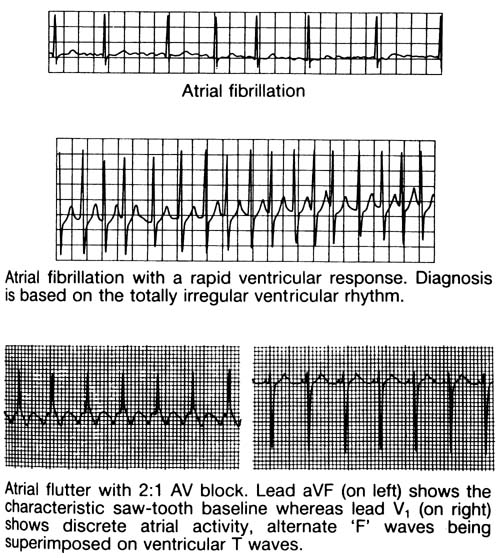
La fibrilación auricular (FA) es un latido cardíaco irregular y rápido anormal. Un ritmo cardíaco anormal se llama arritmia. Una frecuencia cardíaca normal está entre 60 y 100 latidos por minuto (lpm) cuando estás en reposo. En la FA, la frecuencia cardíaca a veces puede ser muy rápida (a menudo entre 140 y 180 lpm) además de ser irregular.
por el Dr. Doug McKechnie, MRCGP
Preguntas frecuentes
¿Cuál es la diferencia entre las palpitaciones del corazón y una percepción normal de mi latido cardíaco?
Normalmente, no somos conscientes de los latidos de nuestro corazón. El término 'palpitaciones' se utiliza específicamente cuando te das cuenta de los latidos de tu corazón, a menudo experimentándolo como una sensación rápida, de golpeteo o aleteo en el pecho.
¿Pueden ciertos medicamentos causar palpitaciones cardíacas?
Sí, algunos medicamentos pueden ser una causa de palpitaciones cardíacas, específicamente al provocar un ritmo cardíaco rápido pero regular conocido como taquicardia sinusal. Si sospechas que un medicamento está causando tus palpitaciones, tu médico considerará esto como parte de su evaluación.
¿Cómo pueden los médicos determinar si mis palpitaciones cardíacas son graves o no?
Los médicos preguntarán sobre sus síntomas y cuándo ocurren, luego realizarán un examen físico que incluye verificar su pulso y presión arterial, y escuchar su corazón. También pueden ordenar varias pruebas como análisis de sangre, un electrocardiograma (ECG) o un ECG ambulatorio para monitorear su corazón durante un período. En algunos casos, se pueden utilizar pruebas más especializadas como un ultrasonido del corazón o pruebas de electrofisiología para identificar la causa.
¿Qué información debo registrar sobre mis palpitaciones para ayudar a mi médico de cabecera?
Es útil llevar un diario de cuándo ocurren tus palpitaciones, cuánto duran y qué estabas haciendo en ese momento. Si es posible, también anota qué tan rápido estaba tu pulso durante el episodio y si se sentía regular o irregular. Esta información puede ayudar a tu médico de cabecera a identificar la causa.
¿Son siempre las palpitaciones cardíacas un signo de un problema del corazón?
No, las palpitaciones del corazón no siempre son un signo de un problema cardíaco. Aunque a veces pueden deberse a un problema subyacente del corazón, muchos casos no son causados por ninguna anomalía en el corazón en sí. Pueden ser desencadenadas por diversos factores como el estrés, la cafeína, ciertos medicamentos u otras condiciones como un tiroides hiperactivo.
Lecturas adicionales y referencias
- Comprobando tu pulso; Fundación Británica del Corazón
- Sociedad Europea de Cardiología; Guías para el Manejo de la Fibrilación Auricular, 2020
- Palpitaciones; NICE CKS, febrero 2026 (acceso solo en el Reino Unido)
- Brugada J, Katritsis DG, Arbelo E, et al; Guías ESC 2019 para el manejo de pacientes con taquicardia supraventricular. El Grupo de Trabajo para el manejo de pacientes con taquicardia supraventricular de la Sociedad Europea de Cardiología (ESC). Eur Heart J. 1 de febrero de 2020;41(5):655-720. doi: 10.1093/eurheartj/ehz467.
- Govender I, Nashed KK, Rangiah S, et al; Palpitaciones: Evaluación y manejo por parte de los médicos de atención primaria. S Afr Fam Pract (2004). 2022 Feb 24;64(1):e1-e8. doi: 10.4102/safp.v64i1.5449.
Sobre el autor
Actualizado por

Dr Hayley Willacy, FRCGP
Médico General, Autor Médico
MBChB (1992), DRCOG, DFFP, MRCOG (Part 1) MRCGP (2007), DFSRH (2013), MSc - medical education (2020)
La Dra. Hayley Willacy fue una médica general del NHS que trabajaba en el noroeste de Inglaterra, quien se retiró de la práctica clínica en 2022 después de 30 años.
Escrito por

Dr Ann Robinson, MRCGP
MBBS, DFFP, DCH, DRCOG, MRCGP
Acerca del revisorVer biografía completa

Dr Toni Hazell, FRCGP
MBBS, BSc, FRCGP, DFSRH, Dip GU med, DRCOG, DCH (London, UK, 2000)
La Dra. Toni Hazell se graduó de la Escuela de Medicina del Hospital St. Mary y realizó su VTS en el Hospital Northwick Park.
Historial del artículo
Artículo también disponible en Inglés, Alemán, Español, Francés, Italiano, Portugués, Hindi, Hebreo, Árabe, y Sueco.
Próxima revisión: 29 Ene 2028
30 Ene 2023 | Última versión
5 Nov 2012 | Publicado originalmente
Escrito por:
Dr Ann Robinson, MRCGP
Únete a la conversación
Comparte tus pensamientos o experiencias con otros en nuestro comunidades de pacientes.

Pregunta, comparte, conecta.
Navega por discusiones, haz preguntas y comparte experiencias en cientos de temas de salud.

¿Te sientes mal?
Evalúa tus síntomas en línea de forma gratuita
Suscríbete al boletín de Patient
Tu dosis semanal de consejos de salud claros y confiables, escritos para ayudarte a sentirte informado, seguro y en control.
Al suscribirte aceptas nuestros Política de Privacidad. Puedes darte de baja en cualquier momento. Nunca vendemos tus datos.