¿Qué alimentos desencadenan el síndrome del intestino irritable?
Revisado por pares por Dr Colin Tidy, MRCGPÚltima actualización por Lynn StephenÚltima actualización 6 de abril de 2026
Cumple con las directrices editoriales
- DescargarDescargar
- Compartir
- Language
- Discusión
- Versión en audio
- Agregar a fuentes preferidas en Google
Si tienes síndrome del intestino irritable (SII), probablemente entenderás que algunos alimentos pueden desencadenar tus síntomas. Aunque no existe una solución única para la dieta en el SII, algunos alimentos pueden ser más propensos a causar problemas que otros.
Síndrome del intestino irritable (IBS) is a common condition that affects the digestive system.
Provoca síntomas como:
Symptoms can come and go and last for days or months.
La causa exacta del síndrome del intestino irritable (SII) es desconocida. Se ha relacionado con factores como que los alimentos pasen por tu intestino demasiado rápido o demasiado lento, nervios sensibles en tu intestino, estrés y antecedentes familiares de la condición. Aunque no existe una cura, saber qué alimentos pueden causar síntomas puede ayudar a crear una dieta que funcione para ti.
Julie Thompson, Gerente de Información en Guts UK, explica que los alimentos que desencadenan una exacerbación de los síntomas varían de una persona a otra. Sin embargo, hay algunos temas comunes.
Which foods can trigger IBS symptoms?
Café
Many people reach for a café first thing in the morning. But caffeine - found in coffee, tea, cola, and chocolate - can lead to diarrhoea, especially if you have a more sensitive gut.
Caffeine is a gastrointestinal stimulant which means that it speeds up peristalsis - the muscle contractions that move food through your digestive tract. Both caffeinated and decaf coffee also stimulate the production of a hormone called gastrin, which promotes digestion and can increase your urge to go to the toilet. The acidic nature of coffee can also stimulate your bowels.
However, whether coffee is problematic can depend on the person.
Thompson says: “Para algunas personas con síndrome de intestino irritable y estreñimiento, una taza de café por la mañana podría ayudar a activar el intestino."
Sweeteners
Many foods contain sugar-free artificial sweeteners - such as sorbitol and xylitol - but these can cause diarrhoea. According to some studies, sweeteners may affect the good bacteria in your gut. Also, chewing gum leads to more swallowed air, which can make gassiness and bloating worse.
Fruit juice
Drinking too much fruit juice can cause unpleasant symptoms for some people with IBS as it contains a sugar called fructose. Research shows that around one third of people with suspected IBS have fructose intolerance. Fructose is found in higher quantities in juice, honey and sweets, as well as in fruits and some vegetables.
Some people - including those with IBS - are unable to fully absorb fructose in the small intestine, which can lead to hinchazón, stomach pain, and diarrea. As a result, the undigested fructose makes its way into the large intestine where it is fermented by bacteria, causing IBS symptoms.
It can help to limit the amount of juice you drink. However, Thompson adds that fruit is healthy and should not be completely cut out of a diet.
Fizzy drinks
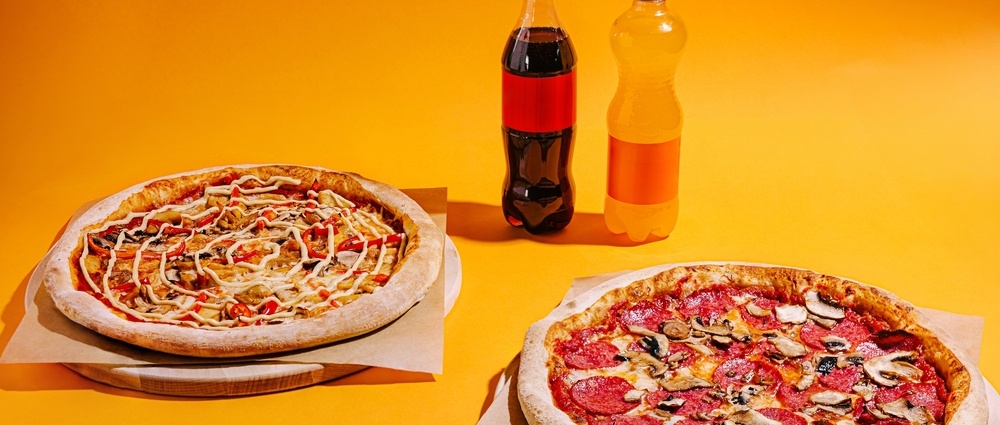
Fizzy drinks can cause gas and bloating because of the carbonation. This can lead to too much gas that can irritate your digestive system. Additionally, regular fizzy drinks contain high levels of sugar, and diet drinks contain artificial sweeteners, which can further aggravate your gut.
Comidas grasosas
Greasy or deep-fried foods that are high in fat, como papas fritas o pizza, pueden causar calambres estomacales y diarrea en algunas personas con SII. No se sabe exactamente por qué esto sucede, pero las investigaciones sugieren que comer alimentos grasos puede ralentizar el movimiento de los gases en tu intestino.
Thompson says: High levels of dietary fat can also trigger a gut reflex called the gastrocolic reflex. This signals your colon to empty food once it gets to your stomach in order to make room for more food. For some people, this can cause diarrhoea immediately when fats enter the stomach.”
Leche
Lactose is a type of sugar found in cow’s milk and dairy products such as cheese or ice cream. For some people with SII, an inability to break down lactose - because of a lack of an enzyme called lactase - causes issues such as bloating, gas, stomach ache, and diarrhoea.
However, Thompson explains that lactose isn’t the cause of all IBS cases. It’s important for people with IBS to identify their own triggers before changing their diet. If lactose does trigger IBS symptoms, you can swap cow's milk for alternatives such as oat or lactose-free milk.
Alcohol
Alcohol is believed to stimulate your digestive tract, which can lead to IBS symptoms. In the small intestine, alcohol can reduce the absorption of nutrients including carbohydrates. This can lead to gas and diarrhoea as these substances interact with bacteria in your large intestine. As with coffee, alcohol can speed up the movement of the muscles of the intestine, increasing the chance of diarrhoea in people with a sensitive gut.
FODMAPS
FODMAPs (fermentable oligosaccharides, disaccharides, monosaccharides, and polyols) are sugars in certain foods that the small intestine absorbs poorly.
“These non-absorbable carbohydrates are found in many foods and are fermented by bacteria in the large bowel,” explains Thompson. “This can cause symptoms in people with SII."
Foods which contain FODMAPs include:
Vye.
Cilk.
Peaches.
Cherries.
Apples.
Pears.
Peas.
Frijoles.
Lentejas.
Savoy cabbage.
Coliflor.
There is a specific low FODMAPS diet for IBS which involves removing high FODMAPs for several weeks, then re-introducing them one at a time to see which ones you can tolerate. You then continue on your personalised diet with certain FODMAPs removed.
The diet can be challenging to follow, and nutritionally restrictive so you should speak to your dietitian for advice.
How to manage the symptoms of IBS
Although there is no fix for IBS, it is possible to manage your symptoms. First, you should speak to your doctor who will ask you about your symptoms - whether they come and go, how often you get them, and when you get them.
Before diagnosing IBS, your doctor may want to rule out other causes of digestive issues, such as enfermedad celíaca - a condition caused by an allergy to gluten. Gluten is mostly found in flour-based foods, such as breads and pastas.
If you are diagnosed with IBS, it’s important to take note of foods which trigger symptoms before changing your diet. Keeping a food diary can help. Finding ways to relax, getting plenty of exercise, and trying probióticos may help ease your symptoms.
People who struggle with diarrhoea may benefit from cutting down on high-fibre foods, such as brown bread, as well as caffeine. It’s also important to drink plenty of water to avoid dehydration. However, if you are constipated, deberías comer más alimentos ricos en fibra, como frijoles, zanahorias y semillas de lino. Tu médico puede recomendar medicamentos para controlar la diarrea o aliviar el estreñimiento.
Your doctor or dietitian may recommend a diet which is low in FODMAP foods.
Selecciones del paciente para Síndrome del intestino irritable
Salud digestiva
¿Cuál es la relación entre el síndrome del intestino irritable y la ansiedad?
Irritable bowel syndrome (IBS) can cause a combination of tummy cramps, diarrhoea, bloating and constipation. It's a long-term health condition that can affect your quality of life. Although changing your diet and taking certain medicines can help, poor mental health and IBS symptoms can mutually aggravate each other.
por Victoria Raw

Salud digestiva
Probióticos para el SII: ¿funcionan?
From your work life to your sex life, having irritable bowel syndrome (IBS) can cause disruption and inconvenience. Can probiotics for IBS help to reduce these symptoms, and which probiotic supplements can you trust?
por Amberley Davis
Sobre el autorVer biografía completa

Lydia Smith
Escritora de artículos
BA, MA, MSc
Lydia Smith es una periodista galardonada y escritora de reportajes que ha escrito extensamente sobre la salud de las mujeres y la salud mental. Actualmente está estudiando una maestría en psicología.
Acerca del revisorVer biografía completa

Dr Colin Tidy, MRCGP
Médico General, Autor Médico
MBBS, MRCGP, MRCP (Paediatrics), DCH
El Dr. Colin Tidy es un médico del NHS, con sede en Oxfordshire.
Historial del artículo
La información en esta página es revisada por pares por clínicos calificados.
Artículo también disponible en Inglés, Alemán, Español, Francés, Italiano, Portugués, Hindi, Hebreo, Árabe, y Sueco.
Siguiente revisión prevista: 6 de abril de 2029
6 de abril de 2026 | Última versión
11 Apr 2023 | Publicado originalmente
Escrito por:
Lydia Smith

Pregunta, comparte, conecta.
Navega por discusiones, haz preguntas y comparte experiencias en cientos de temas de salud.

¿Te sientes mal?
Evalúa tus síntomas en línea de forma gratuita
Suscríbete al boletín de Patient
Tu dosis semanal de consejos de salud claros y confiables, escritos para ayudarte a sentirte informado, seguro y en control.
Al suscribirte aceptas nuestros Política de Privacidad. Puedes darte de baja en cualquier momento. Nunca vendemos tus datos.
Más sobre salud digestiva
- Dieta para el reflujo ácido: alimentos para comer y evitar
- Cómo el SII afecta el sexo, las citas y las relaciones
- Cómo evitar los problemas estomacales
- Cómo deshacerse de la indigestión
- Cómo deshacerse de los oxiuros
- Cómo eliminar los gases atrapados: remedios caseros que funcionan
- Cómo controlar la acidez en Navidad
- Hipnoterapia para el SII: el eje intestino-cerebro
- ¿Es indigestión o un ataque al corazón?
- NuevoLeche cruda: ¿realmente es buena para ti o solo otra tendencia de bienestar?
- Formas astutas de consumir más fibra
- La conexión entre la salud intestinal y la felicidad
- Qué podría significar sangre en tus heces
- ¿Qué causa los calambres estomacales nocturnos?
- ¿Qué sucede si tu apéndice estalla?
- Cómo es tener una discapacidad invisible
- Qué comer y evitar para la acidez
- ¿Qué es la hepatitis autoinmune y en qué se diferencia de otras formas?
- ¿Qué está causando tu dolor abdominal bajo?
- ¿Por qué te suena el estómago cuando no tienes hambre?