Estreñimiento
Revisado por pares por Dr Toni Hazell, FRCGPÚltima actualización por Dr Caroline Wiggins, MRCGP Última actualización 31 Mar 2026
Cumple con las directrices editoriales
- DescargarDescargar
- Compartir
- Language
- Discusión
- Versión en audio
- Agregar a fuentes preferidas en Google
El estreñimiento significa que estás evacuando menos de lo normal, tienes dificultad para evacuar o tienes evacuaciones dolorosas. Generalmente es causado por no consumir suficiente fibra o no beber suficientes líquidos.
Puntos clave
El estreñimiento es un problema digestivo común que puede afectar a personas de cualquier edad. Implica movimientos intestinales infrecuentes (defecación), heces duras o dolorosas, esfuerzo al evacuar o una sensación de vaciado incompleto.
Comúnmente es causado por factores dietéticos y de estilo de vida, como no consumir suficiente fibra, no beber suficiente líquido, la falta de actividad física y los cambios en la rutina.
La mayoría de los casos de estreñimiento pueden aliviarse aumentando la fibra y los líquidos, manteniéndose activo, respondiendo a la necesidad de evacuar y tomando laxantes de venta libre.
What is constipation?
Constipation means having difficulty pooing (passing stools), having fewer poos than usual, or having poos that are hard, dry, or painful to pass.
Some people with constipation can feel the need to strain to pass the poo, or feel that their bowels have not emptied completely.
This information leaflet discusses constipation in adults. For constipation in children, see our information leaflet called Estreñimiento en niños.
What is constipation?
Constipation symptoms
You may be constipated if:
Your poo is hard and difficult or painful to pass.
You're pooing less frequently than usual.
You have stomach ache or cramps.
You feel bloated or sick.
It does not feel as though you have emptied your bowel or 'finished' after pooing.
How long does constipation last?
Constipation can last for just a day, or several days, depending on the cause and if steps are taken to improve it.
Chronic constipation lasts for at least 12 weeks out of the past 6 months.
What causes constipation?
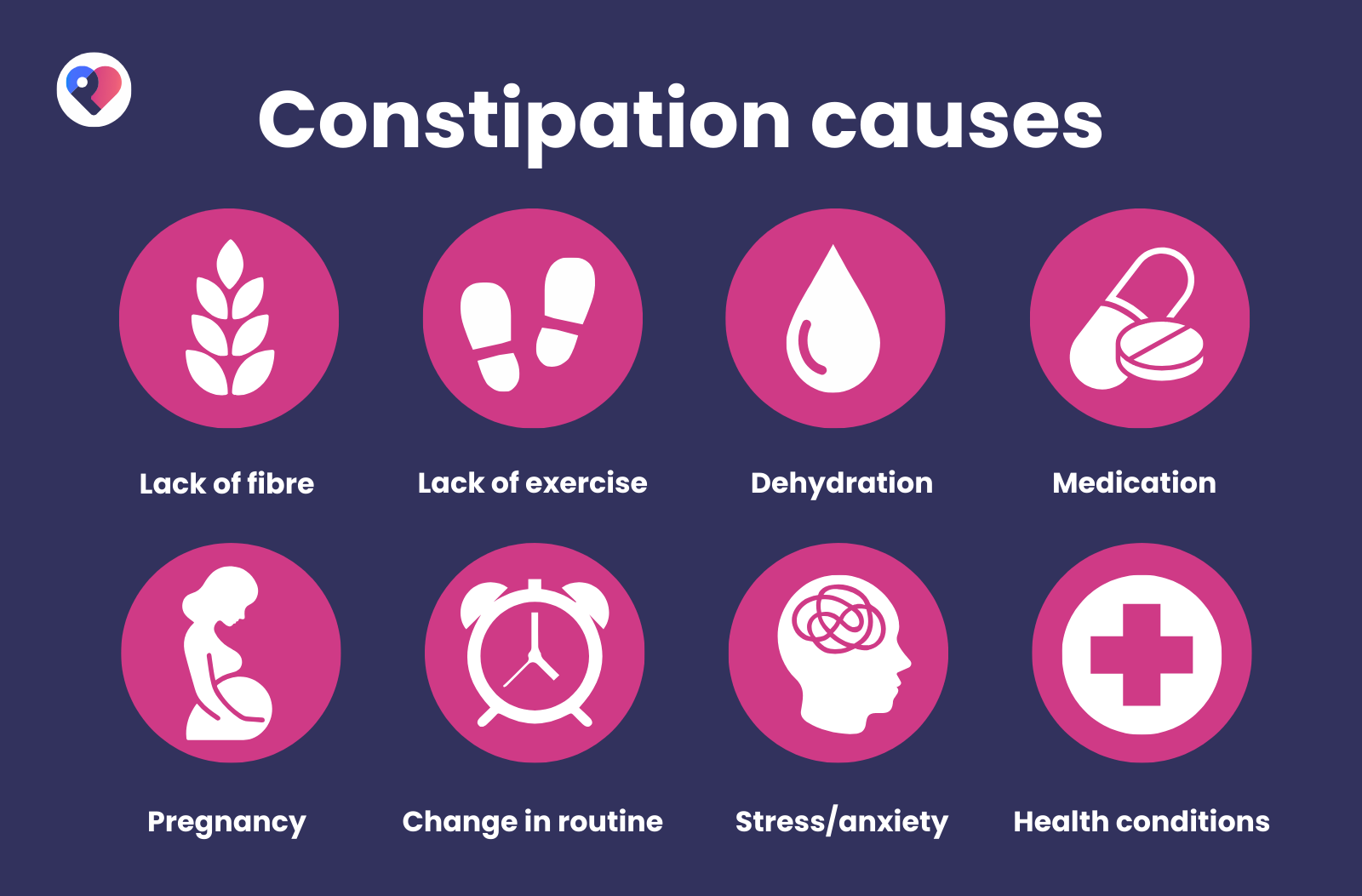
Common causes of constipation include:
Not eating enough fibra - this is found in foods such as fruits, vegetables, and cereals.
Not drinking enough fluids - which can lead to deshidratación.
Lack of physical activity.
Certain medicines – such as painkillers (especially ones with codeína), antiácidos, antidepressants such as amitriptilina, iron tablets, and some blood pressure medicines.
Medical conditions - such as an glándula tiroides poco activa, síndrome del intestino irritable, enfermedad diverticular y colon cancer.
Pregnancy - caused by hormonal changes and pressure from the growing womb. About 1 in 5 pregnant women will become constipated.
Constipation can also be caused by:
Ignoring the urge to poo when you need to go to the toilet.
Changes to your routine.
Changes to your diet.
Difficulty accessing a toilet.
Functional constipation
Some people develop constipation despite a healthy diet, good fluid intake, and no underlying illness or medicines. It causes chronic (long term) constipation and has no identifiable cause. This is known as functional (primary) constipation.
It is common, affects women more often than men and it usually begins in childhood or early adulthood.
How to treat constipation
Lifestyle and diet changes
Gradually increase the fibre in your diet to 30g daily. Wholegrains, fruit and vegetables are higher in fibre than other foods. For information on increasing fibre in your diet see the information sheet on fibre by the British Dietetic Association (BDA) in Further Reading below.
Ensure you drink enough water each day to stay hydrated. The BDA information sheet on Fluid in Further Reading below shows why water is important and how much you need to drink.
Siendo físicamente activo encourages your bowel to move food along through your gut, avoiding constipation.
Go to the toilet to poo as soon as you feel the need to.
Over-the-counter medicine
Some medicines to help short term constipation can be bought over the counter at a pharmacy or supermarket. These medicines can be used for up to one week. If your constipation lasts longer than a week you should see a doctor. If you are pregnant or breastfeeding you should discuss your constipation with a pharmacist so they can advise you which laxatives are safe to use.
Cuándo ver a un médico
You should see a doctor:
If your constipation lasts longer than one week.
If you have severe tummy pain.
You are regularly experiencing constipation and cannot identify an obvious cause.
You are sick (vomiting) and constipated.
You are losing weight.
You notice bleeding from your bottom (anus).
The feeling of not emptying your bowels completely after you have a poo continues once the constipation has got better.
How to prevent constipation
You can help prevent constipation by following the diet and lifestyle advice in the section "How to treat constipation" above.
Preguntas frecuentes
Can paracetamol cause constipation?
No, paracetamol does not cause constipation.
Are bananas good for constipation?
Ripe bananas can help improve constipation as they are high in fibre, but unripe bananas may contribute to constipation.
What foods should you avoid when constipated?
There are no particular foods to avoid, but try to focus on increasing wholegrain foods which are high in fibre and making sure you are drinking enough water.
How long should I sit on the toilet if I'm constipated?
There are no set rules. Instead, make sure you are relaxed when sitting on the toilet, sitting upright with your feet flat on a steady surface and stay on the toilet until you feel you have emptied your bowels.
Selecciones del paciente para Bowel conditions
Investigación en salud
Únete a un estudio que investiga un nuevo producto bacteriano multicepa para el estreñimiento
Constipation can cause significant discomfort and disruption to daily life. A new research study run by The Functional Gut Clinic is investigating whether a multi-strain bacterial food product can help improve bowel regularity and gut function. The study has been approved by an independent ethics committee and adheres to Good Clinical Practice. Many people with constipation try different treatments before finding something that helps. This study aims to explore whether a targeted bacterial product could offer benefits for gut transit and digestive comfort.
por Thomas Andrew Porteus, MBCS
Salud infantil
Estreñimiento en niños
El estreñimiento es un problema muy común en los niños. Para la mayoría de los niños, el estreñimiento significa evacuar heces duras (heces), con dificultad, menos frecuentemente de lo normal. La suciedad regular (a menudo confundida con diarrea líquida) puede indicar que un niño tiene un estreñimiento severo que causa un bloqueo en la parte inferior del intestino (impactación). Cuando ninguna enfermedad o afección particular es la causa del estreñimiento, se llama estreñimiento idiopático. Es importante que el estreñimiento se reconozca temprano para evitar que se convierta en un problema a largo plazo (crónico). Nota: para adultos, consulte el folleto separado llamado Estreñimiento.
por la Dra. Hayley Willacy, FRCGP
Lecturas adicionales y referencias
- Estreñimiento; NICE CKS, noviembre 2025 (acceso solo en el Reino Unido)
- Fibra; The Association of UK Dietitians (BDA)
- Fluid. British Dietetic Association.
- Cánceres del tracto gastrointestinal (inferior) - reconocimiento y derivación; NICE CKS, agosto 2023 (acceso solo en el Reino Unido)
Sobre el autorVer biografía completa

Dr Caroline Wiggins, MRCGP
Médico General, Autor Médico
MBBS Honores (con Distinción), MRCGP (2016), MSc.SEM (con Distinción), BSc (Hons)
La Dra. Caroline Wiggins es una médica de cabecera suplente actualmente en el suroeste de Inglaterra.
Acerca del revisorVer biografía completa

Dr Toni Hazell, FRCGP
MBBS, BSc, FRCGP, DFSRH, Dip GU med, DRCOG, DCH (London, UK, 2000)
La Dra. Toni Hazell se graduó de la Escuela de Medicina del Hospital St. Mary y realizó su VTS en el Hospital Northwick Park.
Historial del artículo
La información en esta página está escrita y revisada por pares por clínicos calificados.
Artículo también disponible en Inglés, Alemán, Español, Francés, Italiano, Portugués, Hindi, Hebreo, Árabe, y Sueco.
Próxima revisión: 31 de diciembre de 2030
31 Mar 2026 | Última versión

Pregunta, comparte, conecta.
Navega por discusiones, haz preguntas y comparte experiencias en cientos de temas de salud.

¿Te sientes mal?
Evalúa tus síntomas en línea de forma gratuita
Suscríbete al boletín de Patient
Tu dosis semanal de consejos de salud claros y confiables, escritos para ayudarte a sentirte informado, seguro y en control.
Al suscribirte aceptas nuestros Política de Privacidad. Puedes darte de baja en cualquier momento. Nunca vendemos tus datos.
Más sobre salud digestiva
- Reflujo ácido y esofagitis
- Fisura anal
- Fístula anal
- Apendicitis
- Diarrea por ácidos biliares
- Síndrome de vómito cíclico
- Divertículos
- Esofagitis eosinofílica
- Intoxicación alimentaria en niños
- Dispepsia funcional
- Malabsorción gastrointestinal
- Náuseas y vómitos
- Norovirus
- Cáncer de esófago
- Prolapso rectal
- Dolor en el cuadrante superior derecho
- Rotavirus
- Úlcera de estómago
- Diarrea en niños pequeños
- diarrea del viajero