Viento atrapado, gases e hinchazón
Revisado por pares por Dr Toni Hazell, FRCGPÚltima actualización por Dr Hayley Willacy, FRCGP Última actualización 26 Ene 2026
Cumple con las directrices editoriales
- DescargarDescargar
- Compartir
- Language
- Discusión
- Versión en audio
- Agregar a fuentes preferidas en Google
En esta serie:Síndrome del intestino irritableDiarrea por ácidos biliaresAntiespasmódicosProbióticos y prebióticos
El viento atrapado es común y ocurre cuando el gas se acumula en el estómago o los intestinos, causando hinchazón, eructos o flatulencias. Todos tienen una cierta cantidad de gas en el intestino, pero para algunas personas, se producen cantidades mayores de gas.
See also the separate leaflet called Abdominal pain.
Puntos clave
Trapped wind happens when gas builds up in the stomach or intestines and can’t pass easily. It causes bloating, sharp or crampy tummy pains, burping, and farting.
Many things can cause trapped wind including, swallowing air, certain foods and drinks such as beans, cabbage, and fizzy drinks, constipation, or digestive conditions like IBS.
Trapped wind can be relieved through gentle movement, burping, farting, making changes to your diet, and over-the-counter medicines such as simeticone.
If pain is severe, constant, or comes with unexplained weight loss, vomiting blood, or other worrying symptoms, you should seek medical help immediately.
What is trapped wind?
Trapped wind is also called gases o hinchazón. It is the build-up of air or gas in your gut (digestive system) that isn’t moving through easily. It can become trapped in the upper or lower gut, leading to uncomfortable sensations. After a time it is released as burping (upper gut) or farting (lower gut).
This is extremely common and most people do it at some time in their lives. People may experience it more than others if they tend to be anxious and have worry-related gut symptoms, or have irritable bowel syndrome.
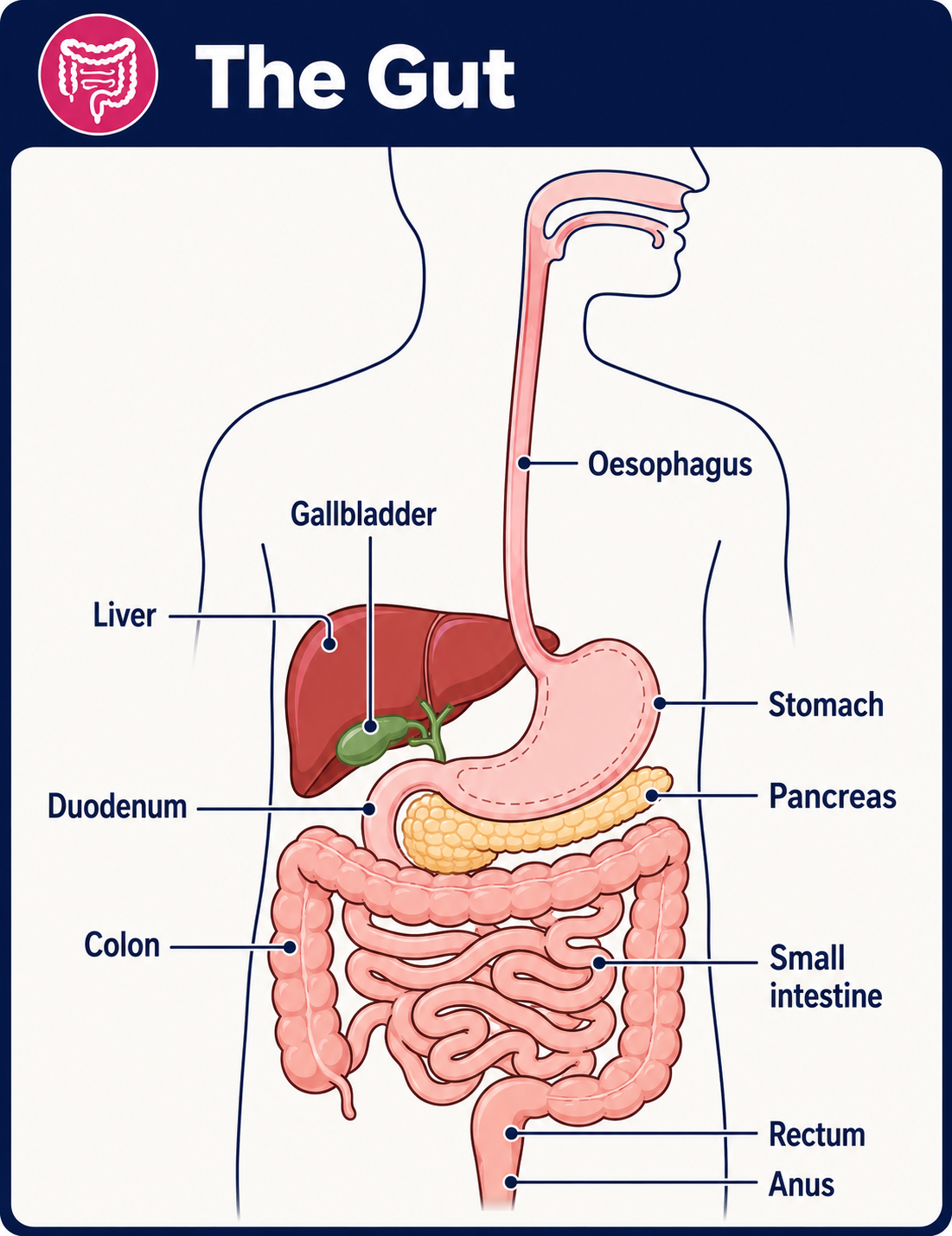
Diagram naming the parts of the gut
How is gas produced?
Gas in the bowel is produced by swallowed air and by bacteria breaking down food in the gut.
Air is taken in while eating, drinking, chewing gum, smoking, or swallowing saliva, and swallowing larger amounts - especially when eating quickly. This can lead to bloating as this air travels through the oesophagus and into the stomach.
Sitting up often causes this air to escape as burps, while lying flat can push it downward, creating abdominal pressure before it moves into the small intestine and exits as farts.
Gas is also produced when gut bacteria digest certain foods like broccoli, Brussels sprouts, and beans, producing carbon dioxide, hydrogen, methane, and small amounts of sulphur, which causes the unpleasant smell. This build-up of gas can lead to abdominal bloating, making the stomach feel tight, swollen, and uncomfortable.
Trapped wind symptoms
Symptoms of trapped wind include:
Crampy stomach pains.
Bloated belly.
Pain in upper abdomen.
Pain in your upper or lower back.
Gurgling noises.
Feeling full.
Burping or farting more.
Gas sometimes settles in the curves of the large bowel (large intestine) under the liver or spleen. This can cause pain in the upper right or upper left areas of your tummy.
The symptoms of trapped wind can be worrying as they can feel more severe than they actually are. However, trapped wind is harmless in most cases and usually settles once the gas passes through the system.
What can be mistaken for trapped wind?
The most common conditions that are similar to trapped wind are:
Estreñimiento - this can cause bloating and pain that usually improves after opening your bowels.
Indigestión - this can cause pressure in the upper part of your tummy, as well as belching and a burning feeling.
Síndrome del intestino irritable (SII) - this can cause recurrent bloating and pain relieved by passing poo (stool) or wind.
Food intolerances (such as lactose or gluten sensitivity) - these can create a lot of gas, as well as colicky pain (that comes and goes), diarrhoea or constipation.
Gastritis or acid reflux - this can cause discomfort in your upper abdomen or chest, and a sensation of fullness.
What causes trapped wind?
Trapped wind is caused when there is too much gas in your digestive system. Reasons why you might have a larger than normal amounts of gas in the tummy include the following:
Swallowing too much air (aerophagia) - by eating and drinking too quickly, chewing gum, smoking, fizzy drinks, and from stress.
Dieta - eating foods high in fibre (broccoli, brussels sprouts, beans, fruit), starchy foods (potatoes, corn, and noodles), and lactose sugars (milk, cheese, ice-cream, and processed foods).
Digestive issues - conditions such as intolerancia a la lactosa, fructose intolerance, síndrome del intestino irritable (SII),
Diseases of the bowel - tales como enfermedad celíaca, inflammatory bowel diseases (colitis ulcerosa y enfermedad de Crohn).
Medicamentos - some medicines such as metformina (a medicine for diabetes), lactulosa (a laxative), and antiácidos como magnesium trisilicate can cause gas and bloating as a side effect.
Infecciones - tales como gastroenteritis (tummy bug), giardiasis, y diverticulitis.
Other gut problems - tales como short bowel syndrome, small intestinal bacterial overgrowth (SIBO), y esclerodermia.
Do I need any tests for trapped wind or bloating?
Most people with these symptoms do not need any tests. However, you may need tests if you have more worrying symptoms. These can include:
The tests may include:
A poo sample to check for blood, high levels of fat (which could suggest problems with food absorption) and infection.
A lactose tolerance test.
Examination of your stomach or lower bowel, using a camera (endoscopy).
A prueba de sangre for coeliac disease.
How to get rid of trapped wind
There are several remedios caseros that you can try that help relieve trapped wind and stop bloating. Estas incluyen:
Making changes to your diet
Some foods are well known for making you bloated. Cut down on these triggers.
If you are unsure of what triggers you, keep a record of the foods and drinks you have and drink to see if there are any foods or beverages which could be associated with your symptoms. These can include milk and milk products, certain fruits and vegetables, whole grains, artificial sweeteners, and fizzy drinks. Pulses, bran, and fruit contain fermentable carbohydrates, sugars which are easily broken down by the digestive system.
If you are lactose-intolerant you will need to avoid lactose-containing foods. Talk to your doctor to find out how best to do this without developing complications such as calcium and mineral deficiency.
If you are fructose-intolerant you should avoid fructose-containing foods. Fructose is used as a sweetener in many processed foods; look for 'high in fructose corn syrup' on the label.
Live micro-organisms (probióticos) may be helpful, although the evidence is not conclusive. Probiotics are 'gut-friendly' germs (bacteria) such as lactobacilli and bifidobacteria. The specific strain of bacteria may be important but, on current evidence, it is difficult to advise which strain(s) to use.
Diets which combat constipation may be helpful. For example, soluble fibre such as linseed (up to one tablespoon daily) and oats are recommended.
Hacer ejercicio regularmente
Exercise has been shown to improve gas-related symptoms. This is partly due to the upright position, as lying flat tends to stop gas from moving round the body.
A 15 minute gentle walk after eating.
Yoga poses such as wind-relieving pose (pawanmuktasana), cat-cow stretch, seated twists, and child's pose.
Pelvic tilt. This movement helps relieve pressure and discomfort in the lower abdomen, encouraging gas to move.
Lie on your back with your knees bent and feet flat on the floor.
Tighten your stomach and tilt your pelvis upward slightly, flattening your lower back against the floor.
Hold for 5-10 seconds, then relax.
Repeat 5-10 times.
Breathe deeply during all exercises. Deep breathing can help reduce tension and stimulate digestion.
Taking over-the-counter medicines
Some over-the-counter medicine may help relieve trapped wind, these include:
Simeticone for bloating. It is usually sold in combination with an antacid. Simeticone is also used for colic in babies and infants. Simeticone has not been found to be helpful in bloating related to irritable bowel syndrome.
Medicines which encourage the movement of the gut (prokinetic medicines). They can be quite helpful as bloated stomach remedies if you have excessive belching and bloating. Most of these are prescription-only preparations but peppermint can be bought in various forms.
Medicines which relieve spasm may also be helpful for bloating and distension. Medicines in this group, available without prescription, include mebeverina y alverine.
Terapias psicológicas
Psychological therapies such as mindfulness y terapia cognitivo-conductual (CBT) may be useful for people who have a low tolerance to a normal amount of gas in the stomach.
They may also be helpful for people who have excessive burping, particularly where aerophagy is the cause. Aerophagy can also sometimes be helped by a speech therapist.
Deodorising products
Carbon fibre underwear appears to be effective but is expensive. Charcoal pads and cushions are cheaper but may not be as effective.
When to see a doctor for trapped wind
Trapped wind pain is more likely to:
Come and go in waves.
Move around the abdomen.
Improve with passing gas, bowel movement, movement, or heat.
Occur without a temperature, or other (non-gut). symptoms of illness.
Entonces seek medical help urgently if pain is:
Severe, constant, or worsening.
Localised to one spot.
Accompanied by fever, vomiting, fainting, chest pain, or breathlessness.
Y see a doctor soon to discuss pain which is:
Associated with blood in poo or unexplained weight loss.
How to prevent trapped wind
Preventing trapped wind mostly comes down to how you eat, what you eat, and how your gut moves.
Eat and drink differently
Eat slowly and chew well (less swallowed air).
Avoid talking while chewing.
Don’t skip meals, then overeat later.
Reduce fizzy drinks, beer, and fizzy water.
Avoid drinking through straws and chewing gum.
Adjust your diet
Common gas-producing foods (you don’t have to avoid all - see how they affect you):
Frijoles y lentejas.
Onions, cabbage, broccoli, cauliflower.
Artificial sweeteners (such as sorbitol, xylitol).
Large amounts of dairy (if lactose-intolerant).
Helpful tips:
Introduce fibre gradually, not suddenly.
Balance fibre with adequate water.
Try keeping a food-symptom diary for 1-2 weeks.
If symptoms are frequent, a low-FODMAP diet (guided by a health professional) might help.
Keep your gut moving
Regular physical activity (a 10-15 min walk after meals).
Don’t ignore the urge to open your bowels.
Maintain regular toilet habits.
Treat constipation early.
Reduce gut tension
The gut is sensitive to stress:
Practice slow breathing or relaxation techniques.
Do some gentle yoga or stretching (knees-to-chest, twists).
Try to have adequate sleep.
Preguntas frecuentes
How long can trapped wind last?
Trapped wind usually passes within a few hours, but in some cases it can last a day or two. You should see a doctor if your symptoms continue or get worse.
Can you release trapped gas by pressing on your stomach?
Massaging your stomach can help move trapped gas and relieve pain. Starting at the lower right side of your stomach, gently massage the area in a circular motion, moving up, across to the left, and then down, following the natural path of your intestines.
What sleeping position relieves trapped wind?
Lying on your left side with your knees slightly bent can help trapped wind move through your intestines and relieve discomfort whilst you sleep.
Does drinking hot water relieve trapped wind?
Yes, drinking hot water can help relieve trapped wind for some people. Warm water can relax the muscles in your gut, encourage movement through the digestive system, and make it easier for gas to pass.
Selecciones del paciente para Signos y síntomas generales

Signos y síntomas
Dolor pélvico en mujeres
El dolor pélvico es más común en mujeres. Hay muchas causas diferentes de dolor en el área pélvica. Se pueden clasificar según cuándo tienden a ocurrir, si estás embarazada y si están acompañados de otros síntomas como sangrado vaginal. Las causas más comunes se mencionan a continuación. La mayoría mejorará con analgésicos. La mayoría de las causas recurrentes tienen tratamientos disponibles.
por la Dra. Hayley Willacy, FRCGP

Signos y síntomas
Picazón
Este folleto ofrece una breve descripción del picor cuando no se puede encontrar una causa para el mismo. Varios otros folletos discuten condiciones donde se conoce la causa del picor, como el eccema o la urticaria.
por la Dra. Rosalyn Adleman, MRCGP
Lecturas adicionales y referencias
- Moshiree B, Drossman D, Shaukat A; AGA Clinical Practice Update on Evaluation and Management of Belching, Abdominal Bloating, and Distention: Expert Review. Gastroenterology. 2023 Sep;165(3):791-800
- Pessarelli T, Sorge A, Elli L, Costantino A; The low-FODMAP diet and the gluten-free diet in the management of functional abdominal bloating and distension. Front Nutr. 2022 Nov 8;9:1007716
- Lacy BE, Gabbard SL, Crowell MD; Pathophysiology, evaluation, and treatment of bloating: hope, hype, or hot air? Gastroenterol Hepatol (N Y). 2011 Nov;7(11):729-39.
- Bendezu RA, Barba E, Burri E, et al; Intestinal gas content and distribution in health and in patients with functional gut symptoms. Neurogastroenterol Motil. 2015 Sep;27(9):1249-57. doi: 10.1111/nmo.12618. Epub 2015 Jun 21.
- Bendezu RA, Mego M, Monclus E, et al; Colonic content: effect of diet, meals, and defecation. Neurogastroenterol Motil. 2017 Feb;29(2). doi: 10.1111/nmo.12930. Epub 2016 Aug 21.
Sobre el autorVer biografía completa

Dr Hayley Willacy, FRCGP
Médico General, Autor Médico
MBChB (1992), DRCOG, DFFP, MRCOG (Part 1) MRCGP (2007), DFSRH (2013), MSc - medical education (2020)
La Dra. Hayley Willacy fue una médica general del NHS que trabajaba en el noroeste de Inglaterra, quien se retiró de la práctica clínica en 2022 después de 30 años.
Acerca del revisorVer biografía completa

Dr Toni Hazell, FRCGP
MBBS, BSc, FRCGP, DFSRH, Dip GU med, DRCOG, DCH (London, UK, 2000)
La Dra. Toni Hazell se graduó de la Escuela de Medicina del Hospital St. Mary y realizó su VTS en el Hospital Northwick Park.
Historial del artículo
La información en esta página está escrita y revisada por pares por clínicos calificados.
Artículo también disponible en Inglés, Alemán, Español, Francés, Italiano, Portugués, Hindi, Hebreo, Árabe, y Sueco.
Next review due: 26 Jul 2030
26 Ene 2026 | Última versión

Pregunta, comparte, conecta.
Navega por discusiones, haz preguntas y comparte experiencias en cientos de temas de salud.

¿Te sientes mal?
Evalúa tus síntomas en línea de forma gratuita
Suscríbete al boletín de Patient
Tu dosis semanal de consejos de salud claros y confiables, escritos para ayudarte a sentirte informado, seguro y en control.
Al suscribirte aceptas nuestros Política de Privacidad. Puedes darte de baja en cualquier momento. Nunca vendemos tus datos.
Más sobre signos y síntomas
- Masas abdominales
- Acalasia
- Dificultades respiratorias en niños
- Cefalea tensional crónica
- Deshidratación
- Escala de somnolencia de Epworth
- Fiebre en niños
- Dolor de cabeza
- Pérdida del gusto y el olfato
- Síntomas del tracto urinario inferior en hombres
- Síntomas del tracto urinario inferior en mujeres
- Bultos en la ingle
- Náuseas y vómitos
- Sudores nocturnos
- Hormigueo
- Proteinuria
- Bultos escrotales, dolor e hinchazón
- Estenosis uretral
- Vértigo
- Vómito con sangre