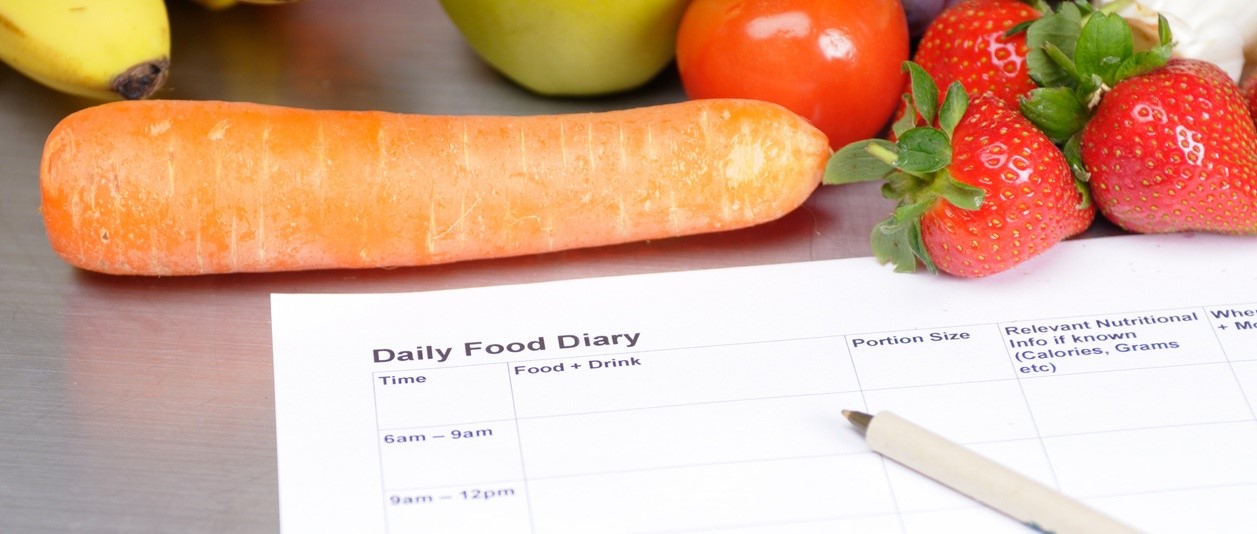
Why keep a food diary?
Peer reviewed by Dr Krishna Vakharia, MRCGPAuthored by Amberley DavisOriginally published 3 Jul 2023
Meets Patient’s editorial guidelines
- DownloadDownload
- Share
- Language
- Discussion
- Audio Version
- Add to preferred sources on Google
More people are putting pen to paper to record their thoughts, emotions, and behaviours. If you're concerned about your eating habits, or feel they could be linked to physical symptoms or mood changes, a food diary can map what you eat against how you feel, so you can identify patterns that are damaging to your health and wellbeing.
What is a food diary?
From mental health journaling to dream journaling, writing things down can help to identify patterns and specific triggers that affect your mood.
A food diary works in much the same way. It helps paint a picture of your eating habits and maps this against any physical and/or mental symptoms you're trying to address. A food diary can help uncover if what and how you eat and drink, negatively affects your health.
According to the Centers for Disease Control and Prevention (CDC), this is the important first step for improving eating habits1:
Reflect - on all of your specific eating habits, both bad and good, using a food diary.
Replace - your unhealthy habits with healthier ones.
Reinforce - your new eating behaviours.
It's easy to forget the details of everything you eat and drink, but the answers you need often lie in the particulars - like how much you ate, when you ate it, and how you felt in the following hours - and writing it down reduces the problem of memory failure2. There are other details you may record, depending on the problem you're hoping to address.
Ro Huntriss, dietitian and founder of Dietitian Ro & Fertility Dietitian UK, says: "Typically, a food diary includes the type and quantity of the food you consume, the time of consumption, and any additional details like cooking methods, specific ingredients, and the type and volume of your drinks throughout the day."
Who should use a food diary?
There are a few common reasons for using a food diary, but anyone who feels they might benefit can start one - it's always useful to know what's going into your body and how this can change how you feel from one day to the next.
"For example," says Huntriss, "You may use a food and mood diary to understand whether there is a relationship between your feelings and the food and drink you consume."
The diet specialist goes on to describe the main groups of people that use food journaling:
Those looking for symptom triggers
Some people develop food intolerances or sensitivities that trigger symptoms. According to Huntriss, doctors and dietitians may advise you to keep a food diary that also tracks your symptoms to help discover if there is a relationship between the two.
Symptoms that can be food-related include:
Unusual bowel habits - constipation, diarrhoea, or both.
Gas.
Unwanted digestive symptoms could be a sign of food intolerances or irritable bowel syndrome (IBS). It's fairly common to develop intolerances to foods that you were previously fine with. As a result, elimination diets - like the low FODMAP diet - are common too.
Food allergies like coeliac disease and other gut conditions like Crohn's disease and inflammatory bowel disease (IBD) are less common and usually come with other, more severe symptoms. Your doctor may also recommend blood tests and other diagnostic tools to identify or rule these out.
Those looking to lose weight
A food diary can help you to identify areas for change to support healthy weight loss.
"It will highlight positive dietary choices and areas to improve in your diet," says Huntriss. "People aren't always fully aware of what they consume until they start to record it in such a way."
And it's not just about limiting foods high in fat, sugar, and salt - although this is most important. Other eating habits can also contribute to weight gain, including:
Eating too fast.
Not chewing your food enough - which can make you feel less full.
Exceeding the recommended plate portion size.
Eating when not hungry - which can be triggered by emotions.
Eating while standing - which may lead to fast or mindless eating.
Skipping meals - which can cause you to overeat at other times.
Always having dessert.
Those looking to improve the quality of their diet
Store-bought and processed food products mean we often don't know what goes into our bodies. Healthy eating habits can help reduce the long list of ingredients we ingest, but packaged goods are here to stay - and a food journal can help you better understand the nutritional value of your favourite foods.
Huntriss says: "If you feel your diet is poor and you want to improve it for your general health, a food diary can be a good place to start. It may help to identify if any particular food groups or nutrients are lacking giving an indication as to what changes should be made."
Summary: what are the benefits of keeping a food diary?
Increased awareness of eating habits and portion sizes.
Identification of patterns, triggers, or emotional associations with food.
Identification of food intolerances or sensitivities.
Better understanding of nutrient intake and potential deficiencies.
Helping weight management and goal tracking.
Personalised insight for making informed dietary changes.
A resource to share with your healthcare team.
How to keep a food diary in 5 steps
1. Find your journal
This could be a notebook, a smartphone app, or an online platform. Apps and online templates save you the task of creating relevant headings and columns, but the old-fashioned method of putting pen to paper can give you the flexibility and space to include as many details as you want, depending on the day.
2. Choose your tracking data
A food diary works best laid out as a table. The most basic headings to include in any food diary are:
Time of day.
What you ate/drank.
A comments section.
The best diaries also have additional headings tailored to the data you need to collect. For example:
Symptom flare ups - for example, when your bowel habits change, bloating, abdominal pain.
Reasons for deciding to eat - for example, hunger, stress, or tiredness.
When you eat food containing common food intolerances - for example, gluten, dairy, caffeine, and fructose.
Nutritional and ingredient details of what you consume.
Templates like the NHS food diary can make things easy with predetermined boxes to fill, but be mindful that these can also limit the information you write down. It's important to find one that allows for the details you need.
For example, people with IBS might use the mySymptoms food and symptom diary app which also tracks symptoms and mood changes, while the BiteSnap app is a photo food diary that fills in the nutritional information of the foods you snap.
3. Update at least twice a day
If possible, update whenever you eat or drink something new, or once after morning and lunch and again before bed. The bigger gaps you leave between journaling, the harder it becomes to remember all the important details including mapping any symptom and mood changes that happened throughout your day.
4. Have an end date
A food diary is a temporary tool to help you reflect on your eating habits. If you don't set an end date, not only are you more likely to inaccurately record data over time2, you also risk developing an unhealthy relationship with your food that's overly obsessive.
You also won't have the space to properly reflect on your habits and formulate an action plan - which is often best to do with a specialist, like a dietitian.
For weight loss - one week is usually long enough to uncover unhealthy eating habits and if they fluctuate between weekdays and weekends.
For symptom and mood tracking - experts normally recommend two to three weeks.
5. Look for patterns
At the end of each week and after you're end date, set aside time to reflect on what you've eaten and drunk, and search for any patterns that link certain foods or behaviours with symptoms, mood changes, or poor nutrition - depending on your end goal.
After a food diary
For general weight loss or nutrition goals, a food diary can empower you to take action and replace any unhealthy habits you identify with healthier ones - either yourself or with support from a health professional.
If you feel you've identified a link between troubling symptoms and your eating habits, the next step is sharing your findings with a professional. Try not to self-diagnose - it could be a sensitivity to certain foods, but it could also be something else, like an allergy or autoimmune disease that requires treatment. Doctors may decide to run other tests to rule these out.
Whatever the diagnosis, part or all of the problem may be improved with dietary changes. "If you require an in-depth look into your diet, a registered dietitian is a great choice. As an expert in medical nutrition, they will have a greater understanding of which foods may be triggering your symptoms," says Huntriss.
Further reading
Centers for Disease Control and Prevention: Improving your eating habits.
Patient picks for Healthy eating

Diet and nutrition
What is fibremaxxing - and how healthy is it really?
There are plenty of so-called health or self-improvement trends circulating that lean on the idea of taking things to the extreme, dialling whatever they focus on up to eleven. Viral movements that promise to push everything ‘to the max’ - not just with one X, but two - may sound empowering at first glance, but pushing yourself to the edge is rarely the healthiest approach for your wellbeing. From Looksmaxxing to Sleepmaxxing, we now have Fibremaxxing - but what exactly is it, and is it really as questionable as the rest?
by Victoria Raw

Diet and nutrition
Biohacking - where to start, and where to stop
'Biohacking' is a trend that aims to improve longevity and to make your brain and body function better by supposedly 'hacking' biology. Can this really be done - if so how, is it safe, and are there any drawbacks to look out for?
by Helena Barham-Coppola
About the authorView full bio

Amberley Davis
Senior writer
BA (Hons), CPD
Amberley is a senior writer with Patient and has written extensively on a range of health and wellbeing topics.
About the reviewerView full bio

Dr Krishna Vakharia, MRCGP
Chief Medical Officer for Health, Optum UK
MBChB, MRCGP(2013), BMedSci (hons), DFSRH, DRCOG, PGDipDerm (Distn)
Dr Krishna Vakharia is an NHS GP. She is also a regular examiner for the postgraduate Diploma in Practical Dermatology at Cardiff University as well as being the Chief Medical Officer for health at Optum UK.
Article history
The information on this page is peer reviewed by qualified clinicians.
Article also available in English, German, Spanish, French, Italian, Portuguese, Hindi, Hebrew, Arabic, and Swedish.
3 Jul 2023 | Originally published
Authored by:
Amberley DavisPeer reviewed by
Dr Krishna Vakharia, MRCGP
Join the conversation
Share your thoughts or experiences with others in our patient communities.

Ask, share, connect.
Browse discussions, ask questions, and share experiences across hundreds of health topics.

Feeling unwell?
Assess your symptoms online for free
Sign up to the Patient newsletter
Your weekly dose of clear, trustworthy health advice - written to help you feel informed, confident and in control.
By subscribing you accept our Privacy Policy. You can unsubscribe at any time. We never sell your data.
More in diet and nutrition
- 7 cacao benefits: is raw chocolate best?
- NewAre ready meals really that bad for you?
- Beyond the grape: uncorking the health facts about resveratrol
- Can probiotics treat obesity and diabetes?
- Do crash diets ever really work for healthy weight loss?
- UpdatedGallstones diet: foods to eat and avoid
- Healthy Hanukkah food for your weight, heart and diabetes
- How a protein-packed breakfast can boost your health
- How to get rid of trapped wind: home remedies that work
- How to improve your immunity through diet and lifestyle
- Mounjaro diet: Foods to eat and avoid
- Plant-based proteins could help prevent high blood pressure
- Vitamin C: benefits, sources, and deficiency
- What does vitamin C serum do?
- What is cortisol belly? Why stress could be making it harder to lose belly fat
- What is the carnivore diet and is it healthy?
- What is the Nordic diet?
- What is the Whole30 diet?
- Why fibre is your friend