Vómito con sangre
Hematemesis
Revisado por pares por Dr Hayley Willacy, FRCGP Última actualización por Dr Philippa Vincent, MRCGPÚltima actualización 4 Jul 2024
Cumple con las directrices editoriales
- DescargarDescargar
- Compartir
- Language
- Discusión
- Versión en audio
- Agregar a fuentes preferidas en Google
En esta serie:Mallory-Weiss tear
Debe llamar a una ambulancia o ir directamente al departamento de emergencias más cercano si está vomitando sangre. A menudo, el sangrado se detendrá bastante rápido, pero en algunos casos puede volverse grave y poner en peligro la vida. Por lo tanto, busque ayuda médica rápidamente.
Hay una variedad de causas diferentes - estas se discuten a continuación. Muchas causas pueden ser tratadas, pero la primera prioridad es asegurarse de que el sangrado se detenga. El resto de este folleto tiene como objetivo proporcionar información de fondo, pero no sustituye la obtención de atención médica inmediata si se vomita sangre.
De un vistazo
Hematemesis es el término médico para el vómito de sangre.
Por lo general, indica un problema en la parte superior del tracto digestivo, como el esófago, el estómago o el intestino delgado.
Las causas comunes incluyen úlceras estomacales, enfermedad hepática alcohólica o un desgarro en el esófago.
Vomitar sangre también puede ocurrir si tragas sangre, por ejemplo, de una hemorragia nasal.
Debe buscar atención médica de emergencia si vomita sangre.
¿Qué es vomitar sangre (hematemesis)?
La palabra médica para vomitar sangre es hematemesis. Vomitar sangre suele ser un signo de un problema en la parte superior del tracto digestivo: el esófago, el estómago o la primera parte del intestino delgado conocida como el duodeno.
El vómito de sangre es una emergencia médica. En muchos casos, el sangrado se detendrá bastante rápido, pero en algunos casos puede volverse grave y poner en peligro la vida. Por lo tanto, llame a una ambulancia o vaya directamente al departamento de emergencias más cercano si vomita sangre.
¿Cuáles son las causas de vomitar sangre?
Las causas comunes de vomitar sangre incluyen:
A desgarro en la garganta (esófago) causado por arcadas prolongadas.
Sangre tragada de un hemorragia nasal.
Vomitar sangre requiere una evaluación médica de emergencia en el hospital.
Sangrado del esófago
Las causas incluyen:
Várices esofágicas. Las várices son vasos sanguíneos agrandados e hinchados en el revestimiento del esófago o el estómago. Son una de las posibles complicaciones de cirrosis hepática. En la cirrosis, el tejido cicatrizado del hígado bloquea el flujo sanguíneo a través del hígado. Esto causa un aumento de presión en la vena que lleva la sangre del intestino al hígado (la vena porta). El aumento de presión retrocede hacia el intestino y provoca que las venas se hinchen en el esófago. Las hinchazones son frágiles y, por lo tanto, pueden sangrar abundantemente en el esófago.
Inflamación del esófago (esofagitis) a menudo se debe al reflujo ácido del estómago (enfermedad por reflujo gastroesofágico (ERGE)). El esófago inflamado a veces sangra.
Cáncer de esófago a veces causa sangrado en el esófago.
Síndrome de Mallory-Weiss es sangrado causado por un desgarro en el revestimiento del esófago o el estómago. El desgarro puede ser causado por cualquier cosa que provoque un aumento repentino de presión en el estómago o el esófago. Por ejemplo, arcadas o vómitos repetidos, esfuerzo excesivo, tos violenta o hipo.
Sangrado del estómago
Las causas incluyen:
Úlcera de estómago (gástrica). Una úlcera es una pequeña ruptura en el revestimiento del estómago. Una úlcera puede sangrar, a veces abundantemente. Hay varias causas de úlceras estomacales, incluyendo:
Infección con una bacteria llamada Helicobacter pylori. Esto generalmente se puede tratar con bastante facilidad.
Medicamentos antiinflamatorios que se utilizan para tratar afecciones como la artritis, a veces causan úlceras estomacales.
Aspirina, utilizado comúnmente para prevenir coágulos de sangre.
Estrés.
Cáncer de estómago a veces causa sangrado en el estómago.
Inflamación del revestimiento del estómago (gastritis) tiene causas similares a las úlceras estomacales.
Várices en el revestimiento del estómago pueden ocurrir varices esofágicas similares a las descritas anteriormente.
Síndrome de Mallory-Weiss puede afectar el revestimiento del estómago - descrito anteriormente.
Sangrado del duodeno
Las causas incluyen:
Úlcera duodenal. Una úlcera puede sangrar, a veces abundantemente. Al igual que las úlceras estomacales, una úlcera duodenal suele ser causada por una infección con la bacteria llamada H. pylori. Esto generalmente se puede tratar con bastante facilidad. Los medicamentos antiinflamatorios y la aspirina, que son causas comunes de las úlceras estomacales, son causas menos comunes de las úlceras duodenales.
Inflamación del revestimiento del duodeno (duodenitis) tiene causas similares a las úlceras duodenales.
Causas raras de cualquier parte del tracto digestivo superior
Incluir:
Envenenamiento por radiación.
Infecciones poco comunes del intestino (tracto gastrointestinal).
Lesión.
No se identificó causa. En algunos casos, la causa no puede ser encontrada, incluso después de realizar pruebas.
Sangrado que no proviene del intestino
A veces, cuando se vomita sangre, no proviene del intestino. Por ejemplo, después de un hemorragia nasal, la sangre puede ser tragada y luego vomitada. A veces puede ser difícil saber si la sangre ha sido vomitada desde el estómago o expulsada al toser desde los pulmones o la garganta.
Una nota sobre anticoagulantes
Medicamentos como warfarina o los nuevos anticoagulantes orales (como rivaroxaban, apixabán y dabigatran - a menudo llamados AOD) generalmente no causan el sangrado, pero si hay un problema subyacente (como una úlcera), empeorarán el sangrado.
El tracto digestivo superior
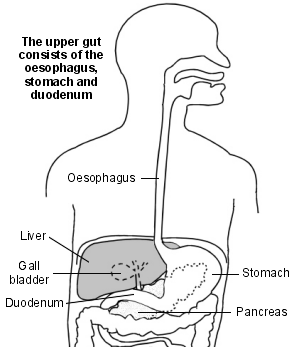
Síntomas junto con vómito de sangre
Otros síntomas pueden ocurrir al mismo tiempo que el vómito de sangre, tales como:
Sentirse mal.
Mareo.
Desmayo.
Otros síntomas intestinales.
La presencia y el tipo de otros síntomas pueden ayudar a señalar la causa del sangrado. A veces no hay otros síntomas al principio.
¿Qué pruebas pueden ser necesarias si estoy vomitando sangre?
La evaluación de un clínico
Es probable que hagan varias preguntas sobre la naturaleza del sangrado y pregunten sobre cualquier otro síntoma. También realizarán un examen.
El médico también intentará hacer un juicio sobre cuánto sangre se ha perdido, de dónde proviene el sangrado y cuán grave es la situación. Podrán determinar esto a partir del historial y también verificando el pulso y la presión arterial.
Si está claro que la sangre proviene del tracto digestivo superior, generalmente se realizan pruebas para identificar la causa.
Análisis de sangre
Análisis de sangre generalmente se realizará para evaluar la situación general, por ejemplo, cuánto sangre se ha perdido, y si se necesitan líquidos intravenosos o una transfusión de sangre para contrarrestar una gran pérdida de sangre.
Además, los análisis de sangre pueden ayudar a evaluar la función hepática si hay 'cicatrización' del hígado (cirrosis), o para ayudar a diagnosticar otras causas del sangrado.
Gastroscopia
A gastroscopia (endoscopia) es un examen interno. Consiste en examinar el interior del tracto digestivo, utilizando un tubo delgado y flexible que tiene una luz y una cámara en un extremo.
El telescopio se introduce por el esófago hacia el estómago y hasta el duodeno superior. La causa del sangrado a menudo puede identificarse mediante endoscopia.
Tratamiento para el vómito con sangre
Tratamiento inicial
El tratamiento inicial puede requerir una vía intravenosa para administrar líquidos, o incluso una transfusión de sangre si se ha perdido mucha sangre. Esto puede no ser necesario si el sangrado ha sido leve y se ha detenido. Sin embargo, si el sangrado es severo, puede ser necesaria una reanimación completa y reemplazo de líquidos/sangre de emergencia.
Otros tratamientos
Esto dependerá de la causa. Detener el sangrado se puede hacer utilizando instrumentos que se pueden pasar por el endoscopio, pero los estudios han demostrado que esto rara vez es necesario, ya que la mayoría de los sangrados se detienen por sí solos, incluso si han sido muy abundantes.
A veces, puede ser necesaria una cirugía de emergencia para controlar una hemorragia severa continua.
Una vez que el sangrado se ha detenido, el tratamiento adicional depende de la causa. Para más detalles, consulte los folletos individuales sobre las diversas enfermedades que pueden causar vómitos con sangre.
Tipos de sangrado del tracto digestivo superior
El tipo de sangrado a veces se describe de la siguiente manera:
Sangre oscura
Esto a menudo se denomina color de 'poso de café'. Esto sugiere que el sangrado ha sido relativamente lento. La sangre ha estado en contacto con el ácido del estómago el tiempo suficiente para que el ácido convierta la sangre en un color marrón oscuro/rojo. El sangrado en esta situación puede no haber sido aún abundante. Sin embargo, puede volverse abundante más adelante.
Una gran cantidad de sangre rojo brillante sugiere una hemorragia rápida y abundante.
Melaena
Esta es la palabra médica para sangre vieja y oscura en las heces (excrementos). Con melaena, las heces se vuelven muy oscuras o negras. A menudo tienen una consistencia similar al alquitrán.
Vómitos con sangre y tener melena son síntomas que a menudo van juntos. Tener ambos síntomas juntos significa que ha habido una gran cantidad de sangrado en el intestino.
Selecciones del paciente para Signos y síntomas generales

Signos y síntomas
Náuseas y vómitos
La náusea es la sensación de querer vomitar, mientras que el vómito es estar enfermo o "devolver". Estos síntomas comunes a menudo son causados por problemas a corto plazo como infecciones estomacales, intoxicación alimentaria, embarazo o mareo por movimiento. La mayoría de los casos se resuelven por sí solos, pero los síntomas persistentes o severos pueden necesitar atención médica. Este folleto explica las causas comunes, consejos de autocuidado, opciones de tratamiento y cuándo consultar a un médico.
por el Dr. Doug McKechnie, MRCGP

Signos y síntomas
Tinnitus
El tinnitus es un ruido como un zumbido o pitido que puedes escuchar, pero el ruido no es causado por nada fuera de tu oído.
por el Dr. Doug McKechnie, MRCGP
Preguntas frecuentes
¿Qué debo hacer si vomito sangre?
Vomitar sangre se considera una emergencia médica. Debe llamar a una ambulancia o ir directamente al departamento de emergencias más cercano de inmediato para evaluación y tratamiento.
¿Pueden los medicamentos que estoy tomando actualmente empeorar el vómito con sangre?
Sí, los medicamentos como la warfarina o los nuevos anticoagulantes orales (DOACs como rivaroxabán, apixabán y dabigatrán) pueden empeorar el sangrado si tienes un problema subyacente como una úlcera. Estos medicamentos no suelen causar el sangrado inicialmente, pero pueden aumentar su gravedad.
¿Qué es la melena y cómo se relaciona con el vómito de sangre?
La melena se refiere a sangre vieja y oscura en las heces, haciéndolas parecer muy oscuras o negras con una consistencia similar al alquitrán. Vomitar sangre y tener melena a menudo ocurren juntos, lo que indica una cantidad significativa de sangrado en el intestino.
¿Cómo pueden los médicos saber cuánto sangre he perdido?
Los clínicos evaluarán la situación preguntando sobre tus síntomas y realizando un examen. Pueden estimar la cantidad de sangre perdida y la gravedad de la situación revisando tu pulso y presión arterial.
¿Qué es una gastroscopia y por qué se utiliza para el vómito de sangre?
Una gastroscopia, también conocida como endoscopia, es un examen interno en el que se introduce un tubo delgado y flexible con una luz y una cámara por el esófago hasta el estómago y la primera parte del intestino delgado (duodeno). Este procedimiento permite a los médicos identificar visualmente la causa del sangrado.
Lecturas adicionales y referencias
- Sangrado gastrointestinal superior agudo en mayores de 16 años: manejo; Guía Clínica NICE (agosto 2016)
- Baumer TE; ¿Hemoptisis o hematemesis? Lo que no es tan obvio sobre el sangrado. BMJ Case Rep. 2014 Apr 29;2014:bcr2014204059. doi: 10.1136/bcr-2014-204059.
- Khoury L, Hill DA MD, Panzo M, et al; La Historia Natural de la Hematemesis en el Siglo XXI. Cureus. 23 de julio de 2018;10(7):e3029. doi: 10.7759/cureus.3029.
Sobre el autor

Dr Tim Kenny, MRCGP
BMedSci (Hons), MB BS, MRCGP, DCH
Acerca del revisorVer biografía completa

Dr Hayley Willacy, FRCGP
Médico General, Autor Médico
MBChB (1992), DRCOG, DFFP, MRCOG (Part 1) MRCGP (2007), DFSRH (2013), MSc - medical education (2020)
La Dra. Hayley Willacy fue una médica general del NHS que trabajaba en el noroeste de Inglaterra, quien se retiró de la práctica clínica en 2022 después de 30 años.
Historial del artículo
La información en esta página está escrita y revisada por pares por clínicos calificados.
Artículo también disponible en Inglés, Alemán, Español, Francés, Italiano, Portugués, Hindi, Hebreo, Árabe, y Sueco.
Próxima revisión: 3 de julio de 2027
4 Jul 2024 | Última versión
11 Dic 2012 | Publicado originalmente
Escrito por:
Dr Tim Kenny, MRCGP

Pregunta, comparte, conecta.
Navega por discusiones, haz preguntas y comparte experiencias en cientos de temas de salud.

¿Te sientes mal?
Evalúa tus síntomas en línea de forma gratuita
Suscríbete al boletín de Patient
Tu dosis semanal de consejos de salud claros y confiables, escritos para ayudarte a sentirte informado, seguro y en control.
Al suscribirte aceptas nuestros Política de Privacidad. Puedes darte de baja en cualquier momento. Nunca vendemos tus datos.
Más sobre signos y síntomas
- Masas abdominales
- Absceso
- Fatiga adrenal
- Angioedema
- Enfermedad de Bornholm
- Síndrome de fatiga crónica
- Cefaleas en racimo
- Costocondritis
- Medicamentos para la tos
- Fiebre en niños
- Hipertensión intracraneal idiopática
- Picaduras y mordeduras de insectos
- Insomnio
- Bultos y protuberancias en el cuello
- Hormigueo
- Proteinuria
- Párpado hinchado
- Trastorno de la Articulación Temporomandibular (TMD)
- Vértigo
- Tos viral