Betabloqueantes
Revisado por pares por Dra. Rachel Hudson, MRCGPÚltima actualización por Dr Rosalyn Adleman, MRCGPLast updated 23 Mar 2023
Cumple con las directrices editoriales
- DescargarDescargar
- Compartir
- Language
- Discusión
- Versión en audio
- Add to preferred sources on Google
Los beta-bloqueantes son medicamentos que se utilizan para tratar una variedad de condiciones. Su nombre completo correcto es medicamentos bloqueadores de los beta-adrenoceptores (o agentes bloqueadores beta-adrenérgicos), pero comúnmente se les llama simplemente beta-bloqueantes.

¿Inseguro sobre mezclar medicamentos?
Verifica posibles interacciones entre medicamentos, suplementos y alimentos antes de tomarlos juntos.
En este artículo:
Video picks for Medicamentos para el corazón y la sangre
Continúa leyendo abajo
How do beta-blockers work?
Betabloqueantes work by blocking the transmission of certain nerve impulses. The ends of some nerves release a chemical (neurotransmitter) called noradrenaline when the nerve is stimulated. This chemical then stimulates beta-adrenergic receptors.
These receptors are tiny structures which occur on cells in various parts of the body, including the heart, brain, and blood vessels. When these receptors are stimulated, they cause various effects. For example, nerve impulses to the heart can stimulate beta-adrenergic receptors on heart cells. This causes an increase in the force and rate of the heartbeat. This can cause a fast heartbeat and higher blood pressure.
The beta-adrenergic receptors are also stimulated by adrenaline (epinephrine), a hormone which circulates in the bloodstream. Adrenaline is made in the adrenal gland. The blood level of adrenaline can vary. For example, you may release a lot of adrenaline into the bloodstream when you are frightened or anxious which can cause an increase in your heart rate, and other effects.
The beta-blocker medicine 'sits' on beta-adrenergic receptors and stops (blocks) the receptor from being stimulated. So, for example, if beta-adrenergic receptors in the heart are blocked, the force and rate of the heartbeat are reduced.
Types of beta-blockers
Volver al contenidoThere are several types of beta-blockers - these include:
Each type has one or more brand names.
Continúa leyendo abajo
What are beta-blockers used for?
Volver al contenidoHeart and blood vessel conditions
Because of their effect on the heart cells, beta-blockers may be used to:
Reduce the risk of a further heart attack (myocardial infarction) if you have already had one.
Control certain abnormal heart rhythms (arrhythmias), particularly those where the heartbeat is too fast. A common arrhythmia is called atrial fibrillation. Beta-blockers are often used to control the fast heart rate in atrial fibrillation. Calcium-channel blockers are an alternative medicine that can be used for this problem.
Help to treat insuficiencia cardíaca.
Otras condiciones
Because beta-adrenergic receptors are found in other parts of the body, beta-blockers are also used for various other conditions. These include:
Glaucoma. Beta-blocker eye drops reduce the fluid that you make in the front chamber of the eye. This reduces the pressure in the eye.
Ansiedad. Beta-blockers do not reduce anxiety itself but can reduce some of the symptoms. For example, they can reduce shaking (tremor) and a fast heart rate.
Glándula tiroides hiperactiva. Beta-blockers can help to reduce symptoms such as tremor, and slow down a fast heart rate.
Migraña. Beta-blockers can reduce the number of migraine attacks if the attacks occur frequently.
Temblores - beta-blockers can be used in benign hand tremors which have no other underlying cause and are causing significant problems in daily activities.
Beta-blockers side-effects
Volver al contenidoMost people who take beta-blockers have no side-effects, or only minor ones. However, because of their action in various parts of the body, some people have unwanted side-effects. The side-effects of beta-blockers include::
Sometimes the heart rate can go too slowly. This can make you dizzy or feel faint.
If you have diabetes you need to be aware that beta-blockers may dull the warning signs of low blood sugar (hipoglucemia - often called a hypo). For example, you may not develop the sensation of rapid, forceful or irregular heartbeats (palpitations) or tremor, which tend to occur as the blood sugar is going too low.
Some people develop cool hands and feet when taking beta-blockers. This is because they can narrow (constrict) small blood vessels and reduce the circulation to the skin of the hands and feet.
Tiredness, depresión, inability to achieve a proper erection (impotence), vivid dreams, nightmares and other sleeping problems occur in some people.
There is some evidence to suggest that beta-blockers may provoke type 2 diabetes to develop in some people.
Some people with asthma are advised not to take a beta-blocker. If you have asthma or something similar, discuss this with your GP.
The above is not a full list of possible side-effects but mentions the main ones that may occur. Read the information leaflet that comes with your particular brand for a full list of possible side-effects and cautions.
Continúa leyendo abajo
How long can you stay on beta-blockers?
Volver al contenidoThe length of treatment depends on why you are taking a beta-blocker. Some people only need to take beta-blockers for a few weeks, or months - for example, if you have an overactive thyroid. Some people need to take beta-blockers for the rest of their lives - for example, after a ataque al corazón (infarto de miocardio).
Who cannot take beta-blockers?
Volver al contenidoYou cannot take a beta-blocker if you have certain conditions, including:
Asma.
Uncontrolled heart failure.
Very slow heart rate (bradicardia).
Low blood pressure (hypotension).
Certain problems with the rhythm of your heart - eg, sick sinus syndrome.
Patient picks for Medicamentos para el corazón y la sangre
Tratamiento y medicación
Bloqueadores alfa
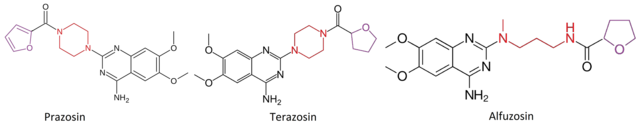
Los bloqueadores alfa son medicamentos que se utilizan principalmente para tratar la hipertensión arterial y los problemas para orinar en hombres con agrandamiento de la glándula prostática. El agrandamiento de la glándula prostática también se llama hiperplasia prostática benigna (HPB).
por el Dr. Doug McKechnie, MRCGP
Tratamiento y medicación
Diuréticos tiazídicos
Los diuréticos tiazídicos se utilizan principalmente para tratar la hipertensión arterial. También se usan ocasionalmente para la insuficiencia cardíaca.
por la Dra. Rachel Hudson, MRCGP
¿Inseguro sobre mezclar medicamentos?
Verifica posibles interacciones entre medicamentos, suplementos y alimentos antes de tomarlos juntos.
Lecturas adicionales y referencias
- Resumen de hipertensión; Ruta NICE, agosto de 2011
- Síndrome coronario agudo; Red de Guías Intercolegiales de Escocia - SIGN (2016)
- Fibrilación auricular: diagnóstico y manejo; Guía NICE (abril 2021 - última actualización junio 2021)
- Guías ESC 2021 para el diagnóstico y tratamiento de la insuficiencia cardíaca aguda y crónica; Desarrollado por el Grupo de Trabajo para el diagnóstico y tratamiento de la insuficiencia cardíaca aguda y crónica de la Sociedad Europea de Cardiología (ESC) con la contribución especial de la Asociación de Insuficiencia Cardíaca (HFA) de la ESC
- Migraña; NICE CKS, agosto 2025 (acceso solo en el Reino Unido)
Continúa leyendo abajo
About the authorView full bio

Dr Rosalyn Adleman, MRCGP
MRCGP
Dr Rosalyn Adleman, is an NHS GP working in north London.
About the reviewerView full bio

Dra. Rachel Hudson, MRCGP
General Practitioner and Medical Author
MBChB, MRCGP (2008), BSc (Medical Science), DFSRH, DRCOG, DCH
Dr Rachel Hudson, is an NHS GP working in the North West of England.
Historial del artículo
La información en esta página está escrita y revisada por pares por clínicos calificados.
Next review due: 21 Mar 2028
23 Mar 2023 | Última versión

Pregunta, comparte, conecta.
Navega por discusiones, haz preguntas y comparte experiencias en cientos de temas de salud.

¿Te sientes mal?
Evalúa tus síntomas en línea de forma gratuita
Suscríbete al boletín de Patient
Tu dosis semanal de consejos de salud claros y confiables, escritos para ayudarte a sentirte informado, seguro y en control.
By subscribing you accept our Política de Privacidad. Puedes darte de baja en cualquier momento. Nunca vendemos tus datos.