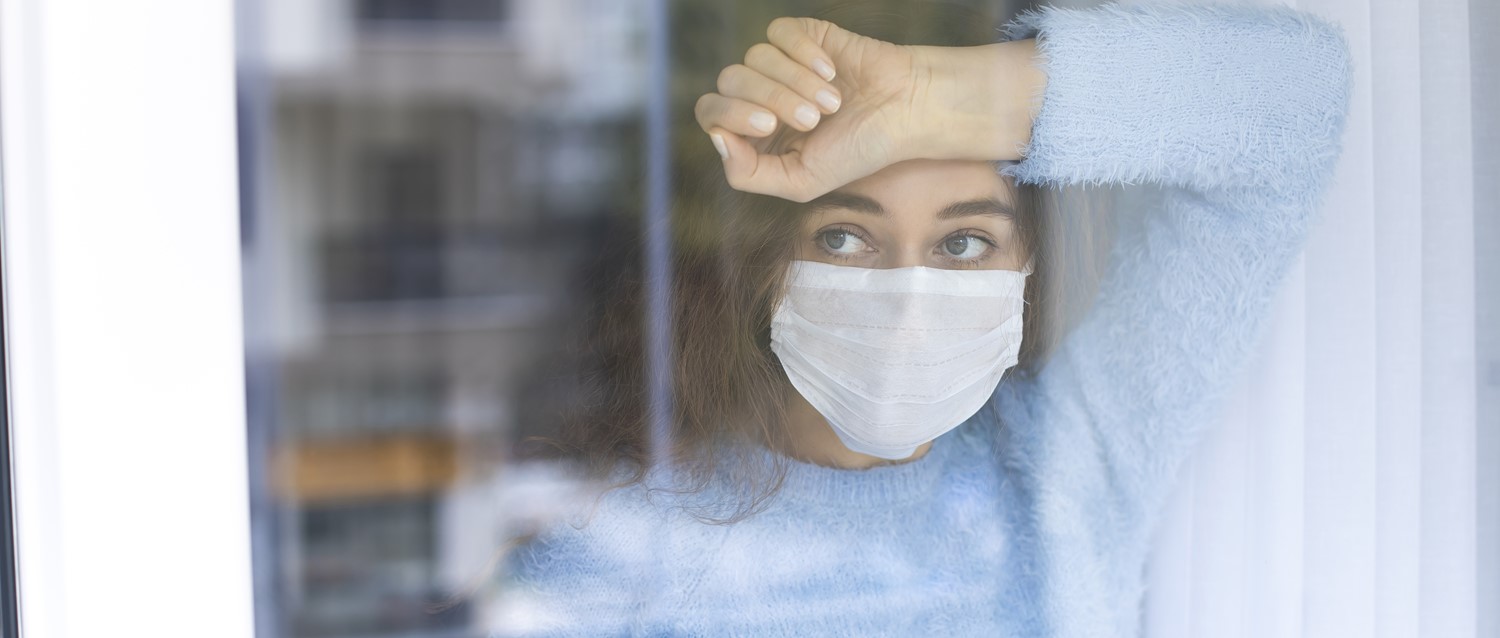
Coping with anxiety around COVID-19 uncertainty
Peer reviewed by Dr Sarah JarvisLast updated by Emily Jane BashforthLast updated 30 Dec 2021
Meets Patient’s editorial guidelines
- DownloadDownload
- Share
- Language
- Discussion
- Audio Version
- Add to preferred sources on Google
The last couple of years have been difficult for many of us. As COVID-19 remains present in our daily lives, there can be a lot of mental challenges to contend with. With speculation around future lockdowns and ever-changing restrictions on social contact, it can be exhausting even just keeping up with the news. Let's take a look at how you can manage your COVID anxiety at a time when there's so much uncertainty.
What are the effects of the COVID-19 pandemic on mental health?
Dr Tara Quinn-Cirillo says dealing with a global pandemic has taken a lot out of us, but has also taught us about human resilience.
"In March 2020 we had to redefine how we lived our lives, practically overnight. People adapted to working from home, home-schooling and other variables including job security, financial pressures and huge changes to the way they interacted with others. Frontline workers including NHS staff, teachers, supermarket and delivery workers have been tirelessly supporting us throughout. For many, 'COVID fatigue' has set in. We are innately social beings and the psychological impact of isolation and lockdown restrictions have been profound."
She explains how some people have experienced ongoing COVID anxiety, lowered mood, sleep difficulties and frustration at the continuing situation.
"This can create cognitive dissonance in terms of how people think and, ultimately, behave. The decisions we face as we navigate the pandemic can exert an impact on our overall well-being, including our view of ourselves, self-esteem and self-worth."
We are over 18 months into the pandemic, why are we still experiencing anxiety around lockdowns?
After nearly two years of life in a pandemic, why are some people facing bigger mental challenges now than they were before? Dr Quinn-Cirillo says it is down to how much our lives have been forced to change as - when faced with adversity, our brains go into threat mode.
"We are primed to manage short-term threats but, in the longer term, ongoing stress and anxiety can exert a significant impact on our emotional and physical well-being. This can create difficulties with concentration, attention and memory as well as issues with the digestive system, libido and sleep."
The ever-growing uncertainty accompanying the pandemic, along with changing variants and death rates, can lead to increased rates of COVID anxiety. With conversations around possible further lockdowns, people are likely to be reminded of how mentally challenging they found the first one and the impact of having zero control over the situation.
The Mental Health Foundation and Mind all report elevated rates of mental health issues in the UK during the pandemic, including depression and anxiety.
Analysis of the UK Household Longitudinal Study (UKHLS) data between June and November 2020 found that young adults (aged 18-25) reported decreasing then rapidly increasing levels of loneliness. This suggests young people's mental health was very up and down, and sharp levels of loneliness came on suddenly. There was a sharp rise in self-reported loneliness during the winter months under the national lockdown. Young adults with long-standing physical or mental health conditions, or with lower household incomes, or those who were unemployed or not in school, reported higher levels of loneliness than their peers.
Another study looking at the same age group between April and November 2020 found that alcohol consumption, smoking, being female, having a lower income, and having a pre-existing mental health condition were all related to experiencing worse mental health during the pandemic.
For young adult females specifically, mental distress was at its highest in April 2020 but gradually improved until September, when it began to increase again.
Analysis of data from the English Longitudinal Study of Ageing (ELSA), which includes adults aged 52 and over, found that the prevalence of clinically significant depressive symptoms rose from 12.5% pre-pandemic to 22.6% in June/July 2020. It then increased further to 28.5% in November/December 2020.
Might talk of new lockdowns bring back traumatic memories of earlier ones?
"It's taken a lot of work to adapt to lockdown life and the continual restrictions imposed. It takes time for the human brain to learn new behaviours, and this is not something we can simply 'undo', re-emerging 'seamlessly' again and again. After many months of adhering to a new way of living, it's not realistic to expect just to snap back into a pre-pandemic way of life when we are released from lockdown, or restrictions are lifted," explains Dr Quinn-Cirillo.
We face the possibility (in England) or the prospect (in Wales and Scotland) of new restrictions due to the Omicron variant of COVID-19, and an undetermined second winter. This makes it all the more important to remember you are not alone if you are feeling anxious about how life may look. Dr Quinn-Cirillo says such anxiety may stem from your fears about the future, socialising or simply the continued threat from the virus. It is understandable that we may panic going forward after over a year of constant changes.
She adds, "We need to consider the emotional and physical effort that it takes to keep adjusting the way we live our lives. From adapting home life, work life and businesses for some, the lockdown experience may have been particularly traumatic. This can only increase the element of fear as we face yet more uncertainty this winter."
What forms of self-care can you practise if you are struggling with your mental health due to COVID-19?
Focus on what you can control
In unpredictable times, it's understandable why you might feel helpless. It is important to focus on what you can control, not what you cannot. Dr Quinn-Cirillo says this is key to helping you negotiate the pandemic. Although there are many circumstances that are out of our hands, there are aspects we can manage. For example, while you have no say in the restrictions implemented by the government, you can decide how you follow them. While you cannot control the actions of strangers, you can choose how you go about socially distancing and wearing a face covering.
Have a self-care routine
It is essential to find the right coping mechanisms for you. Your self-care routine also falls under 'parts of your life you can control'. Dr Quinn-Cirillo recommends simple changes such as trying to eat healthily, taking gentle exercise regularly, having a consistent sleep pattern and making time for yourself. She stresses the importance of setting a routine at home. Having a structure when there are rules around what you can and can't do, helps you feel like you still have a grasp on normality. Allocate times for waking up and going to bed, eating meals, engaging in tasks, working and for relaxation.
Take time out
"Targeted time out is shown to help reduce feelings of being overwhelmed and to build resilience. Taking time away from socialising, checking social media, responding to emails and messages - taking some time away from the daily demands of 21st century life is really important for reconnecting with yourself," says Dr Quinn-Cirillo.
Time out needn't involve sitting around, doing nothing. It can simply mean focusing your energy on what brings you joy. This might be a self-care activity, such as reading a book, having a bath, or watching a nostalgic TV series.
Human beings are not robots designed to consume media and be "on it" 24/7, so "me time" is crucial to minimise stress and anxiety.
Try journaling
Writing down your worries can help you process and make sense of them. Journaling also allows you to create a plan of action for solving problems. You can write down coping strategies and work out solutions to your issues in a logistical way. For example, if you are struggling with working from home, writing this in a journal can help to break down a big problem into smaller ones. You can target the concern in sections, such as where you work, what hours you work, and what boundaries you will enforce to separate your work and home life.
"Boundaries are also a vital part of self-care. Saying no to demands on your time where you can, to prevent burnout, shouldn't cause you to feel guilty. This is especially true as we enter the festive period - usually a time of social gatherings. Think about your personal space and the best ways to avoid exhaustion," says Dr Quinn-Cirillo.
Journaling can also be a useful way of practising gratitude, as you write down what you are thankful for. This can help you develop a positive mindset at a time of such pessimistic news, and also help you realise how strong you are for coping.
If you feel overwhelmed, Dr Quinn-Cirillo suggests grounding strategies, such as pushing your feet into the floor and breathing in through your nose, then out through your mouth. You can also use the technique of counting three things around you that you can see, hear, touch, taste and smell.
Talk with others
"Share how you are feeling with those around you. Chances are, there will be others feeling the same. It is important to normalise the feelings we are experiencing, and it can be beneficial to voice this for both the person sharing and the person listening," says Dr Quinn-Cirillo.
"You should remember that it is absolutely valid to feel the way you do about the ongoing situation. It's useful if you can recognise when you are starting to struggle, as you can deal with those emotions and talk about them, rather than allowing them to escalate. This allows for clearer thinking and decision making."
She says it's also vital that you don't downplay what you are feeling, as everything is relative when it comes to mental health. Dr Quinn-Cirillo says we are doing what we can for the common good and to protect the vulnerable, but it is OK to feel anxious, angry or despondent.
"It's a global pandemic that none of us have lived through before - it's perfectly acceptable to admit the situation is tough!"
Is it helpful to remain informed of the situation with the pandemic if you are already anxious?
With restrictions changing at a rapid pace over the past 18 months, there has been a pressure to keep up with the news so we all know what behaviour is and isn't permitted. However, while it's important to stay up to date, you shouldn't overwhelm yourself: rather, you should learn when to put down the phone or accept that reading the news is doing more harm than good.
"It is necessary to be informed in order to aid your risk assessment process with the virus. However, there's a danger of being over-saturated by information, especially with outlets like 24-hour news channels, social media coverage and notification alerts on phones. This can only heighten your fears and lead to overthinking. You should stay up to date, but not to the point where it's damaging your mental well-being and preventing you from thinking about anything else," advises Dr Quinn-Cirillo.
You should make sure that the information you are viewing is from a reputable source. If your only source of information is social media, rather than government websites or the World Health Organization (WHO), it's likely to send your brain into overdrive unnecessarily, and make you panic.
Dr Quinn-Cirillo also suggests scheduling times not to talk about COVID-19, such as mealtimes or other set periods in the day, to allow for normality.
Affirmations to repeat to yourself when you are struggling
I cannot control everything.
I still need to look after myself, as well as protect other people.
I am allowed to say 'no' to social gatherings.
I am not alone in how I feel.
I am resilient.
I have to do what is right for me.
Where can you find professional support for anxiety due to the pandemic?
Dr Quinn-Cirillo highlights Mind and the Mental Health Foundation as sources of information. If you are in need of immediate assistance for your mental health, or are worried about a loved one, you can contact the Samaritans. You can also reach out to local council well-being hubs for guidance on mental health support during the pandemic.
Additionally, your GP is there to help. If you are struggling with your mental health, reaching out to them can help you to get reassurance. They can refer you for various forms of therapy, or prescribe antidepressants or anti-anxiety medication if necessary.
Patient picks for General information
COVID-19
Is it COVID-19 or flu this winter?
Cases of flu and COVID-19 are both on the rise this winter, so how can you tell the difference between these viruses? Knowing which illness you're dealing with can help you to protect others and may help you get better quicker.
by Lawrence Higgins

COVID-19
How to protect yourself from COVID-19 and flu in pregnancy
With unvaccinated pregnant women making up almost 20% of the most critically ill COVID-19 patients in England, it is more important than ever for women to protect themselves against COVID-19 and flu in pregnancy. There are many protective measures that can be taken at home, in work, and through health services.
by Amberley Davis
About the authorView full bio

Emily Jane Bashforth
Feature Writer
NCTJ
Emily is a Feature Writer with Patient, writing articles on a variety of topics relating to health and well-being.
About the reviewerView full bio

Dr Sarah Jarvis
Clinical Consultant
MA (Cantab), BM, BCh (Oxon), DRCOG, FRCGP, MBE
After training in medicine at Cambridge and Oxford, Dr Sarah Jarvis MBE became a GP.
Article history
The information on this page is peer reviewed by qualified clinicians.
Article also available in English, German, Spanish, French, Italian, Portuguese, Hindi, Hebrew, Arabic, and Swedish.
30 Dec 2021 | Latest version
30 Dec 2021 | Originally published
Join the conversation
Share your thoughts or experiences with others in our patient communities.

Ask, share, connect.
Browse discussions, ask questions, and share experiences across hundreds of health topics.

Feeling unwell?
Assess your symptoms online for free
Sign up to the Patient newsletter
Your weekly dose of clear, trustworthy health advice - written to help you feel informed, confident and in control.
By subscribing you accept our Privacy Policy. You can unsubscribe at any time. We never sell your data.
More in cOVID-19
- Can the COVID vaccine affect the menstrual cycle?
- COVID-19: how to manage back-to-school worries
- How to hang on to a lockdown lifestyle
- How to help children cope with stress and anxiety during the pandemic
- How to help your child adjust to a post-COVID world
- How to maintain a healthy lifestyle during lockdown
- How to reduce your risk of DIY injuries during coronavirus lockdown
- Long COVID: what it is and how to cope
- Should you worry about your lockdown drinking habits?
- The latest treatments for COVID-19
- Tips for restarting your exercise routine after lockdown
- What to do if you have a dental emergency during the lockdown
- Why it's a good thing if you feel unwell after your COVID-19 booster jab