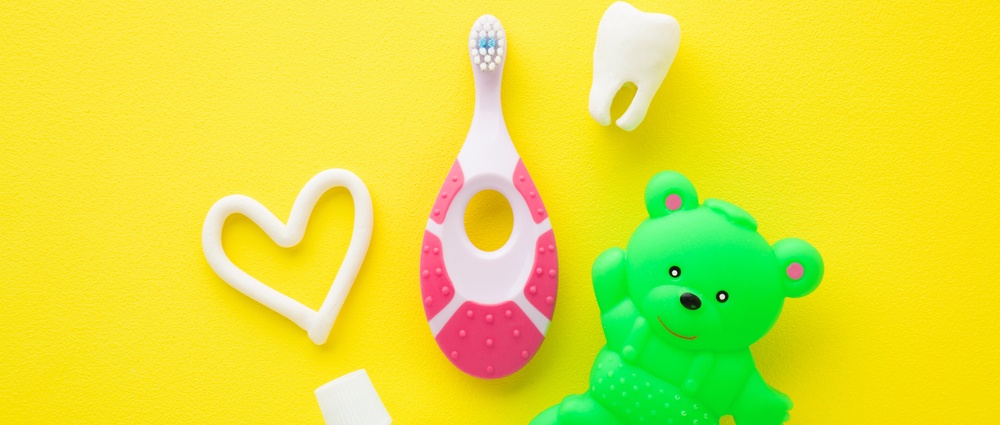
How to look after your baby's first teeth
Peer reviewed by Dr Colin Tidy, MRCGPLast updated by Lynn StephenLast updated 1 Jun 2026
Meets Patient’s editorial guidelines
- DownloadDownload
- Share
- Language
- Discussion
- Audio Version
- Add to preferred sources on Google
The teething period can be a challenging time for many parents. When your baby's first teeth start coming through, it's painful and uncomfortable for them - and can make them grumpy and disrupt their sleep. But teething is an important milestone in their development. And as soon as that first tooth appears, it's time to start looking after their oral health.
Caring for your baby's first teeth
Karen Coates, a registered dental nurse and content specialist for the Oral Health Foundation, says that babies' teeth begin to erupt at around six months old and go on until they are around two and a half years old.
"As soon as your child’s first tooth comes through, you should start planning their first trip to the dentist", she advises. "If it is started early enough it will feel more like a routine rather than something big and scary."
In the UK, you can register your child with your current dentist, or search for a local practice accepting new patients. However, NHS dental spaces have long waiting lists. You can opt for a private dentist instead, but you will have to pay for these check-ups and treatments.
People often think that baby teeth are not as important as adult teeth, but this isn't true. Baby teeth - also known as milk teeth - are essential for learning to speak and eat. They are crucial for the alignment and spacing of your baby's permanent adult teeth.
"There can be repercussions if they are not taken care of," says Coates. "This can be anything from pain for your child or impacting the adult teeth coming through properly, leading to misaligned teeth."
When to start brushing your baby's teeth
You don't need to wait for your baby to have all their teeth before brushing them. As soon as they have one - which usually happens when they're around 6 months old - you can start making brushing a part of their routine. Use a toothbrush with a small head and soft bristles, or you could also try a finger toothbrush, which are normally made from silicone and sit on top of your finger.
For babies, it can help to sit them on your knee and support their head against your chest while you brush their teeth. The toothpaste should contain at least 1,000 parts per million (ppm) of fluoride as this helps prevent and control decay.
Brush their teeth in small circles with a small smear of toothpaste and gradually build up how thoroughly you do it as they get used to the brush. You should brush their teeth twice a day - once before bed and any other time.
What to do if your baby hates having their teeth brushed
If your baby hates having their teeth brushed and cries, we have some helpful tips to encourage them to tolerate it.
These include:
Don't panic - it's normal if they cry. Just stick with it and gradually work it into their routine.
Brushing your teeth at the same time - seeing you do it may encourage them to copy you.
Letting them hold the toothbrush - they might enjoy it more if they are in control. However, keep a close eye on them to avoid accidents. It's easy for a baby to push the toothbrush too far into their mouth, or to poke themselves in the eye.
Patient picks for Baby and toddler

Children's health
What are the benefits of baby probiotics?
If you search for baby probiotics in shops and online you will find a wide range of products. What do these supplements claim to do, and are these claims supported by evidence?
by Amberley Davis

Children's health
Putting together a budget for your baby
Having a baby is one of the most exciting – and expensive things – you will ever do. Figures from The Money Advice Service show you’ll spend £4,000 on a child in their first year and by the time they’re 18, that could be a staggering £250,000.
by Danny Chadburn
About the authorView full bio
Updated by

Lynn Stephen
Content developer
MA (Hons)
Lynn joined Patient in 2023 and her role includes checking all the professional leaflets, patient information leaflets and medicine leaflets, to ensure consistency of spelling, grammar, reference material and brand style, working with the medical authors and clinical director to coordinate the authoring and peer reviewing of the leaflets.
Authored by

Lydia Smith
Feature writer
BA, MA, MSc
Lydia Smith is an award-winning journalist and feature writer who has written extensively on women's health and mental health. She is currently studying for an MSc in psychology.
About the reviewerView full bio

Dr Colin Tidy, MRCGP
General Practitioner, Medical Author
MBBS, MRCGP, MRCP (Paediatrics), DCH
Dr Colin Tidy is an NHS Doctor, based in Oxfordshire.
Article history
Article also available in English, German, Spanish, French, Italian, Portuguese, Hindi, Hebrew, Arabic, and Swedish.
Next review due: 31 May 2029
1 Jun 2026 | Latest version
23 Aug 2023 | Originally published
Authored by:
Lydia Smith
Join the conversation
Share your thoughts or experiences with others in our patient communities.

Ask, share, connect.
Browse discussions, ask questions, and share experiences across hundreds of health topics.

Feeling unwell?
Assess your symptoms online for free
Sign up to the Patient newsletter
Your weekly dose of clear, trustworthy health advice - written to help you feel informed, confident and in control.
By subscribing you accept our Privacy Policy. You can unsubscribe at any time. We never sell your data.