Cálculos renales
Revisado por pares por Dr Krishna Vakharia, MRCGPÚltima actualización por Dr Colin Tidy, MRCGPLast updated 18 de mayo de 2023
Cumple con las directrices editoriales
- DescargarDescargar
- Compartir
- Language
- Discusión
- Versión en audio
- Add to preferred sources on Google
Los cálculos renales son piedras duras que pueden causar un dolor intenso en el costado, junto con sangre en la orina, náuseas y vómitos. Es más probable que desarrolles cálculos renales si sigues una dieta occidental, no bebes suficiente líquido o tienes sobrepeso. Una vez que has tenido un episodio, es probable que se repitan, pero hay varias opciones de tratamiento para los cálculos renales disponibles.
En este artículo:
Video picks for Problemas renales
Continúa leyendo abajo
What are kidney stones?
Los cálculos renales son piedras duras que pueden formarse en el riñón, en el tubo (el uréter) que drena la orina del riñón, o en la vejiga.
Renal (kidney) stones with indication of size
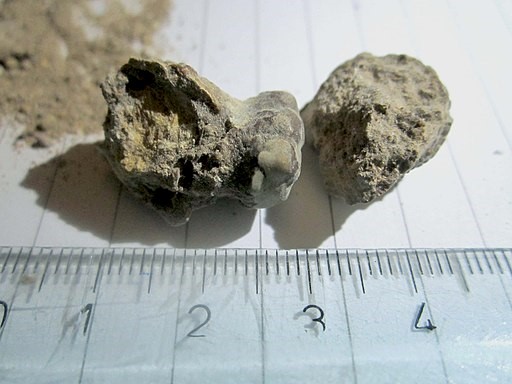
© Jakupica, CC BY-SA 4.0, via Wikimedia Commons
Our kidneys remove many different chemicals from our body. This is really important to keep us healthy. These chemicals are passed from our kidneys to our bladder and out of our body. Occasionally these chemicals can join together and form kidney stones.
How common are kidney stones?
Volver al contenidoKidney stones are common and occur in up to 1 in 7 people.
Each year 1 or 2 people in every 1,000 will have symptoms caused by kidney stones.
About 1 in 8 men and 1 in 16 women will have an episode of pain caused by kidney stones at some time in their lives.
If you have a kidney stone there is about a 1 in 2 chance of having another stone within the following five years.
Kidney stones are more common in people who are overweight, or have diabetes, or hipertensión.
Continúa leyendo abajo
What causes kidney stones?
Volver al contenidoDiagram with kidney cross-section
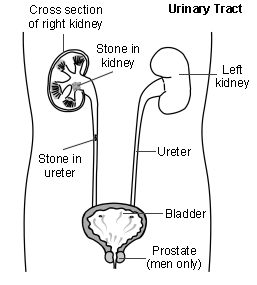
The kidneys filter the blood and remove excess water and waste chemicals to produce urine. Urine travels from each kidney down the tube (the ureter) draining urine from the kidney into the bladder. This is called the urinary tract.
Many waste chemicals are dissolved in the urine. The chemicals sometimes form tiny crystals in the urine which clump together to form a small stone. Most kidney stones are small and pass out with the urine. Some stones become stuck in a kidney or in the ureter.
In most cases, there is no known reason why a stone is formed. Most stones are made of calcium. However, in most cases, the amount of calcium and other chemicals in the urine and blood is normal.
Kidney stone symptoms
Volver al contenidoFor some people, a kidney stone may just stay in a kidney and cause no symptoms. Other kidney stones may travel out of your body in your urine without you knowing anything about it. If kidney stone symptoms do occur, they include:
Pain from a kidney. A stone that is stuck in a kidney may cause pain in the side of your abdomen (loin). This pain can be very severe and cause you to feel sweaty and be sick (vomit).
Cólico renal:
This is a severe pain which is caused by a stone that passes into the tube (the ureter) draining urine from the kidney.
The stone becomes stuck. The ureter squeezes the stone towards the bladder, which causes intense pain in the side of your tummy (abdomen).
The pain caused by renal colic may last from a few minutes to a few hours. The pain comes in spasms and between these spasms there may be intervals of no pain or just a dull ache.
The pain may spread down into the lower abdomen or groin. You may sweat, feel sick or even vomit because the pain can be very bad.
Sangre en tu orina. You may see blood in your urine (the urine turns red). This is caused by a stone rubbing against the inside of your ureter.
Infección urinaria. Urine infections are more common in people with kidney stones. Urine infections may cause high temperature (fever), pain on passing urine (dysuria) and a need to pass urine more often.
Continúa leyendo abajo
What makes kidney stones more likely?
Volver al contenidoYou are more likely to form a kidney stone if your urine is concentrated. For example, if you exercise vigorously, if you live in a hot climate or if you work in a hot environment when you may lose more fluid as sweat and less as urine.
You are also more prone to develop kidney stones if you have:
Repeated (recurrent) urine infections.
An abnormal kidney - for example, with scars or cysts on it.
A close relative who has had a kidney stone.
Underlying causes are uncommon
In a small number of cases, a medical condition causes the kidney stone. Various uncommon conditions can lead to high levels of chemicals in the body, such as calcium, oxalate, uric acid and cystine. If the level of these chemicals is high enough in the urine, they can form into stones.
Do some medicines make kidney stones more likely?
Volver al contenidoTaking certain medicines can make you more prone to making kidney stones. Examples include:
Some chemotherapy medicines for cancer.
Some medicines used to treat el VIH.
However, many people safely take these medicines without developing kidney stones. If you think that a medicine you are taking is the cause of your kidney stone, you should not stop taking the medicine but discuss it with your doctor.
Diagnosing kidney stones
Volver al contenidoYour doctor may arrange some initial urine and blood tests if you display kidney stone symptoms:
Un análisis de sangre to check that the kidneys are working properly.
You may also have other blood tests to check the level of certain chemicals that may cause kidney stones if the level is high. Examples include calcium and uric acid.
Análisis de orina to check for infection and for certain crystals.
If you have kidney stone symptoms, special X-rays or scans of the kidneys and the tubes (the ureters) draining urine from the kidneys may be done. These tests may start with an radiografía y ultrasonido. Un tomografía computarizada may also be needed. These tests are used to detect a stone, to find out exactly where it is and to check that a stone is not blocking the flow of urine.
What can be done to rule out or confirm an underlying cause?
Volver al contenidoKidney stones are common and they are not caused by any known underlying disease for most people. However, some tests may be recommended to rule out an underlying problem. In particular, tests are more likely to be advised if:
You have repeated (recurring) kidney stones.
You have symptoms of an underlying condition.
You have a family history of a particular condition.
A stone forms in a child or young person.
You may be asked to catch a stone so that it can be analysed. This will help to find out if there may be an underlying cause for the kidney stone. To catch a stone, you will need to pass urine through gauze, a tea strainer or a filter such as a coffee filter.
Kidney stone treatment
Volver al contenidoMost stones that cause renal colic are small and pass out with the urine in a day or so. You should drink plenty of fluids to encourage a good flow of urine. Analgésicos fuertes are often needed to ease the pain until you pass the stone. No other treatment is usually needed.
Some stones become stuck in a kidney or in one of the tubes (the ureters) draining urine from a kidney and cause persistent symptoms or problems. In these cases, the pain usually becomes severe and you may need to be admitted to hospital. There are various kidney stone treatment options, including:
Extracorporeal shock wave lithotripsy (ESWL) uses high-energy shock waves which are focused on to the stones from a machine outside the body to break up stones. You then pass out the tiny broken fragments when you pass urine.
Percutaneous nephrolithotomy (PCNL) is used for stones not suitable for ESWL. A thin telescope-like instrument (a nephroscope) is passed through the skin and into the kidney. The stone is broken up and the fragments of stone are removed via the nephroscope. This procedure is usually done under general anaesthetic.
Ureteroscopy is another treatment that may be used. In this procedure, a thin telescope is passed up into the ureter via the urethra and bladder. Once the stone is seen, a laser is used to break up the stone. This technique is suitable for most types of kidney stones.
Cirugía to remove the stone. This is only needed in a very small number of cases where the above, newer techniques have not worked or are not possible. It may be done if you have a very large stone in your kidney.
Another option for a purely uric acid stone (about 1 in 20 stones) is to dissolve the stone. This can be done by drinking plenty of fluids and making the urine alkaline with medication.
How to prevent kidney stones
Volver al contenidoThere are various kidney stone treatment options available, but about half of people who have a kidney stone develop another one at a later time in their lives. Drinking plenty of water each day may help in preventing kidney stones in future.
For the few people who have a high level of certain chemicals in the body, further advice and treatment to reduce the amount of these chemicals may be needed.
Kidney stone complications
Volver al contenidoComplications from kidney stones are uncommon. Rarely, a large stone can completely block the flow of urine passing down one of the tubes (ureters) draining urine from the kidney. This may lead to infection or even damage to the kidney (lesión renal aguda o enfermedad renal crónica).
This is now very uncommon because X-rays or scans will usually detect any blockage so that large stones can be removed before they cause any damage to your kidneys.
Patient picks for Problemas renales
Riñón y tracto urinario
Síndrome nefrótico
El síndrome nefrótico es una condición en la que los 'filtros' en el riñón se vuelven 'permeables' y grandes cantidades de proteína se filtran de la sangre a la orina. El síntoma principal es la retención de líquidos (edema), que se debe principalmente al bajo nivel de proteínas en la sangre. Varias enfermedades pueden causar el síndrome nefrótico, algunas más graves que otras. El tratamiento y el pronóstico varían, dependiendo de la causa. La causa más común en los niños, la enfermedad de cambios mínimos, generalmente responde muy bien al tratamiento.
por la Dra. Surangi Mendis, MRCGP
Riñón y tracto urinario
Glomerulonefritis
La glomerulonefritis es el nombre que se le da a una serie de condiciones que pueden afectar el riñón, específicamente los glomérulos del riñón. Los glomérulos se dañan, generalmente debido a un problema con el sistema inmunológico del cuerpo. Muchas personas con glomerulonefritis pueden no notar síntomas inicialmente. Sin embargo, la sal y el exceso de líquido pueden acumularse en el cuerpo si los glomérulos y los riñones no funcionan normalmente. Esto puede llevar a complicaciones como hipertensión y, en algunos casos, enfermedad renal crónica, que puede progresar a insuficiencia renal terminal. El tratamiento dependerá de la causa subyacente y de la gravedad de los síntomas.
por la Dra. Toni Hazell, MRCGP
Lecturas adicionales y referencias
- CUA guideline on the evaluation and medical management of the kidney stone patient; Canadian Urological Association (November 2016)
- Renal or ureteric colic - acute; NICE CKS, octubre 2024 (solo acceso en el Reino Unido)
- Urolithiasis; Asociación Europea de Urología (2023)
- Khan SR, Pearle MS, Robertson WG, et al; Kidney stones. Nat Rev Dis Primers. 2016 Feb 25;2:16008. doi: 10.1038/nrdp.2016.8.
- Fontenelle LF, Sarti TD; Kidney Stones: Treatment and Prevention. Am Fam Physician. 2019 Apr 15;99(8):490-496.
Continúa leyendo abajo
About the authorView full bio

Dr Colin Tidy, MRCGP
Médico General, Autor Médico
MBBS, MRCGP, MRCP (Paediatrics), DCH
Dr Colin Tidy is an NHS Doctor, based in Oxfordshire.
About the reviewerView full bio

Dr Krishna Vakharia, MRCGP
Chief Medical Officer for Health, Optum UK
MBChB, MRCGP(2013), BMedSci (hons), DFSRH, DRCOG, PGDipDerm (Distn)
La Dra. Krishna Vakharia es una médica general del NHS. También es examinadora habitual del Diploma de Posgrado en Dermatología Práctica en la Universidad de Cardiff, además de ser la Directora Médica de salud en Optum UK.
Historial del artículo
La información en esta página está escrita y revisada por pares por clínicos calificados.
Próxima revisión: 12 de mayo de 2028
18 de mayo de 2023 | Última versión

Pregunta, comparte, conecta.
Navega por discusiones, haz preguntas y comparte experiencias en cientos de temas de salud.

¿Te sientes mal?
Evalúa tus síntomas en línea de forma gratuita
Suscríbete al boletín de Patient
Tu dosis semanal de consejos de salud claros y confiables, escritos para ayudarte a sentirte informado, seguro y en control.
By subscribing you accept our Política de Privacidad. Puedes darte de baja en cualquier momento. Nunca vendemos tus datos.