Hiperlipidemia
Revisado por pares por Dr Colin Tidy, MRCGPÚltima actualización por Dr Toni Hazell, MRCGPÚltima actualización 24 Jul 2025
Cumple con las directrices editoriales
- DescargarDescargar
- Compartir
- Language
- Discusión
- Versión en audio
En esta serie:Colesterol altoHipercolesterolemia familiarEstatinas y otros medicamentos para reducir lípidos
Hyperlipidaemia means a high level of cholesterol or triglycerides in your blood.
En este artículo:
Videos seleccionados para Colesterol alto
Continúa leyendo abajo
What causes hyperlipidaemia?
Hyperlipidaemia is often found when people are overweight or have an unhealthy diet. It can also be the result of drinking too much alcohol. It can be something that you may have inherited through your family genes (known as primary hyperlipidaemia) and approximately 1 person in 500 will have this cause.
Otras condiciones
It may be because of another medical condition that you may have, such as diabetes, when it is known as secondary. Other causes include:
Medicine side-effects
Some prescribed medicines can affect your cholesterol level, including:
Diuréticos tiazídicos (used to control blood pressure).
Ciclosporina (used after organ transplants).
Antiretroviral therapy (used to treat HIV infection).
Betabloqueantes (used to control heart rate).
Atypical antipsychotics (used in some mental health problems).
Retinoic acid derivatives (used in some skin conditions).
How do I know if I have hyperlipidaemia?
Volver al contenidoHyperlipidaemia is often found during routine screening when your doctor is trying to assess your risk of having heart attacks or strokes. This may be as part of an annual health check if you are over 40 years of age, or if you have a close relative who had these problems at a young age.
Usually, the diagnosis is made after a blood test. It used to be the case that we always asked people to fast (not eat) for 8-12 hours before the blood test, but this is now usually not needed. The person who requests the blood test will tell you if you need to fast for it.
There are also changes that may be visible on your body if you have the inherited form of hyperlipidaemia:
Premature arcus senilis - this is a white or grey ring that is visible when your doctor looks at the front of your eyes.
Arcus senilis
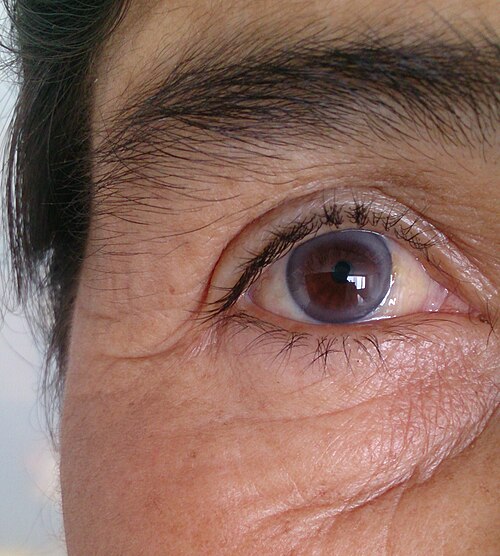
© Afrodriguezg, CC BY-SA 4.0, via Wikimedia Commons
Tendon xanthomata - these are hard nodules that you may find in the tendons of the knuckles and the Achilles (at the back of your ankle).
Xantelasma - fatty deposits in the eyelids.
Xanthelasma_palpebrarum
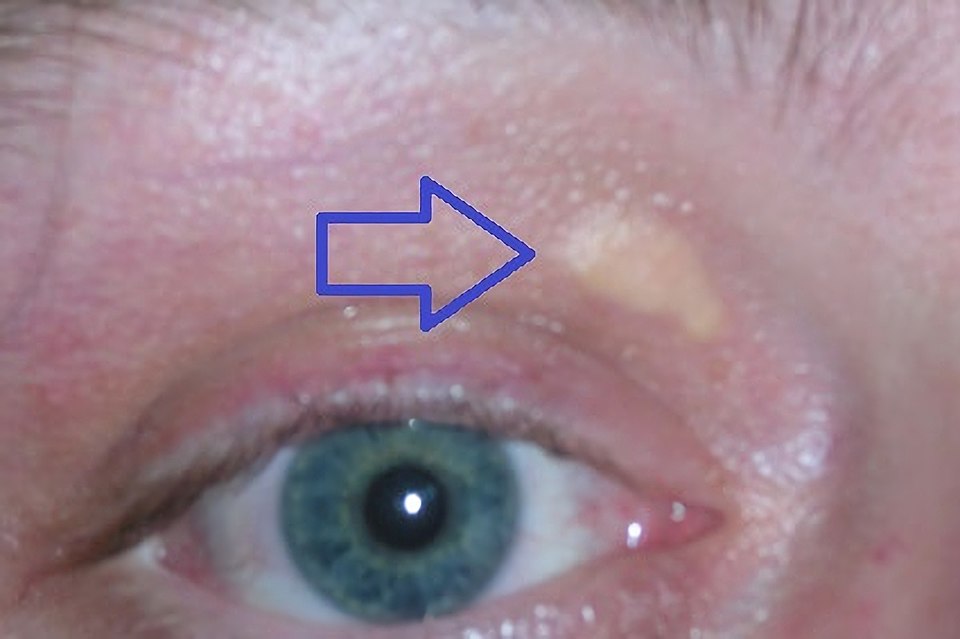
© Bobtheowl2 at the English Wikipedia, CC BY-SA 3.0 , via Wikimedia Commons
See the separate leaflet called Familial hypercholesterolaemia.
Continúa leyendo abajo
What can I do to lower my lipid levels?
Volver al contenidoHyperlipidaemia can be treated both by eating a healthy diet and by taking a medicine to reduce your cholesterol level. It is also very important to lower any other risk factors for cardiovascular diseases, such as doing regular actividad física and not smoking. See the separate leaflet called Cardiovascular disease (Atheroma) for more information.
The decision as to whether you need medication is usually taken by your healthcare professional by putting your information into an online calculator. This uses a variety of factors to predict your risk of having a cardiovascular event such as a heart attack or stroke. If your risk is over 10% then you will usually be offered medication, however if you would like to first try diet and other lifestyle change then you can do that and arrange a re-test in 6-12 months. Some people are always offered medication, with no need to do a risk calculation. This includes those who have already been found to have arterial disease (for example, angina, heart attack, stroke), and those who have type 1 diabetes, chronic kidney disease, or a type of raised cholesterol which is inherited.
Dieta
Changing from an unhealthy diet to a healthy diet can reduce a cholesterol level. However, dietary changes alone rarely lower a cholesterol level enough to change a person's risk of cardiovascular disease from a high-risk category to a lower-risk category. A healthy diet has other benefits too, apart from reducing the level of cholesterol. See also the separate leaflet called Healthy eating.
Medicamento
If you are at high risk of developing a cardiovascular disease then medication is usually advised along with advice to tackle any lifestyle issues, including diet. Medication can be used to lower your cholesterol or triglyceride level, usually with a statin medicine. Read more about statins and other lipid-lowering medicines for further details. Most medication is taken by mouth, but there is some newer medications (for example, evolocumab and incliseran) which are given by injection. They are usually prescribed by specialists rather than by GPs.
Selecciones del paciente para Colesterol alto

Salud del corazón y vasos sanguíneos
Hipercolesterolemia familiar
Familial hypercholesterolaemia is inherited high cholesterol. It is a condition where you have a very high cholesterol level in your blood.
por el Dr. Colin Tidy, MRCGP

Salud del corazón y vasos sanguíneos
Colesterol alto
Cholesterol is a fat chemical (lipid) that is made in the cells in your body. Many different cells make cholesterol but cells in the liver make about a quarter of the total. You need some cholesterol to keep healthy.
por la Dra. Rosalyn Adleman, MRCGP
Lecturas adicionales y referencias
- Enfermedad cardiovascular: evaluación y reducción del riesgo, incluyendo la modificación de lípidos; NICE guidance (December 2023)
- Familial hypercholesterolaemia: identification and management; NICE Clinical Guideline (2008, last updated October 2019)
- Guidelines for the management of dyslipidaemias: lipid modification to reduce cardiovascular risk; European Society of Cardiology/European Atherosclerosis Society (2019)
- Lipid modification - CVD prevention; NICE CKS, March 2025 (UK access only).
- 2021 European Guidelines on cardiovascular disease prevention in clinical practice; European Society of Cardiology (2021)
- Hypercholesterolaemia - familial; NICE CKS, abril 2024 (acceso solo en el Reino Unido)
Continúa leyendo abajo
Historial del artículo
La información en esta página está escrita y revisada por pares por clínicos calificados.
Next review due: 23 Jul 2028
24 Jul 2025 | Última versión
14 Oct 2011 | Publicado originalmente

Pregunta, comparte, conecta.
Navega por discusiones, haz preguntas y comparte experiencias en cientos de temas de salud.

¿Te sientes mal?
Evalúa tus síntomas en línea de forma gratuita
Suscríbete al boletín de Patient
Tu dosis semanal de consejos de salud claros y confiables, escritos para ayudarte a sentirte informado, seguro y en control.
Al suscribirte aceptas nuestros Política de Privacidad. Puedes darte de baja en cualquier momento. Nunca vendemos tus datos.