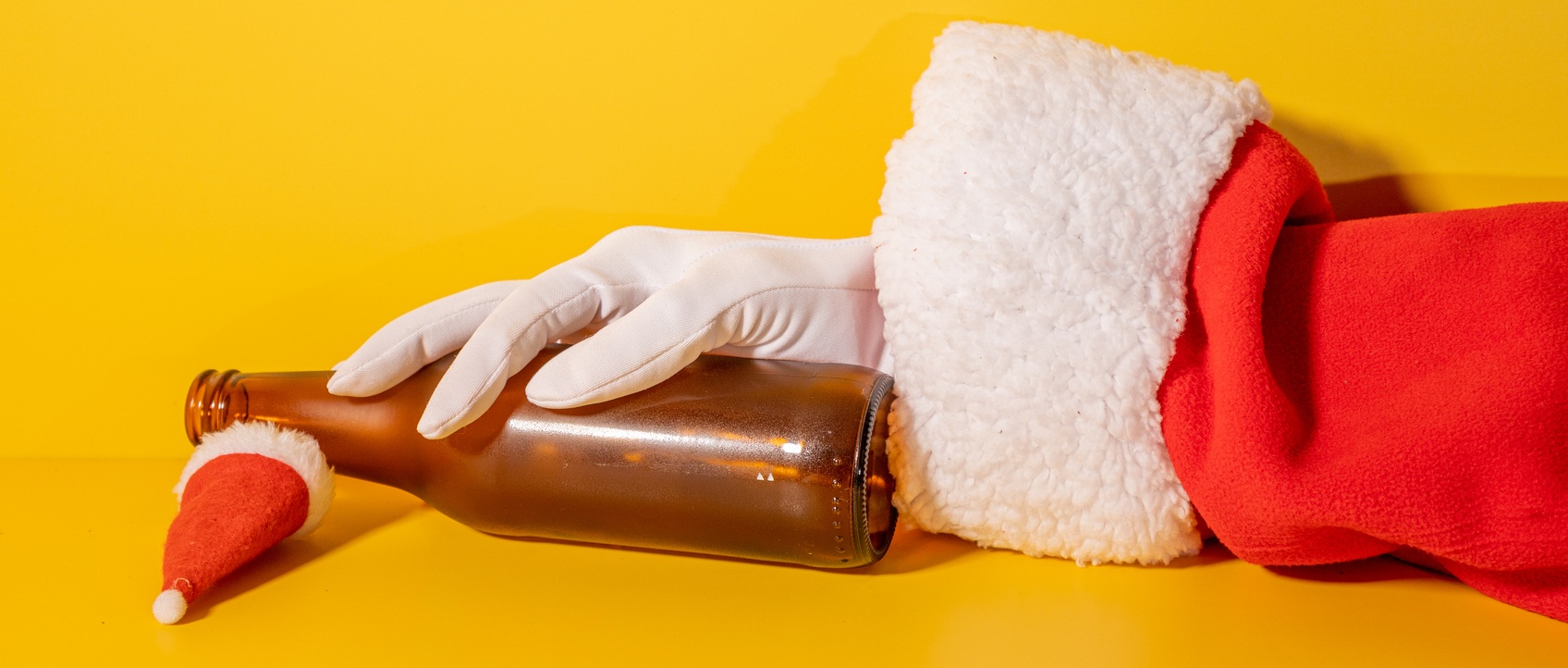
How to drink less over Christmas and the New Year
Peer reviewed by Dr Colin Tidy, MRCGPLast updated by Lynn StephenLast updated 17 Dec 2025
Meets Patient’s editorial guidelines
- DownloadDownload
- Share
- Language
- Discussion
- Audio Version
- Add to preferred sources on Google
Whether you're going to parties with friends or colleagues, it's easy to overdo it with alcohol over Christmas and the New Year. So how can you manage your drinking throughout the festive period?
Many of us overindulge at Christmas. We meet friends at the pub, crack open the wine with family, and make the most of free fizz with your colleagues at work parties. And although many of us drink too much from time to time - and regret it when we have a hangover - it's easy to fall into the habit of unhealthy drinking.
How drinking too much affects your health
Drinking too much can lead to serious health consequences - both mental and physical.
Jennifer Walters, Director of Communications at the National Institute for Health and Care Research (NIHR), and former spokesperson for the UK charity Drinkaware says: "In the short term, alcohol can affect your sleep and your weight, and impair your judgement. Alcohol is the second biggest health hazard for developing cancer - after smoking."
She explains that - in the long term - drinking above the recommended guidelines increases your chance of seven types of cancer, including breast, liver, and mouth cancer. Other effects include raised blood pressure, liver disease, brain damage and mental health issues.
Stephen Buckley, Head of Information, Mind adds: "Many of us drink more than usual at Christmas. While for most it's not a huge issue, becoming dependent on alcohol can affect your mental health. It may cause difficulty thinking clearly or problem solving, and trigger feelings of anxiety."
This is because alcohol is a depressant and regularly drinking too much disrupts the balance of chemicals in our brain that affect mood.
Walters explains that drinking heavily and regularly is associated with symptoms of depression, although it can be difficult to separate cause and effect.
"Reducing or stopping drinking can improve mood," she says. "To look after our mental health, reducing how much we drink is an important first step."
Although feeling anxious or sad when you're hungover is very different to experiencing depression - which is marked by long-term feelings of sadness or despair - it can still be unpleasant. Managing how much you drink on a night out can help you avoid hangovers and the accompanied feelings of anxiety or low mood.
How to cut down your drinking over Christmas
Cutting down your intake of alcohol isn't always easy, but there are steps you can take to reduce it.
The guidelines for both men and women are to drink no more than 14 units a week - around six medium glasses of wine or six pints of beer. If you regularly drink as much as 14 units per week, it is best to spread your drinking evenly over three or more days.
Know your triggers
Understanding why you drink can help you manage your drinking. People, places, times and emotions - such as feeling sad or happy - can also be linked to drinking alcohol.
"Think about what your own personal triggers to drink alcohol are and how you can change your behaviour to fit your lifestyle," Walters advises. "It might help to talk to someone about it - a friend, your doctor, or anonymously with a trained professional over the phone.
"To succeed in reducing your drinking you may need to break associations. For example, if you tend to reach for a drink when you come home from work - or stop work if you're working from home - plan an alternative activity to try to break this link. You could go for a walk or read your favourite book instead."
Avoid 'all or nothing' thinking
If you've cut back on your drinking and you've been doing well, it's easy to feel you've blown it completely if you slip up. However, it’s important to avoid this 'all or nothing' thinking.
"Remember this is all about moderation to be kind to yourself and get back on track as soon as possible," says Walters. "Reducing your drinking is a marathon, not a sprint, so take it day by day. Focusing on one day at a time will help the journey feel more manageable."
Get support
Telling your friends and family about your goals over Christmas can help them understand why you may turn down drinks, or perhaps taking up new activities in place of drinking. Getting their support can also help you stick to your goals.
Walters says: "There are times when friends and family might not be as supportive as you'd like and they may not even realise it. If this is the case, remind yourself of your 'why' and that you alone are in control of your decisions."
It's also important to remember the festive season can be very hard for some people, especially those who are isolated.
"If you're worried about your own drinking or someone else's, it's more important than ever that you stay connected to people by phone or video calls to seek or offer support and strength by talking to someone," adds Walters.
You can do this anonymously in online groups, with trained advisors and counsellors or with friends or family. Organisations including Drinkaware, AA and the Alcohol Health Alliance offer advice, support and resources.
It can help to speak with your doctor if you think you have an issue with alcohol. They can provide advice on the best course of action for you.
Be prepared
Here are some tips to help you drink less over Christmas:
There are apps you can download to help keep track of how much alcohol you are drinking, such as the Drinkaware app.
If you are planning to see family or friends, try to come up with activities at home that don't necessarily involve drinking - for example, a games night.
If other people will be drinking, stock up on alcohol-free options.
It's easy to underestimate the amount you're drinking, especially if you're drinking spirits at home - what you assume is a single measure could easily be two or three. Use a drink measure to keep tabs on the number of units you're drinking.
Patient picks for Alcohol advice

Healthy living
How to create healthy drinking habits that last beyond Dry January
After a Christmas of excess, many of us vow to become healthier in the New Year. Often, this involves giving up alcohol in January to try to reset our relationship with drinking. However, it can be tempting to fall back into our previous habits as soon as February rolls around. So how can we make long-lasting changes to the way we drink?
by Lynn Stephen

Healthy living
What are the risks of alcohol as you get older?
Alcohol presents health hazards for people of all ages. But as we age our bodies are less able to cope with its effects, and health concerns increase even more. This includes our chance of developing several cancers, the likelihood of breaking a bone after a minor fall, slower reaction times, and bad reactions to medicines.
by Victoria Raw
About the authorView full bio
Updated by

Lynn Stephen
Content developer
MA (Hons)
Lynn joined Patient in 2023 and her role includes checking all the professional leaflets, patient information leaflets and medicine leaflets, to ensure consistency of spelling, grammar, reference material and brand style, working with the medical authors and clinical director to coordinate the authoring and peer reviewing of the leaflets.
Authored by

Lydia Smith
Feature writer
BA, MA, MSc
Lydia Smith is an award-winning journalist and feature writer who has written extensively on women's health and mental health. She is currently studying for an MSc in psychology.
About the reviewerView full bio

Dr Colin Tidy, MRCGP
General Practitioner, Medical Author
MBBS, MRCGP, MRCP (Paediatrics), DCH
Dr Colin Tidy is an NHS Doctor, based in Oxfordshire.
Article history
Article also available in English, German, Spanish, French, Italian, Portuguese, Hindi, Hebrew, Arabic, and Swedish.
Next review due: 17 Dec 2028
17 Dec 2025 | Latest version
23 Dec 2020 | Originally published
Authored by:
Lydia Smith
Join the conversation
Share your thoughts or experiences with others in our patient communities.

Ask, share, connect.
Browse discussions, ask questions, and share experiences across hundreds of health topics.

Feeling unwell?
Assess your symptoms online for free
Sign up to the Patient newsletter
Your weekly dose of clear, trustworthy health advice - written to help you feel informed, confident and in control.
By subscribing you accept our Privacy Policy. You can unsubscribe at any time. We never sell your data.