Lifting facial
Revisado por La Asociación Británica de Cirujanos Plásticos (BAAPS)Escrito por La Asociación Británica de Cirujanos Plásticos (BAAPS)Publicado originalmente 23 de marzo de 2016
Cumple con las directrices editoriales
- DescargarDescargar
- Compartir
- Language
- Discusión
- Ask Patient
- Versión en audio
- Agregar a fuentes preferidas en Google
Aviso sobre el contenido
Esta página no se ha revisado recientemente, por lo que es posible que haya cambiado parte de la información o que algunos enlaces externos ya no funcionen.
Este folleto es proporcionado por el Asociación Británica de Cirujanos Plásticos Estéticos, el organismo profesional responsable del avance en la educación y la seguridad en la cirugía plástica estética.
De un vistazo
Un lifting facial es un procedimiento quirúrgico para tratar la piel y los músculos caídos en el rostro y el cuello.
Puede hacerte lucir más joven, vital y alegre.
Los mejores candidatos tienen cierta elasticidad en la piel y una buena estructura ósea.
Deberías dejar de fumar y evitar ciertos medicamentos antes de la cirugía.
La recuperación implica algunos hematomas, hinchazón y entumecimiento durante algunas semanas o meses.
Los efectos de un estiramiento facial pueden durar mucho tiempo.
As part of the aging process which happens to all of us sooner or late, our skin progressively loses its elasticity and our muscles tend to slacken. The stresses of daily life, effects of gravity and exposure to sun can be seen on our faces. The folds and smile lines deepen, the corners of the mouth droop, the jaw line sags and the skin of the neck becomes slack. Around the eyes, the eyebrows often droop and the skin of the eyelids gathers loose folds. In the skin the first sign is wrinkles developing at the edges, at the outer corners of the eye and lines of expression.
The rate at which this happens varies from one person to another and is probably determined by our genes. Aging of the skin of the face does not necessarily reflect the rate that the rest of our body and mind is ageing and many people feel frustrated that the face they see in the mirror is not the one they feel should be there. Substantial weight loss can produce similar changes in facial appearance to those of the aging process.
Who will benefit from a facelift?
The best candidate is one whose face and neck has begun to sag, but whose skin still has some elasticity and whose bone structure is strong and well defined. Most patients are in their 40s to 60s, but facelifts can be done successfully on people in their 70s or 80s.
It should not be obvious that a patient has had a facelift, but instead they look younger, more vital and cheerful. It is a procedure that technically works well but also increases morale and is well appreciated by the patient.
Facelift

What a facelift does not do
A facelift works better for the lower half of the face and particularly the jaw line and neck. If you have sagging eyebrows and wrinkles of the forehead then you should perhaps consider an endoscopic brow lift. Loose skin with fine wrinkles, freckles and rough areas will benefit more by chemical peel or laser resurfacing.
What should you do before the operation?
If you are overweight and intend to lose it you should do so before the operation. This allows the surgeon to remove more skin and therefore achieve a more pleasing result. You should avoid taking tablets containing aspirin and non steroidal anti-inflammatory drugs such as Voltarol® and Indocid® for at least two weeks before surgery as they increase the risk of bleeding.
You should stop smoking at least two weeks before surgery as this is the main cause of reduced healing. It decreases circulation of the skin flaps, particularly behind the ears.
Have your hair permed and tinted, if you wish, before your operation as fresh scars are sensitive to these chemicals for a few weeks.
The surgery
A facelift is carried out in a hospital and most surgeons and patients prefer a general anaesthetic. It is possible to carry out the procedure under local anaesthetic and intravenous sedation but the patient would still be advised to spend the night in hospital. The procedure, although long, can be combined with other operations of all sorts. The most common however would be an endoscopic brow lift and an eyelid reduction. Other extra procedures which can be used to enhance the face at the same time are malar (cheek bone) and chin augmentation and lip enhancement.
This is an extension of the forehead lift which is designed to tighten the skin of the upper half of the face, as opposed to the standard facelift which helps the lower half of the face. The Deep Facelift carried out endoscopically avoids the same ear to ear incision. It is usually carried out at a younger age than the standard facelift. It tightens the skin of the mid-face and freshens the eyes, opening and lifting the outer angle and reducing the wrinkles of the crow's feet. There will be swelling around and below the eyes which gradually resolves in about a month. There will also be scars beneath the eyelashes of the lower eyelid and sometimes in the upper gum line. There is a slight risk of damage to the nerve which supplies the muscles of the forehead. This weakness is usually partial and temporary; on rare occasions it may be permanent.
Incisions are made above the hair line at the temples and extend in a natural line down the front of the ear, or just inside the cartilage at the front of the ear, and continue around behind the earlobe and up in the crease behind the ear and off into the lower scalp. Occasionally it may be necessary to make a small incision under the chin. Sometimes only the skin is lifted following separation from the underlying platysma muscle.
More usually however the platysma muscle and its fibrous attachments (SMAS) is dissected free and sutured tightly to the solid structures in front and behind the ear. At other times the skin and the SMAS layer are lifted together as a single layer, but will still be sutured separately. Fat along the jaw line and under the chin may be removed by liposuction or on occasion through an incision under the chin. The skin is sutured so that it is lifted upwards and backwards, just as when one lifts the skin when looking in the mirror. Sometimes drains are inserted. Most surgeons will bandage the face to minimise bruising and swelling. These bandages will stay for one or two days and the sutures are removed in 7 to 8 days.
After your surgery there is usually some bruising of the cheeks and with gravity this tends to descend into the neck. Discomfort is usually mild and can be controlled with paracetamol. It is normal for there to be some numbness of the skin of the cheeks and ears. This will usually disappear in a few weeks or months. It is better to keep the head elevated for a couple of days to reduce swelling. Drainage tubes will be removed a day or two after surgery. Avoid strenuous activity, saunas and massage for at least two weeks.
At the beginning your face will look a little puffy and may feel rather strange and stiff. The scars can be very well hidden by women with their hair and disc shaped earrings so that they should be able to resume work and social activities within a couple of weeks. Camouflage make-up can be helpful in masking bruising.
Men find it more difficult to disguise the scars and will need to shave their beard closer to the ear in front and also behind the ear where the skin has been lifted.
The scars in the hair do not usually show except that the hair is cut shorter immediately around the wound. There may be some slight reduction in hair growth in the temples, but this is not usually a problem unless the hair is very thin and repeated facelifts are being carried out.
How long does a facelift last?
A facelift does not stop the clock, but it does put the clock back. The effect of the facelift is likely to always be there, in that you will not look as old as you would have done if it had not been carried out.
Choosing your surgeon
A facelift is a skilled procedure and we would recommend that you choose a surgeon who has undergone a full training programme for cosmetic surgery. These surgeons will be on the Specialist Register in Plastic Surgery at the General Medical Council. All members of the British Association of Aesthetic Plastic Surgeons (BAAPS) are on the Specialist Register.
Contenido utilizado con permiso del sitio web de la Asociación Británica de Cirujanos Plásticos Estéticos: Lifting facial. Los derechos de autor de este folleto pertenecen a BAAPS.
Descargo de responsabilidad
Este folleto está diseñado para proporcionar información útil, pero no debe considerarse como un consejo específico para ningún caso en particular. No reemplaza la necesidad de una consulta exhaustiva y todos los pacientes potenciales deben buscar el consejo de un profesional médico debidamente cualificado. La BAAPS no asume ninguna responsabilidad por las decisiones tomadas por el lector respecto al tratamiento que decida realizar.
Selecciones del paciente para Cirugía estética
Cirugía y procedimientos
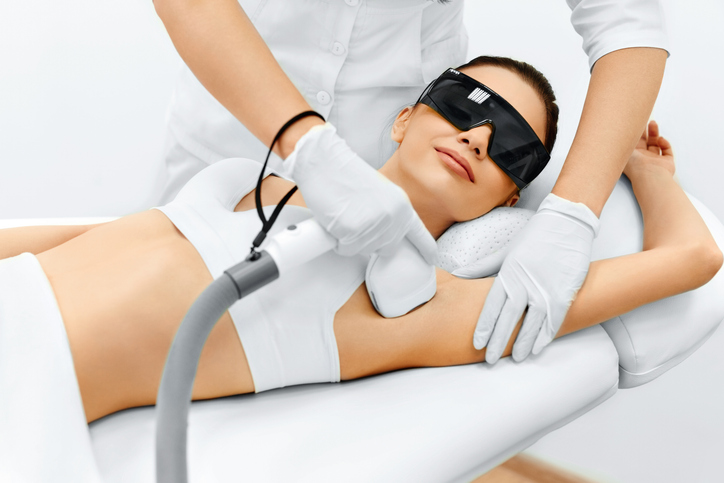
Depilación láser
Este folleto es proporcionado por la Asociación Británica de Cirujanos Plásticos Estéticos, el organismo profesional responsable del avance en la educación y la seguridad en la cirugía plástica estética.
por la Asociación Británica de Cirujanos Plásticos (BAAPS)

Cirugía y procedimientos
Cirugía ocular con láser
La cirugía láser de ojos se está volviendo cada vez más popular como una alternativa permanente a usar gafas o lentes de contacto.
por el Dr. Colin Tidy, MRCGP
Preguntas frecuentes
¿Un lifting facial aborda problemas en la parte superior del rostro, como las cejas y la frente?
Un lifting facial estándar se enfoca principalmente en la mitad inferior del rostro, específicamente en la línea de la mandíbula y el cuello. Para cejas caídas y arrugas en la frente, otros procedimientos como un levantamiento de cejas endoscópico podrían ser más adecuados.
¿Puedo combinar un lifting facial con otros procedimientos estéticos?
Sí, un estiramiento facial se puede combinar con otras operaciones. Comúnmente, se realiza junto con un levantamiento de cejas endoscópico o una reducción de párpados. Otros procedimientos para mejorar las características faciales, como el aumento de pómulos (malar) o mentón, y el realce de labios, también se pueden realizar al mismo tiempo.
¿Experimentaré mucho dolor después de la cirugía?
El malestar después de un lifting facial suele ser leve y generalmente se puede controlar con paracetamol. También es normal tener algo de entumecimiento en la piel de las mejillas y las orejas, que generalmente se resuelve en unas pocas semanas o meses.
¿Cuánto tiempo me tomará volver a mis actividades normales después de un lifting facial?
Las mujeres generalmente pueden reanudar el trabajo y las actividades sociales en un par de semanas, ya que las cicatrices pueden ocultarse con el cabello y aretes en forma de disco. Los hombres pueden encontrar más desafiante disimular las cicatrices y podrían necesitar ajustar su rutina de afeitado más cerca de la oreja. Se recomienda evitar la actividad extenuante, saunas y masajes durante al menos dos semanas.
¿Qué sucede con las cicatrices en mi cabello después de un estiramiento facial?
Las cicatrices en el cabello generalmente no son notables, excepto porque el cabello se corta más corto inmediatamente alrededor de la herida. Podría haber una ligera reducción en el crecimiento del cabello en las sienes, pero esto generalmente no es un problema a menos que tu cabello sea muy fino o hayas tenido múltiples estiramientos faciales.
Sobre el autorVer biografía completa
Escrito por
La Asociación Británica de Cirujanos Plásticos (BAAPS)
La Asociación Británica de Cirujanos Plásticos Estéticos (BAAPS) es el organismo profesional de cirujanos plásticos en el Reino Unido.
Acerca del revisorVer biografía completa
La Asociación Británica de Cirujanos Plásticos (BAAPS)
La Asociación Británica de Cirujanos Plásticos Estéticos (BAAPS) es el organismo profesional de cirujanos plásticos en el Reino Unido.
Historial del artículo
Artículo también disponible en Inglés, Alemán, Español, Francés, Italiano, Portugués, Hindi, Hebreo, Árabe, y Sueco.
23 de marzo de 2016 | Publicado originalmente
Escrito por:
La Asociación Británica de Cirujanos Plásticos (BAAPS)Revisado por
La Asociación Británica de Cirujanos Plásticos (BAAPS)
Comparte tus pensamientos o experiencias con otros en nuestro comunidades de pacientes.
Acceso sencillo a tratamientos y servicios de salud confiables en línea.
Common conditions
Get help with common conditions through the NHS, without a GP appointment.
 Sinusitis aguda
 Amigdalitis bacteriana
 Impetigo
 Picaduras de insectos
 Herpes zósterInfección del tracto urinario (ITU)
Suscríbete al boletín de Patient
Tu dosis semanal de consejos de salud claros y confiables, escritos para ayudarte a sentirte informado, seguro y en control.
Al suscribirte aceptas nuestros Política de Privacidad. Puedes darte de baja en cualquier momento. Nunca vendemos tus datos.