Enfisema
Revisado por pares por Dr Surangi Mendis, MRCGPÚltima actualización por Dr Philippa Vincent, MRCGPÚltima actualización 2 de junio de 2023
Cumple con las directrices editoriales
- DescargarDescargar
- Compartir
- Language
- Discusión
- Versión en audio
- Agregar a fuentes preferidas en Google
En esta serie:Enfermedad pulmonar obstructiva crónicaEspirometríaInhaladores para EPOCMucolíticosBroncodilatadores oralesExacerbaciones agudas de la EPOC
Emphysema is a progressive lung condition that is a form of chronic obstructive pulmonary disease. Smoking is the most common cause of emphysema.
De un vistazo
El enfisema es una afección pulmonar que causa dificultad para respirar y tos persistente.
Daño los sacos de aire en los pulmones, reduciendo la cantidad de oxígeno transferido a la sangre.
Fumar es la principal causa de enfisema, pero el tabaquismo pasivo y la contaminación también son factores de riesgo.
Los síntomas empeoran con el tiempo, haciendo que las actividades normales sean difíciles.
Dejar de fumar es el tratamiento más importante y puede ralentizar la progresión de la enfermedad.
El tratamiento incluye inhaladores y tabletas, y a veces cirugía para casos avanzados.
Las complicaciones pueden incluir infecciones frecuentes en el pecho, colapso pulmonar y problemas cardíacos.
What is emphysema?
Emphysema is a lung condition that causes shortness of breath and cough. Over time, the inner walls of the air sacs in the lungs (alveoli) are weakened and the lining of the alveoli becomes damaged. This causes a smaller number of larger air spaces instead of lots of normal small ones.
The smaller number of larger air sacs causes a reduction in the overall surface area of the lungs. This means that less oxygen can be transferred from the air being breathed into the lungs into the bloodstream.
Most people with emphysema also have a condition called chronic bronchitis. Chronic bronchitis causes inflammation in the tubes (bronchi) that carry the air to and from the lungs. This leads to a persistent cough and further reduces the air that is breathed into the lungs. Emphysema and chronic bronchitis are the two conditions that make up enfermedad pulmonar obstructiva crónica (EPOC).
Emphysema symptoms
The main symptoms of emphysema are falta de aire y a cough, which usually begin gradually. As the emphysema in the lungs becomes worse, the symptoms also deteriorate.
Emphysema is a long-term condition that usually progresses over a number of years. Progress is often slow but can be faster in some people. There may be no symptoms for a long time and sometimes emphysema is found on chest x-rays even in people with no or few symptoms.
As the shortness of breath and the cough become progressively worse, it can become difficult to continue with normal activities and mobility. Emphysema eventually causes shortness of breath even at rest.
Stages of emphysema / COPD
Stage 1 - mild
Lung function is reduced to around 80% and symptoms are mild. They can often be assumed to be "just a smoker's cough". The cough increases at this stage and often there is production of phlegm. The most important action in this mild stage is to stop smoking which can reduce the worsening of emphysema. Exercise is important as well to try and increase the functioning of the lungs.
Stage 2 - moderate
Lung function is reduced to between 50 and 79%. This is the commonest stage for emphysema and COPD to be diagnosed as the symptoms are more troublesome. The symptoms are usually the same as in mild emphysema but more persistent with daily cough and phlegm.
Stage 3 - severe
Lung function is reduced to between 30 and 49% of normal. Symptoms are worse and more frequent at this stage. It is common to get more frequent infections as the lungs are no longer able to work to expel bacteria and viruses. It is usually difficult at this stage to exercise without getting out of breath very quickly.
Stage 4 - very severe
Lung function is reduced to less than 30%. This stage is also called "end-stage" emphysema or "end-stage" COPD because it is so severe and can be life-threatening; however, it is common to live for several years at this stage, but with reduced quality of life. Weight loss is common at this stage.
How common is emphysema?
In the UK it is thought that around 1.2 million people have COPD. This number represents 2 out of every 100 of the population, or between 4-5 out of 100 of all people aged over 40. It is much commoner in the North of England and in deprived areas. The rates of emphysema and COPD in the 10% most-deprived areas is double that in the least-deprived areas. The numbers of people with emphysema and COPD has not decreased in recent years, unlike most chronic health conditions.
Risk factors for and causes of emphysema
Factors that increase the risk of developing emphysema include:
Fumar. Emphysema is most likely to develop in cigarette smokers; however, cigar and pipe smokers also are susceptible. The risk for all types of smokers increases with the number of years and amount of tobacco smoked. Around 50% of smokers will develop emphysema with around 20% of smokers developing more severe symptoms. 80% of deaths from COPD are related to smoking.
Edad. Although the lung damage that occurs in emphysema develops gradually, most people with tobacco-related emphysema begin to experience symptoms of the disease between the ages of 40 and 60.
Fumar pasivo. This means breathing in the smoke from someone else's cigarette, pipe or cigar. Being around secondhand smoke increases the risk of emphysema.
Exposure to fumes or dust. People breathing fumes from certain chemicals or dust from grain, cotton, wood or mining products, are more likely to develop emphysema. This risk is even greater if they also smoke.
Exposure to indoor and outdoor pollution. Breathing indoor pollutants (such as fumes from heating fuel), as well as outdoor pollutants (such as car exhaust) increases the risks of emphysema.
Deficiencia de alfa-1-antitripsina. There is a rare genetic disorder called alpha-1-antitrypsin deficiency which leads to an inherited deficiency of a protein which protects the elastic structures in the lungs. People with this condition have a significantly higher risk of emphysema at a young age if they smoke. This can be diagnosed with a simple blood test.
Diagnosing emphysema
¿Qué pruebas se necesitan?
The most common test used in helping to diagnose the condition is called spirometry. Other tests include a radiografía de tórax y análisis de sangre to help exclude other serious conditions. Occasionally, a special tomografía computarizada (TC) of the chest - high-resolution CT - is needed.
Emphysema treatment
The most important part of treatment is to reduce exposure to any cause - particularly to avoid smoking, including passive smoking. The treatment for many people with emphysema is the same as for enfermedad pulmonar obstructiva crónica (EPOC) and includes inhalers and tablets to try and reduce the volume of phlegm produced.
Surgery (such as lung volume reduction surgery or a lung transplant) may be considered for advanced severe emphysema.
In the UK, the National Institute for Health and Care Excellence (NICE) recommends that endobronchial valve insertion to reduce lung volume can be considered as a treatment option. An endobronchial valve is a small one-way valve, which is placed in an airway (bronchus), usually using a bronchoscope. The valve allows air to flow out of the lung when breathing out but blocks air from entering that lung when breathing in. This helps to remove the excess air that is trapped in the lungs in emphysema.
Complications of emphysema
People who have emphysema are also more likely to develop:
Infecciones del pecho. These can occur frequently.
Collapsed lung (pneumothorax). A collapsed lung can be life-threatening in people who have severe emphysema, because the function of their lungs is already so compromised. This is uncommon but serious when it occurs.
Problemas del corazón. Emphysema can increase the pressure in the arteries that connect the heart and lungs. This can cause failure of the right side of the heart, which pumps blood to the lungs (this condition is called cor pulmonale).
Large holes in the lungs (bullae). The bullae can be as very large. These bullae reduce the transfer of oxygen into the bloodstream and also increase the risk of a pneumothorax.
Preventing emphysema
This risk of emphysema can be greatly reduced by:
No fumar.
Avoiding passive smoking.
Wearing a mask to protect the lungs if working with chemical fumes or dust.
Selecciones del paciente para EPOC
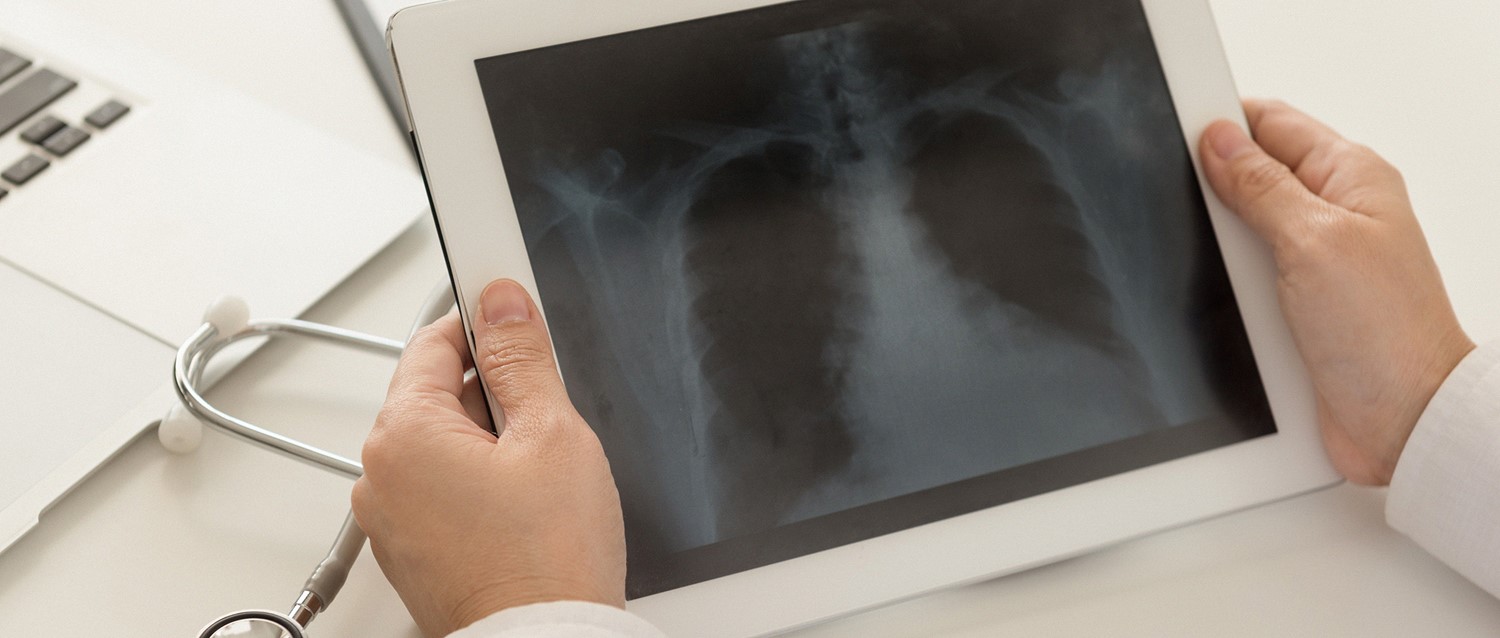
Pecho y pulmones
Enfermedad pulmonar obstructiva crónica
La enfermedad pulmonar obstructiva crónica (EPOC) es una afección a largo plazo de los pulmones donde el flujo de aire hacia los pulmones está obstruido. Los síntomas incluyen tos y dificultad para respirar. La afección es causada con mayor frecuencia por el tabaquismo y el tratamiento más importante es dejar de fumar. Los inhaladores se utilizan comúnmente para aliviar los síntomas. Otros tratamientos como esteroides, antibióticos, oxígeno y medicamentos mucolíticos (que adelgazan el moco) a veces se prescriben en casos más graves, o durante un brote (exacerbación) de síntomas.
por la Dra. Toni Hazell, FRCGP
Pecho y pulmones
Uso de la terapia de oxígeno en la EPOC
Oxygen is used for some chronic lung conditions. Chronic obstructive pulmonary disease (COPD) is one of these conditions. Long-term oxygen use can help to relieve the strain on the heart. However, it does not relieve breathlessness.
por el Dr. Oliver Starr, MRCGP
Preguntas frecuentes
¿Qué es la inserción de válvulas endobronquiales y cómo ayuda en el enfisema severo?
La inserción de válvulas endobronquiales es un procedimiento en el que se coloca una pequeña válvula unidireccional en una vía aérea (bronquio) utilizando un broncoscopio. Esta válvula permite que el aire salga del pulmón cuando exhalas, pero impide que el aire entre en ese pulmón cuando inhalas. Esto ayuda a eliminar el exceso de aire que queda atrapado en los pulmones debido al enfisema, lo que puede mejorar la respiración.
Can emphysema lead to other health problems?
Sí, el enfisema puede aumentar su riesgo de desarrollar varios otros problemas de salud. Estos incluyen infecciones frecuentes en el pecho, un colapso pulmonar (neumotórax) y problemas cardíacos, específicamente un aumento de la presión en las arterias que conectan el corazón y los pulmones, lo que puede llevar a una insuficiencia del lado derecho del corazón (cor pulmonale). También pueden formarse grandes agujeros llamados bullas en los pulmones, reduciendo aún más la transferencia de oxígeno y aumentando el riesgo de neumotórax.
¿Es hereditario el enfisema?
En un número reducido de casos, el enfisema puede estar relacionado con un trastorno genético llamado deficiencia de alfa-1-antitripsina. Esta condición significa que el cuerpo no produce suficiente cantidad de una proteína que normalmente protege las estructuras elásticas en los pulmones. Si alguien con esta deficiencia también fuma, tiene un riesgo significativamente mayor de desarrollar enfisema a una edad más temprana. Esto se puede identificar con un simple análisis de sangre.
¿Existen formas de prevenir el desarrollo del enfisema?
Sí, hay formas efectivas de reducir su riesgo de desarrollar enfisema. La más importante es no fumar y evitar la exposición al humo pasivo. Si trabaja en un entorno con vapores químicos o polvo, usar una máscara protectora para sus pulmones también puede reducir significativamente su riesgo.
Lecturas adicionales y referencias
- Pahal P, Sharma S; Emphysema. StatPearls Publishing. 2018.
- Visca D, Aiello M, Chetta A; Cardiovascular function in pulmonary emphysema. Biomed Res Int. 2013;2013:184678. doi: 10.1155/2013/184678. Epub 2013 Dec 3.
- Inserción de válvulas endobronquiales para reducir el volumen pulmonar en el enfisema; Guía de procedimientos intervencionistas de NICE, diciembre de 2017
- British Lung Foundation; Chronic obstructive pulmonary disease (COPD) statistics, 2019.
Sobre el autorVer biografía completa

Dra. Philippa Vincent, MRCGP
Médico General, Autor Médico
MB BS, Bsc, MRCGP (2000), DCH, DFSRH, DRCOG
Dra Philippa Vincent es un médico de cabecera del NHS que trabaja en el norte de Londres.
Acerca del revisorVer biografía completa

Dra. Surangi Mendis, MRCGP
Consultor y Autor Médico
MBBS, BSc (1º), MRCGP (2014), DFSRH, PGcert otología y audiología
Surangi Mendis es consultora en Medicina Audiovestibular y Neuro-otología en los Hospitales Royal National ENT y Eastman Dental, UCLH.
Historial del artículo
La información en esta página está escrita y revisada por pares por clínicos calificados.
Artículo también disponible en Inglés, Alemán, Español, Francés, Italiano, Portugués, Hindi, Hebreo, Árabe, y Sueco.
Próxima revisión: 12 de mayo de 2028
2 de junio de 2023 | Última versión
Última actualización por
Dra. Philippa Vincent, MRCGPRevisado por pares por
Dra. Surangi Mendis, MRCGP

Pregunta, comparte, conecta.
Navega por discusiones, haz preguntas y comparte experiencias en cientos de temas de salud.

¿Te sientes mal?
Evalúa tus síntomas en línea de forma gratuita
Suscríbete al boletín de Patient
Tu dosis semanal de consejos de salud claros y confiables, escritos para ayudarte a sentirte informado, seguro y en control.
Al suscribirte aceptas nuestros Política de Privacidad. Puedes darte de baja en cualquier momento. Nunca vendemos tus datos.