Blepharospasm
Eyelid twitching
Peer reviewed by Dr Colin Tidy, MRCGPLast updated by Dr Hayley Willacy, FRCGP Last updated 23 Oct 2023
Meets Patient’s editorial guidelines
- DownloadDownload
- Share
- Language
- Discussion
- Audio Version
- Add to preferred sources on Google
In this series:Hemifacial spasm
Blepharospasm is a condition in which blinking or spasmodic closing of the eyes occurs at an increased rate. It ranges from a mild, embarrassing condition of twitching or fluttering of an eyelid to severe spasms of eye closure which interrupt useful vision.
Secondary blepharospasm is a common response to many common eye conditions, and can be caused by some conditions affecting the nervous system. This leaflet is mainly about primary blepharospasm, also called benign essential blepharospasm (BEB). BEB cannot be cured, but is usually successfully managed with botulinum toxin injections, repeated at intervals.
In the UK, if you have blepharospasm you must notify the Driver and Vehicle Licensing Agency (DVLA).
At a glance
Blepharospasm is abnormal, involuntary twitching, fluttering, or spasmodic closing of the eyelids.
It can range from increased blinking to a disabling condition that affects vision.
Symptoms can be triggered by bright light, stress, driving, or fatigue.
Benign essential blepharospasm has no known cause and affects only the eyelids.
Treatment often involves injections of botulinum toxin, which are effective for most people.
In the UK, you must tell the DVLA if you have blepharospasm.
What is blepharospasm?
Blepharospasm is abnormal twitching, fluttering or spasmodic eyelid closure. It is caused by spasms of the orbicularis oculi muscle, the muscle which normally makes you blink. Most people blink 10 to 20 times per minute, a little less when concentrating on reading or a computer screen. An increase in blink frequency and strength is called blepharospasm.
Blepharospasm is a type of focal dystonia. 'Dystonia' means abnormal, unintentional, sustained muscle contractions or spasms. Focal means that it affects only one part of the body - in blepharospasm it affects the muscle around the eye. This muscle, the orbicularis oculi muscle, has spasms lasting from seconds to minutes.
Blepharospasm ranges from an increased blink frequency with occasional spasms to a disabling and painful condition that can interrupt vision.
Any abnormal blinking or eyelid twitching can be called blepharospasm, including blinking caused by eye irritation and injury, medications and Tourette's syndrome.
The blepharospasm mainly referred to here is called benign essential blepharospasm (BEB).
How common is blepharospasm?
Essential blepharospasm, unrelated to eye or other disease, is not very common. It is thought to affect 5 per 100,000 people, women more commonly than men. It is more common with advancing age and typically develops in the sixth decade.
Is blepharospasm hereditary?
About 1 in 20 patients with BEB have family members who have facial movement disorders, but no gene for blepharospasm has been identified.
How does blepharospasm begin?
In most people BEB develops spontaneously with no known cause, beginning with frequent blinking affecting first one eye, then both. However, it often seems to follow symptoms of dry eye, possibly only in people who are susceptible to it.
If left untreated, BEB tends to become worse over a period of years, so that eventually those affected experience periods when they cannot open their eyes. If untreated it seems to stabilise eventually.
Blepharospasm symptoms
Symptoms of blepharospasm eye twitching include:
Spasms typically occur in bright light or when reading or watching television.
Both sides are usually affected, although symptoms often begin on one side.
Nocturnal symptoms are unusual.
If there is associated eye irritation this suggests the blepharospasm is not BEB but is secondary to an eye condition.
Driving, fatigue and stress can also bring the spasms on, as can wind, pollution and atmospheric irritants like smoke.
Visual concentration on a book or screen can make things worse for some people but better for others.
Talking, whistling, touching the face, walking and relaxation can improve the problem. Most people blink more frequently during conversation, but those with blepharospasm tend to blink less when talking.
The eye closing of blepharospasm can be very debilitating as it may interfere with reading, driving, watching television, and other visual activities. It is rarely associated with pain behind the eyeball (retro-orbital pain).
Why is my eyelid twitching?
Primary blepharospasm, or benign essential blepharospasm (BEB), is a term used for eyelid twitching, fluttering or blinking without a known underlying cause. Blepharospasm is thought to be due to abnormal functioning of the basal ganglia, a pair of 'junction boxes' in the brain that help coordinate our movements.
What causes secondary blepharospasm?
Secondary blepharospasm is the term for when this results from other conditions affecting the eyes or nervous system disorders. Causes of secondary blepharospasm, which would generally have additional features as well as the eyelid spasm, include:
Common secondary causes of blepharospasm
Eye trauma.
Blepharitis, which is eyelid inflammation or infection. This is a common cause.
Other chronic lid disease or ocular surface disease.
Less common secondary causes of blepharospasm
Brain injury or tumour.
Brain infections (viral encephalitis, Creutzfeldt-Jakob disease (CJD), AIDS, tuberculosis, tetanus).
Parkinson's disease/multiple system atrophy/progressive supranuclear palsy.
Reaction to medications - eg, olanzapine, levodopa.
Tardive dyskinesia (see below).
Tourette's syndrome, although this usually causes a tic (an involuntary movement which can sometimes be deliberately suppressed) rather than a twitch.
Conditions which may mimic blepharospasm
Hemifacial spasm. This condition involves the forehead muscles as well as the eyelid, and is usually due to damage to the facial nerve, or to Bell's palsy.
Ptosis - this is a drooping eyelid without spasm.
Oromandibular dystonia. This causes recurrent spasms of the face, mouth, throat and chin as well as potentially affecting blinking.
Is blepharospasm an eye tic?
Technically blepharospasm is a twitching, not a tic, although it looks like one. A tic is an involuntary movement of a muscle or group of muscles which, whilst it occurs unintentionally, can sometimes, with concentration on the part of the affected person, be deliberately suppressed.
A twitch, as in blepharospasm, is a movement that cannot be suppressed.
Does blepharospasm affect only the eyelids?
Benign essential blepharospasm (BEB) is blepharospasm not known to be caused by an underlying condition of the eyes or nervous system. It affects only the eyelids.
Some patients with primary blepharospasm also have other primary focal dystonias involving nearby or distant muscles, leading to abnormal movements of the eyebrows, forehead, lips, jaw and tongue. When the dystonia affects these more widespread facial muscles, but has no known underlying cause, then the disorder is known as Meige syndrome.
Blepharospasm diagnosis
Reflex blepharospasm to a secondary cause must be ruled out, so your eyes will be examined and you will be questioned about, and checked for, evidence of any other underlying condition.
If no further symptoms are found, isolated blepharospasm does not usually require further investigation. The Blepharospasm Disability Index is a scale used by specialists to assess the severity of blepharospasm.
Blepharospasm treatment
Self-help measures
Wearing dark glasses can reduce bright light triggers and make the condition less obvious to others. Wrap-around glasses are most protective.
Voluntary manoeuvres, such as pulling on or touching the eyelid, pinching the neck, talking, yawning, humming or singing, can be helpful.
Medication
Blepharospasm does not respond well to antispasmodic or sedative medicines.
Tetrabenazine is a medicine used in some severe movement disorders such as Huntington's disease. It has been shown to be helpful for some patients but is not licensed for this purpose, and its side-effects can be significant.
Injections
The preferred treatment is injection of botulinum toxin (Botox®) into the orbicularis oculi muscle. This treatment is highly effective, helping up to 90% of patients. Injections are placed at four spots along the lower and upper eyelids. Positive effects are generally seen within about three days of treatment, with the maximum effect 2-3 weeks after injection. Most patients need re-treatment every three months.
Side-effects are uncommon and include drooping of the eyelid, dry eye and occasional double vision, if the toxin leaks to the eye muscles; however, these symptoms wear off over time.
Surgery
Where vision is seriously impaired by severe eye closure, and in the event that other treatments fail, a surgeon may suggest removal of some of the muscles of eye closure. This can improve the ability to see properly.
Deep brain stimulation
Deep brain stimulation has been used (very rarely) for blepharospasm which is a part of Meige syndrome.
Is tardive dyskinesia related to blepharospasm?
Tardive dyskinesia is a movement disorder that results from taking certain medication, particularly a class of medicines used mainly in psychiatric practice, called neuroleptics. It can affect the eyelids in a similar way to blepharospasm, but this would not be the only symptom. The predominant symptoms of tardive dyskinesia - movements of the tongue and jaw - are also present.
Tardive dyskinesia is a late effect of taking neuroleptic medications: the term 'tardive' means late.
Is benign essential blepharospasm a psychiatric or psychological disorder?
BEB is a neurological disorder. It is sometimes misdiagnosed as a psychiatric disorder.
Can I drive if I have blepharospasm?
In the UK, you must tell the DVLA if you have blepharospasm. Failure to do so may invalidate your insurance and is a criminal offence.
The DVLA will assess your condition further, and may supply a questionnaire or contact your doctor. If your blepharospasm is assessed as mild, and treatments are successful, it is likely you will be permitted to drive. If the condition is severe then, even if you are having treatment, you are unlikely to be permitted to drive.
What is the outlook (prognosis) for blepharospasm?
Primary blepharospasm cannot usually be cured, but botulinum toxin injections are very helpful in managing the condition in most patients.
Blepharospasm does not usually get better without treatment, although this has occasionally occurred.
Dr Mary Lowth is an author or the original author of this leaflet.
Patient picks for Eyelid problems
Eye health
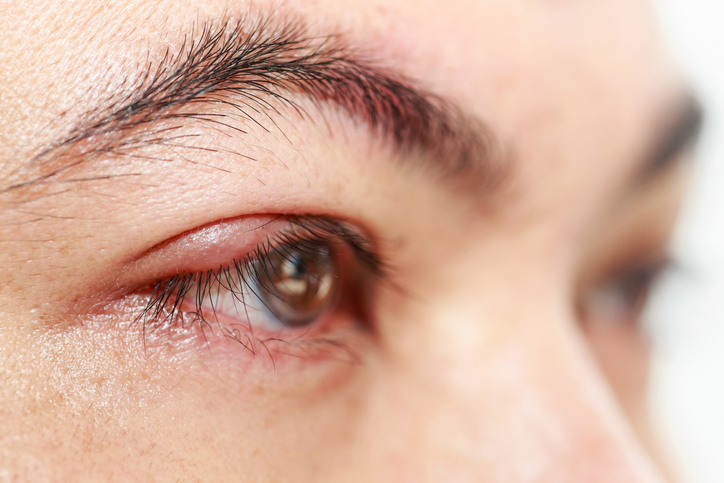
Chalazion
A chalazion is a small cyst that forms on the eyelid when an oil gland becomes blocked or inflamed. It is usually painless and mainly affects the upper eyelid.
by Dr Philippa Vincent, MRCGP
Eye health
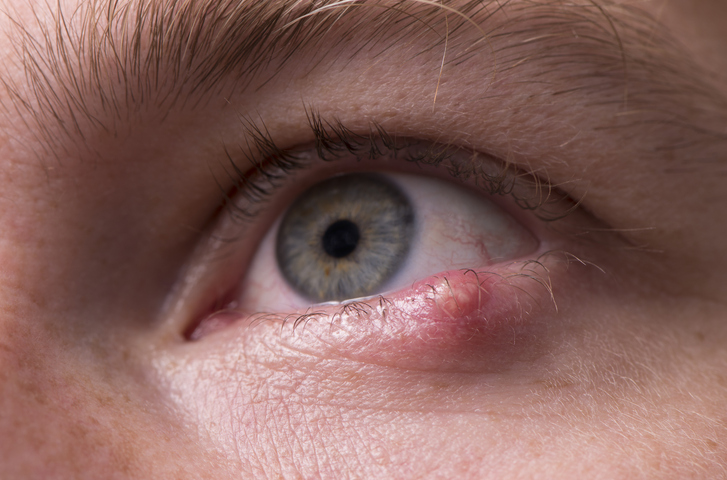
Stye
A stye is a small painful red lump on the edge of the eyelid. Most styes get better on their own and do not need medical treatment. Hot compresses can ease the pain and encourage the stye to burst.
by Dr Hayley Willacy, FRCGP
Frequently asked questions
What is the difference between primary and secondary blepharospasm?
Primary blepharospasm, also known as benign essential blepharospasm (BEB), is eyelid twitching, fluttering, or blinking that occurs without an identifiable underlying cause. It's thought to be due to abnormal functioning in the brain's basal ganglia. Secondary blepharospasm, on the other hand, is when the eyelid spasms are a symptom of another condition affecting the eyes or nervous system, such as eye trauma, infections like conjunctivitis, or certain neurological disorders like Parkinson's disease.
Can blepharospasm ever go away on its own?
Primary blepharospasm (BEB) typically does not improve without treatment. While botulinum toxin injections are very effective in managing the condition for most patients, it's generally considered a chronic condition that cannot be cured. There have been rare instances where it has improved without intervention, but this is uncommon.
How do doctors diagnose blepharospasm?
To diagnose blepharospasm, doctors first need to rule out any secondary causes. This involves a thorough eye examination and questioning you about your symptoms and medical history to check for other underlying conditions. If no other symptoms are found and the blepharospasm appears isolated, further investigations are usually not needed. Specialists may use a tool called the Blepharospasm Disability Index to assess how severe the condition is.
Are there any self-help methods I can try to reduce blepharospasm symptoms?
Yes, some self-help measures can help manage blepharospasm symptoms. Wearing dark, wrap-around glasses can reduce triggers like bright light and make the condition less noticeable to others. Certain voluntary actions, such as gently touching or pulling on the eyelid, pinching the neck, talking, yawning, humming, or singing, have also been found to be helpful for some individuals.
What happens if blepharospasm is left untreated?
If benign essential blepharospasm (BEB) is left untreated, it generally tends to worsen over several years. Eventually, affected individuals may experience periods where they are unable to open their eyes, which can significantly impair their vision and daily activities. Though it progresses, if left untreated, it seems to stabilise eventually.
What is Meige syndrome?
Meige syndrome is a condition where primary blepharospasm extends to affect more widespread facial muscles, leading to abnormal movements of the eyebrows, forehead, lips, jaw, and tongue, in addition to the eyelids. This occurs when patients with primary blepharospasm also experience other focal dystonias in nearby or distant muscles, without an identifiable underlying cause.
Further reading and references
- Blepharospasm; Benign Essential Blepharospasm Research Foundation (BEBRF)
- Benitez-Del-Castillo JM; How to promote and preserve eyelid health. Clin Ophthalmol. 2012;6:1689-98. doi: 10.2147/OPTH.S33133. Epub 2012 Oct 25.
- Lawes-Wickwar S, McBain H, Brini S, et al; A patient-initiated treatment model for blepharospasm and hemifacial spasm: a randomized controlled trial. BMC Neurol. 2022 Mar 17;22(1):99. doi: 10.1186/s12883-022-02603-7.
- Duarte GS, Rodrigues FB, Marques RE, et al; Botulinum toxin type A therapy for blepharospasm. Cochrane Database Syst Rev. 2020 Nov 19;11(11):CD004900. doi: 10.1002/14651858.CD004900.pub3.
- Titi-Lartey OA, Patel BC; Benign Essential Blepharospasm.
About the authorView full bio

Dr Hayley Willacy, FRCGP
General Practitioner, Medical Author
MBChB (1992), DRCOG, DFFP, MRCOG (Part 1) MRCGP (2007), DFSRH (2013), MSc - medical education (2020)
Dr Hayley Willacy was an NHS GP working in northwest England, who retired from clinical practice in 2022 after 30 years.
About the reviewerView full bio

Dr Colin Tidy, MRCGP
General Practitioner, Medical Author
MBBS, MRCGP, MRCP (Paediatrics), DCH
Dr Colin Tidy is an NHS Doctor, based in Oxfordshire.
Article history
The information on this page is written and peer reviewed by qualified clinicians.
Article also available in English, German, Spanish, French, Italian, Portuguese, Hindi, Hebrew, Arabic, and Swedish.
Next review due: 21 Oct 2028
23 Oct 2023 | Latest version
Join the conversation
Share your thoughts or experiences with others in our patient communities.

Ask, share, connect.
Browse discussions, ask questions, and share experiences across hundreds of health topics.

Feeling unwell?
Assess your symptoms online for free
Sign up to the Patient newsletter
Your weekly dose of clear, trustworthy health advice - written to help you feel informed, confident and in control.
By subscribing you accept our Privacy Policy. You can unsubscribe at any time. We never sell your data.
More in eye health
- Allergic conjunctivitis
- Amblyopia (lazy eye)
- Astigmatism
- Cataracts
- Chalazion
- Charles Bonnet syndrome
- Colour vision deficiency
- Contact lenses
- Diabetic retinopathy
- Eye infection (herpes simplex)
- Giant Cell Arteritis
- Idiopathic intracranial hypertension
- Retinal detachment
- Retinal vein occlusion
- Retinoblastoma
- Swollen eyelid
- Uveitis
- Visual problems
- Vitreous haemorrhage