Lupus discoide
Revisado por pares por Dr Hayley Willacy, FRCGP Última actualización por Dr Colin Tidy, MRCGPLast updated 16 Oct 2023
Cumple con las directrices editoriales
- DescargarDescargar
- Compartir
- Language
- Discusión
- Versión en audio
- Add to preferred sources on Google
El lupus discoide es una afección cutánea rara, pero de larga duración. Por lo general, es sensible a la luz solar y provoca cicatrices cuando las lesiones sanan.
At a glance
Discoid lupus is a chronic skin rash made worse by sun exposure.
It causes red scaly patches, mainly on the face, ears, and neck.
Discoid lupus is thought to be an autoimmune disease.
Doctors usually diagnose it by looking at the skin, sometimes with a biopsy.
Treatments include steroid creams, anti-malarial tablets, and sun protection.
Untreated discoid lupus can lead to permanent scarring.
A small number of people with discoid lupus may develop systemic lupus erythematosus.
En este artículo:
Video picks for Erupciones cutáneas
Continúa leyendo abajo
What is discoid lupus?
Discoid lupus is an uncommon but long-lasting (chronic) skin rash, which is usually made worse by exposure to sunlight (it is photosensitive).
Discoid lupus is also called discoid lupus erythematosus (DLE). Discoid lupus can be localised to affect a small area of skin, or may be more widespread.
'Discoid' lupus erythematosus is confined to the skin and is not associated with symptoms from other organs.
A more severe form of lupus is called lupus eritematoso sistémico (LES), which can affect internal organs.
Discoid lupus can be divided into two groups:
Localised discoid lupus occurs when the head and neck only are affected. It is nearly always confined to the skin
Generalised discoid lupus occurs when other areas are affected. Those with widespread skin involvement are more likely to develop SLE, although the overall risk is still low.
DLE may be associated with other problems such as Raynaud’s phenomenon, chilblains y hair loss (alopecia).
Discoid lupus can cause permanent scarring if it is not treated or if treatment is not effective.
What causes discoid lupus?
Volver al contenidoIt is thought that discoid lupus is an autoimmune disease. This means that some of the proteins made by the body to fight infection (antibodies), mistakenly attack normal cells in our body. in discoid lupus it is the skin cells that are attacked by these antibodies.
Some families may carry genes that increase the risk of developing discoid lupus. It is thought that discoid lupus is caused by a combination of environmental factors and genetics.
Continúa leyendo abajo
How common is discoid lupus?
Volver al contenidoDiscoid lupus affects between 2 and 5 out of every 10,000 people. Women are much more often affected than men. Discoid lupus usually first starts in people aged between 20 and 40 years. Discoid lupus is more common in people who smoke.
Discoid lupus is the most common form of lupus and is responsible for most cases of lupus that only affects the skin (cutaneous lupus erythematosus).
A small number of people with systemic lupus erythematosus also have discoid lupus.
Discoid lupus may be triggered or made worse by stress, infection or trauma. Some medicines may also trigger discoid lupus.
What are the symptoms of discoid lupus
Volver al contenidoDiscoid lupus mainly affects the cheeks, nose and ears, and sometimes the front of the neck, the upper back, and the back of the hands. Occasionally it is more widespread.
Discoid lupus causes red scaly patches. When the lesions eventually resolve, they may leave areas of increased skin pigmentation, destruction (atrophy) of the affected skin, and white scars.
Discoid_lupus_erythematosus
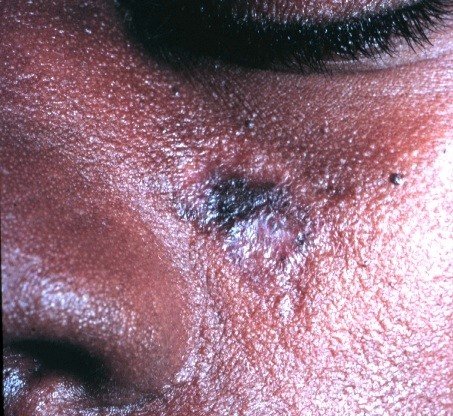
© Leonard C. Sperling, M.D., COL, MC, EE. UU., Departamento de Dermatología, Universidad de los Servicios Uniformados, Dominio público, vía Wikimedia Commons
Lupus eritematoso discoide
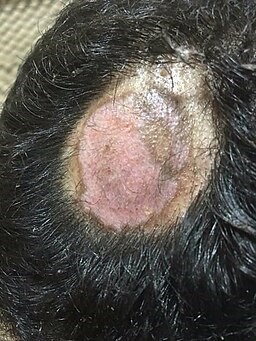
© Mohammad2018, CC BY-SA 4.0, a través de Wikimedia Commons
The lesions don't usually cause any other symptoms but may cause itching or pain. Discoid lupus mainly affects areas exposed to sunlight, such as the cheeks, nose, ears, upper back, neck and the backs of the hands. It may rarely occur on the palms or the soles.
The discoid lupus lesions may cause wart-like lesions, most often on the back of the arms.
Continúa leyendo abajo
How can discoid lupus be diagnosed?
Volver al contenidoYour doctor will usually be able to make the diagnosis just on the appearance of your skin. However, you will usually be referred to a dermatologist for further assessment and treatment.
Sometimes tests are needed to confirm the diagnosis. These tests may include blood and urine tests, and taking a skin sample (skin biopsy).
What are the treatments for discoid lupus?
Volver al contenidoLike many autoimmune conditions, discoid lupus is generally a lifelong condition and there is no cure. However, there are treatments available that are usually effective and can help keep symptoms under control.
Consejos generales
Fumar can make discoid lupus worse and may also result in a poor response to treatment.
Protect your skin with clothing and sunscreen. Wear a hat to protect your face. Wear a pair of UV protective sunglasses.
Use daily sunscreen when appropriate. You should use a sunscreen with a high sun protection factor (SPF 30 or more) to protect against UVB and UVA.
Strictly avoiding sunlight can reduce vitamin D levels. You should have a diet high in vitamin D (oily fish, eggs, meat, fortified margarines and cereals) and it may be worth taking vitamin D supplements.
Tratamientos tópicos
Strong steroid creams or steroid injections into the lesions. These can help to reduce inflammation but can thin the skin if used for too long.
Steroid-sparing creams and ointments. Examples include calcineurin inhibitors (such as tacrolimus ointment o crema de pimecrolimus). These treatments do not contain steroid and they act on the immune system to help reduce inflammation.
Topical imiquimod cream is an alternative treatment for widespread discoid lupus.
Skin camouflage can be used where there are areas of plaque involvement or if scarring occurs.
Tablets and injections
Anti-malarial tablets including hidroxicloroquina and mepacrine. These medications reduce inflammation and so help to control discoid lupus.
Steroid tablets may be helpful for severe, extensive or scarring discoid lupus.
If there is no response to standard therapy, other medications may be used - for example, acitretin, metotrexato o mycophenolate mofetil. There are risks associated with these treatments and so they are reserved for severe discoid lupus or when other treatments have not been effective.
Otros tratamientos
Burned-out scarred lesions may be surgically removed.
Photodynamic therapy can be effective for some cases. Photodynamic therapy involves using a light-sensitive medicine and a light source to destroy abnormal cells.
Laser therapy may also be considered for lesions covered with prominent small 'spider' blood vessels (telangiectasias).
What are the complications of discoid lupus?
Volver al contenidoAbout 1 in 30 people with discoid lupus go on the develop systemic lupus erythematosus. The risk is greater for children who develop discoid lupus.
Cánceres de piel (basal cell carcinoma or squamous cell carcinoma) may occur but this is unusual.
Dark skin may lose its protection against sunlight because of loss of pigment (depigmentation).
¿Cuál es el pronóstico?
Volver al contenidoThe outcome can be greatly improved by early diagnosis and effective treatment. For about half of people with discoid lupus, the condition resolves completely over many years.
The outcome is worse if discoid lupus is associated with Raynaud’s phenomenon, chilblains and alopecia. Ultimately some people with discoid lupus will be left with scarring
Discoid lupus tends to heal with scarring, hair loss and pigment changes if effective treatment is not started early. Pain in the lesions may continue and scars and skin destruction (atrophy) will be permanent.
Patient picks for Erupciones cutáneas

Salud de la piel, uñas y cabello
Pénfigo bulloso
El pénfigo ampolloso es una enfermedad de la piel que puede causar sarpullido, picazón y ampollas. Afecta principalmente a personas mayores de 70 años. El tratamiento suele ser efectivo para controlar los síntomas. Generalmente se emplean cremas con esteroides o medicamentos, aunque en ocasiones pueden usarse otros medicamentos. La condición tiende a desaparecer después de 3-6 años y luego se puede suspender el tratamiento. A veces, la enfermedad persiste.
by Dr Caroline Wiggins, MRCGP

Salud de la piel, uñas y cabello
Rosácea
La rosácea es una afección de la piel que afecta algunas partes de tu rostro. Los síntomas pueden incluir enrojecimiento facial, manchas, engrosamiento de la piel y problemas oculares como ojos secos y párpados irritados. No todos los síntomas aparecen en todos los casos. La rosácea afecta aproximadamente a 1 de cada 20 personas en el Reino Unido, generalmente en la mediana edad. Muchos casos son leves. Las manchas suelen eliminarse con tratamiento con antibióticos. Otros tratamientos pueden usarse para otros síntomas. Una complicación que afecta la parte frontal del ojo (la córnea) es poco común pero grave. Consulta a un médico con urgencia si tienes rosácea y desarrollas dolor en los ojos o problemas de visión.
por la Dra. Rosalyn Adleman, MRCGP
Preguntas frecuentes
Can discoid lupus affect areas other than the skin?
Discoid lupus predominantly affects the skin, and when it is localised to the head and neck, it is nearly always confined to the skin. However, a more severe form called systemic lupus erythematosus (SLE) can affect internal organs. While discoid lupus is generally limited to the skin, widespread skin involvement can increase the likelihood of developing SLE.
I have discoid lupus; does this mean I will get systemic lupus erythematosus (SLE)?
No, not necessarily. While a small number of people with systemic lupus erythematosus also have discoid lupus, approximately 1 in 30 individuals with discoid lupus go on to develop SLE. The risk is slightly higher for children who develop discoid lupus, and for those with generalised discoid lupus affecting multiple body areas. However, the overall risk is still considered low.
What is the likelihood of regaining normal skin appearance after discoid lupus lesions resolve?
When discoid lupus lesions eventually resolve, they may leave permanent changes. These can include areas of increased or decreased skin pigmentation (dark or white spots), destruction (atrophy) of the affected skin, and white scars. Early diagnosis and effective treatment can greatly improve the outcome, but if treatment is not started early, scarring, hair loss, and pigment changes are more likely.
How can I protect my skin from sun exposure if I have discoid lupus?
It is important to protect your skin from sunlight, as discoid lupus is photosensitive. You should wear protective clothing and a hat to cover your face. Use a daily sunscreen with a high sun protection factor (SPF 30 or more) that protects against both UVB and UVA rays. Wearing UV protective sunglasses is also recommended.
Are there any side effects from the creams or injections used to treat discoid lupus?
Yes, some treatments can have side effects. Strong steroid creams or steroid injections can help reduce inflammation but may cause thinning of the skin if used for too long. Other creams like calcineurin inhibitors (tacrolimus ointment or pimecrolimus cream) act on the immune system to reduce inflammation and do not contain steroids.
Can diet help manage discoid lupus?
While diet is not a direct treatment for discoid lupus, strict avoidance of sunlight to protect your skin can reduce vitamin D levels. Therefore, it is advisable to have a diet rich in vitamin D, including oily fish, eggs, meat, and fortified margarines and cereals. It may also be beneficial to take vitamin D supplements.
What is the significance of discoid lupus being an autoimmune disease?
Discoid lupus is considered an autoimmune disease, meaning your body's immune system mistakenly attacks healthy cells. In discoid lupus, antibodies, which are proteins usually made to fight infection, target and attack your own skin cells. This understanding helps explain why treatments often focus on reducing inflammation and modulating the immune response.
Lecturas adicionales y referencias
- Discoid Lupus Erythematosus (DLE); DermIS (Sistema de Información de Dermatología)
- Cutaneous lupus erythematosus; DermNet NZ
- Okon LG, Werth VP; Cutaneous lupus erythematosus: diagnosis and treatment. Best Pract Res Clin Rheumatol. 2013 Jun;27(3):391-404. doi: 10.1016/j.berh.2013.07.008.
- Bockle BC, Sepp NT; Smoking is highly associated with discoid lupus erythematosus and lupus erythematosus tumidus: analysis of 405 patients. Lupus. 2015 Jun;24(7):669-74. doi: 10.1177/0961203314559630. Epub 2014 Nov 19.
- Cutaneous lupus erythematosus; Sociedad de Dermatología de Atención Primaria.
Continúa leyendo abajo
About the authorView full bio

Dr Colin Tidy, MRCGP
Médico General, Autor Médico
MBBS, MRCGP, MRCP (Paediatrics), DCH
Dr Colin Tidy is an NHS Doctor, based in Oxfordshire.
About the reviewerView full bio

Dr Hayley Willacy, FRCGP
Médico General, Autor Médico
MBChB (1992), DRCOG, DFFP, MRCOG (Part 1) MRCGP (2007), DFSRH (2013), MSc - medical education (2020)
Dr Hayley Willacy was an NHS GP working in northwest England, who retired from clinical practice in 2022 after 30 years.
Historial del artículo
La información en esta página está escrita y revisada por pares por clínicos calificados.
Next review due: 14 Oct 2028
16 Oct 2023 | Última versión

Pregunta, comparte, conecta.
Navega por discusiones, haz preguntas y comparte experiencias en cientos de temas de salud.

¿Te sientes mal?
Evalúa tus síntomas en línea de forma gratuita
Suscríbete al boletín de Patient
Tu dosis semanal de consejos de salud claros y confiables, escritos para ayudarte a sentirte informado, seguro y en control.
By subscribing you accept our Política de Privacidad. Puedes darte de baja en cualquier momento. Nunca vendemos tus datos.