Liquen plano
Revisado por pares por Dr Krishna Vakharia, MRCGPÚltima actualización por Dr Hayley Willacy, FRCGP Última actualización 30 Ene 2023
Cumple con las directrices editoriales
- DescargarDescargar
- Compartir
- Language
- Discusión
- Versión en audio
- Agregar a fuentes preferidas en Google
El liquen plano causa principalmente una erupción cutánea con picazón. En algunas personas también afecta otras partes del cuerpo, como la boca, los genitales, las uñas y el cabello. La mayoría de las personas mejoran en 6-12 meses. El tratamiento, generalmente con una crema o ungüento de esteroides, suele aliviar la picazón y puede reducir la erupción hasta que la condición desaparezca.
De un vistazo
El liquen plano es una afección cutánea que causa un sarpullido con picazón, afectando principalmente a personas mayores de 45 años.
La causa del liquen plano es desconocida, no es infeccioso ni hereditario.
Los síntomas incluyen protuberancias de color rojo-púrpura y brillantes en la piel, que pueden ser muy pruriginosas.
También puede afectar la boca, los genitales, el cabello y las uñas.
Un médico generalmente puede diagnosticar la condición observando la erupción o con una biopsia de piel.
El tratamiento tiene como objetivo aliviar la picazón y mejorar el sarpullido hasta que desaparezca, lo cual suele ocurrir en un plazo de 6 a 12 meses.
Se aconsejan revisiones dentales regulares si el liquen plano oral causa úlceras dolorosas.
¿Qué es el liquen plano?
El liquen plano es una afección que afecta principalmente la piel, causando una erupción cutánea con picazón. En algunos casos, afecta la boca, los genitales, el cabello, las uñas y (raramente) otras partes del cuerpo.
Aproximadamente 1 de cada 5,000 personas desarrolla liquen plano. Ocurre por igual en hombres y mujeres. La mayoría de los casos ocurren en personas mayores de 45 años. Sin embargo, puede ocurrir a cualquier edad. No es una enfermedad hereditaria. No es una infección y el sarpullido no se puede contagiar ni transmitir a otros.
Causas del liquen plano
La causa del liquen plano no se conoce. Se desarrolla un tipo de inflamación en la piel, que causa la erupción. Sin embargo, la causa de la inflamación no se conoce. Una teoría es que el sistema inmunológico puede ser activado por un virus u otro factor en el ambiente para atacar las células de la piel, lo que lleva a la inflamación.
Una erupción muy similar al liquen plano ocasionalmente se desarrolla a partir de una causa conocida, pero esto es raro. Por ejemplo:
Una erupción similar al liquen plano ocurre como una efecto secundario raro de algunos medicamentos. Esto se llama una erupción medicamentosa liquenoide. Por ejemplo: antipalúdicos, bloqueadores beta, medicamentos antiinflamatorios, diuréticos tiazídicos e inyecciones de oro para artritis reumatoide. La erupción desaparece en unas pocas semanas después de dejar el medicamento que la causó.
El liquen plano en la boca a veces se debe a un alergia a los empastes de mercurio en los dientes.
Una erupción similar al liquen plano ocasionalmente se desarrolla después del contacto con ciertos productos químicos utilizados en el revelado fotográfico en color.
Síntomas del liquen plano
Liquen plano de la piel
El sarpullido típico consiste en pequeñas protuberancias rojo-púrpura (pápulas). Las protuberancias suelen ser brillantes y de cima plana (planus significa plano). Varían en tamaño desde la cabeza de un alfiler hasta aproximadamente 1 cm de ancho. La cantidad de protuberancias de cima plana que se desarrollan varía. El sarpullido puede aparecer en cualquier parte del cuerpo, pero es más probable que ocurra en las muñecas internas, las piernas inferiores y la parte baja de la espalda. Hay fotos del sarpullido típico en la sección de Lecturas Adicionales.
A menudo se desarrollan finas líneas blancas en la parte superior de cada protuberancia. Estas se llaman estrías de Wickham.
La picazón puede variar de leve a severa. Una picazón severa es común y a menudo es lo peor del liquen plano. La picazón puede perturbar el sueño y afectar su calidad de vida. La picazón es inusual en el sentido de que las personas afectadas tienden a frotar la erupción en lugar de rascarse para aliviar la picazón.
A veces, la erupción se desarrolla rápidamente en unos pocos días. A veces, cada bulto se desarrolla gradualmente durante varias semanas. A veces, varios bultos se forman en una línea a lo largo de una cicatriz anterior. A veces, varios bultos se agrupan para formar una gran mancha. Pueden aparecer nuevos bultos con el tiempo mientras los más antiguos desaparecen. Cada bulto tiende a durar varios meses antes de desvanecerse.
En la mayoría de los casos, el sarpullido dura entre 6-12 meses y luego desaparece. En algunos casos persiste más tiempo. Puede quedar una marca marrón o gris que no pica en la piel donde había estado cada bulto. Estas pueden tardar varios meses o años en desvanecerse por completo.
Liquen plano oral
Liquen plano oral - dentro de la mejilla
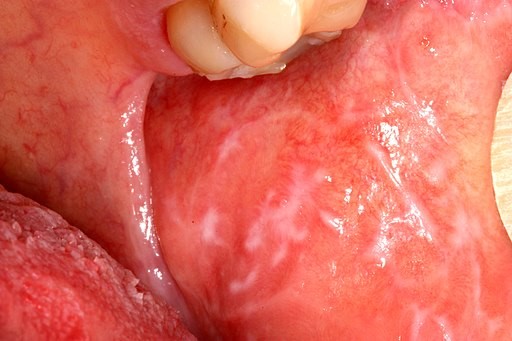
© Ian Furst, CC BY-SA 4.0, a través de Wikimedia Commons
Aproximadamente la mitad de las personas con un sarpullido de liquen plano en la piel desarrollan rayas blancas en el interior de las mejillas, encías o lengua. Esto generalmente es indoloro y no produce picazón. Puede no ser notado a menos que se busque. A veces, el liquen plano de la boca ocurre sin ningún sarpullido en la piel.
El liquen plano también puede causar úlceras en la boca, pero esto es poco común. Si ocurren, pueden ser muy dolorosas y desagradables. Los alimentos calientes o picantes son especialmente difíciles de comer.
Las úlceras bucales pueden aparecer con o sin erupción cutánea. En algunos casos, las encías se vuelven rojas y doloridas.
Líquen plano de otras partes del cuerpo
La mayoría de las personas con liquen plano solo tienen el sarpullido en la piel y/o afectación en la boca. Sin embargo, en algunos casos, otras áreas del cuerpo también se ven afectadas. Estas incluyen las siguientes:
Vulva y vagina de las mujeres - el liquen plano puede causar estrías blancas indoloras en la vulva. Sin embargo, también puede causar áreas dolorosas y rojas en la vulva y la entrada de la vagina. Esto puede ser doloroso, causar picazón y, en casos severos, hacer que tener relaciones sexuales sea muy doloroso. También puede desarrollarse tejido cicatricial que puede estrechar la entrada de la vagina.
Pene de los hombres: la erupción cutánea típica puede afectar la cabeza del pene (glande). Además, pueden desarrollarse manchas blancas en el glande.
Uñas - aproximadamente 1 de cada 10 personas con liquen plano tienen las uñas afectadas. Generalmente causa un leve estriado en la uña. Raramente, puede ocurrir un daño severo en la uña.
El cuero cabelludo - que puede causar parches de calvicie.
Raramente, el esófago, los párpados, el canal auditivo, la vejiga y el ano se ven afectados. Esto puede observarse con el liquen plano erosivo.
Liquen plano erosivo
El liquen plano erosivo es un tipo raro de liquen plano. Usualmente se presenta con ulceraciones dolorosas en la boca o en el área genital. Muy raramente puede verse en otras mucosas como los párpados, el esófago o el ano. Tiende a observarse en personas entre los 50 y 80 años y es dos veces más común en mujeres que en hombres.
El diagnóstico se realiza mediante la historia y la apariencia de la ulceración. A biopsia puede ser necesario si hay dudas, o también hay sospechas de cáncer. El tratamiento puede ser desafiante (ya que la respuesta suele ser pobre y las recaídas son frecuentes), pero es el mismo que para el liquen plano.
¿Cómo se diagnostica el liquen plano?
En la mayoría de los casos, el sarpullido es típico y un médico puede diagnosticar la condición por el aspecto del sarpullido. Si hay dudas, se puede tomar una pequeña muestra de piel afectada (una biopsia) bajo anestesia local. La muestra de biopsia se examina bajo un microscopio. Se pueden observar cambios característicos en la piel que confirman el diagnóstico.
Tratamiento del liquen plano
No hay una cura rápida para el liquen plano. Sin embargo, es probable que desaparezca con el tiempo. El tratamiento tiene como objetivo aliviar la picazón y mejorar la apariencia de la erupción hasta que desaparezca.
Sin tratamiento - es una opción si los síntomas son leves.
Medicamentos antihistamínicos - puede ayudar a aliviar la picazón. Un antihistamínico que te haga sentir somnoliento, tomado a la hora de dormir, puede ayudarte a dormir si la picazón te mantiene despierto por la noche.
Emolientes - a menudo también se administran para proporcionar humedad a tu piel. Estos también pueden ayudar a reducir la picazón.
Una crema o ungüento esteroide - es comúnmente recomendado. Los esteroides reducen la inflamación. El efecto de las cremas y ungüentos con esteroides es variable. Funcionan en muchos casos para aliviar la picazón, pero pueden no eliminar realmente la erupción.
Pastas de esteroides o enjuagues bucales - puede ayudar a aliviar las dolorosas úlceras bucales.
Un curso de tabletas de esteroides - puede ser aconsejado si el liquen plano es severo. Esto puede aclarar o reducir en gran medida la erupción. No se suelen aconsejar las tabletas de esteroides durante más de unas pocas semanas debido a los posibles efectos secundarios. La erupción puede reaparecer después de que se suspendan las tabletas. Sin embargo, un curso de tabletas de esteroides puede ayudar a sobrellevar un período particularmente malo.
Moduladores inmunitarios - tales como imiquimod y el levamisol puede ser recomendado por un especialista si el liquen plano es severo. Estos trabajan con el sistema inmunológico del cuerpo para ayudar a combatir el daño a la piel. La irritación de la piel, el dolor de cabeza, las náuseas y el cansancio pueden ser efectos secundarios.
PUVA - esta es una terapia de luz especial que puede ser recomendada por un especialista en piel si tienes liquen plano extenso y severo.
Tratamiento con láser - a veces se utilizan láseres de baja potencia para tratar el liquen plano en la boca.
¿Cuál es el pronóstico para las personas con liquen plano?
En general, el pronóstico es bueno. El liquen plano de la piel generalmente desaparece sin dejar problemas persistentes.
Sin tratamiento, aproximadamente la mitad de los casos que afectan la piel se resuelven en un plazo de 6 a 12 meses. El resto generalmente se aclara poco después de este período. Aunque es inusual que la erupción dure más de 18 meses, algunas personas encuentran que puede durar hasta dos años. Sin embargo, el liquen plano persiste más tiempo en un pequeño número de personas que están gravemente afectadas. Esto ocurre principalmente en personas que desarrollan úlceras bucales de liquen plano y liquen plano de la vulva o el pene.
El tratamiento generalmente puede aliviar los síntomas de la piel hasta que el sarpullido desaparezca.
Para el liquen plano de la piel, una vez que la erupción ha desaparecido, aproximadamente 1 de cada 5 personas afectadas experimenta una recurrencia en algún momento en el futuro. Un pequeño número de personas tiene varias recurrencias.
Si el liquen plano afecta las uñas o el cabello, cualquier daño como parches de calvicie o uñas destruidas es permanente.
Las personas con liquen plano tienen una probabilidad ligeramente mayor que el promedio de desarrollar otras enfermedades inflamatorias. Por ejemplo:
Dermatomiositis.
Esto probablemente se deba a que algunas personas son más propensas a condiciones inmunitarias o inflamatorias. Sin embargo, la mayoría de las personas con liquen plano no desarrollan ninguna de estas otras condiciones.
Si se desarrollan úlceras dolorosas debido al liquen plano en la boca, hay una probabilidad mayor que el promedio de desarrollar cáncer de boca. Nuevamente, la mayoría de las personas no lo desarrollan, pero se recomienda realizar revisiones bucales regulares con un dentista.
Si la vulva está gravemente afectada, hay un riesgo ligeramente mayor de desarrollar cáncer de vulva.
Selecciones del paciente para Erupciones cutáneas
Salud de la piel, uñas y cabello
Urticaria
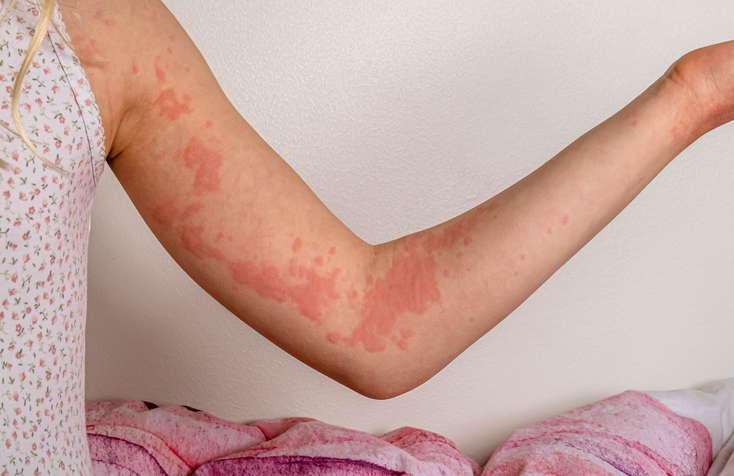
Las ronchas (también llamadas urticaria) son protuberancias rojas o blancas en la piel que pican y se parecen a una erupción por ortiga. Las ronchas son comunes y a menudo son causadas por una reacción alérgica, estrés, infecciones o ciertos medicamentos. La mayoría de las ronchas mejoran por sí solas en unos pocos días. Este folleto discute las causas, tipos y tratamiento de las ronchas.
por la Dra. Philippa Vincent, MRCGP

Salud de la piel, uñas y cabello
Pénfigo vulgar
El pénfigo vulgar es una enfermedad de la piel muy grave que causa ampollas. Es rara. El pénfigo vulgar es más grave que la mayoría de las otras afecciones cutáneas con ampollas. Antes de que existieran tratamientos, la mayoría de las personas con esta condición morían poco después de que comenzaba la enfermedad. Hoy en día, la mayoría de los casos pueden controlarse con tratamiento. El tratamiento suele consistir en medicamentos esteroides y otros medicamentos para suprimir el sistema inmunológico. Un especialista en piel debe supervisar el tratamiento.
por el Dr. Oliver Starr, MRCGP
Preguntas frecuentes
¿Se puede prevenir el liquen plano?
La causa exacta del liquen plano es desconocida, por lo que no hay una forma específica de prevenir su aparición. Sin embargo, si se desarrolla una erupción similar al liquen plano como efecto secundario de ciertos medicamentos, o debido a una alergia a los empastes de mercurio o al contacto con productos químicos fotográficos, evitar estos desencadenantes puede prevenir recurrencias en esas situaciones específicas.
¿Existen medidas específicas de autocuidado que pueda tomar en casa para manejar los síntomas de mi liquen plano?
Aunque el artículo menciona emolientes para hidratar la piel y reducir la picazón, y antihistamínicos para ayudar con el sueño debido a la picazón, no detalla otros pasos de autocuidado. Para el liquen plano oral, evitar alimentos calientes o picantes puede ayudar si tienes úlceras bucales dolorosas. Sin embargo, no se mencionan otras medidas de autocuidado ampliamente aplicables para la condición en su conjunto que no sean ya opciones de tratamiento.
¿Cómo puedo diferenciar entre el liquen plano y otras afecciones de la piel?
El liquen plano generalmente se presenta como pequeñas protuberancias (pápulas) de color rojo-púrpura, brillantes y con la parte superior plana, que a menudo tienen finas estrías blancas (estrías de Wickham) sobre ellas. Aunque esta descripción ayuda a identificarlo, un médico generalmente hace el diagnóstico basándose en la apariencia de la erupción. Si hay alguna duda, una biopsia de piel puede confirmarlo mostrando cambios característicos bajo un microscopio.
¿Qué debo hacer si mi erupción de liquen plano persiste durante mucho tiempo?
La mayoría de los casos de liquen plano en la piel desaparecen en 6-12 meses, aunque algunos pueden durar hasta dos años. Si su erupción persiste más tiempo o es grave, el artículo menciona que un pequeño número de personas se ve gravemente afectado y puede persistir más tiempo, especialmente si involucra úlceras bucales o afecta la vulva o el pene. También indica que el tratamiento puede aliviar los síntomas de la piel hasta que la erupción desaparezca.
¿Es contagioso el liquen plano?
No, el liquen plano no es una infección y el sarpullido no se puede contagiar ni transmitir a otros. Tampoco es una enfermedad hereditaria.
¿Puede el liquen plano afectar a los niños?
Aunque la mayoría de los casos de liquen plano ocurren en personas mayores de 45 años, el artículo afirma que puede ocurrir a cualquier edad. No proporciona detalles específicos sobre su prevalencia o características en niños.
Lecturas adicionales y referencias
- Lichen Planus; Sociedad de Dermatología de Atención Primaria (PCDS)
- Liquen plano oral; Fundación Británica de Salud Dental
- Gall R, Navarro-Fernandez IN; Forma Erosiva de Liquen Plano.
- Arnold DL, Krishnamurthy K; Liquen Plano.
- Boch K, Langan EA, Kridin K, et al; Liquen Plano. Front Med (Lausanne). 1 de noviembre de 2021;8:737813. doi: 10.3389/fmed.2021.737813. eCollection 2021.
Sobre el autorVer biografía completa

Dr Hayley Willacy, FRCGP
Médico General, Autor Médico
MBChB (1992), DRCOG, DFFP, MRCOG (Part 1) MRCGP (2007), DFSRH (2013), MSc - medical education (2020)
La Dra. Hayley Willacy fue una médica general del NHS que trabajaba en el noroeste de Inglaterra, quien se retiró de la práctica clínica en 2022 después de 30 años.
Acerca del revisorVer biografía completa

Dr Krishna Vakharia, MRCGP
Director Médico de Salud, Optum UK
MBChB, MRCGP(2013), BMedSci (hons), DFSRH, DRCOG, PGDipDerm (Distn)
La Dra. Krishna Vakharia es una médica general del NHS. También es examinadora habitual del Diploma de Posgrado en Dermatología Práctica en la Universidad de Cardiff, además de ser la Directora Médica de salud en Optum UK.
Historial del artículo
La información en esta página está escrita y revisada por pares por clínicos calificados.
Artículo también disponible en Inglés, Alemán, Español, Francés, Italiano, Portugués, Hindi, Hebreo, Árabe, y Sueco.
Próxima revisión: 29 Ene 2028
30 Ene 2023 | Última versión

Pregunta, comparte, conecta.
Navega por discusiones, haz preguntas y comparte experiencias en cientos de temas de salud.

¿Te sientes mal?
Evalúa tus síntomas en línea de forma gratuita
Suscríbete al boletín de Patient
Tu dosis semanal de consejos de salud claros y confiables, escritos para ayudarte a sentirte informado, seguro y en control.
Al suscribirte aceptas nuestros Política de Privacidad. Puedes darte de baja en cualquier momento. Nunca vendemos tus datos.
Más sobre la salud de la piel, uñas y cabello
- Queratosis actínica
- Quemaduras y escaldaduras
- El eccema en los niños
- Quistes epidermoides y pilares
- Foliculitis
- Ampollas en los pies
- Infección fúngica en la ingle
- Uña encarnada
- Picaduras y mordeduras de insectos
- Pruebas de parche para dermatitis de contacto
- Erupción polimórfica lumínica
- Verrugas seborréicas
- Síndrome de la mejilla abofeteada
- Esclerosis sistémica
- Efluvio telógeno
- Úlceras venosas en las piernas