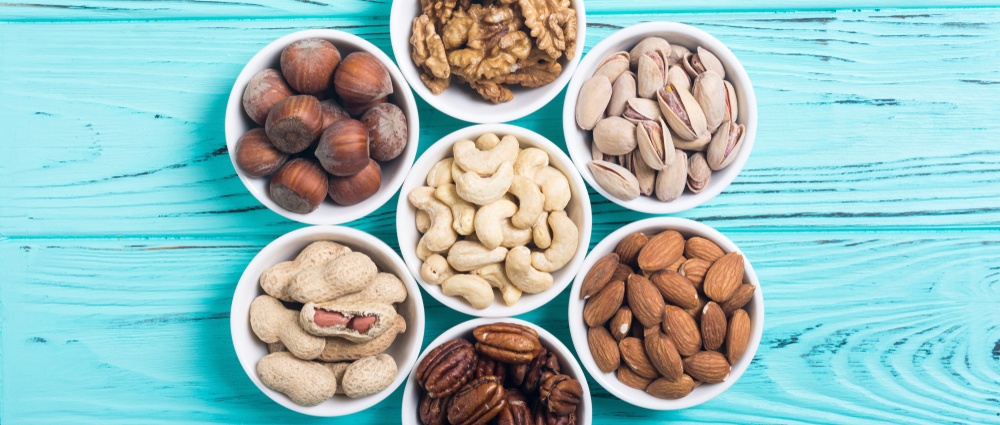
8 frutos secos ricos en proteínas para potenciar tu fuerza
Revisado por pares por Dr Colin Tidy, MRCGPÚltima actualización por Lynn StephenÚltima actualización 3 Feb 2026
Cumple con las directrices editoriales
- DescargarDescargar
- Compartir
- Language
- Discusión
- Versión en audio
- Agregar a fuentes preferidas en Google
Llenos de proteínas, deliciosos, fáciles de comer y versátiles: los frutos secos son una excelente fuente de energía para quienes están desarrollando su forma física y fuerza. Pero no todos los frutos secos son iguales, por eso presentamos los ocho mejores frutos secos que debes consumir durante el entrenamiento de fuerza y compartimos ideas de recetas deliciosas.
Why nuts are good for strength
If you're looking to increase your strength and build or tone muscle, there is no escaping the importance of protein in your diet. Protein is a nutrient made up of essential amino acids - the building blocks for muscle tissue, and all other tissues and cells in your body.
Cualquier strength exercise routine you undertake will have limited results unless you also consume the optimal amount of protein per day as part of a healthy diet.
Nuts are an excellent proteína de origen vegetal source for both vegetarians and meat eaters. For years, meat sources of protein have enjoyed good publicity, but while we need to moderate meat consumption to protect our heart health, eating lots of high protein nuts can help keep our hearts healthy.
These eight common high protein nuts pack in the most protein per 100 grams serving.
All protein figures below can be found on the US Department of Agriculture website.
8 high-protein nuts
1. Peanuts
Protein: 25.8 grams per 100 grams of peanuts.
Peanuts top the list for providing the most grams of protein per serving. Even though peanuts are considered a nut from a nutritional standpoint, they belong to the legume family. This means they're related to lentils, chickpeas, and beans - all of which are also protein-rich and good for your heart.
Peanuts also contain many vitamins and minerals, including biotina which helps to convert the food you eat into energy - another great benefit for those who are strength training.
Like all nuts, you can enjoy their delicious nutty, earthy flavour as a raw snack, or incorporate them in many dishes.
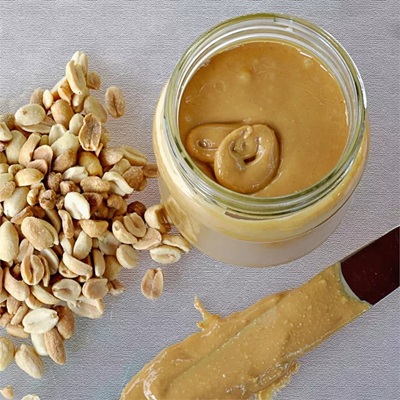
Recipe idea: Homemade peanut butter.
Homemade peanut butter
2. Almonds
Protein: 21.2 grams per 100 grams of almonds.
From a culinary standpoint, almonds are grouped with nuts - their nutty, woody, and sweet flavour can be prepared in many different ways in cooking. However, almonds are technically a high protein seed. Like many nuts, they are high in antioxidants, reducing cell damage made by reactive molecules known as free radicals - which is one of the risk factors for enfermedades del corazón and some cánceres.
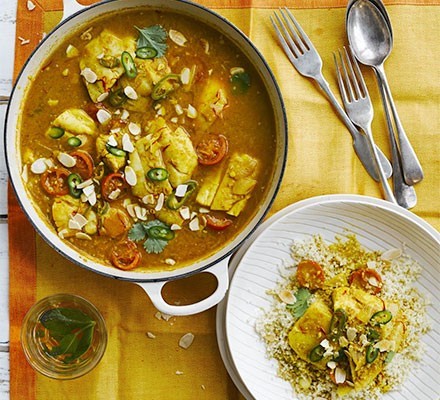
Recipe idea: Fish tagine with saffron and almonds.
Fish tagine with saffron & almonds
3. Pistachios
Protein: 20 grams per 100 grams of pistachios.
These high protein nuts have milder, sweeter notes and a lower fat and higher fibre content compared with other nuts. This makes them a good choice for people looking to create a calorie deficit while remaining fuller for longer - especially useful for healthy weight loss.
Other health benefits of pistachios include their high amounts of vitamins and minerals, and their higher ratio of essential amino acids to protein content, when compared with other common nuts. Minerals, vitamins, and essential amino acids support a wide range of crucial mechanisms in your body.
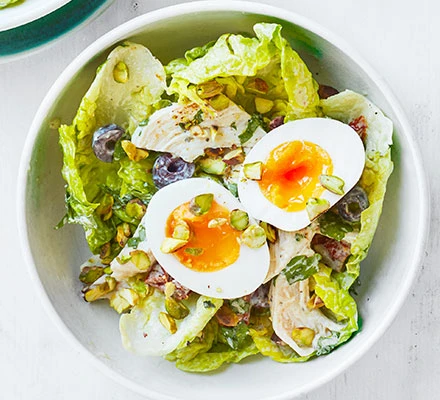
Recipe idea: Chicken and pistachio salad.
Chicken and pistachio salad
4. Cashews
Protein: 15.3 grams per 100 grams of cashews.
Cashew nuts are a good source of protein as well as several other health-promoting nutrients, including copper. This essential trace mineral is needed for many physiological processes, including brain development, cell and tissue creation, and immunity.
When you don't get enough copper, you have a higher chance of developing health issues such as anemia, colesterol alto, osteoporosis, and an increased vulnerability to infections.
Cashews can be blended to add rich, nutty notes to sauces or added to dishes raw to add crunch and texture.
Recipe idea: Cashew and fragrant vegetable biryani.
Cashew and fragrant vegetable biryani

5. Walnuts
Protein: 15.2 grams per 100 grams of walnuts.
As well as being another protein-rich nut, the dry and slightly bitter walnut is an especially healthy nut for your heart. One large study found that eating walnuts and peanuts regularly could significantly reduce your chance of developing coronary heart disease and enfermedad cardiovascular.1
It's believed that this is because both walnuts and peanuts are particularly rich in a plant-based form of omega-3 fatty acids - called alpha-linolenic acid (ALA) - that can protect your heart and ward-off heart disease.
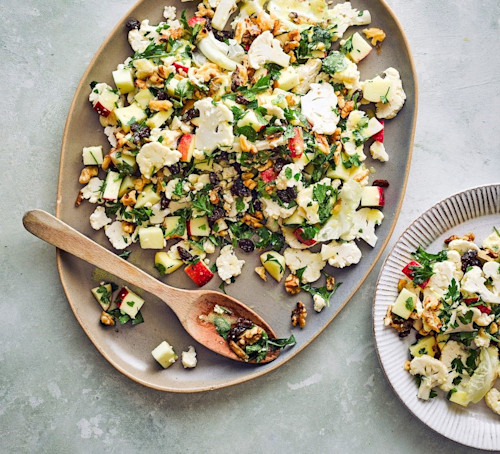
Recipe idea: Walnut, cauliflower and apple salad.
Walnut, cauliflower and apple salad
6. Hazelnuts
Protein: 15 grams per 100 grams of hazelnuts.
Hazelnuts are another great source of protein for muscle building. These are the nuts used in nutty chocolate spreads such as Nutella - their woody, nutty taste complimenting the sweet chocolate.
When eaten regularly, they can also help to lower LDL (bad) cholesterol and increase HDL (good) cholesterol, regulate control de la presión arterial, and can help improve blood sugar levels. These benefits are reversed when you stop eating these delicious, earthy nuts, so it's best to keep them in your diet.
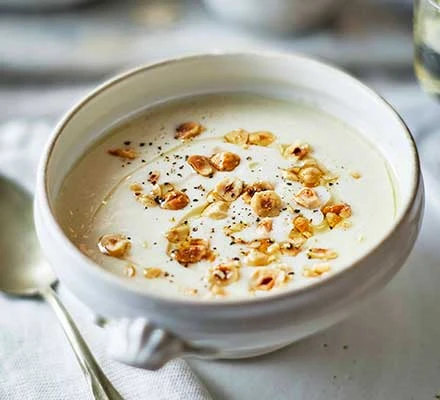
Recipe idea: Celeriac, hazelnut, and truffle soup.
Celeriac, hazelnut, and truffle soup
7. Brazil nuts
Protein: 14.3 grams per 100 gram of Brazil nuts.
These high protein nuts have a smooth, buttery texture and are relatively large. Due to their size, eating only one Brazil nut a day provides your daily requirement of selenium. This antioxidant helps to protect your cells from damage, may help fight off infection, and supports your thyroid - a gland that controls your metabolism.
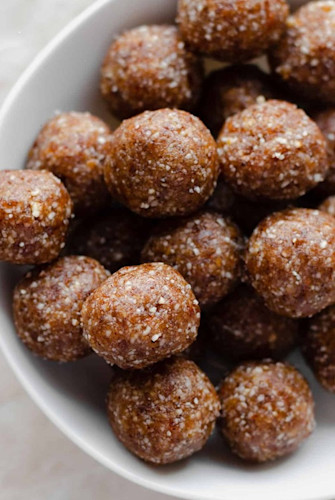
Recipe idea: Apricot and Brazil nut energy balls.
Apricot and Brazil nut energy balls
8. Pine nuts
Protein: 13.7 grams per 100 grams of pine nuts.
Mild and sweet tasting pine nuts are actually seeds from pine cones. However, their nutritional benefits are in-line with the other nuts we've looked at - they are a source of healthy fats which helps to ward of heart disease, they're loaded with essential vitamins and minerals, and they have anti-inflammatory properties which, among other health benefits, could help to limit the spread of cancer.
Recipe idea: Pasta with pine nuts, broccoli, sardines and fennel.
Pasta with pine nuts, broccoli, sardines and fennel

Selecciones del paciente para Ejercicio y actividad física
Dieta y nutrición
5 comidas vegetarianas ricas en proteínas para mantener tu fuerza
It wasn't long ago that people thought to be strong, toned and healthy you had to follow a meat-heavy diet. We now know that this is not the case, and vegetarian sources of protein can be used in a variety of exciting, nutritious, and delicious meals.
por Amberley Davis
Vida saludable
Proteína natural versus proteína en polvo: ¿cuál es mejor para el entrenamiento de fuerza?
Consuming enough protein is essential for building strong muscles. Protein powder shakes are not a complete replacement for natural protein sources found in your food. However, you may consider supplementing your diet and strength-training regime with protein shakes. Before you decide if this is right for you, there are several benefits and considerations to take into account.
por Amberley Davis
Lecturas adicionales y referencias
- Guasch-Ferre M, Liu X, Malik VS, et al; Nut Consumption and Risk of Cardiovascular Disease. J Am Coll Cardiol. 2017 Nov 14;70(20):2519-2532. doi: 10.1016/j.jacc.2017.09.035.
Sobre el autorVer biografía completa

Amberley Davis
Escritora senior
BA (Hons), CPD
Amberley es una escritora senior en Patient y ha escrito extensamente sobre una variedad de temas de salud y bienestar.
Acerca del revisorVer biografía completa

Dr Colin Tidy, MRCGP
Médico General, Autor Médico
MBBS, MRCGP, MRCP (Paediatrics), DCH
El Dr. Colin Tidy es un médico del NHS, con sede en Oxfordshire.
Historial del artículo
La información en esta página es revisada por pares por clínicos calificados.
Artículo también disponible en Inglés, Alemán, Español, Francés, Italiano, Portugués, Hindi, Hebreo, Árabe, y Sueco.
Próxima revisión: 3 de febrero de 2029
3 Feb 2026 | Última versión
9 Dec 2022 | Publicado originalmente
Escrito por:
Amberley Davis

Pregunta, comparte, conecta.
Navega por discusiones, haz preguntas y comparte experiencias en cientos de temas de salud.

¿Te sientes mal?
Evalúa tus síntomas en línea de forma gratuita
Suscríbete al boletín de Patient
Tu dosis semanal de consejos de salud claros y confiables, escritos para ayudarte a sentirte informado, seguro y en control.
Al suscribirte aceptas nuestros Política de Privacidad. Puedes darte de baja en cualquier momento. Nunca vendemos tus datos.
Más sobre vida saludable
- Las 5 mejores aplicaciones para un Enero Seco en 2024
- ¿Son buenos los entrenamientos de baile para mantenerse en forma?
- ¿Pueden ciertos alimentos imitar los efectos de las inyecciones para perder peso?
- ¿Puedes perder peso y ser positivo con tu cuerpo?
- ¿Puedes confiar en la IA para tu salud?
- ¿El vinagre de sidra de manzana ayuda a perder peso?
- ¿Importa el IMC?
- ¿Cómo ha afectado el trabajo desde casa a nuestra salud mental?
- Cómo dormir mejor
- Cómo detectar las señales de ciberacoso
- Cómo hablar con las personas sobre tu salud mental
- Paseo japonés: pasos sencillos hacia una vida más saludable
- ¿Deberías tomar descansos regulares del consumo de alcohol a lo largo del año?
- Las mejores aplicaciones de mindfulness, según los expertos
- Los entrenamientos de fin de semana podrían ser suficientes para tu salud
- ¿Cuáles son los beneficios de las sentadillas?
- ¿Qué es la 'buena salud mental'?
- Por qué una película navideña puede hacernos sentir bien
- Por qué nuestro cerebro está enganchado a las malas noticias
- Por qué no necesitas desintoxicarte