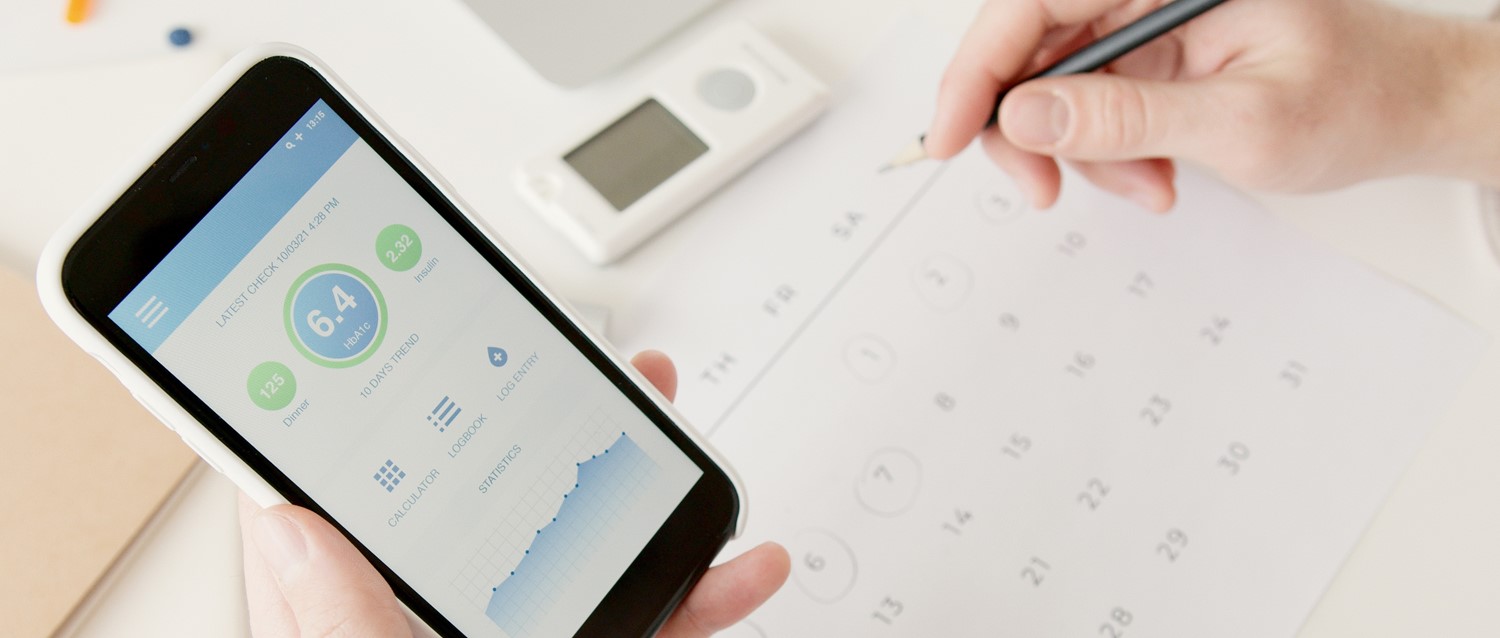
Blood glucose test (blood sugar) and HbA1c
Peer reviewed by Dr Toni Hazell, FRCGPLast updated by Dr Mohammad Sharif Razai, MRCGPLast updated 4 Aug 2024
Meets Patient’s editorial guidelines
- DownloadDownload
- Share
- Language
- Discussion
- Audio Version
- Add to preferred sources on Google
In this series:DiabetesDiabetes and high blood pressureDiabetic foot ulcersDiabetic kidney diseaseDiabetic neuropathyDiabetic amyotrophy
Blood glucose (sugar) tests check the amount of glucose in the blood. These tests help diagnose diabetes, including type 1 and type 2 diabetes mellitus. They are also used to monitor glucose control in people already living with diabetes.
At a glance
Diabetes is a group of diseases that affect how your body uses blood sugar.
High blood sugar can be caused by Type 1, Type 2, or Gestational Diabetes, or Non-Diabetic Hyperglycaemia.
Blood tests, such as random, fasting, oral glucose tolerance, and HbA1c tests, can diagnose diabetes.
An HbA1c level of 48 mmol/mol or higher indicates diabetes.
Home monitoring using a finger prick or flash glucose monitor can check blood sugar levels.
Glucose in urine suggests high blood sugar, but a blood test is needed for diagnosis.
Sign up for our free 10-week Diabetes course!
Each week, we'll explore a different topic to help you better understand and manage your diabetes, including everyday living and medicines, to mental wellbeing, the latest in diabetes tech, and nutrition.
By subscribing you accept our Privacy Policy. You can unsubscribe at any time. We never sell your data.
Diabetes types
Diabetes is a group of diseases that affect how your body uses blood sugar (glucose). The scientific term for this is diabetes mellitus.
If your glucose level is high and remains high (hyperglycaemia), then you are likely to have diabetes. If the level goes too low, then it is called hypoglycaemia.
Below are the main types of diabetes and related conditions:
Type 1 Diabetes Mellitus: The immune system attacks the insulin-making cells in the pancreas. It usually presents in childhood and requires insulin injections.
Type 2 Diabetes Mellitus: The body becomes resistant to insulin or does not make enough insulin. It usually presents in adulthood and is managed with diet, exercise, pills, and sometimes insulin.
Gestational Diabetes Mellitus (GDM): Develops during pregnancy and usually resolves after woman gives birth. GDM increases the risk of Type 2 diabetes later.
Non-Diabetic Hyperglycaemia (NDH): Blood sugar levels are higher than normal but not high enough to be diabetes. NDH, formerly known as prediabetes, increases the risk of Type 2 diabetes.
Blood glucose tests (blood sugar)
The main tests for measuring the glucose levels in the blood (blood sugar tests) are as follows.
Random blood glucose level
A blood sample taken at any time can be a useful test if diabetes is suspected. A level of 11.1 mmol/L or more in the blood sample indicates diabetes. A fasting blood glucose test may be done to confirm the diagnosis.
Fasting blood glucose levels
A glucose level below 11.1 mmol/L on a random blood sample does not rule out diabetes. A blood test taken in the morning before you eat anything is a more accurate test. Do not eat or drink anything except water for 8-10 hours before a fasting blood glucose test. A level of 7.0 mmol/L or more indicates that you have diabetes.
If you have no symptoms of diabetes but the blood test shows a glucose level of 7.0 mmol/L or more, the blood sugar test should be repeated to confirm you have diabetes.
If you have symptoms (such as increased thirst, frequent urination, and feeling very tired) and the blood test shows a glucose level of 7.0 mmol/L or more, the diabetes test doesn't need to be repeated.
Please see the separate leaflets called Type 1 diabetes and Type 2 diabetes for more details.
Oral glucose tolerance test
This test may be performed to check if a woman has developed diabetes during pregnancy (gestational diabetes). It is also used when it is suspected that you have high blood sugar but not high enough to be diagnosed with diabetes. This condition is known as NDH.
The oral glucose tolerance test is not commonly used to diagnose diabetes anymore.
For this test, you fast overnight. In the morning you are given a drink which contains 75g of glucose. A blood sample is taken two hours later. Normally, your body should be able to deal with the glucose and your blood level should not go too high. A glucose level of 11.1 mmol/L or more in the blood sample taken after two hours indicates that you have diabetes. See the separate leaflet called Glucose tolerance test for more details.
The HbA1c blood test
If you have diabetes, your doctor or nurse may test your HbA1c levels every 3-6 months. This test measures your recent average blood glucose levels. Because it is an average measurement, you do not need to fast on the day of the test.
The test measures a part of the red blood cells. Glucose in the blood attaches to part of the red blood cells. This part can be measured and gives a good indication of your average blood glucose over the previous 2-3 months.
In the UK, HbA1c results are expressed in mmol/mol. This is in line with the International Federation of Clinical Chemistry. The non-diabetic, HbA1c 'normal' range is 20-42 mmol/mol.
In the UK, HbA1c results used to be expressed in percentages that were in line with the Diabetes Control and Complications Trial (DCCT). The non-diabetic HbA1c 'normal' range is 4-6%.
As some places still use the old-style percentages, a comparison tool is below.
Comparing DCCT-HbA1c and IFCC-HbA1c Results | |
DCCT-HbA1c (%) | IFCC-HbA1c (mmol/mol) |
6.0 | 42 |
6.5 | 48 |
7.0 | 53 |
7.5 | 59 |
8.0 | 64 |
9.0 | 75 |
For people with diabetes, treatment aims to lower the HbA1c level to below a target level, which is usually agreed between you and your doctor at regular check-ups.
Your HbA1c level should ideally be less than 48 mmol/mol (6.5%). However, this may not always be achievable, and the target level of HbA1c should be agreed upon individually by you and your doctor. This could involve increasing the dose of medication, improving your diet, and other measures.
The usual HbA1c target is 53 mmol/mol (7%) if the treatment includes a drug that causes hypoglycaemia (low blood sugar). The target may be adjusted based on factors such as potential side effects, other medical conditions, age, general health, and frailty.
The HbA1c test can also be used to diagnose diabetes. An HbA1c value of 48 mmol/mol (6.5%) or above is the blood level for diagnosing diabetes. People with an HbA1c level of 42-47 mmol/mol (6.0-6.5%) are at increased risk of diabetes and cardiovascular disease. This is called NDH). See the separate leaflet called Pre-diabetes (Impaired glucose tolerance) for more details.
Home monitoring
A drop of blood from a finger prick is placed on a test strip, which contains a chemical that reacts with glucose. The blood glucose level can be measured quickly using a colour chart or a small glucose meter machine. Home glucose monitoring is crucial for anyone with diabetes who needs insulin treatment. In this situation, checking the blood glucose several times a day is usually recommended.
Home monitoring is not available upon request in the NHS and is provided under certain circumstances, including the use of insulin therapy, having evidence of hypoglycaemic episodes, or taking a drug that may increase the risk of hypoglycaemia while driving or operating machinery.
New devices called flash glucose monitors or continuous glucose monitors can be worn by diabetics. Continuous glucose monitoring allows those with diabetes to check their blood glucose frequently without pricking fingers.
Urine test for glucose
Urine, produced by the kidneys, does not normally contain glucose. The kidneys filter our blood, retaining substances the body needs while eliminating waste products. Your kidneys constantly reabsorb glucose so that it does not enter the urine. However, if blood glucose levels rise above a certain threshold, the kidneys cannot reabsorb all of it. This means some glucose will 'spill' through the kidneys into the urine.
A simple urine dipstick test can detect glucose in a urine sample. In a dipstick test, a doctor or nurse uses a special chemical strip that they dip into a sample of your urine. Colour changes on the strip show whether there is glucose in the urine sample. If you have glucose in your urine, you are likely to have diabetes.
However, some people have kidneys that are more 'leaky', allowing glucose to enter the urine even with normal blood glucose levels. Therefore, if your urine contains any glucose, you should have a blood test to measure your blood glucose levels to confirm or rule out diabetes.
Patient picks for Diabetes
Diabetes
Type 2 diabetes treatment
Although diabetes cannot be cured, it can be treated successfully. If a high blood sugar level is brought down to a normal level, your symptoms will ease and your risk of long-term complications will be much lower.
by Dr Doug McKechnie, MRCGP
Diabetes
Non-diabetic hyperglycaemia (pre-diabetes)
In non-diabetic hyperglycaemia (NDH, previously known as impaired glucose tolerance or pre-diabetes), your blood sugar (glucose) is raised beyond the normal range. Whilst this raised glucose level is not so high that you have type 2 diabetes, you are at increased risk of developing type 2 diabetes when you have NDH.
by Dr Toni Hazell, FRCGP
Frequently asked questions
What is the difference between an HbA1c test and a standard blood glucose test?
A standard blood glucose test measures your current blood sugar level at the time the blood sample is taken. In contrast, an HbA1c test provides an average of your blood glucose levels over the previous 2-3 months. Because of this, you don't need to fast before an HbA1c test, whereas some blood glucose tests, like the fasting blood glucose test, require you to avoid food or drink (except water) for 8-10 hours beforehand.
Why does the HbA1c test measure the average blood glucose over 2-3 months?
The HbA1c test measures how much glucose in your blood has attached to a part of your red blood cells. Since red blood cells have a lifespan of about 2-3 months, this test gives a good indication of your average blood glucose levels during that period.
Could my target HbA1c level be different from the general recommendation?
Yes, your HbA1c target may be adjusted individually by you and your doctor. While the ideal target is often less than 48 mmol/mol (6.5%), or 53 mmol/mol (7%) if you're on medication that can cause low blood sugar, your specific target can depend on factors like potential side effects of medication, other health conditions you have, your age, general health, and overall frailty.
What does Non-Diabetic Hyperglycaemia (NDH) mean?
Non-Diabetic Hyperglycaemia (NDH), previously known as prediabetes, means your blood sugar levels are higher than normal but not quite high enough to be diagnosed as full diabetes. This condition indicates an increased risk of developing Type 2 diabetes and cardiovascular disease.
Why is a urine test for glucose not definitive for diagnosing diabetes?
While glucose in your urine suggests you might have diabetes, it’s not a definitive diagnosis. This is because some individuals have kidneys that allow glucose to pass into the urine even when their blood glucose levels are normal. Therefore, if glucose is found in your urine, a blood test is always needed to confirm or rule out diabetes.
How often are HbA1c tests typically carried out?
If you have been diagnosed with diabetes, your doctor or nurse may test your HbA1c levels every 3-6 months. This regular testing helps monitor your average blood glucose control over time.
Further reading and references
- Management of diabetes; Scottish Intercollegiate Guidelines Network - SIGN (March 2010 - updated November 2017)
- Diabetes UK
- Type 1 diabetes in adults: diagnosis and management; NICE Guidelines (August 2015 - last updated August 2022)
- Diabetes (type 1 and type 2) in children and young people: diagnosis and management; NICE Guidelines (Aug 2015 - updated May 2023)
- Diabetic foot problems: prevention and management; NICE Guidelines (August 2015 - last updated October 2019)
- Type 2 diabetes in adults: management; NICE Guidance (December 2015 - last updated February 2026)
About the authorView full bio
Updated by

Dr Mohammad Sharif Razai, MRCGP
General Practitioner. Medical Author
BSc, BA, MBBChir, MA (Cantab), MRCGP (2021), FHEA, MA (Distn)
Dr Mohammad Sharif Razai is an award-winning interdisciplinary scientist, clinician and educator. He holds an MA and a Bachelor of Medicine and Surgery from the University of Cambridge, a BSc from University College London and an MA from Birkbeck University of London.
About the reviewerView full bio

Dr Toni Hazell, FRCGP
MBBS, BSc, FRCGP, DFSRH, Dip GU med, DRCOG, DCH (London, UK, 2000)
Dr. Toni Hazell qualified from St. Mary’s Hospital Medical School and did her VTS at Northwick Park Hospital.
Join the conversation
Share your thoughts or experiences with others in our patient communities.

Ask, share, connect.
Browse discussions, ask questions, and share experiences across hundreds of health topics.

Feeling unwell?
Assess your symptoms online for free
Sign up to the Patient newsletter
Your weekly dose of clear, trustworthy health advice - written to help you feel informed, confident and in control.
By subscribing you accept our Privacy Policy. You can unsubscribe at any time. We never sell your data.