Uretritis en hombres
Secreción uretral
Revisado por pares por Dr Colin Tidy, MRCGPÚltima actualización por Dr Toni Hazell, FRCGPÚltima actualización 20 Jun 2024
Cumple con las directrices editoriales
- DescargarDescargar
- Compartir
- Language
- Discusión
- Versión en audio
- Agregar a fuentes preferidas en Google
En esta serie:Infecciones de transmisión sexualVerrugas genitalesHerpes genitalGonorreaTricomoniasisMycoplasma genitalium
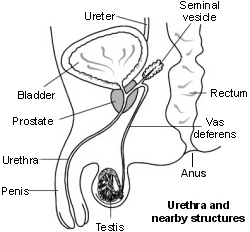
La uretritis significa inflamación de la uretra (el tubo dentro de tu pene que lleva la orina fuera de tu vejiga). La uretritis generalmente es causada por una infección de transmisión sexual (ITS), pero no siempre. Puede ocurrir dentro de una relación estable.
De un vistazo
Urethritis is inflammation of the urethra, the tube that carries urine out of the body.
Common symptoms include discharge from the penis, or pain when urinating.
Some men with urethritis have no symptoms.
It is most common in sexually active men under 25 who have recently changed partners.
If you suspect you have urethritis, contact a genitourinary clinic or your GP.
It is important to complete treatment to prevent serious complications for yourself and others.
Do not have sex until you and your partner(s) have completed treatment.
Cross-section diagram showing urethra and nearby structures in men
What causes urethritis in men?
Any man can develop urethritis. However, it's most common among sexually active men under 25 who have recently changed their sexual partner. It's also more likely if you have unprotected sex (without a condom). If you have, or have had any STI, you are at more risk of getting another.
Gonorrea is one type of STI which can cause urethritis.
Non-gonococcal urethritis (NGU) is the term used to describe urethritis caused by anything other than gonorrhoea. Infection with a germ (bacterium) - either Chlamydia trachomatis or Mycoplasma genitalium - is the common cause of NGU. It can also be caused by a variety of other germs (bacteria or viruses). NGU may rarely have a non-infective cause, such as trauma or blockage or a reaction to a soap or cream.
Both. Some men have gonococcal and non-gonococcal urethritis at the same time, for example infection with both gonorrhoea and chlamydia.
No obvious cause can be found in up to three out of ten men with urethritis.
Urethritis symptoms
A fluid (discharge) from the end of the penis is common but does not always occur.
Pain or burning when you pass urine. This may be confused with a infección urinaria.
You may have soreness or irritation inside the penis, or a feeling of wanting to pass urine frequently.
Some men with urethritis never develop any symptoms. For example, up to half of men with infección por clamidia (the most common cause of NGU) do not have any symptoms.
Ulceration on the skin at the head of the penis - this may be caused by herpes simplex virus.
How does urethritis progress?
Occasionally, symptoms may clear without treatment but may take months to do so. If your condition has been caused by an infection, germs (bacteria) may still be present, even if the symptoms have gone. You are therefore likely to still be able to pass the infection on to a partner.
One bacterium that commonly causes inflammation of the urethra (urethritis) in men (chlamydia) can cause serious problems in women, including pelvic inflammatory disease (PID) and difficulties with getting pregnant in the future. It is important that you get tested, and treated if necessary, in order to prevent complications for yourself and others.
You can read about possible complications in the separate leaflets called Gonorrea y Uretritis no gonocócica.
What should I do if I have symptoms of urethritis?
If you suspect that you have urethritis, contact your local genitourinary (GUM) clinic - find one from the 'Find a sexual health clinic' link in Further Reading below. Alternatively, contact your GP.
You are likely to be offered tests for el VIH, hepatitis y sífilis, as people with inflammation of the urethra (urethritis) sometimes have these conditions as well.
Men who have sex with men may also need to have swabs taken from the back of the throat (pharynx) and back passage (rectum).
The GUM clinic will protect your confidentiality but, if they confirm you have an infection, they will suggest that you contact anyone you had sex with up to three months before you were diagnosed. This is called 'contact tracing'. The clinic can do this for you if you wish and they do not have to give your name.
Medicamentos llamados antibióticos will usually clear an infection. The antibiotic prescribed depends on the cause. Make sure you complete the course.
If your urethritis is due to gonorrhoea, it is vital that you have another test after you have been treated to make sure the infection has been cured. This will usually be done 7 - 14 days after treatment.
Tell your sexual partner(s) to see their doctor or go to a GUM clinic, even if they have no symptoms. Many women with sexually transmitted infections do not have symptoms.
Don't have sex (including oral and anal sex) until you and your sexual partner(s) have completed tests and treatment. You should wait seven days after you have had your treatment course to avoid passing on the infection: your doctor will advise.
Selecciones del paciente para Salud sexual masculina

Salud sexual
Síndrome de Klinefelter
El síndrome de Klinefelter es una condición genética que solo afecta a los hombres. Los hombres afectados tienen un cromosoma X extra. A veces se le llama simplemente XXY. Entre 1 de cada 500 y 1 de cada 1,000 niños nacen con el síndrome de Klinefelter (SK). Muchas personas con SK no son diagnosticadas hasta que son adultas, y se cree que hasta dos tercios pueden nunca ser diagnosticadas. Los hombres con el síndrome de Klinefelter tienen testículos pequeños (testículos) que no producen suficiente hormona masculina testosterona antes del nacimiento y durante la pubertad. Esta falta de testosterona significa que durante la pubertad, las características sexuales masculinas normales pueden no desarrollarse completamente. Tiende a haber una reducción del vello facial y corporal, y a menudo se desarrolla algo de tejido mamario. La falta de testosterona también es responsable de otros síntomas del síndrome de Klinefelter, incluida la infertilidad. El tratamiento incluye la sustitución de testosterona. Esto puede ayudar a mejorar algunos de los síntomas, pero no tiene efecto sobre la fertilidad. La mayoría de los hombres con el síndrome de Klinefelter llevan una vida independiente, formando relaciones y consiguiendo un trabajo normal. También suelen tener una esperanza de vida normal.
por la Dra. Toni Hazell, FRCGP

Salud sexual
Bajo nivel de testosterona
La testosterona baja en los hombres (deficiencia de testosterona) es a menudo parte del proceso de envejecimiento y, por lo tanto, común en hombres mayores. También puede ocurrir a cualquier edad como resultado de condiciones que afectan los testículos o la glándula pituitaria en el cerebro. La testosterona baja puede tratarse con terapia de reemplazo de testosterona. Cualquier causa subyacente de la deficiencia de testosterona también necesitará tratamiento. El pronóstico dependerá de la causa subyacente.
por la Dra. Philippa Vincent, MRCGP
Preguntas frecuentes
Can urethritis resolve on its own?
Occasionally, symptoms of urethritis may disappear without treatment. However, this can take several months. Even if symptoms clear, the infection-causing germs (bacteria) might still be present, meaning you could still pass the infection to a sexual partner.
Does urethritis affect only sexually active men?
While urethritis is most common in sexually active men under 25 who have recently changed partners or had unprotected sex, any man can develop urethritis. It is also more likely if you have had any STI previously.
Can urethritis be caused by something other than an infection?
Yes, in rare cases, non-gonococcal urethritis (NGU) can have a non-infective cause. This could include trauma, a blockage in the urethra, or an allergic reaction to a soap or cream.
Why is it important for my sexual partner(s) to get tested if I have urethritis?
It is important for your sexual partner(s) to get tested, even if they don't have symptoms, because many women with sexually transmitted infections do not show any symptoms. Also, some bacteria that cause urethritis in men, like chlamydia, can lead to serious problems in women, such as pelvic inflammatory disease (PID) and future fertility difficulties. Getting tested and treated prevents complications for both you and others.
What is 'contact tracing'?
Contact tracing is a process where the clinic, after confirming you have an infection, suggests you inform anyone you had sex with up to three months before your diagnosis. The clinic can do this anonymously for you if you prefer, without revealing your name.
Are other tests done when checking for urethritis?
If you are being tested for urethritis, you will likely also be offered tests for HIV, hepatitis, and syphilis. This is because people with urethritis sometimes have these conditions as well. Men who have sex with men might also need swabs taken from their throat and rectum.
Lecturas adicionales y referencias
- BASHH 2015 UK National Guideline on the management of non-gonococcal urethritis; International Journal of STD & AIDS. Last updated 2018,
- 2018 UK national guideline for the management of infection with Neisseria gonorrhoeae; British Association for Sexual Health and HIV (BASHH) - 2018: reviewed 2020
- Encuentra una clínica de salud sexual cerca de ti; Servicios del NHS
- CKS Urethritis - male; NICE CKS, mayo 2024 (acceso solo en el Reino Unido)
Sobre el autorVer biografía completa

Dr Toni Hazell, FRCGP
MBBS, BSc, FRCGP, DFSRH, Dip GU med, DRCOG, DCH (London, UK, 2000)
La Dra. Toni Hazell se graduó de la Escuela de Medicina del Hospital St. Mary y realizó su VTS en el Hospital Northwick Park.
Acerca del revisorVer biografía completa

Dr Colin Tidy, MRCGP
Médico General, Autor Médico
MBBS, MRCGP, MRCP (Paediatrics), DCH
El Dr. Colin Tidy es un médico del NHS, con sede en Oxfordshire.
Historial del artículo
La información en esta página está escrita y revisada por pares por clínicos calificados.
Artículo también disponible en Inglés, Alemán, Español, Francés, Italiano, Portugués, Hindi, Hebreo, Árabe, y Sueco.
Próxima revisión: 19 de junio de 2027
20 Jun 2024 | Última versión

Pregunta, comparte, conecta.
Navega por discusiones, haz preguntas y comparte experiencias en cientos de temas de salud.

¿Te sientes mal?
Evalúa tus síntomas en línea de forma gratuita
Suscríbete al boletín de Patient
Tu dosis semanal de consejos de salud claros y confiables, escritos para ayudarte a sentirte informado, seguro y en control.
Al suscribirte aceptas nuestros Política de Privacidad. Puedes darte de baja en cualquier momento. Nunca vendemos tus datos.
Más sobre salud sexual
- Clamidia
- Condón
- Métodos anticonceptivos de barrera
- Implante anticonceptivo
- Inyección anticonceptiva
- Disfunción eréctil
- Esterilización femenina
- Síndrome de Klinefelter
- Dispositivo intrauterino de levonorgestrel
- Anticonceptivos reversibles de larga duración
- Bajo nivel de testosterona
- Uretritis no gonocócica
- Enfermedad inflamatoria pélvica
- Píldora anticonceptiva solo de progestágeno
- Sexo seguro
- Pruebas de ITS
- Candidiasis en hombres
- Tricomoniasis
- Flujo vaginal
- Sequedad vaginal