
Should you change your contraception to the coil or implant?
Peer reviewed by Dr Sarah JarvisAuthored by Lydia SmithOriginally published 20 Nov 2018
Meets Patient’s editorial guidelines
- DownloadDownload
- Share
- Language
- Discussion
- Audio Version
- Add to preferred sources on Google
Fewer women in England are using the pill compared to ten years ago. More and more are turning to long-acting reversible contraceptives (LARCs), including the copper or the hormonal coil, the implant or the injectable contraceptive. We explore why this might be and look at the pros and cons of these longer-term options for birth control.
Want to access contraception online?
Start a quick NHS Pharmacy First consultation online through Patient.info.
- Online and available 24/7, treatment can often be delivered next day.
- Free service, just pay the NHS prescription charge online if required.
- Just answer a few questions then choose a time for a clinician call.
Powered by Evaro, a UK regulated healthcare service supporting over 2 million patients. Reviewed by UK registered clinicians.

The contraceptive pill was first launched in the UK in 1961, transforming sexual health and allowing women to have control over their lives, relationships and futures.
Although the pill is used by 44% of women accessing contraception through sexual health services, its use has dropped in the last 10 years, according to figures from the NHS in England. Meanwhile, the number of women choosing LARCs has nearly doubled since 2007.
Are women turning their back on the pill?
Becky*, 31, switched to the implant after taking the pill, saying human error meant it was not a reliable option for her.
"The implant takes that anxiety away, and as I'm in a long-term and stable relationship, that's perfect for us without using condoms. A negative might be that I can't run pills together to avoid a period anymore, but that's a tiny price to pay," she says. "Most women I know don't even get periods on the implant, but I do. So for me, it's ideal and it was a good choice to switch from the pill."
Recent studies have linked the contraceptive pill to an increased risk of mental health problems such as depression and anxiety. The majority of users don't experience these side-effects, but some women have chosen other options because of their well-being.
Jess*, 36, says she tried being on the pill when she was younger.
"I got really depressed, and it scared me how much hormones could affect my entire experience of life. I switched to the copper coil, which has no hormones and gives 10 years of protection instantly.
"The only downside in the two or three years I've had it so far is that putting it in was painful for a few seconds which I wasn't expecting," she adds.
The LARC list
Ultimately, you should choose the contraception that suits you, whether that is LARCs, the pill or another type.
There are four types of LARCs:
The implant
The implant is a small, rod-shaped device implanted under the skin in the upper arm, which releases progestogen and lasts for up to three years.
The contraceptive injection
The contraceptive injection lasts for two to three months (depending on type) and releases the hormone progestogen.
The IUD
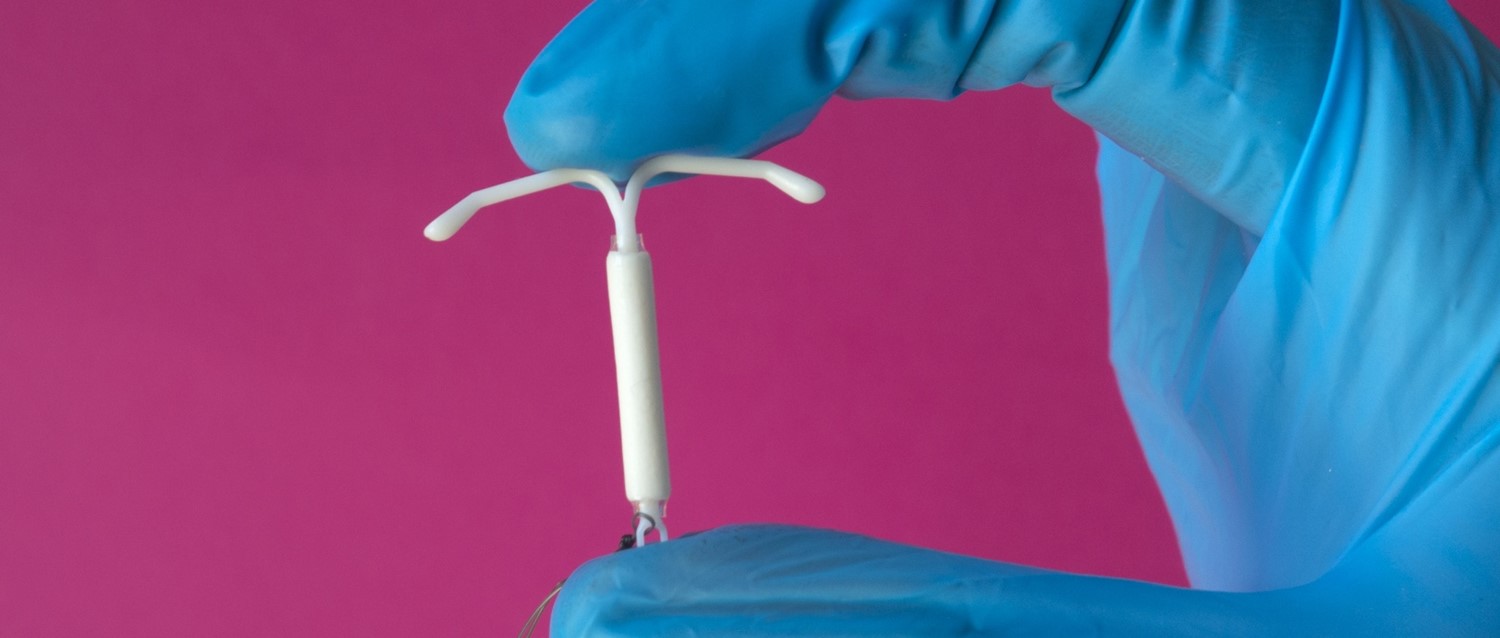
The copper intrauterine contraceptive device (IUD) - also known as the coil - sits inside the womb (uterus) and works for up to ten years. It does not release hormones.
The IUS
The intrauterine system, otherwise known as the IUS (or the hormonal coil), releases a progestogen hormone into the womb and can last for up to five years.
The implant or the coil can be good options for women who don't want a baby in the near future or who don't want children at all - and they are also reversible, so you can stop using them if you want to.
No room for error
LARCs are also more effective than the pill or condoms because you don't need to remember to use them, says Dr Jane Dickson, vice president of the Faculty of Sexual and Reproductive Healthcare at the Royal College of Obstetricians and Gynaecologists.
"In this sense, it is a better idea to opt for LARCs," she says. "No contraceptive method is 100% effective, but the copper IUD and IUS are highly effective with less than 1 in 100 women becoming pregnant using these methods each year.
"But above all, women should have free, open and easy access to all the methods of contraception available in the UK and receive non-judgemental, up-to-date evidence-based advice from healthcare professionals so that they can choose the method that fits their needs best."
Although LARCs all require a small procedure of some sort which can be uncomfortable, this doesn't have to be done very often.
Period changes
Some women may find their periods change with the coil, implant or injection, too. On the implant, periods may become irregular, or may become lighter or stop altogether.
Periods may become irregular, but often become lighter or stop altogether when you have the injection. If you plan to become pregnant, it's important to remember that there may be a delay returning to being fertile for some months. There may be hormonal side-effects such as mood changes or weight gain.
On the copper IUD, periods may become heavier or more painful - so they may not be suitable for women already struggling with this. As it isn't a hormonal contraceptive though, it is unlikely to affect your mood, weight or libido.
Using the IUS, your periods may become light, or stop altogether, or you have have irregular bleeding, although this can settle down after a few months. Hormonal side-effects are uncommon, as the progestogen released stays mainly around the womb, rather than in the bloodstream.
It may also come out without you noticing, so it's a good idea to check to see if you can feel the strings of the IUS after your period - your doctor or nurse can show you how if you're unsure.
Impact of budget cuts
Choosing the right contraception is different for each individual, but worryingly, women's access to different types may be under threat because of budget cuts to sexual health services.
This year, a report by the Advisory Group on Contraception found that since 2015, almost half of local councils in England have closed sites offering contraceptive services.
These cuts particularly impact those seeking the implant or coil because fitting these requires specialist training, but as a result of limited funding, fewer doctors are able to provide this service.
"Cuts to services put women's access to the most effective and reliable forms of contraception, such as LARCs, at risk,” says Dickson. “Women need to be given the information to allow them to understand the differences between methods and be offered the full range of alternatives."
So what is the best way to discuss contraception options?
Contraception services on the NHS are free and confidential, so there is no need to feel embarrassed. It can be helpful to consider your needs before your appointment and tell these to your doctor or nurse. For example, whether you mind if your periods change, if you are happy to make contraception part of your daily routine and if you want to become pregnant in the near future.
If you are unsure about anything, it's essential to ask questions. Dickson adds it is crucial that women receive 'non-judgemental, up-to-date, evidence-based advice' so they can make an informed decision.
Talking about your sexual history isn't always easy, but it is important to consider lots of factors when choosing the right contraception.
"Our guidance recommends that healthcare professionals should take a detailed history from women requesting contraception, including medical conditions, family medical history and lifestyle factors such as smoking," says Dickson.
The charities Brook (if you're aged under 25) and FPA also offer free, confidential online questionnaires which can help you work out which is the best contraception for you.
*Names have been changed to protect identities.
Patient picks for Contraception
Sexual health
When will I become fertile again after coming off contraception?
If you want to have a baby, you’ve probably got a lot of questions - including how long it can take for you to become fertile again if you’ve been on the contraceptive pill or the coil. And while everyone is different, here’s what we know about fertility after coming off different kinds of contraception.
by Lydia Smith

Sexual health
Are fertility apps a reliable form of contraception?
Hormonal contraception has had a bad press in recent years, with studies linking it to breast cancer and mental health side effects such as depression and anxiety. All that, combined with the rise of so-called 'fem tech', and the burgeoning trend for all things natural - from organic beauty products to 'clean' and plant-based diets - has led to an increased interest in more natural family planning options. But do any of them really work?
by Sarah Graham
About the authorView full bio

Lydia Smith
Feature writer
BA, MA, MSc
Lydia Smith is an award-winning journalist and feature writer who has written extensively on women's health and mental health. She is currently studying for an MSc in psychology.
About the reviewerView full bio

Dr Sarah Jarvis
Clinical Consultant
MA (Cantab), BM, BCh (Oxon), DRCOG, FRCGP, MBE
After training in medicine at Cambridge and Oxford, Dr Sarah Jarvis MBE became a GP.
Article history
Article also available in English, German, Spanish, French, Italian, Portuguese, Hindi, Hebrew, Arabic, and Swedish.
20 Nov 2018 | Originally published
Authored by:
Lydia SmithPeer reviewed by
Dr Sarah Jarvis
Join the conversation
Share your thoughts or experiences with others in our patient communities.

Ask, share, connect.
Browse discussions, ask questions, and share experiences across hundreds of health topics.

Feeling unwell?
Assess your symptoms online for free
Sign up to the Patient newsletter
Your weekly dose of clear, trustworthy health advice - written to help you feel informed, confident and in control.
By subscribing you accept our Privacy Policy. You can unsubscribe at any time. We never sell your data.
More in sexual health
- Are erection problems getting more common in young men?
- Are fertility apps a reliable form of contraception?
- Can men get thrush?
- Can your diet and lifestyle improve fertility?
- Do condoms really cause erection problems?
- Does the contraceptive pill increase your risk of blood clots?
- How cancer can affect your sex life
- How good is PEP for preventing HIV?
- How long to wait before your second baby
- Is it safe to skip your period on the pill?
- Telling current and past partners about your STI
- The best way to treat a herpes outbreak
- The health benefits of sex toys
- The most likely reasons for your low sex drive
- What is the difference between HIV and AIDS?
- What living with HIV is like today
- What not to say to someone with HIV
- What to do if you think you have an STI
- What you need to know about sexual consent
- What's the future of contraception?