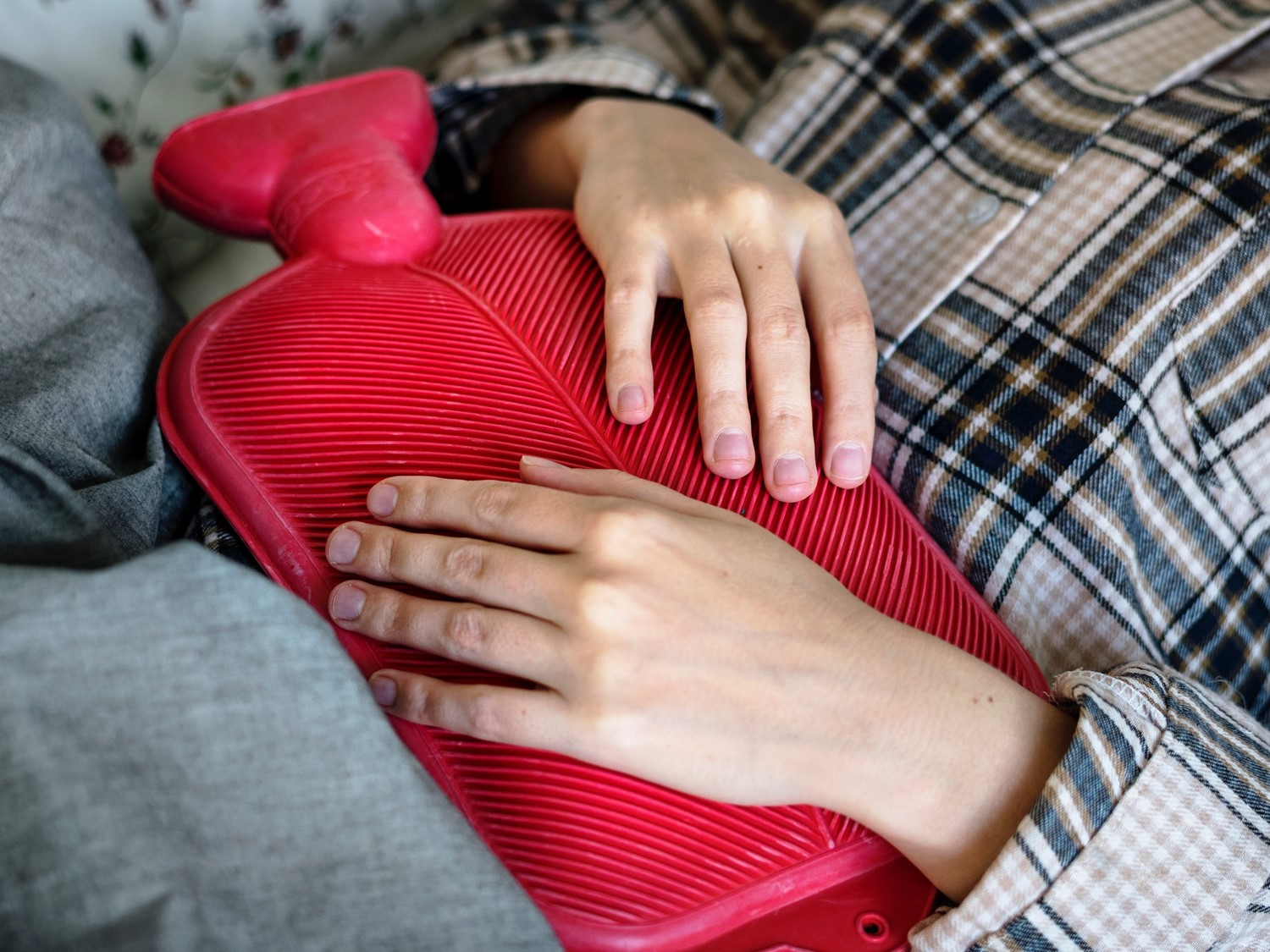
Períodos y problemas menstruales
Revisado por Dr Toni Hazell, FRCGPÚltima actualización por Dr Hayley Willacy, FRCGP Última actualización 13 Feb 2023
Cumple con las directrices editoriales
- DescargarDescargar
- Compartir
- Language
- Discusión
- Versión en audio
- Agregar a fuentes preferidas en Google
En esta serie:Períodos perdidosPeríodos abundantesSíndrome premenstrualFibromasCómo retrasar un períodoBiopsia endometrial
Comenzar a tener períodos es parte de crecer. Los períodos comienzan a ocurrir al mismo tiempo que otros cambios suceden en el cuerpo, como el inicio del desarrollo de los senos o el crecimiento del vello púbico. La edad promedio para comenzar los períodos es 13, pero es normal comenzar en cualquier momento entre las edades de 9 y 15 años. Un pequeño número de niñas puede comenzar antes o después de esto. Los períodos continúan hasta la menopausia, que generalmente ocurre alrededor de los 50 años.
Note: for the purposes of this patient information leaflet, 'girls, females or women' are those individuals who are assigned to be female at birth. It is not intended to exclude or dismiss individuals who do not identify as female.
De un vistazo
Un período es el desprendimiento mensual del revestimiento del útero, lo que resulta en sangrado vaginal.
Un período normal implica una pérdida de sangre de 20-60 ml y puede durar hasta ocho días.
El dolor menstrual, generalmente en la parte baja del abdomen y la pelvis, es común y normal.
Las opciones para absorber la sangre incluyen toallas sanitarias, tampones, copas menstruales y ropa interior para el período.
Aunque es poco probable, es posible quedar embarazada si tienes relaciones sexuales durante tu período.
Deberías ver a un médico si el patrón de tu periodo cambia, si ocurre sangrado entre periodos, o después del sexo o la menopausia.
What is a period?
For several days each month there is blood loss from the vagina. The amount of blood loss varies from period to period, and between women. The nature of the blood loss may also vary with some women having a dark scanty loss, and others having a heavier loss which is a brighter red. Sometimes clots are passed, especially if the loss is heavy. Sometimes there are small flaky fragments in with the menstrual blood. A normal amount of blood loss during each period is between 20 and 60 ml. (This is about 4 to 12 teaspoonfuls.) Bleeding can last up to eight days but five days is the average. The bleeding is usually heaviest on the first two days. Some pain in the lower tummy (abdomen) and pelvic pain - period pain - is common and normal.
Sanitary towels or tampons?
When you have a period, you will need to use something to absorb the blood you lose. It is common to use sanitary towels when periods first start. These are placed in your underwear to soak up the blood. They come in different sizes and styles. You may need a pad which is bigger or bulkier at night, or on the heavy days of your period. When it is light, a small panty liner may be enough.
Tampons, which you insert into your vagina to absorb the blood, can be more convenient. They need to be changed regularly. You can start to use tampons at any age after you start having periods. They may feel uncomfortable to start with and may take a little bit of practice to get used to. There are different sizes, so start with the smallest to get used to it. You may need to use several sizes of tampon during a period, depending on how heavy the bleeding is. A larger size may be needed in the early heavy stages, then a smaller one when bleeding becomes lighter. Some tampons come with an applicator. Other types are put in with your fingers. Some women prefer one type, others another. You will find the one which is easiest for you.
Sometimes you may like to mix and match - for example, using tampons for swimming but pads at other times. For very heavy periods you may even need to use both together.
An alternative to towels and tampons is a menstrual cup. This is a reusable device, about two inches long which is made from soft medical-grade silicone. It is placed in the vagina. The cup collects menstrual blood. It is folded and inserted into the vagina, then removed. It can be rinsed and reinserted up to every eight hours.
Another alternative is re-usable period pants. They are designed to avoid leakages and be more comfortable than towels or tampons.
See the separate article called Supporting your child when they start menstruation for more details.
Can you get pregnant during your period?
Although unlikely, it is possible to get pregnant by having sex during your period. Sperm can stay alive inside you for up to five days. So if you ovulate early and have a short menstrual cycle (see below) then it is possible for you to become pregnant. See below for more information about ovulation and the menstrual cycle.
Do I have to avoid anything when I have a period?
No. Carry on as normal. If you find the periods painful, regular exercise sometimes helps. Periods are not dirty; they are a normal part of a woman's life. You can go swimming, have a bath, etc. You may prefer to use tampons if you enjoy swimming.
What is the menstrual cycle?
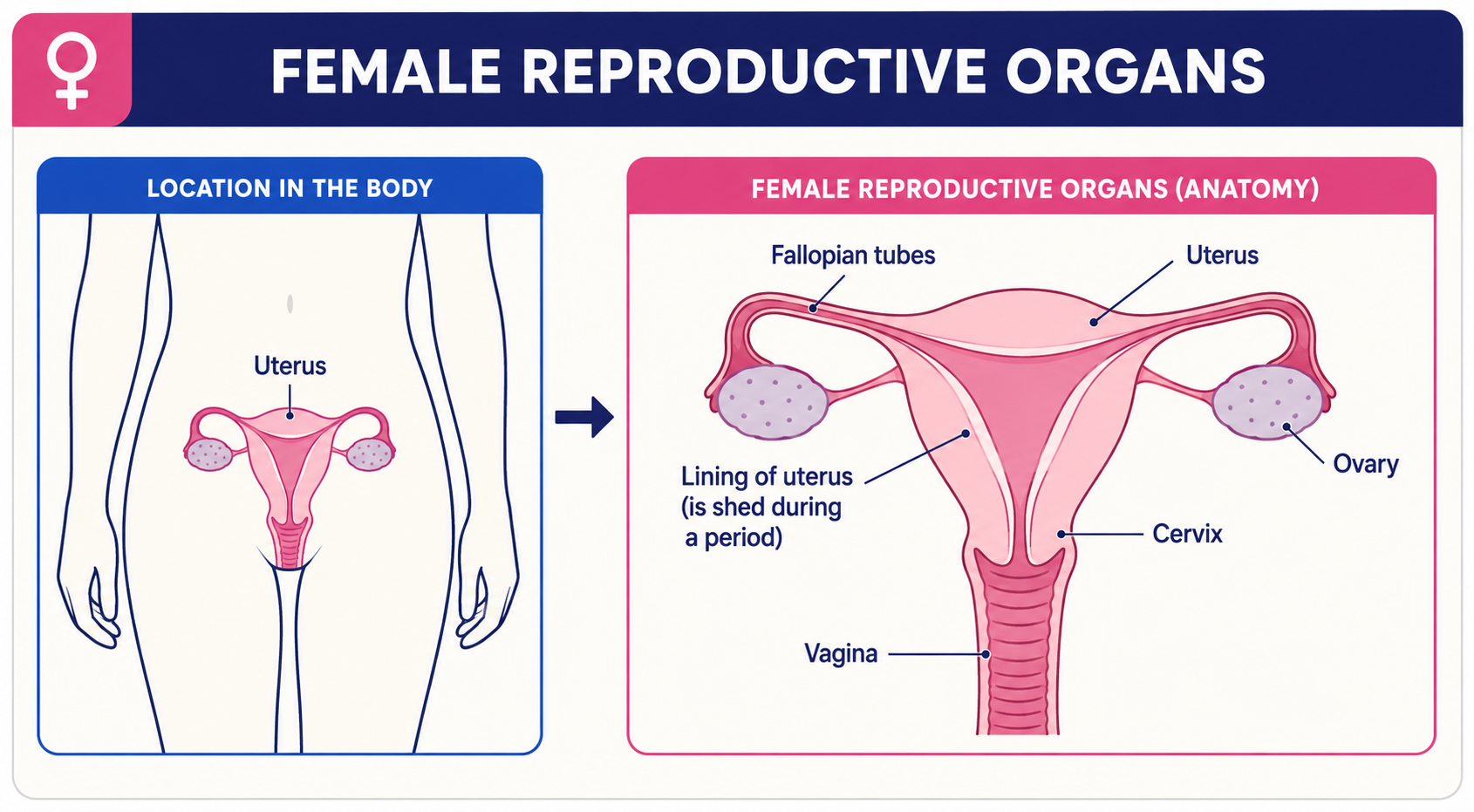
Small organs called ovaries lie in the lower part of their tummy (abdomen). The ovaries lie either side of the womb (uterus). The ovaries start to produce female hormones around puberty which cause changes to the uterine lining. Every month during your period the lining of your womb is shed together with some blood.
Female reproductive organs (periods)
How long does a menstrual period last?
The time between the start of one period and the start of the next is called the menstrual cycle. The average length of a menstrual cycle is 28 days. However, anything between 24 and 35 days is common. During the cycle various changes occur in your body. The changes are controlled by chemical substances called hormones, which act like messengers in your body. There are changing amounts of your female hormones at different times of your cycle. The menstrual cycle is split roughly into two halves:
The first half of your cycle is called the follicular or proliferative phase. The levels of two main hormones, oestrogen and progesterone, are low to start with and you shed the inner lining of your womb (endometrium). This causes your period (menstrual bleeding).
During this phase your ovaries are stimulated by other hormones. These travel to the ovary in the bloodstream from a gland near your brain, called the pituitary gland. One of these hormones causes some eggs in your ovaries to grow and develop in tiny fluid-filled cavities called follicles. The follicles produce oestrogen. Throughout the first half of your cycle the level of oestrogen in your blood rises. One function of oestrogen is to cause the lining of your womb to thicken (proliferate).
Ovulation occurs about halfway through your cycle (about 14 days after the start of your period). Ovulation is the release of an egg into your Fallopian tube from a follicle in an ovary. The egg travels along your Fallopian tube into your womb. The egg may be fertilised if you have recently had sex and there are sperm in your womb.
The second half of the cycle is called the secretory or luteal phase. After ovulation, the follicle that released the egg makes a hormone called progesterone as well as oestrogen. Progesterone causes the lining of the uterus to swell and be ready to receive a fertilised egg. If the egg is not fertilised, the levels of progesterone and oestrogen gradually fall. When they fall to a low level, they lose their effect on your womb. The lining of your womb is then shed (a period) and a new cycle then begins.
Some symptoms relating to periods
In general, if you have a cambio from your usual pattern that lasts for several periods, it may be abnormal. You should contact a doctor if this occurs.
Heavy periods (menorrhagia)
Períodos abundantes are very common. It is difficult to measure blood loss accurately. Periods are considered heavy if they are affecting your life and causing problems.
Painful periods (dysmenorrhoea)
Painful periods are common and you may experience an ache in your lower abdomen, back and tops of your legs, especially in the first few days of your period. The first two days are usually the worst. Some women have more pain than others. The cause of the pain is often not fully understood. Sometimes conditions such as endometriosis can make period pains become worse.
Bleeding at abnormal times
If you have vaginal bleeding at times apart from your expected periods, you should see a doctor. This includes if bleeding occurs after you have sex, or after the menopausia. Bleeding after sex is also called postcoital bleeding.
Bleeding in between your periods (intermenstrual bleeding) can also occur. This has several causes. They include infections or polyps. Polyps are small fleshy lumps that can occur on the neck of the womb or inside the cavity of the womb. There are various causes of bleeding between periods:
One common cause is called breakthrough bleeding, which is small bleeds that occur in the first few months after starting the birth control pill. This usually settles over a few months.
It may be because the neck of the womb (cervix) is sore and inflamed. This can make it more likely to bleed after sex. The most common reasons for this are infections - such as clamidia - and hormonal changes.
It is very important to see your doctor because abnormal vaginal bleeding can be caused by cancer - for example, cancer of the cuello uterino o cancer of the womb.
Periods which stop (amenorrhoea) or are irregular
Periods may stop or become irregular. Pregnancy is the most common reason for periods to stop. However, it is not uncommon to miss the odd period for no apparent reason. Apart from pregnancy, other causes of periods stopping include stress, trastornos alimentarios, losing weight, exercising too much and hormonal imbalance. Blood tests can help diagnose the cause of the irregular bleeding.
The interval between periods can also vary between women. Irregular periods may indicate that you do not ovulate every month. Irregular periods are common in the few years leading up to the menopause.
Selecciones del paciente para Períodos y problemas menstruales

Salud de la mujer
Períodos abundantes
Los períodos abundantes son comunes. En la mayoría de los casos no se encuentra una causa. En algunos casos se encuentra una causa, que puede incluir endometriosis, fibromas y otras condiciones. Hay varias maneras de mejorar los períodos abundantes y hacerlos más manejables. Las opciones incluyen medicación para reducir el sangrado, el uso de un sistema intrauterino (a veces conocido como espiral hormonal) o una operación.
por la Dra. Philippa Vincent, MRCGP

Salud de la mujer
Dolor menstrual
La mayoría de las mujeres experimentan algún dolor durante la menstruación. El dolor suele ser leve, pero en aproximadamente 1 de cada 10 mujeres, el dolor es lo suficientemente severo como para afectar las actividades diarias. El dolor puede ser tan intenso que no pueden ir a la escuela o al trabajo. Los médicos pueden llamar al dolor menstrual 'dismenorrea'. El dolor menstrual es un tipo de dolor pélvico.
por el Dr. Doug McKechnie, MRCGP
Preguntas frecuentes
¿Qué es el abdomen inferior y la zona pélvica?
El abdomen inferior se refiere a la parte baja de tu vientre, y el área pélvica se encuentra en la misma región general. Estas son las áreas donde comúnmente ocurre el dolor menstrual, a menudo descrito como una molestia.
¿Cuándo podría considerar usar una copa menstrual en lugar de compresas o tampones?
Una copa menstrual es una opción reutilizable para absorber el flujo menstrual. Está hecha de silicona médica suave y se inserta en la vagina, similar a un tampón. Recoge la sangre y se puede enjuagar y reinserir, durando hasta ocho horas. Algunas mujeres la prefieren como alternativa a las compresas o tampones desechables.
¿Qué son las bragas menstruales reutilizables?
Las bragas menstruales reutilizables son una alternativa a los productos sanitarios tradicionales como las toallas y los tampones. Están diseñadas para prevenir fugas y ofrecer más comodidad. Se usan como ropa interior normal y absorben el flujo menstrual.
¿Qué es el sangrado postcoital?
El sangrado postcoital se refiere al sangrado vaginal que ocurre después de tener relaciones sexuales. Si experimentas esto, es importante consultar a un médico.
¿Qué es el sangrado intermenstrual?
El sangrado intermenstrual es cualquier sangrado que ocurre entre tus períodos esperados. Esto puede tener varias causas, incluidas infecciones, pólipos o sangrado intercurrente si has comenzado recientemente a tomar píldoras anticonceptivas. Es importante ver a un médico si experimentas este tipo de sangrado.
Lecturas adicionales y referencias
- Manejo del Síndrome Premenstrual; Real Colegio de Obstetras y Ginecólogos (2016)
- Sangrado menstrual abundante: evaluación y manejo; Guía NICE (marzo 2018 - actualizada mayo 2021)
- Dismenorrea; NICE CKS, octubre 2023 (solo acceso en el Reino Unido)
- Amenorrea; NICE CKS, febrero 2024 (acceso solo en el Reino Unido)
Sobre el autorVer biografía completa
Actualizado por

Dr Hayley Willacy, FRCGP
Médico General, Autor Médico
MBChB (1992), DRCOG, DFFP, MRCOG (Part 1) MRCGP (2007), DFSRH (2013), MSc - medical education (2020)
La Dra. Hayley Willacy fue una médica general del NHS que trabajaba en el noroeste de Inglaterra, quien se retiró de la práctica clínica en 2022 después de 30 años.
Acerca del revisorVer biografía completa

Dr Toni Hazell, FRCGP
MBBS, BSc, FRCGP, DFSRH, Dip GU med, DRCOG, DCH (London, UK, 2000)
La Dra. Toni Hazell se graduó de la Escuela de Medicina del Hospital St. Mary y realizó su VTS en el Hospital Northwick Park.
Únete a la conversación
Comparte tus pensamientos o experiencias con otros en nuestro comunidades de pacientes.

Pregunta, comparte, conecta.
Navega por discusiones, haz preguntas y comparte experiencias en cientos de temas de salud.

¿Te sientes mal?
Evalúa tus síntomas en línea de forma gratuita
Suscríbete al boletín de Patient
Tu dosis semanal de consejos de salud claros y confiables, escritos para ayudarte a sentirte informado, seguro y en control.
Al suscribirte aceptas nuestros Política de Privacidad. Puedes darte de baja en cualquier momento. Nunca vendemos tus datos.