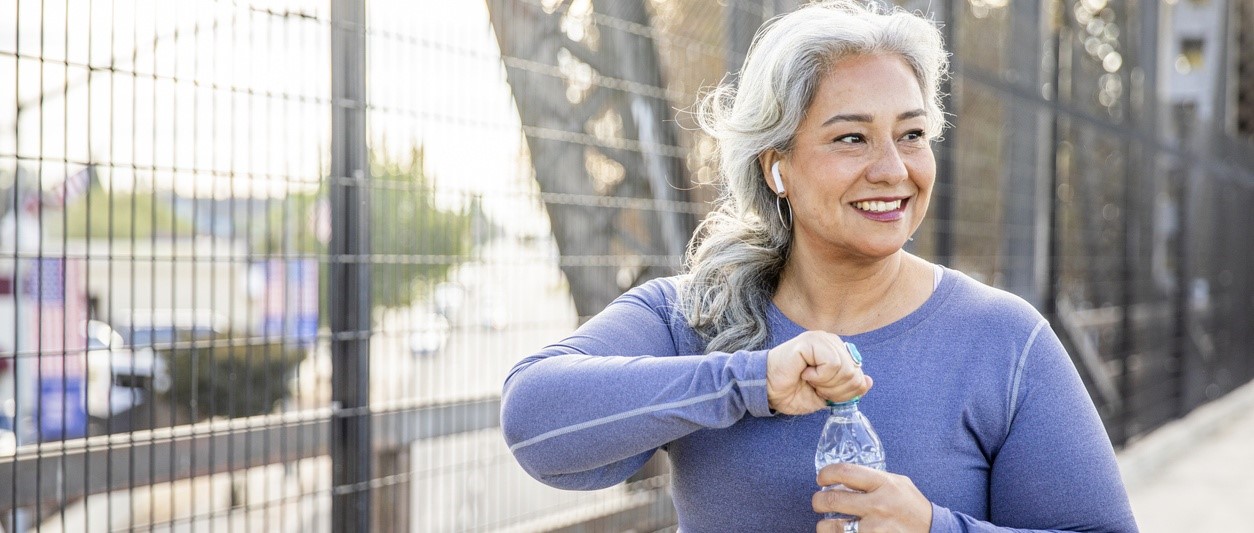
¿Cuál es la relación entre la menopausia y el colesterol?
Revisado por Dr Krishna Vakharia, MRCGPEscrito por Dra. Sarah JarvisPublicado originalmente 31 Jan 2024
Cumple con las directrices editoriales
- DescargarDescargar
- Compartir
- Language
- Discusión
- Ask Patient
- Versión en audio
- Agregar a fuentes preferidas en Google
Después de la menopausia, tienes un mayor riesgo de enfermedad cardíaca (cardiovascular), y es la principal causa de muerte en mujeres. Tus niveles de colesterol juegan un papel importante aquí, y por eso es importante asistir a tus chequeos de salud del NHS.
Get support with menopause symptoms
Reciba asesoramiento sanitario experto desde la comodidad de su hogar. Complete una consulta rápida en línea, disponible las 24 horas del día, los 7 días de la semana, y un profesional sanitario colegiado en el Reino Unido revisará su solicitud. Hay entrega al día siguiente disponible para los tratamientos que cumplan los requisitos.

Menopause and its challenges
Every woman will go through menopausia if she lives long enough. On average, women go through the menopause at the age of around 51. It's a natural stage in life but it doesn't happen overnight.
Officially, you've reached the menopause when your periods have stopped for 12 months. You stop having periods because the levels of your female hormone, oestrogen, have dropped. But before that comes a time called the perimenopausia, when your hormone levels are going up and down. This period lasts close to 5 years for most women, and brings with it many of the symptoms of the menopause.
When you think about the symptoms of the menopause, you probably think of hot flushes and night sweats. And you'd be right. Around 4 in 5 women get some symptoms around the menopause, and these are the most common.
Usually hot flushes, like night sweats, settle down eventually - although if you get them, they go on for an average of 7 years after your periods stop. But the menopause can also lead to a host of other issues:
Niebla mental.
Cansancio.
Joint and muscle pains.
Memory issues.
Cambios de humor.
Thinning hair.
Piel seca.
Menopause and cholesterol
As a nation, we're gradually beginning to recognise more of the impact the menopause can have on health. However, very few women seem to be aware of the link between menopause and colesterol.
After the menopause, you're at higher risk of enfermedad cardiovascular and it's the leading cause of death for women. Cholesterol is one of the major risk factors for ataque al corazón y accidente cerebrovascular. Oestrogen works on your liver to keep cholesterol levels stable - and going through the menopause is often linked to an increase in 'bad' cholesterol.
A 2023 national survey of UK adults aged 55 and over, commissioned by Novartis, showed that less than 1 in 10 respondents were aware that menopause could lead to high levels of bad cholesterol. 1 in 9 said they didn't know what conditions high cholesterol can lead to1.
All this is a concern, because you won't know your cholesterol is high unless you have it checked. In fact, 3 in 4 women aged 55 and over in the survey were unable to identify that high cholesterol doesn't cause symptoms.
NHS Health Checks
If you are aged 40-74, you're eligible for a free NHS Health Check every 5 years. If you've been diagnosed with high cholesterol, enfermedades del corazón, stroke, presión arterial alta, raised cholesterol, enfermedad renal o diabetes, you're not eligible because your GP should be checking your health regularly. Only 1 in 12 women over 55 in the survey had ever had a 10-year/lifetime CVD risk assessment to see how high their risk of stroke or heart attack is.
NHS Health Checks are available at GP practices and many pharmacists. At this check, your healthcare professional will ask you some questions about your family history and your lifestyle. They'll check your weight and blood pressure and carry out a blood test. If you're over 65, you'll also be advised about the signs and symptoms of demencia and what to do if you think you have them.
Making lifestyle changes
Once you've had the test, your healthcare professional will offer you personalised advice to help you avoid health problems in the future. This often relates to changes you could make to your diet, advice on exercise, or losing weight if you're overweight. For more information on cholesterol, head to Get Back In The Game.
We all know how important exercise is for your heart. But it can be really easy to let exercise slip if you're busy, have joint stiffness, or other medical problems that make it harder.
National guidelines from doctors recommend that you should aim for half an hour, five days a week, of aerobic exercise - the sort that makes your heart beat a bit faster and leaves you mildly out of puff. Ideally, you should also do some strengthening exercises to work individual muscle groups - like your legs, hips, arms, shoulders, chest and back - a couple of times a week too.
Nearly half of the women aged 55 and over in the survey say they don't manage to do this much exercise, and 2 in 5 say it's because they've lost interest in any exercise they were doing1. However, women were more likely than men to reconsider if they had company, with 2 in 5 saying having a friend to take part with them would make them more likely to get exercising again.
Regular exercise can also help cut your risk of osteoporosis, or thinning of the bones, which can cause 1 in 2 women over 50 to break a bone. Weight-bearing exercise strengthens your bones. That includes running, brisk walking, dancing, aerobics and strengthening exercises - in fact, pretty much any exercise other than swimming or cycling.
Your bones are constantly being reabsorbed and rebuilt by your body, and the stress on your bones of weight-bearing exercise kicks your bone-forming cells into action. You also need enough calcio in your diet to keep your bones strong.
Con agradecimientos a la revista My Weekly, donde este artículo fue publicado originalmente.
Lectura adicional
Selecciones del paciente para Menopausia y TRH
Hormonas
Cómo cambian tus períodos durante la perimenopausia
La perimenopausia significa 'alrededor de la menopausia'. Es el momento en que tu cuerpo comienza a avanzar hacia la menopausia, que es cuando tus períodos se detienen. Durante la perimenopausia, tus niveles hormonales suben y bajan, lo que puede hacer que tus períodos sean más irregulares. Analizamos por qué sucede esto y qué puedes esperar de tu ciclo menstrual durante la perimenopausia.
por Lynn Stephen

Hormonas
La 'segunda pubertad': por qué podrías estar teniendo brotes en tus treintas
Si estás en tus últimos treinta, es posible que hayas notado una aparición repentina de manchas, algo que se siente mucho como el acné, aunque pensabas que habías dejado atrás la piel adolescente. Algunas personas incluso lo llaman una 'segunda pubertad'. Pero según la dermatóloga Dra. Shamsa Kanwal, en realidad es un cambio hormonal que altera el comportamiento de tu piel a medida que te acercas a la mediana edad.
por Victoria Raw
Sobre el autorVer biografía completa
Escrito por

Dra. Sarah Jarvis
Consultora Clínica
MA (Cantab), BM, BCh (Oxon), DRCOG, FRCGP, MBE
Después de formarse en medicina en Cambridge y Oxford, la Dra. Sarah Jarvis MBE se convirtió en médica general.
Acerca del revisorVer biografía completa

Dr Krishna Vakharia, MRCGP
Director Médico de Salud, Optum UK
MBChB, MRCGP(2013), BMedSci (hons), DFSRH, DRCOG, PGDipDerm (Distn)
La Dra. Krishna Vakharia es una médica general del NHS. También es examinadora habitual del Diploma de Posgrado en Dermatología Práctica en la Universidad de Cardiff, además de ser la Directora Médica de salud en Optum UK.
Historial del artículo
Artículo también disponible en Inglés, Alemán, Español, Francés, Italiano, Portugués, Hindi, Hebreo, Árabe, y Sueco.
31 Jan 2024 | Publicado originalmente
Escrito por:
Dra. Sarah JarvisRevisado por
Dr Krishna Vakharia, MRCGP
Comparte tus pensamientos o experiencias con otros en nuestro comunidades de pacientes.
Suscríbete al boletín de Patient
Tu dosis semanal de consejos de salud claros y confiables, escritos para ayudarte a sentirte informado, seguro y en control.
Al suscribirte aceptas nuestros Política de Privacidad. Puedes darte de baja en cualquier momento. Nunca vendemos tus datos.