Epilepsia y planificación del embarazo
Revisado por pares por Dr Jacqueline Payne, FRCGPÚltima actualización por Dra. Mary Harding, MRCGPÚltima actualización 29 Jul 2017
Cumple con las directrices editoriales
- DescargarDescargar
- Compartir
- Language
- Discusión
- Versión en audio
- Agregar a fuentes preferidas en Google
En esta serie:Planificación para quedar embarazada
Esta página ha sido archivada.
No se ha revisado recientemente y no está actualizado. Los enlaces externos y las referencias pueden ya no funcionar.
It is essential that you seek expert advice from a doctor or epilepsy nurse specialist when you are considering starting a family.
De un vistazo
La mayoría de las mujeres con epilepsia tienen embarazos y partos normales.
Algunos medicamentos contra la epilepsia conllevan un pequeño riesgo de defectos de nacimiento.
Hable con su médico antes de quedar embarazada para discutir su medicación.
En general, es seguro amamantar cuando se toman la mayoría de los medicamentos antiepilépticos.
Se recomienda tomar 5 mg de ácido fólico diariamente antes y durante el inicio del embarazo.
El valproato de sodio y el topiramato tienen advertencias específicas y fuertes sobre su uso durante el embarazo.
Inscribirse en el Registro de Epilepsia y Embarazo del Reino Unido ayuda a la investigación de tratamientos seguros.
¡Inscríbete en nuestro curso gratuito de 8 semanas sobre Embarazo Saludable!
Cada semana compartiremos información útil y consejos esenciales sobre temas como nutrición, ejercicio, salud mental, síntomas a tener en cuenta y preparación para el parto, para ayudarte a navegar tu viaje de embarazo en cualquier etapa en la que te encuentres.
Al suscribirte aceptas nuestros Política de Privacidad. Puedes darte de baja en cualquier momento. Nunca vendemos tus datos.
How will my epilepsy be treated if I become pregnant?
Doctors are continuing to learn more about the best ways to treat epilepsy during pregnancy. By enrolling with the UK Epilepsy and Pregnancy Register if you are pregnant and have epilepsy, you will help to give doctors a clearer picture of which medicines are safest for babies' health.
Most pregnant women with epilepsy have a normal pregnancy and childbirth.
The frequency of fits (seizures) may increase in pregnancy in some women with epilepsy. For women with epilepsy, the risk of complications during pregnancy and labour is slightly higher than for women without epilepsy. The small increase in risk is due to:
The small risk of harm coming to a baby if you have a serious seizure whilst pregnant.
The possible small risk of harm to an unborn baby from some anti-epilepsy medicines (discussed further below).
Nota: the risk of complications to your unborn baby from you having a seizure is greater than the risk from taking your epilepsy medication.
What would be the risk of anti-epilepsy medicines if I become pregnant?
If you take anti-epilepsy medicines when you are pregnant, you have a very small increased risk of having a baby with a birth defect. However, this may depend on exactly which medicine you take.
The most recent studies suggest that taking one of the following anti-epilepsy medicines whilst pregnant was not associated with an increased risk of having a baby with a major birth defect.
However, the research notes that there is less evidence around about these medicines, as many are newer treatments and they haven't been around such a long time. The same studies show that the following anti-epilepsy medicines are associated with a small increased risk of having a baby with a birth defect:
These medicines are linked with a small increased risk of having a baby with a neural tube defect (such as spina bifida), facial defects such as cleft lip and/or palate, congenital heart defects, arm or leg abnormalities, and a defect of the penis, known as hypospadias.
Síndrome anticonvulsivo fetal
Babies whose mothers took sodium valproate for epilepsy during pregnancy may have one or more abnormal features. Some abnormal features may also be seen in babies of mothers who took carbamazepine for epilepsy during pregnancy. Associated features may include abnormalities of the forehead, eyebrows, nose, ears, mouth, fingers, feet and nails. However, the features are often very mild and may also occur in babies whose mothers did not take any medicines for epilepsy during pregnancy.
What should I do before I get pregnant if I have epilepsy?
Nota del editor
Dra. Sarah Jarvis, 1st April 2019
Sodium valproate and pregnancy
Sodium valproate medicine is linked to a higher risk than some other epilepsy tablets of problems for your baby if you get pregnant while you are taking it. The National Insttitute for Health and Care Excellence, NICE, has issued a summary of all the guidance it has issued about this. This included guidance for women who are of childbearing age, women who are planning pregnancy and women who are pregnant. You can find out more in the further reading section at the end of this article. In summary:
If you're taking sodium valproate. even if you're not planning to get pregnant, it is very important to have regular epilepsy follow up with a specialist.
if you've started your periods but haven't gone through the menopause, it's also very important to use reliable contraception.
If you're planning to get pregnant you must always see a specialist before you stop using contraception - please see your GP for an urgent referral.
If you become pregnant while taking sodium valproate, you must see your GP urgently.
Dra. Sarah Jarvis, 23rd May 2022
New national guidance on epilepsy
NICE has produced new guidance on epilepsy. The guidance includes a section on support and monitoring for women planning pregnancy or who are pregnant. The guidance recommends that if you have epilepsy and are pregnant or planning pregnancy:
You should be referred to a specialist epilepsy team who can review your medication options with you.
Information about your care during pregnancy should be shared between your GP, epilepsy team and obestetric (pregnancy care) team.
You should be advised of the importance of taking your medicines as they are prescribed.
Your epilepsy team should explain the risk and benefits of the various medicines available to you before you start trying to get pregnant.
You may need more frequent monitoring during pregnancy if you:
Are under 16.
Have had a seizure within the previous 12 months.
Have bilateral tonic-clonic seizures.
Have a learning disability.
Are at risk of sudden unexplained death in epilepsy (SUDEP).
Your team may recommend doing blood tests to monitor the levels of your antiseizure medication. They should discuss the results of these tests with you to help you and your team make decisions about your dosage.
If your dose of medication is changed during pregnancy, you should be given a plan on returning to your pre-pregnancy doses, starting shortly after you have your baby.
Your team should follow national guidance on the safest medications to take (discussed in this leaflet).
Nota del editor
Dr Krishna Vakharia, 1st July 2024
The MHRA has introduced new safety measures for topiramate (Topamax) due to studies showing increased risks of intellectual disabilities, autism, and ADHD in children when taken during pregnancy. As a result, topiramate should only be used for epilepsy in pregnancy if no other treatment is suitable and should not be used for migraines.
Women who can become pregnant must use effective birth control and have a pregnancy test before starting topiramate. It's important to discuss birth control options with your doctor, as some methods may be less effective with this medication.
Regular medication reviews are recommended, and new educational materials are available to help patients and healthcare professionals understand these safety measures.
If you are pregnant, planning to become pregnant, or currently taking topiramate, consult your GP or specialist before making any changes to your treatment. Safer alternatives for epilepsy during pregnancy include lamotrigine and levetiracetam - your doctor will discuss with you if these are suitable.
Before becoming pregnant, it is best to seek advice from your doctor or epilepsy nurse. You should be seen by an epilepsy expert to discuss in detail your treatment during your pregnancy. The potential risks and benefits of adjusting your treatment, if necessary, can be discussed. If your pregnancy is planned carefully then any risk of complications may be minimised.
Most of the advice is the same as for any other woman who is planning a pregnancy. However, other specific things that may be discussed include:
In some cases it may be wise to change to a different medication which is less likely to cause harm to a developing baby (depending on the medication you are already taking). NB: This is particularly necessary if you are taking sodium valproate.
It may be an option to stop or reduce the dose of your treatment before you become pregnant if your seizures have been well controlled. However, deciding to come off anti-epilepsy medication can be a difficult decision. Factors such as the type of epilepsy that you have can be important. For example, if you have the type of epilepsy that causes severe tonic-clonic seizures, there is a risk that you could have a severe seizure when you are pregnant if you stop your medication.
Advice to take ácido fólico at a strength of 5 mg a day. This should ideally be taken before you become pregnant and be continued until you are 12 weeks pregnant. Although folic acid is recommended for all women who are pregnant, the dose for women taking anti-epilepsy medicines is higher than usual. Taking folic acid has been shown to reduce the risk of having a baby born with a spinal cord problem such as spina bifida.
Advice to notify your pregnancy to the UK Epilepsy and Pregnancy Register. This is to allow information to be gathered to improve the future management of pregnant women with epilepsy.
Will I be able to breastfeed if I am taking anti-epilepsy medicines?
Breast-feeding for most women taking anti-epilepsy medicines is generally safe. Your doctor, midwife or health visitor can advise you in more detail.
What are the risks that my child will also have epilepsy?
In general, the probability is low that a child born to a parent with epilepsy will also have epilepsy. However, it can partly depend on your family history, as some types of epilepsy run in families.
Therefore, genetic counselling may be an option to consider if you have, or your partner has, epilepsy and also a family history of epilepsy.
Selecciones del paciente para Epilepsy and seizures
Cerebro y nervios
Viviendo con epilepsia
This leaflet is a brief introduction to the practical considerations of living with epilepsy.
por el Dr. Colin Tidy, MRCGP
Cerebro y nervios
Tipos de convulsiones
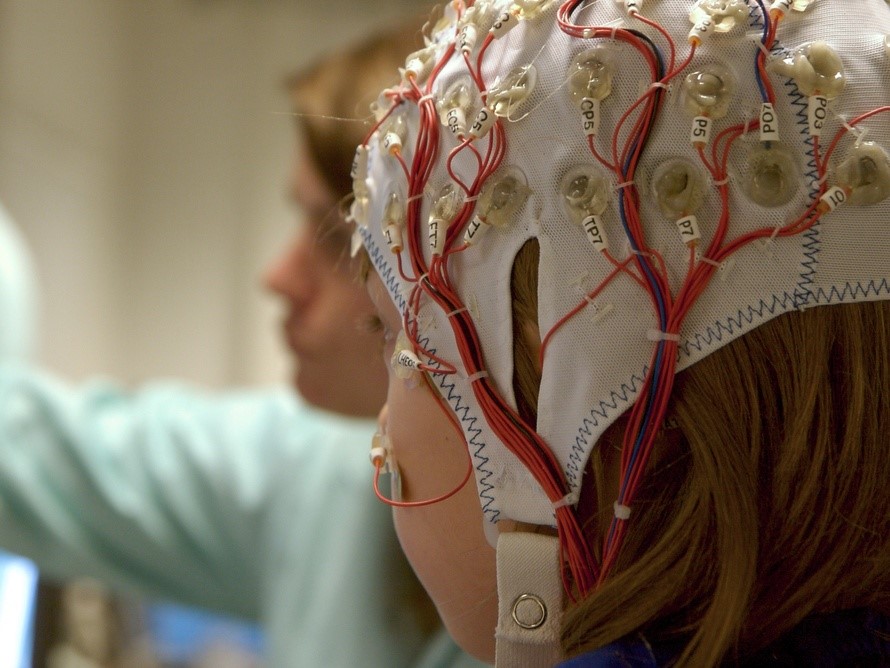
Una convulsión es una condición causada por una descarga repentina de actividad eléctrica en el cerebro. Existen diferentes tipos de convulsiones. Este folleto proporciona información sobre lo que su médico puede querer saber y qué pruebas podrían recomendarse después de dicho evento.
por el Dr. Doug McKechnie, MRCGP
Preguntas frecuentes
¿Qué es específicamente un defecto del tubo neural como la espina bífida, y otros medicamentos además del valproato de sodio lo causan?
Un defecto del tubo neural, como la espina bífida, es un defecto de nacimiento que afecta el cerebro y la médula espinal. Aunque el valproato de sodio está vinculado a un mayor riesgo, otros medicamentos antiepilépticos como el fenobarbital, la fenitoína, la carbamazepina y el topiramato también están asociados con un pequeño aumento del riesgo de defectos del tubo neural.
Si estoy embarazada y tomando medicación antiepiléptica, ¿con qué frecuencia se controlarán mis niveles sanguíneos?
Si estás embarazada, tu equipo de epilepsia puede recomendar un monitoreo más frecuente, incluyendo análisis de sangre para medir los niveles de tu medicación anticonvulsiva. Los resultados de estos análisis se discutirán contigo para ayudar a tomar decisiones sobre tu dosis si se necesitan ajustes.
¿Por qué es particularmente importante usar anticonceptivos confiables si estoy tomando valproato de sodio y podría quedar embarazada?
Es muy importante usar anticonceptivos confiables si estás tomando valproato de sodio y estás en edad fértil, porque este medicamento está relacionado con un mayor riesgo de problemas para tu bebé si quedas embarazada. Esta es una parte clave de la guía emitida por NICE para minimizar riesgos.
¿Qué tipos de defectos de nacimiento se han observado en bebés cuyas madres tomaron carbamazepina durante el embarazo?
Los bebés cuyas madres tomaron carbamazepina para la epilepsia durante el embarazo pueden mostrar algunas características anormales. Estas pueden incluir anomalías en la frente, cejas, nariz, orejas, boca, dedos, pies y uñas. Sin embargo, estas características suelen ser muy leves y también pueden ocurrir en bebés cuyas madres no tomaron ningún medicamento para la epilepsia durante el embarazo.
¿Qué cuidados de seguimiento se proporcionan con respecto a la dosis de mi medicación después de dar a luz?
Después del parto, si la dosis de su medicación fue ajustada durante el embarazo, su equipo de epilepsia debería proporcionarle un plan para volver a las dosis previas al embarazo, el cual debería comenzar poco después del nacimiento de su bebé.
¿Qué es SUDEP y por qué se menciona en relación con el monitoreo frecuente durante el embarazo?
SUDEP significa Muerte Súbita Inesperada en Epilepsia. Si estás en riesgo de SUDEP, junto con otros factores, tu equipo de epilepsia puede recomendar un monitoreo más frecuente durante tu embarazo para garantizar tu seguridad y la de tu bebé.
Lecturas adicionales y referencias
- Cuidado prenatal para embarazos sin complicaciones; Guía Clínica NICE (marzo 2008 - actualizada febrero 2019)
- Epilepsias: diagnóstico y manejo; Guía Clínica NICE (enero 2012)
- Molgaard-Nielsen D, Hviid A; Newer-generation antiepileptic drugs and the risk of major birth defects. JAMA. 2011 May 18;305(19):1996-2002.
- Feldman HS, Jones KL, Lindsay S, et al; Prenatal alcohol exposure patterns and alcohol-related birth defects and growth deficiencies: a prospective study. Alcohol Clin Exp Res. 2012 Apr;36(4):670-6. doi:
- Pre-conception - advice and management; NICE CKS, June 2012 (UK access only )
- Formulario Nacional Británico (BNF); Servicios de Evidencia NICE (acceso solo en el Reino Unido)
- Diabetes en el embarazo - manejo desde la preconcepción hasta el período posnatal; Guía Clínica NICE (febrero 2015 - última actualización diciembre 2020)
- Bromley R, Weston J, Adab N, et al; Treatment for epilepsy in pregnancy: neurodevelopmental outcomes in the child. Cochrane Database Syst Rev. 2014 Oct 30;10:CD010236. doi: 10.1002/14651858.CD010236.pub2.
- Diagnóstico y manejo de la epilepsia en adultos; Red de Directrices Intercolegiales de Escocia - SIGN (2015 - actualizado 2018)
- De-Regil LM, Pena-Rosas JP, Fernandez-Gaxiola AC, et al; Effects and safety of periconceptional oral folate supplementation for preventing birth defects. Cochrane Database Syst Rev. 2015 Dec 14;12:CD007950. doi: 10.1002/14651858.CD007950.pub3.
- Weston J, Bromley R, Jackson CF, et al; Monotherapy treatment of epilepsy in pregnancy: congenital malformation outcomes in the child. Cochrane Database Syst Rev. 2016 Nov 7;11:CD010224.
- UK Chief Medical Officers’ Low Risk Drinking Guidelines; GOV.UK, agosto de 2016
- Safety and use guidance summary on valproate in children, young people and adult, including women or girls of childbearing potential and women or girls who are pregnant or planning pregnancy; NICE Clinical Guidance Summary (2020)
Sobre el autorVer biografía completa

Dr Mary Harding, MRCGP
Médico General, Autor Médico
BA, MA, MB, BChir, MRCGP, DFFP
La Dra. Mary Harding se graduó de la facultad de medicina de la Universidad de Cambridge en 1989.
Acerca del revisorVer biografía completa

Dr Jacqueline Payne, FRCGP
Médico General, Autor Médico
MB, BS, DFFP, DRCOG, FRCGP
Jacqueline fue médica de cabecera en Kendal, Cumbria durante 25 años, donde formó a jóvenes médicos de cabecera para el RCGP y fue Doctora Instructora para el FSRH.
Historial del artículo
La información en esta página está escrita y revisada por pares por clínicos calificados.
Artículo también disponible en Inglés, Alemán, Español, Francés, Italiano, Portugués, Hindi, Hebreo, Árabe, y Sueco.
29 Jul 2017 | Última versión

Pregunta, comparte, conecta.
Navega por discusiones, haz preguntas y comparte experiencias en cientos de temas de salud.

¿Te sientes mal?
Evalúa tus síntomas en línea de forma gratuita
Suscríbete al boletín de Patient
Tu dosis semanal de consejos de salud claros y confiables, escritos para ayudarte a sentirte informado, seguro y en control.
Al suscribirte aceptas nuestros Política de Privacidad. Puedes darte de baja en cualquier momento. Nunca vendemos tus datos.