
Anatomy of the ear
Peer reviewed by Dr Colin Tidy, MRCGPAuthored by Dr Krishna Vakharia, MRCGPOriginally published 18 Oct 2023
Meets Patient’s editorial guidelines
- DownloadDownload
- Share
- Language
- Discussion
- Audio Version
- Add to preferred sources on Google
Your ears do the remarkable job of allowing you to hear a huge range of sounds, from a whisper to a loud bang. To do this, the ear transforms sound energy into electrical signals which the brain can interpret. Your ears also help to maintain your balance.
Structure of the ear
The ear - normal hearing
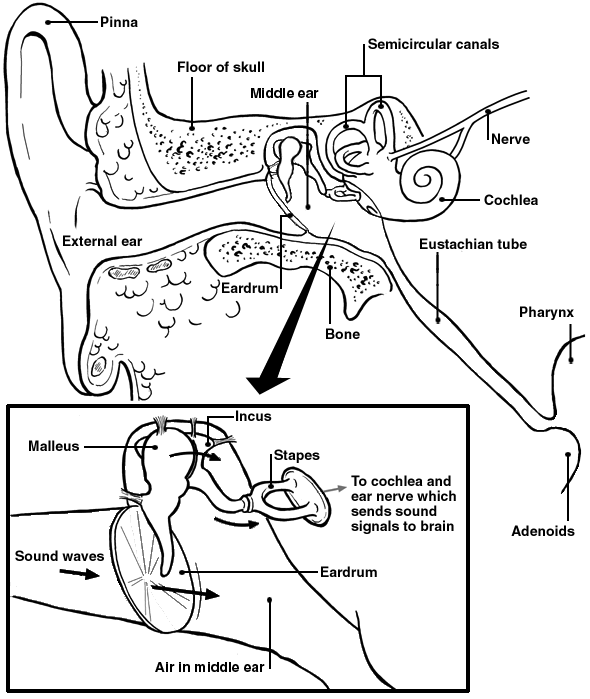
The ear is divided into three parts. The outer (external) ear includes the part you can see (called the pinna) and the narrow tube-like structure - the ear canal. At the end of the canal is the eardrum. This separates the external ear from the middle ear. The eardrum is a tightly stretched membrane, a bit like the skin of a drum.
The middle ear is a small air-filled compartment which sits in the skull between the eardrum and the inner ear. Inside it are the three smallest bones in the body, called malleus, incus and stapes. These bones are connected to each other. The last in the group, stapes, also makes contact with the inner ear. The air space of the middle ear connects to the back of the nose by the Eustachian tube, a narrow tube which can let air in or out of the space. It can also allow infections like the common cold to spread from the throat and nose to the ears.
The inner ear is made up of two components - the cochlea and the vestibular system. The cochlea is involved with hearing, whilst the vestibular system helps with balance.
Inner ear diagram
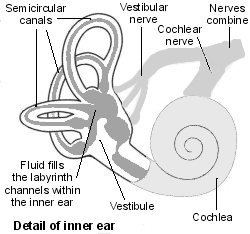
The cochlea is a snail-shaped chamber filled with fluid. It is lined with special sensory cells called hair cells which are sensitive to sound. The hairs are different lengths and each responds to a particular pitch of sound (the pitch of a sound is its musical note). These cells transform sound waves into electrical signals, which are then sent from the cochlea to the hearing area of the brain via the cochlear nerve.
The vestibular system is made up of a network of looped tubes, three in each ear, called the semicircular canals. They loop off a central area called the vestibule. The vestibular system detects movement through special sensory cells which are activated as you tilt or move your head. The vestibular system is very sensitive to small movements of the head. If you make large, fast or prolonged movements (eg, spinning around on the spot) they can take a while to 'settle down' afterwards. This is why the room can appear to continue to spin when we stop spinning. The vestibular system sends signals to the vestibular nerve, which joins the cochlear nerve and carries electrical signals to the brain.
How do you hear?
Sound waves are created when air vibrates. To hear, the ear needs to change sound into electrical signals which the brain can interpret. The outer part of the ear (the pinna) funnels sound waves into the ear canal. When sound waves reach the eardrum they cause it to vibrate. Vibrations of the eardrum cause the tiny bones in the middle ear to move too. The last of these bones, the stapes, passes on the vibrations through another membrane to the cochlea.
When the cochlea receives the vibrations, the fluid inside it moves. As the fluid moves, it causes the sensory cells to create an electrical signal. This electrical signal is sent to the brain. Special areas in the brain receive these signals and translate them into what we know as sound.
Your ears create electrical signals to represent an extraordinary variety of sounds. For example, the speed at which the eardrum vibrates varies with different types of sound. With low-pitched sounds the eardrum vibrates slowly. With high-pitched sounds it vibrates faster. This means that the special hair cells in the cochlea also vibrate at varying speeds. This causes different signals to be sent to the brain. This is one of the ways we are able to distinguish between a wide range of sounds.
How do you keep your balance?
Balance is maintained not only by the vestibular system found in your ears but also by your visual and sensory systems (your eyes and what you physically feel - for example, under your feet). If any one of these systems is damaged, you may experience dizziness or loss of balance.
The brain uses the visual system to help orientate us in our surroundings. The vestibular system detects both circular motion and movement in a straight line. This includes everyday actions such as stopping, starting or turning. The sensory system keeps track of the movement and tension of our muscles and joints. It also monitors the position of our body with respect to the ground. The brain receives signals from all these systems and processes the information gathered to produce a sensation of stability.
The tubes and sacs within the vestibular system are filled with fluid. When we move our heads, this fluid also moves. The vestibular system also contains specialised sensory cells. Movement of the fluid causes these sensory cells to bend. This change results in an electrical signal which is carried, via a nerve, to the brain for interpretation.
Once the brain has interpreted the signals as movement, it controls your eyes so that they keep providing information about your position. The brain also sends signals to your muscles so that they help to ensure balance regardless of the position of your body.
If the signals sent to the brain by the vestibular system do not match those which the eyes and sensory system send then dizziness and motion sickness can result. This can happen, for example, if you travel on a boat but you are looking at the boat rather than at the horizon. Your eyes see that you are not moving relative to the boat but your ears and body can feel that you are moving. It's the discrepancy between the two that causes the motion sickness.
Some common disorders of the ear
Dr Mary Lowth is an author or the original author of this leaflet.
Patient picks for Ear

Ear, nose and throat
Why has the advice on dealing with earwax blockages changed?
Earwax plays an important role in protecting our ears from dirt and bacteria. However, excess earwax can become compacted in the ear and cause earwax blockages, resulting in problems such as hearing loss and earache. Advice on the safety of certain treatment options has changed over the years. It's important to know if you have an increased risk of adverse side-effects from earwax removal methods.
by Amberley Davis

Ear, nose and throat
Earache relief: medicine and remedies
We all get earache from time to time, and while it's no fun, this common problem is usually minor, often clearing without the need for treatment over a few days. But a painful ear can be very uncomfortable, and there are earache relief methods you can use at home that also speed along recovery. We outline the medicines and home remedies to help some of the most common earache problems - and when you need to see a doctor.
by Amberley Davis
About the authorView full bio

Dr Krishna Vakharia, MRCGP
Chief Medical Officer for Health, Optum UK
MBChB, MRCGP(2013), BMedSci (hons), DFSRH, DRCOG, PGDipDerm (Distn)
Dr Krishna Vakharia is an NHS GP. She is also a regular examiner for the postgraduate Diploma in Practical Dermatology at Cardiff University as well as being the Chief Medical Officer for health at Optum UK.
About the reviewerView full bio

Dr Colin Tidy, MRCGP
General Practitioner, Medical Author
MBBS, MRCGP, MRCP (Paediatrics), DCH
Dr Colin Tidy is an NHS Doctor, based in Oxfordshire.
Article history
Article also available in English, German, Spanish, French, Italian, Portuguese, Hindi, Hebrew, Arabic, and Swedish.
18 Oct 2023 | Originally published
Authored by:
Dr Krishna Vakharia, MRCGPPeer reviewed by
Dr Colin Tidy, MRCGP
Join the conversation
Share your thoughts or experiences with others in our patient communities.

Ask, share, connect.
Browse discussions, ask questions, and share experiences across hundreds of health topics.

Feeling unwell?
Assess your symptoms online for free
Sign up to the Patient newsletter
Your weekly dose of clear, trustworthy health advice - written to help you feel informed, confident and in control.
By subscribing you accept our Privacy Policy. You can unsubscribe at any time. We never sell your data.
More in ear, nose and throat
- 10 common questions about tonsil stones
- Can earwax build-up cause hearing loss?
- Coughs, colds and sore throats: is honey better than over-the-counter treatments?
- Does tinnitus lead to hearing loss?
- Ear conditions videos
- How to manage tonsillitis in children
- How to protect against hearing loss while using headphones
- How to use nose drops
- Is British Sign Language a legally recognised language?
- Signs of tinnitus to look out for in children
- Sound advice: 6 ways to safeguard your hearing
- What do tonsils do?
- What is a cochlear implant and what effect do they have on hearing?
- What is it like to be Deaf?
- What is swimmer’s ear - and why you shouldn’t ignore it
- What should you eat if you have tonsillitis?
- What's causing my hearing loss?
- When it feels like something is stuck in your throat
- When to worry about a sore throat
- Why has the advice on dealing with earwax blockages changed?