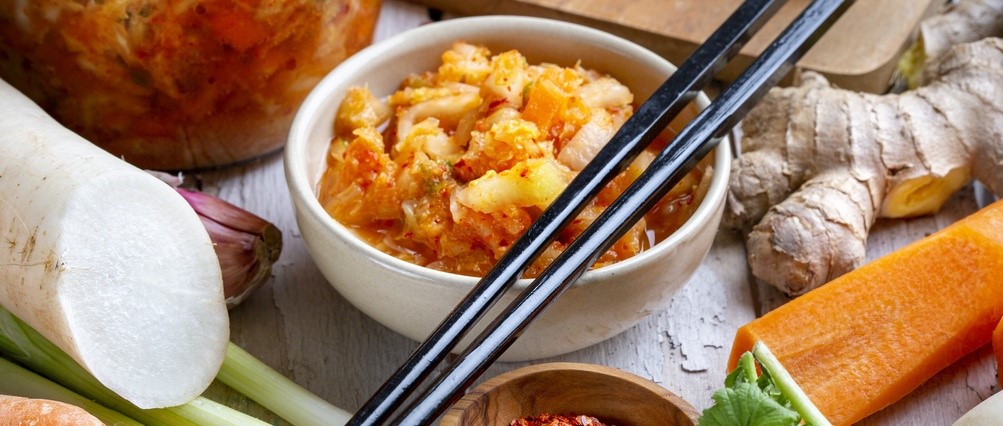
Kimchi y chucrut: ¿Cuáles son los beneficios de consumir alimentos fermentados?
Revisado por pares por Dr Krishna Vakharia, MRCGPÚltima actualización por Amberley DavisLast updated 12 Oct 2023
Cumple con las directrices editoriales
- DescargarDescargar
- Compartir
- Language
- Discusión
- Versión en audio
- Add to preferred sources on Google
TikTok e Instagram están llenos de influencers que afirman que todo tipo de alimentos son superalimentos, algunos de los cuales ni siquiera son saludables, y mucho menos super. Pero cuando se trata de kimchi y chucrut, la investigación sugiere que estos alimentos fermentados pueden en realidad contribuir a un sistema digestivo saludable. ¿Pero por qué?
En este artículo:
Video picks for Vitaminas y suplementos
Continúa leyendo abajo
What are fermented foods?
Long before we had fridges, fermentation was used to preserve goods to give them a longer life. Fermentation is when bacteria and yeast - microorganisms - break down carbohydrates such as starch or sugar and turns them into alcohol or acids. This acts as a natural preservative and gives the foods a stronger, tangy taste. Fermentation also creates good bacterias, which help to promote a healthy gut.
People across the world ferment foods. Kimchi is a traditional, slightly spicy Korean dish made from fermented vegetables. Usually, the ingredients include raw cabbage, daikon radish, carrots, garlic, ginger, and gochugaru - a Korean chilli. The mix is then lacto-fermented in brine, which is salted water. The water is salty enough to kill off harmful bacterias, leaving behind the good bacteria - in this case, lactobacillus organisms. Kimchi is usually eaten as a side dish to a meal.
Sauerkraut is a similar European dish made from cabbage and other vegetables, such as carrots. It is popular in Germany, but it is also a traditional dish in other eastern European countries including Poland and Ukraine. The vegetables are fermented in the same way as Kimchi, using salted water. It is eaten in a similar way too, often as a side dish to make a meal more interesting.
Why are kimchi and sauerkraut healthy?
Volver al contenidoReema Patel, a registered dietitian at Dietitian Fit, explains that these dishes are healthy for a number of reasons. Firstly, they are made from vegetables - typically cabbage, but can also contain onions, carrots, radish, as well as garlic and ginger. She says: "All of these are great for our health and provide a range of nutrients, such as Vitamins A, B, C, and K, as well as being a good source of fibra."
Fermented foods are also useful because they help provide a spectrum of probióticos. "Probiotics are the healthy bacteria that are found in our body, especially our gut. These help our immune function, salud mental, digestion of foods, and so much more,"
Patel says.
The body is home to trillions of microorganisms, including bacteria, known as the microbiome. Probióticos are living microorganisms that are thought to boost your microbiome's diversity by introducing bacteria that can help promote healthy digestion and immunity and keep bad bacteria at bay.
The gut microbiome has been linked to having an affect on our health - including behaviour, mood, appetite, immunity, and weight - as well as having anti-inflammatory properties, which can reduce the risk of health issues such as diabetes tipo 2 and high blood pressure.
Research has also linked the gut microbiome to mental health. This is because the brain and gastrointestinal system are connected by the gut-brain axis - a term for the communication network that links the pair1.
Some studies suggest fermented foods like kimchi can improve symptoms of síndrome del intestino irritable and help with digestive issues such as acidez, hinchazón y reflujo2. This may be because it is high in fibre and contains lactic acid.
Research suggests that fermented foods may also help to reduce the risk of cancer3. However, other studies have linked the high salt content of fermented foods such as kimchi to stomach cancer4.
Continúa leyendo abajo
Are there any downsides to fermented foods?
Volver al contenidoFermented foods like kimchi and sauerkraut may offer healthy benefits, but they may not be suitable for everyone. Firstly, the process of fermentation in brine means these foods are often quite salty. "We need to keep in mind that kimchi can be high in sodium, so it is important to include it as part of an overall balanced and varied diet in moderation," says Patel.
Also, fermented foods are high in substances called amines and people who are sensitive to these may experience headaches and other issues after eating them5.
However, there is a significant body of research to suggest that fermented foods can help to boost your health when eaten as part of a balanced diet.
Best ways to eat kimchi and sauerkraut
Volver al contenidoKimchi is often eaten as a side dish, but it can also be added to stews, soups or dumplings. It is delicious served alongside cooked meats, fish or rice dishes. A popular way to eat sauerkraut is alongside meat, such as German sausage, and potatoes.
For a healthy option, try vegetarian sausages, lean or low-salt sausages or look for nitrate-free meat. Nitrates, often found in processed meats to preserve the food for longer, have been linked to cancer6.
Both kimchi and sauerkraut are versatile dishes and can be eaten however you like, or as a healthy snack.
Continúa leyendo abajo
Lectura adicional
Volver al contenidoClapp et al: Gut microbiota’s effect on mental health: The gut-brain axis.
Sehadet-Tasdemir et al: An insight into the anti-cancer effects of fermented foods: A review.
Hong-Nei Nan et al: Kimchi and soybean pastes are risk factors of gastric cancer.
Skowron et al:Two Faces of Fermented Foods—The Benefits and Threats of Its Consumption.
An insight into the anticancer effects of fermented foods: A review.
Patient picks for Vitaminas y suplementos

Dieta y nutrición
Can kombucha boost your health?
Kombucha - once a niche health drink - has become a mainstream staple, thanks to its unique combination of hydration, flavour and fizz. But beyond its distinctive taste, find out if the health benefits of kombucha live up to its reputation.
por Victoria Raw
Dieta y nutrición
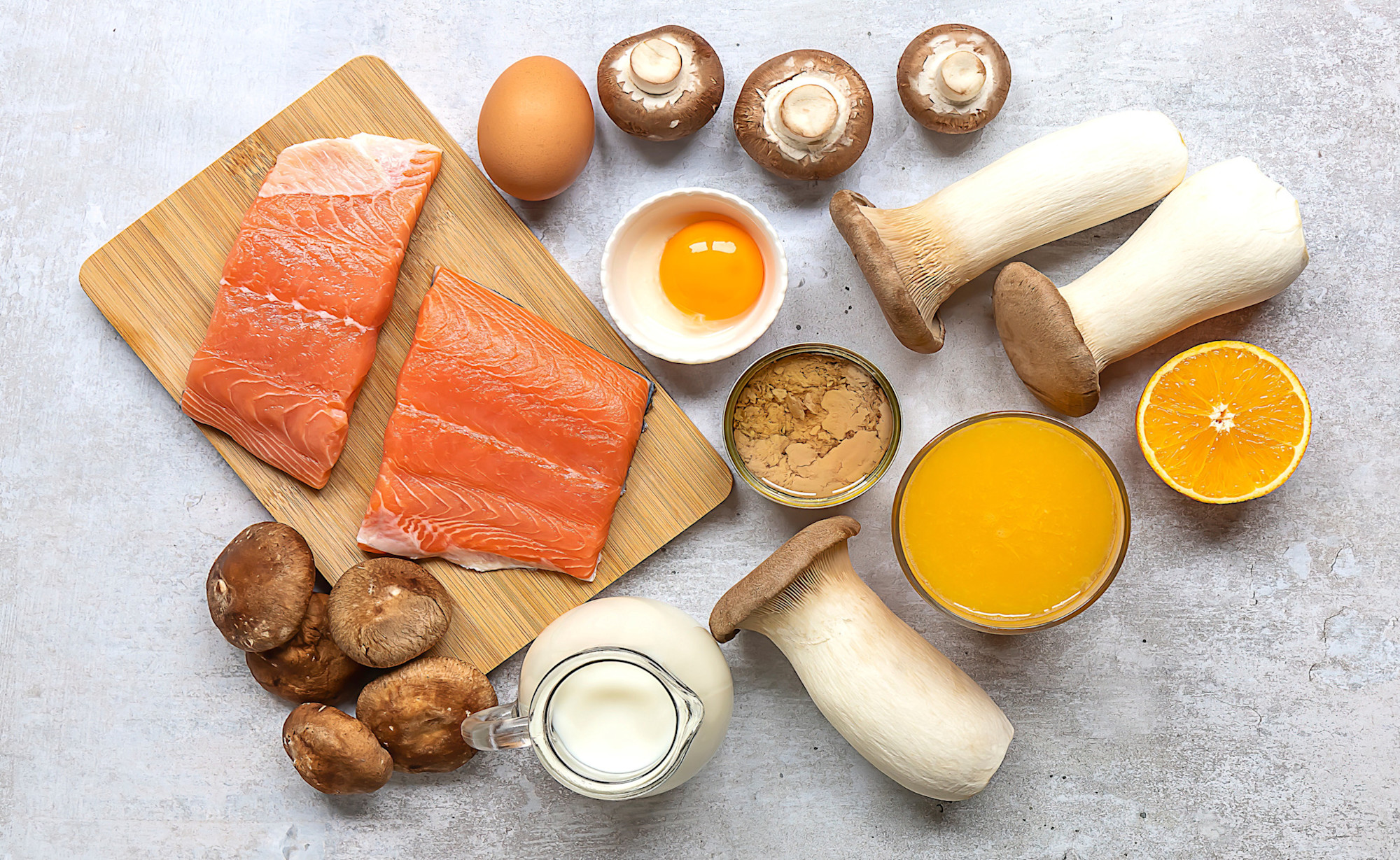
10 alimentos cotidianos ricos en vitamina D
La vitamina D desempeña un papel esencial en la salud ósea, la inmunidad y el estado de ánimo, pero muchas personas en el Reino Unido no obtienen suficiente, especialmente durante los meses más oscuros. Aunque la luz solar es la principal fuente, ciertos alimentos también pueden ayudar a aumentar tus niveles de forma natural. En este artículo, exploramos alimentos ricos en vitamina D que quizás no esperes y cómo incluirlos en tu dieta.
por Josh Alderman
Continúa leyendo abajo
About the author

Lydia Smith
Feature writer
BA, MA, MSc
Lydia Smith is an award-winning journalist and feature writer who has written extensively on women's health and mental health. She is currently studying for an MSc in psychology.
About the reviewerView full bio

Dr Krishna Vakharia, MRCGP
Chief Medical Officer for Health, Optum UK
MBChB, MRCGP(2013), BMedSci (hons), DFSRH, DRCOG, PGDipDerm (Distn)
La Dra. Krishna Vakharia es una médica general del NHS. También es examinadora habitual del Diploma de Posgrado en Dermatología Práctica en la Universidad de Cardiff, además de ser la Directora Médica de salud en Optum UK.
Historial del artículo
La información en esta página es revisada por pares por clínicos calificados.
12 Oct 2023 | Última versión
4 Jul 2023 | Publicado originalmente
Escrito por:
Lydia Smith

Pregunta, comparte, conecta.
Navega por discusiones, haz preguntas y comparte experiencias en cientos de temas de salud.

¿Te sientes mal?
Evalúa tus síntomas en línea de forma gratuita
Suscríbete al boletín de Patient
Tu dosis semanal de consejos de salud claros y confiables, escritos para ayudarte a sentirte informado, seguro y en control.
By subscribing you accept our Política de Privacidad. Puedes darte de baja en cualquier momento. Nunca vendemos tus datos.