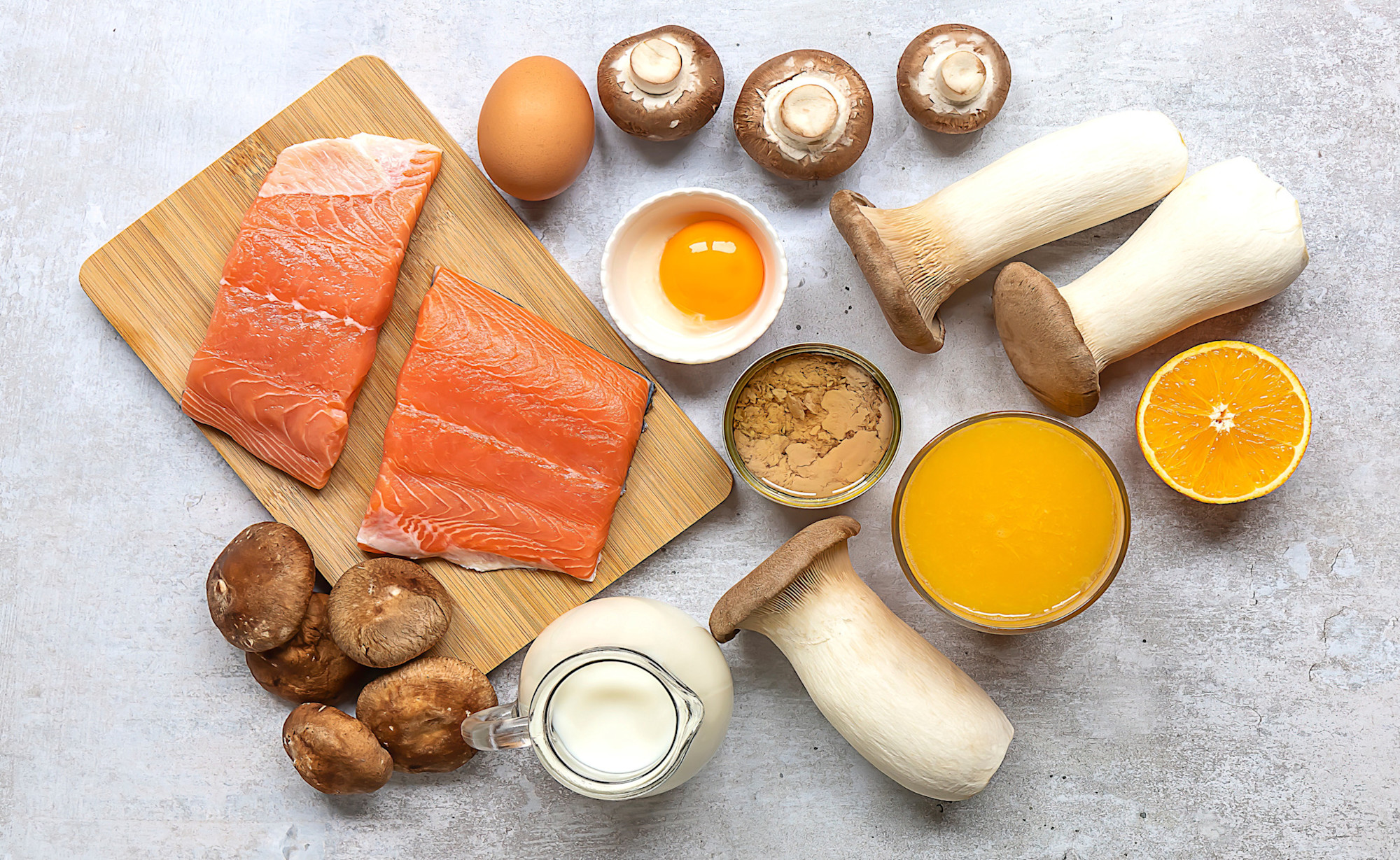
10 alimentos cotidianos ricos en vitamina D
Revisado por pares por Dr Colin Tidy, MRCGPEscrito por Josh AldermanPublicado originalmente 29 Oct 2025
Cumple con las directrices editoriales
- DescargarDescargar
- Compartir
- Language
- Discusión
- Versión en audio
- Agregar a fuentes preferidas en Google
Vitamin D plays an essential role in bone health, immunity, and mood, yet many people in the UK don’t get enough, especially during the darker months.
While sunlight is the main source, certain foods can also help to boost your levels naturally. In this article, we explore vitamin D foods you might not expect and how to include them in your diet.
¿Por qué necesitamos vitamina D?
Vitamin D helps the body absorb calcium and phosphate, nutrients that are vital for strong bones, teeth, and muscles. A deficiencia can cause fatigue, low mood, weakened immunity, and, in severe cases, bone problems such as rickets or osteoporosis.
Since the body produces vitamin D when the skin is exposed to sunlight, some people may be deficient during the autumn and winter months.
To bridge that seasonal gap, experts recommend adults consider a daily 10 micrograms (400 International Units) supplement from October through March to maintain healthy levels of this essential vitamin.¹
Alongside your daily supplement, it’s a good idea to boost your vitamin D intake through food. There are plenty of everyday sources that you might already know of - and a few that might even surprise you.
10 foods high in vitamin D
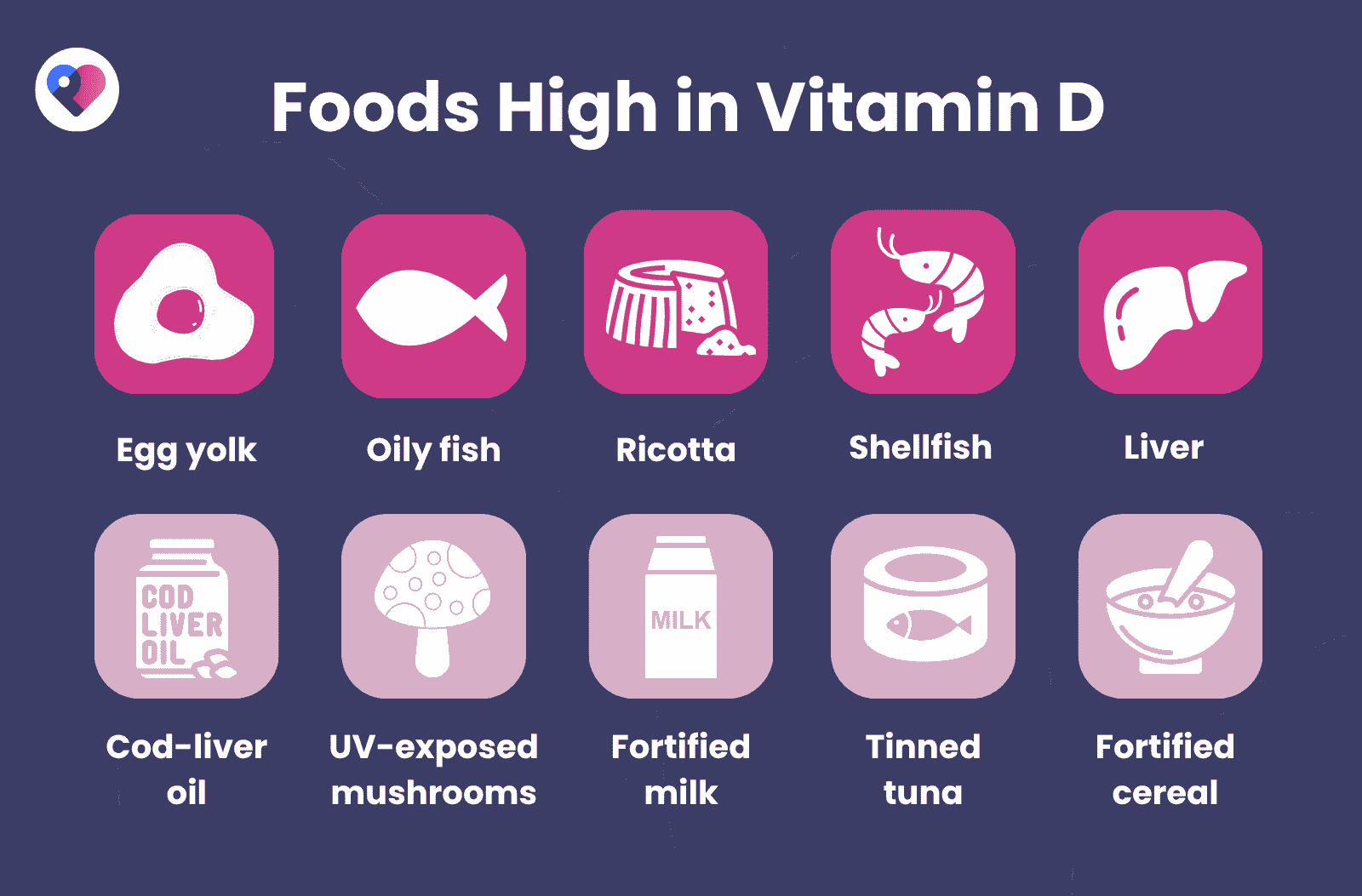
© Paciente / Heather Ainsworth
Graphic: Heather Ainsworth
Everyday foods high in vitamin D
1. Oily fish
Oily fish, are among the richest natural sources of vitamin D. Just one serving of salmon or mackerel can provide most of your daily requirement.
Sardines, whether fresh or canned, are another excellent option and supply calcium and omega-3 fatty acids.
2. Egg yolks
Eggs are a convenient and versatile way to get more vitamin D. The yolk contains most of the nutrient, so eating whole eggs rather than just the whites is best.
Vitamin D levels can vary depending on how the hens were raised, and eggs from free-range or outdoor-reared hens tend to contain more.
3. Fortified foods
In the UK, many everyday foods are fortified with vitamin D, meaning it is added during production. Common examples include:
Cereales para el desayuno.
Margarine and spreads.
Some plant-based milks such as soya, oat, or almond.
Fortified orange juice.
Fortified foods are particularly useful for vegetarians, vegans, or anyone who does not eat fish. Always check the label to see how much vitamin D a product contains.
4. Mushrooms exposed to sunlight
Most mushrooms contain very little vitamin D unless they have been exposed to UV light, which increases their vitamin D2 content. Look for labels that say “UV-exposed” or “vitamin D enriched”.
Leaving ordinary mushrooms on a sunny windowsill for an hour before cooking can slightly boost their vitamin D levels.
5. Liver
Beef and lamb liver are rich in several nutrients, including vitamin D, iron, and vitamin A. However, because they are high in vitamin A, they should be eaten in moderation, especially by people who are pregnant, as too much vitamin A can be harmful to the baby.
6. Cod liver oil
Cod liver oil has long been a popular supplement in the UK and is still one of the richest natural sources of vitamin D.
Just one teaspoon can give you your entire daily dose. However, because it’s also high in vitamin A, it’s best to follow the recommended dosage and avoid taking it alongside other vitamin A supplements.
7. Tinned tuna
Fresh tuna loses much of its vitamin D during cooking, but tinned tuna retains more of it. It is a convenient cupboard staple that can be added to sandwiches, salads, or pasta dishes.
Choose tuna canned in spring water rather than oil for a lighter option.
8. Cheese
Some types of cheese, particularly ricotta, contain small amounts of vitamin D, and when combined with other foods high in vitamin D, can contribute to your overall intake.
Cheese also provides calcium and protein, which support bone and muscle health.
9. Shellfish
Prawns, and oysters contain modest amounts of vitamin D, along with protein, zinc, and vitamin B12. They are also lower in fat than other animal sources, making them a healthy addition to a balanced diet.
10. Fortified plant-based alternatives
For those following a vegan diet, fortified plant-based milks, yoghurts, and spreads are among the most reliable vitamin D foods.
They usually contain vitamin D2, though some brands now add D3 derived from lichen2, which is suitable for vegans and thought to be more effective.
Getting enough vitamin D
It can be difficult to meet your vitamin D needs through food alone, even with a varied diet. This is why supplementation is sometimes recommended, particularly during the winter months or for people at higher risk of deficiency, including those who rarely go outdoors or have darker skin tones.
If you are unsure whether you need a supplement, speak to your doctor or pharmacist. They may recommend a simple blood test to check your levels.
Resumen
Although sunlight is the main source of vitamin D, certain foods high in vitamin D, such as oily fish, fortified products, and eggs, can make a valuable contribution.
For most people, combining these foods with a daily supplement during the winter offers the best protection against deficiency. Always make sure to stick to the recommended intake to avoid toxicidad por vitamina D.
Keeping your vitamin D levels healthy supports not only bones and muscles but also your immune system and overall wellbeing.
Lectura adicional
Selecciones del paciente para Vitaminas y suplementos
Salud de los mayores
Los mejores suplementos antienvejecimiento para tu salud
El término antienvejecimiento está escrito en muchos envases de cremas de belleza y otros productos para el cuidado de la piel. Pero, ¿qué significa antienvejecimiento dentro del cuerpo? Aquí, va más allá de la apariencia de las líneas de nuestro rostro, hacia un envejecimiento interno saludable. Esto significa cuán bien nuestras células y órganos se mantienen saludables y son capaces de combatir el deterioro y las enfermedades a medida que envejecemos, para que podamos vivir felices el mayor tiempo posible. Exploramos los suplementos antienvejecimiento que ayudan a nuestros cuerpos a lograr esto, según los expertos.
por Lawrence Higgins
Diabetes
¿Puede el consumo de suplementos ayudar a controlar la diabetes?
Según Diabetes UK, algunas personas con diabetes creen que ciertas vitaminas y suplementos pueden ayudar a controlar sus niveles de azúcar en sangre. Aunque no deben ser un sustituto del tratamiento convencional, aquí hay un vistazo a algunos de los suplementos más comúnmente utilizados y sus supuestos beneficios.
por Victoria Raw
Sobre el autorVer biografía completa

Josh Alderman
Ejecutiva de SEO
Licenciatura (Hons) en Medios y Periodismo Impreso
Josh es un ejecutivo de SEO en Patient con más de 4 años de experiencia trabajando en el ámbito de la salud.
Acerca del revisorVer biografía completa

Dr Colin Tidy, MRCGP
Médico General, Autor Médico
MBBS, MRCGP, MRCP (Paediatrics), DCH
El Dr. Colin Tidy es un médico del NHS, con sede en Oxfordshire.
Historial del artículo
La información en esta página es revisada por pares por clínicos calificados.
Artículo también disponible en Inglés, Alemán, Español, Francés, Italiano, Portugués, Hindi, Hebreo, Árabe, y Sueco.
Siguiente revisión prevista: 29 de octubre de 2028
29 Oct 2025 | Publicado originalmente
Escrito por:
Josh AldermanRevisado por pares por
Dr Colin Tidy, MRCGP

Pregunta, comparte, conecta.
Navega por discusiones, haz preguntas y comparte experiencias en cientos de temas de salud.

¿Te sientes mal?
Evalúa tus síntomas en línea de forma gratuita
Suscríbete al boletín de Patient
Tu dosis semanal de consejos de salud claros y confiables, escritos para ayudarte a sentirte informado, seguro y en control.
Al suscribirte aceptas nuestros Política de Privacidad. Puedes darte de baja en cualquier momento. Nunca vendemos tus datos.
Más sobre dieta y nutrición
- 7 recetas de ensaladas ligeras para días calurosos de verano
- ¿Realmente ayuda el jugo de aloe vera a la salud intestinal?
- ActualizadoCómo la dieta afecta a tu corazón
- ActualizadoCómo desarrollar músculo con una dieta vegana
- Cómo comer reconfortante de manera saludable en invierno
- ¿El café de hongos es realmente bueno para ti?
- Alimentación consciente: cómo desacelerar y disfrutar de tu comida
- Videos de nutrición y dieta
- Señales de que no estás bebiendo suficiente agua
- La dieta de la longevidad - ¿puede añadir años a tu vida?
- ¿Pensando en volverte vegano? Aquí te mostramos cómo hacerlo de manera saludable
- Toxicidad por vitamina D: 5 señales de que has tomado demasiado
- ¿Qué es la ashwagandha? Beneficios para la salud, usos y efectos secundarios
- ¿Qué es la colina? El nutriente para tu memoria, músculos y más
- ¿Cuál es la mejor dieta para la enfermedad de Crohn?
- ¿Qué es la dieta coreana?
- ¿Cuál es tu microbioma intestinal?
- ¿Cuál es la diferencia entre las dietas veganas y vegetarianas?
- Héroes de los granos enteros: ¿Por qué comer granos ancestrales?
- ¿Por qué experimentamos síntomas de abstinencia de azúcar?