Picazón
Revisado por pares por Dr Doug McKechnie, MRCGPÚltima actualización por Dr Rosalyn Adleman, MRCGPÚltima actualización 27 Apr 2025
Cumple con las directrices editoriales
- DescargarDescargar
- Compartir
- Language
- Discusión
- Versión en audio
Este folleto ofrece una breve descripción del picor cuando no se puede encontrar una causa para el mismo. Varios otros folletos discuten condiciones donde se conoce la causa del picor, como el eccema o la urticaria.
En este artículo:
Videos seleccionados para Otros signos y síntomas
Continúa leyendo abajo
What causes itching?
Itching (the medical term is pruritus) is a symptom that can be caused by a large number of conditions.
Skin condition. Sometimes itching is caused by a skin condition, such as eczema o hives. You would usually have a rash to see if this is the case. Scabies is a fairly common cause of itching. It is caused by mites and you will see a rash.
General illness. Other times, itching is caused by a more general illness, such as ictericia o enfermedad renal crónica.
Embarazo. Itching is also common in pregnancy.
Itchy bottom and itchy vulva. Sometimes you itch in a specific place. Itch of the back passage (anus) and itch of the external sex organs of a woman (her vulva) are common, for example, and have various causes. These conditions are also known as pruritus ani and pruritus vulvae. See separate leaflets called Itchy bottom (Pruritus ani) y Itchy vulva (Pruritus vulvae) para más detalles.
Unknown cause. However, in many cases no cause is found for a skin itch. This article deals only with itch that is reportado due to any underlying skin or medical condition. This is called itch of unknown cause.
Piel seca. One possible factor is that in some people with itch of unknown cause, their skin may be drier than average, which may contribute to the itch. Itch of unknown cause is most common in older people whose skin tends to be drier than that of younger people. Itch tends to be worse at night and may be made worse by bathing. Any part of the skin may be affected.
Itching can occur over your entire body or just in one area. It can be very unpleasant and uncomfortable.
If you are not sure why you are itching, you should see your doctor. If no cause for an itch is obvious, then your doctor may suggest some blood tests to see if there is an underlying cause for the itch. However, in many cases, the tests are normal and the cause remains a mystery.
Treatment for itching
Volver al contenidoThe following may help to improve your itching:
Keep your nails short to limit any damage done to your skin by scratching. As much as possible try not to scratch. It is thought that scratching can make itch worse and you may get into an 'itch-scratch' vicious cycle. (That is, you itch more because you scratch, so you scratch more because you itch more ... and so on.)
Keep cool as much as possible. You might find having cool (or lukewarm) baths or showers soothing.
Avoid irritants such as soaps, bubble bath and detergents. Cotton clothes are usually preferable to woollen clothes.
Hidratantes (emolientes). Dry skin may be making the itch worse. Moisturisers are useful to keep your skin supple and moist.
They can be applied once a day or several times a day if your skin becomes very dry. Water and soap dry out the skin as they wash away the natural skin oils.
Therefore, the most important time to use moisturisers is after a bath or shower. Moisturisers work by providing a replacement for these body oils and keeping the skin moist.
Numerous moisturisers are available as creams, ointments and bath/shower additives, and also to use instead of soap. It may be worth trying out a few to see which is the most suitable. These can be bought from a pharmacy. Use them liberally, as often as needed.
Antihistamine medication is sometimes tried. Antihistamínicos are useful for some skin conditions that cause itch such as urticaria. However, they do not help with all types of itch. For itch of unknown cause they may have little effect. Some antihistamines also tend to make you drowsy. However, these types of antihistamines may be worth trying at bedtime if itch is troublesome at night. An example is chlorphenamine. Your doctor or pharmacist can advise you further and these can be bought from a pharmacy.
Relaxation techniques can be beneficial for some people. A brain-training treatment called terapia cognitivo-conductual (TCC) may also be helpful. This helps you to break the itch-scratch cycle.
Certain antidepressants. These may occasionally be prescribed when itching is very distressing. They work by helping to tone down the chemicals in the brain which make you feel an itch and want to scratch.
The amount of discomfort from itch can vary from person to person, and in its frequency in the same person. A referral to a skin specialist may be advised if your itching persists or is severe. There are different treatments which are being investigated in clinical trials which may be available in the future.
Selecciones del paciente para Otros signos y síntomas
Signos y síntomas
Náuseas y vómitos
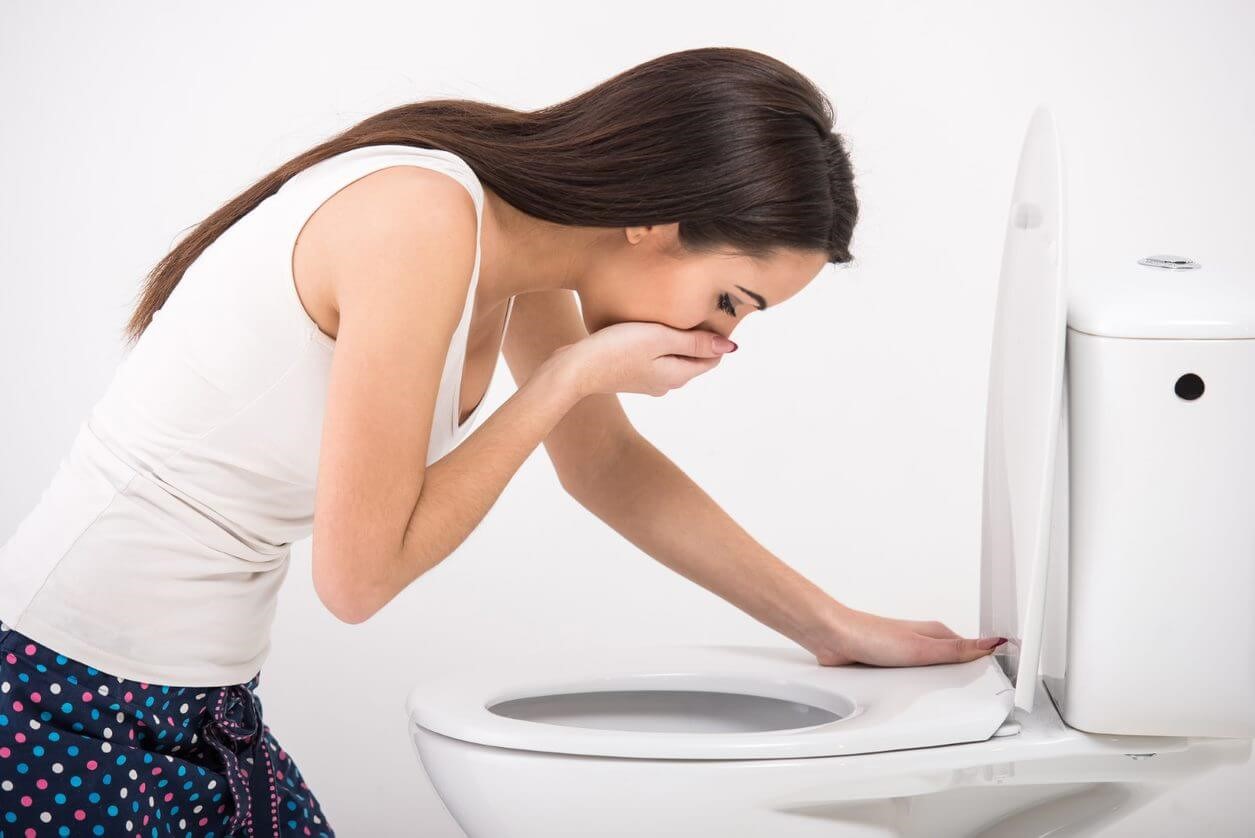
La náusea es la sensación de querer vomitar, mientras que el vómito es estar enfermo o "devolver". Estos síntomas comunes a menudo son causados por problemas a corto plazo como infecciones estomacales, intoxicación alimentaria, embarazo o mareo por movimiento. La mayoría de los casos se resuelven por sí solos, pero los síntomas persistentes o severos pueden necesitar atención médica. Este folleto explica las causas comunes, consejos de autocuidado, opciones de tratamiento y cuándo consultar a un médico.
por el Dr. Doug McKechnie, MRCGP

Signos y síntomas
Boca seca
La boca seca tiene varias causas. Medidas simples como beber sorbos frecuentes de agua, chupar cubitos de hielo y masticar chicle sin azúcar a menudo ayudarán. Pueden ser todo lo que se necesita en muchos casos. A veces se utiliza saliva artificial o medicamentos para estimular las glándulas salivales.
por el Dr. Doug McKechnie, MRCGP
Lecturas adicionales y referencias
- Reamy BV, Bunt CW, Fletcher S; Un enfoque diagnóstico para el prurito. Am Fam Physician. 2011 Jul 15;84(2):195-202.
- Sanders KM, Nattkemper LA, Yosipovitch G; Avances en la comprensión del picor y el rascado: una nueva era de tratamientos dirigidos. F1000Res. 22 de agosto de 2016;5. pii: F1000 Faculty Rev-2042. doi: 10.12688/f1000research.8659.1. eCollection 2016.
- Prurito (PDQ(R)): Versión para profesionales de la salud.
- Picazón - generalizada; NICE CKS, enero 2024 (acceso solo en el Reino Unido)
Continúa leyendo abajo
Historial del artículo
La información en esta página está escrita y revisada por pares por clínicos calificados.
Next review due: 26 Apr 2028
27 Apr 2025 | Última versión

Pregunta, comparte, conecta.
Navega por discusiones, haz preguntas y comparte experiencias en cientos de temas de salud.

¿Te sientes mal?
Evalúa tus síntomas en línea de forma gratuita
Suscríbete al boletín de Patient
Tu dosis semanal de consejos de salud claros y confiables, escritos para ayudarte a sentirte informado, seguro y en control.
Al suscribirte aceptas nuestros Política de Privacidad. Puedes darte de baja en cualquier momento. Nunca vendemos tus datos.