Convulsión febril
Revisado por pares por Dr Colin Tidy, MRCGPÚltima actualización por Dr Philippa Vincent, MRCGPLast updated 9 Jun 2023
Cumple con las directrices editoriales
- DescargarDescargar
- Compartir
- Language
- Discusión
- Versión en audio
- Add to preferred sources on Google
En esta serie:Fiebre en niños
Una convulsión febril es una convulsión que ocurre en algunos niños con una temperatura alta (fiebre). La gran mayoría de las convulsiones febriles no son graves. La mayoría ocurren con enfermedades comunes leves. La recuperación completa sin daño permanente es lo habitual. El tratamiento principal está dirigido a la enfermedad que causó la fiebre.
At a glance
A febrile seizure is a fit that can happen when a child has a high temperature.
They usually occur in children aged 12 to 18 months, but can affect children up to age six.
Symptoms include the child's body becoming stiff and twitching, and them becoming unconscious.
Call an ambulance if a seizure lasts more than five minutes.
If it is your child's first seizure or they are under 18 months old, contact a doctor urgently.
Febrile seizures are not usually dangerous and children typically make a full recovery.
A febrile seizure is not a type of epilepsy.
En este artículo:
Video picks for Infecciones
Continúa leyendo abajo
What causes a febrile seizure?
A febrile seizure is sometimes called a febrile convulsion. Any illness that causes a high temperature (fever) can cause a febrile seizure. Most occur with common illnesses such as recurrentes, amigdalitis, resfriados, gripe and other viral infections. Serious infections, such as neumonía, kidney infections, meningitis, etc, are much less common causes.
Who has febrile seizures?
Volver al contenidoBetween 2 and 5 in 100 children have a febrile seizure sometime before their 6th birthday. They most commonly occur between the ages of 12 months and 18 months. They are rare in children aged under 3 months and over the age of 6 years.
Febrile seizures are more common in children who have had a previous febrile seizure (3-5 out of 10 children who have had one febrile seizure will go on to have another one). They are also more common in children with a family history of febrile seizures (another family member having had them) or a family history of epilepsy. They are more common in children with a neurological condition such as cerebral palsy. They also seem to be more common in children who were born prematurely or those whose mothers smoked around the time of birth.
Febrile seizures tend to occur when the temperature is above 38 degrees Celsius. However, they are not directly related to the height of the fever - they are no more likely to occur at 40 degrees Celsius in a child who is prone to them than they are at 38.1 degrees Celsius.
82 out of 100 febrile seizures are caused by viral illnesses, particularly influenzae (the flu virus), rhinoviruses (a cold virus) and enteroviruses (the most common group of viruses which cause lots of minor illnesses such as hand, foot and mouth disease).
11 out of 100 febrile seizures occur within 2 weeks of a vaccination. Fevers are common after vaccines in children. As most vaccines protect against illnesses that can also cause fever (and febrile seizures) as well as much more serious consequences, this is not a reason to avoid vaccination. Children prone to febrile seizures should still be vaccinated as normal.
Continúa leyendo abajo
Febrile seizure symptoms
Volver al contenidoFebrile seizures are classified into three types:
Simple febrile seizure
These are the most common type, and occur in about 15 out of 20 cases. They most often occur early in the illness when the child's temperature is starting to rise. Symptoms include:
The child may look hot and flushed.
Eyes may appear to roll backwards; they may appear dazed.
The body may go stiff and twitch or shake (convulse).
The child becomes unconscious and unresponsive.
Some children may wet themselves during the febrile seizure.
It does not usually last long. It may only be a few seconds and it is unusual for it to last more than five minutes. The child may be sleepy for some minutes afterwards.
Within an hour or so the child will usually appear a lot better. This happens when their temperature has come down. Another feature of a simple febrile seizure is that it does not recur within 24 hours.
Complex febrile seizure
This is less common and occurs in about 4 out of 20 cases. It is similar to a simple febrile seizure but has one or more of the following features:
The seizure lasts more than 15 minutes; y/o
The seizure recurs within 24 hours; y/o
The child is not fully recovered within one hour. This does not mean the seizure lasts more than an hour but that it takes more than an hour for the child to look and behave more like their normal self; y/o
The seizure has focal (used to be called partial) features. This means that rather than a generalised twitch or shaking, only a part of the body may shake - for example, just one arm or just one leg.
Febrile status epilepticus
This occurs in less than 1 out of 20 cases and means the febrile seizure lasts for longer than 30 minutes.
What first aid should I do for a febrile seizure?
Volver al contenidoNote the time it started.
Cushion the child's head as best as possible with hands or soft material.
Make sure there is nothing nearby that can cause harm or move the child away from anything that could cause harm.
Do not put anything into their mouth or shake the child.
When the seizure finishes, put the child into the recovery position.
When the seizure stops, try to lower the child's temperature to make them more comfortable. To do this, take off their clothes (if the room is warm).
When the child has recovered enough to swallow, give a drink and some paracetamol o ibuprofeno.
Continúa leyendo abajo
What should happen after immediate first aid?
Volver al contenidoCall an ambulance if a seizure lasts more than five minutes (this includes small twitching movements, even if large jerking movements have stopped).
Cuándo ver a un médico
You should also contact a doctor urgently if:
This is the first time the child has had a seizure.
The child is less than 18 months old.
The child does not improve quickly once a short seizure is over.
Another seizure starts soon after the first one stops.
There are focal signs during the seizure (eg, one arm or leg jerking instead of the whole body).
The child has difficulty breathing.
The child was not fully conscious before the seizure or one hour afterwards.
The child has recently taken antibiotics (these might mask symptoms of a more serious infection such as meningitis).
You are worried the child may have a serious illness (such as meningitis) as the cause of the high temperature (fever). See the separate leaflet called Fever in Children (High Temperature) for details of symptoms to look out for.
No treatment is needed for the seizure itself if it stops within five minutes. However, treatment may be needed for the infection causing the fever if it is a bacterial infection (82% of febrile seizures are caused by viral infections and do not need specific treatment).
Sometimes the seizure lasts longer than 5 minutes and an ambulance should be called. A healthcare professional may give a medicine to stop the seizure. For example, they may use a medicine called diazepam via the child's back passage (rectum) or a medicine called midazolam into the side of the mouth.
These medicines are absorbed quickly, directly into the bloodstream, from within the rectum or mouth, and stop a seizure. Sometimes the parents of children who are prone to recurrent febrile seizures are taught how to use one of these medicines. They are then given a supply to have in case a further febrile seizure occurs.
It is important to assess why a child has had the fever causing the febrile seizure. Often this is obvious as they have had a cold or flu like symptoms or are known to have an ear infection or urinary tract infection. If the cause is not obvious then investigations will need to be done in the emergency department which may include blood tests or x-rays (although these are not recommended routinely in febrile seizures as they are unlikely to change management). Although meningitis is an unusual cause of febrile seizures (as they are common and meningitis is uncommon), 1 in 4 children with meningitis will have a febrile seizure at the start of the illness - it is therefore important to rule this out in children where the cause is otherwise unclear. A test called a lumbar puncture (where fluid is removed from the spine and tested) may be recommended if:
A healthcare professional thinks there are signs of meningitis.
A child is between 6 and 18 months of age and has not had the Hib vaccine to protect against meningitis.
A child has febrile status epilepticus.
A child under 12 months of age has a complex febrile seizure.
Is a febrile seizure dangerous?
Volver al contenidoAlthough alarming, a febrile seizure in itself is not usually dangerous. Full recovery is usual. Most illnesses which cause temperatura alta (fiebre) and febrile convulsions are the common tos, colds and viral infections which are not usually serious.
Can febrile seizures be prevented?
Volver al contenidoIt may seem logical that keeping a child's temperature down during a feverish illness it may prevent a febrile seizure. However, there is little scientific evidence to prove that this is so.
However, a fever may make a child feel uncomfortable and irritable. The following are things that can be done to help bring the temperature down and make a child feel more comfortable:
Give paracetamol (or ibuprofen if the child is over 6 months) to lower a temperature. paracetamol can be bought in liquid form, or melt-in-the-mouth tablets, for children. It comes in various brand names. The dose for each age is given with the medicine packet. Nota: paracetamol does not treat the cause of the fever. It merely helps to ease discomfort. The fever will usually recur when the medication is wearing off. Paracetamol does not need to be used if the child is comfortable and not distressed by the fever, aches or pains.
Keep the child very lightly dressed, or take all their clothes off if the room is warm.
Give lots of cool drinks.
¿Volverá a suceder?
Volver al contenidoOnly one seizure occurs in most cases. However, a second seizure may occur during a future feverish illness in 3-5 out of 10 children. A future febrile seizure is more likely if the first occurs in a child younger than 15 months, or if there is a family history of febrile seizures in close relatives (father, mother, sister, brother).
Does a febrile seizure cause any permanent damage?
Volver al contenidoFull recovery is usual with no after-effects. One study that followed children who had a febrile seizure found that: "Children who had febrile seizures did at least as well as, if not better than, children without febrile seizures on measures of intelligence, academic achievement, behaviour and working memory."
Is a febrile seizure a type of epilepsy?
Volver al contenidoNo. Febrile seizures and epilepsy are two different conditions.
The cause of a febrile seizure is related to the feverish illness and is not due to epilepsy or any brain abnormality.
Epilepsy causes seizures without a high temperature (fever). There is a separate set of leaflets explaining epilepsy in more detail.
About 2 in 100 children who have a febrile seizure develop epilepsy in later childhood. This is very slightly higher than the chance of epilepsy developing in children who have not had a febrile seizure. This is thought to be due to a small number of children being prone to develop both epilepsy and febrile seizures. Having the febrile seizure does not cause the epilepsy but a child who is going to develop epilepsy may be more likely to have febrile seizures.
New studies suggest that children with febrile seizures are more likely to have differences in genes relating to fever response as well as in several genes affecting brain cell responses, including some genes commonly found in people with epilepsy.
Should a child who has had a febrile seizure have immunisations?
Volver al contenidoYes. Immunisations are very important for your child's health.
Patient picks for Infecciones
Salud infantil
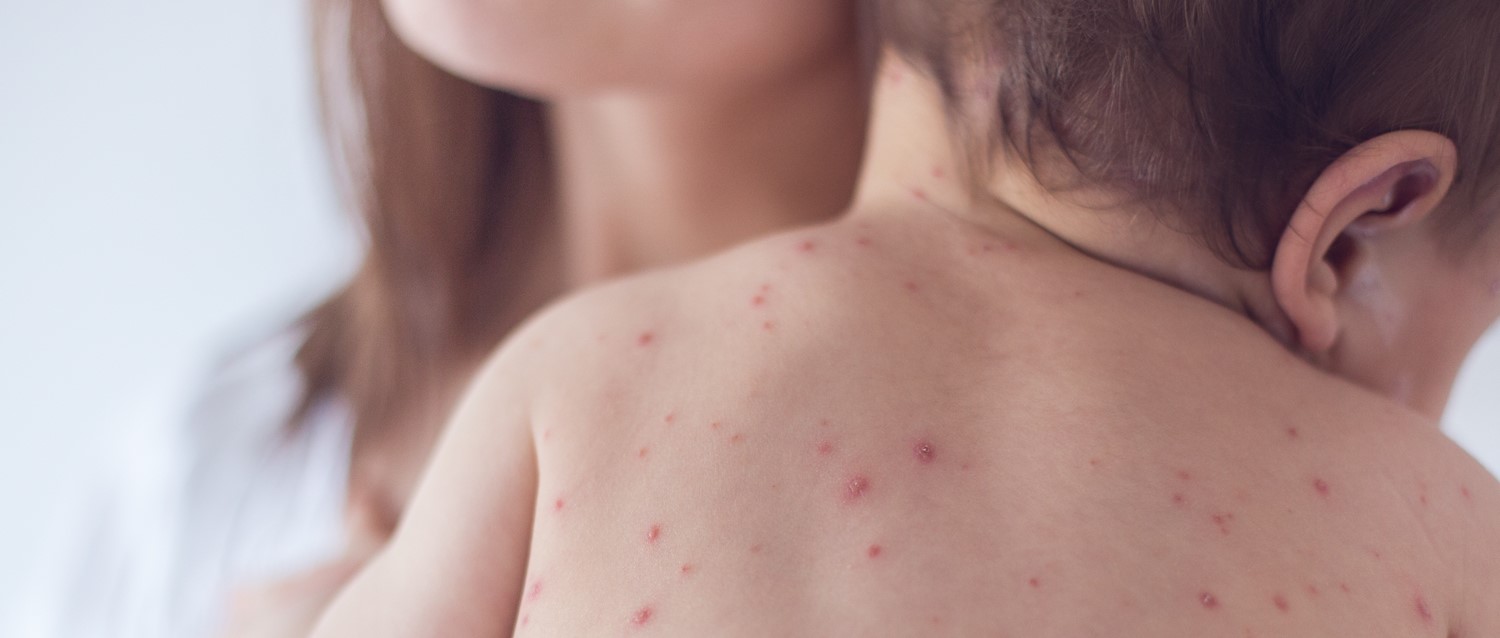
Varicela en niños
La varicela causa manchas (un sarpullido) y puede hacer que un niño se sienta generalmente mal. El tratamiento tiene como objetivo aliviar los síntomas hasta que la enfermedad desaparezca. La recuperación completa es habitual en niños menores de 12 años. Las complicaciones graves son raras, pero son más probables en niños con un sistema inmunológico deficiente, como aquellos que están en quimioterapia.
por el Dr. Colin Tidy, MRCGP
Salud infantil
Tos y resfriados en niños
La tos y los resfriados suelen ser causados por una infección con un germen llamado virus. Normalmente desaparecen por sí solos. Los medicamentos antibióticos no ayudan y pueden causar daños, como diarrea y vómitos. El paracetamol o el ibuprofeno pueden aliviar algunos de los síntomas. Asegúrese de que el niño beba suficiente líquido.
por el Dr. Doug McKechnie, MRCGP
Preguntas frecuentes
At what body temperature are febrile seizures most likely to occur?
Febrile seizures tend to happen when a child's temperature is above 38 degrees Celsius. However, the exact height of the fever doesn't directly correlate with the likelihood of a seizure; a child prone to them is no more likely to have a seizure at 40 degrees Celsius than at 38.1 degrees Celsius.
Can common illnesses cause febrile seizures?
Yes, most febrile seizures are caused by common illnesses that lead to a high temperature, such as ear infections, tonsillitis, colds, flu, and other viral infections. Less commonly, serious infections like pneumonia or meningitis can also be a cause.
What specifically should I do immediately after my child's febrile seizure stops?
Once the seizure stops, place your child into the recovery position. To help make them more comfortable, try to gently lower their temperature by taking off their clothes if the room is warm. When your child is recovered enough to swallow, give them a drink and some paracetamol or ibuprofen.
What's the difference between a 'simple' and a 'complex' febrile seizure?
A 'simple' febrile seizure is the most common type, usually lasting only a few seconds to less than five minutes, with the child recovering within an hour and not having another seizure within 24 hours. A 'complex' febrile seizure lasts longer than 15 minutes, or recurs within 24 hours, or the child isn't fully recovered within an hour, or only a part of the body shakes instead of the whole body (focal features).
Are new tests or investigations always needed after a child has a febrile seizure?
No, often the cause of the fever is obvious, such as a cold, flu, ear infection, or urinary tract infection. Investigations like blood tests or x-rays are not routinely recommended for febrile seizures if the cause is clear, as they are unlikely to change the management. However, if the cause of the fever is not obvious, further assessment might be done, potentially including tests like a lumbar puncture if there are concerns about more serious infections like meningitis.
If my child has had a febrile seizure, will it definitely happen again?
No, in most cases, only one febrile seizure occurs. However, there's a chance of a second seizure during a future feverish illness in 3-5 out of 10 children. This is more likely if the first seizure happened when the child was under 15 months old or if there's a family history of febrile seizures.
Can keeping a child's temperature down prevent a febrile seizure?
While it seems logical to try to prevent a febrile seizure by lowering a child's temperature during an illness, there is little scientific evidence to prove that this is effective in preventing a seizure. However, managing a fever with paracetamol or ibuprofen, light clothing, and cool drinks can make the child more comfortable, though paracetamol does not treat the cause of the fever itself.
Lecturas adicionales y referencias
- Offringa M, Newton R, Cozijnsen MA, et al; Prophylactic drug management for febrile seizures in children. Cochrane Database Syst Rev. 2017 Feb 22;2:CD003031. doi: 10.1002/14651858.CD003031.pub3.
- Fiebre en menores de 5 años: evaluación y manejo inicial; Guía NICE (última actualización noviembre 2021)
- Convulsión febril; NICE CKS, enero 2024 (acceso solo en el Reino Unido)
- Sawires R, Buttery J, Fahey M; A Review of Febrile Seizures: Recent Advances in Understanding of Febrile Seizure Pathophysiology and Commonly Implicated Viral Triggers. Front Pediatr. 2022 Jan 13;9:801321. doi: 10.3389/fped.2021.801321. eCollection 2021.
- Eilbert W, Chan C; Febrile seizures: A review. J Am Coll Emerg Physicians Open. 2022 Aug 23;3(4):e12769. doi: 10.1002/emp2.12769. eCollection 2022 Aug.
- Genome-wide association study of febrile seizures implicates fever response and neuronal excitability genes; Brain
Continúa leyendo abajo
About the authorView full bio

Dra. Philippa Vincent, MRCGP
Médico General, Autor Médico
MB BS, Bsc, MRCGP (2000), DCH, DFSRH, DRCOG
Dra Philippa Vincent is an NHS GP working in North London.
About the reviewerView full bio

Dr Colin Tidy, MRCGP
Médico General, Autor Médico
MBBS, MRCGP, MRCP (Paediatrics), DCH
Dr Colin Tidy is an NHS Doctor, based in Oxfordshire.
Historial del artículo
La información en esta página está escrita y revisada por pares por clínicos calificados.
Próxima revisión: 12 de mayo de 2028
9 Jun 2023 | Última versión

Pregunta, comparte, conecta.
Navega por discusiones, haz preguntas y comparte experiencias en cientos de temas de salud.

¿Te sientes mal?
Evalúa tus síntomas en línea de forma gratuita
Suscríbete al boletín de Patient
Tu dosis semanal de consejos de salud claros y confiables, escritos para ayudarte a sentirte informado, seguro y en control.
By subscribing you accept our Política de Privacidad. Puedes darte de baja en cualquier momento. Nunca vendemos tus datos.