Diafragmas y capuchones
Revisado por Dr Jacqueline Payne, FRCGPÚltima actualización por Dra. Mary Harding, MRCGPÚltima actualización 28 Nov 2018
Cumple con las directrices editoriales
- DescargarDescargar
- Compartir
- Language
- Discusión
- Ask Patient
- Versión en audio
- Agregar a fuentes preferidas en Google
Aviso sobre el contenido
Esta página no se ha revisado recientemente, por lo que es posible que haya cambiado parte de la información o que algunos enlaces externos ya no funcionen.
Diaphragms and caps are barrier methods of contraception. They are convenient but not quite as reliable as some other methods of contraception.
De un vistazo
Los diafragmas y capuchones son dispositivos de barrera en forma de cúpula que se colocan en la vagina para la anticoncepción.
Forman una barrera entre el esperma y el útero, y deben usarse con espermicida.
Un médico o enfermero ajustará el tamaño correcto y te mostrará cómo usarlo.
Their effectiveness depends on correct and consistent use.
Deben dejarse puestos durante al menos seis horas después del sexo, pero no más de 30-48 horas.
Es posible que necesites cambiar de talla si tu peso cambia significativamente o después del parto.
What are diaphragms and caps?
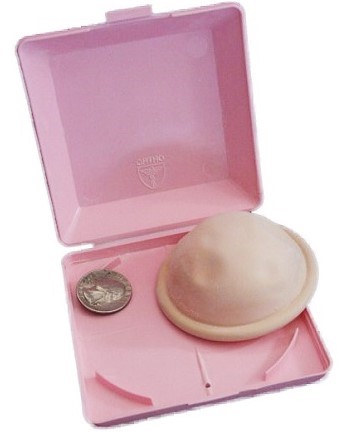
Diaphragms are dome-shaped devices. They are usually made from soft rubber or silicone. They are put into the vagina and form a barrier between sperm and the womb. There are various different types and sizes.
Caps are smaller and firmer than diaphragms, covering just the neck of the womb and used less often than diaphragms.
Contraceptive diaphragm
Contraceptive cap
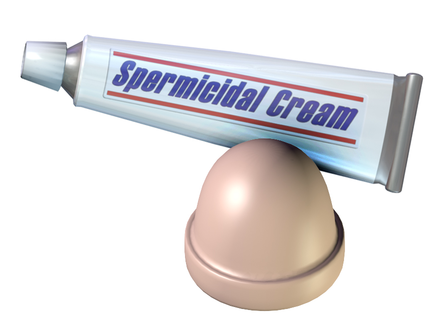
You should also use a spermicide gel each time you use a diaphragm or cap. Spermicide kills sperm. It makes diaphragms and caps more effective as contraceptives.
How effective are diaphragms and caps?
How effective diaphragms and caps are depends on how well they are used.
Perfect use means using the diaphragm or cap every time you have sex, and using it correctly. However, many women do not use them perfectly.
Effectiveness also depends on the type of device and whether you have had a baby in the past.
The following approximate numbers give an idea of how effective diaphragms and caps are in varying situations.
When no contraception is used, more than 80 out of 100 sexually active women become pregnant within one year.
Diaphragms
If used perfectly, in the first year of using a diaphragm, 6 in 100 sexually active women will become pregnant.
If used less perfectly, in the first year of using a diaphragm, 16 in 100 sexually active women will become pregnant.
Caps
If used perfectly, in the first year of using a cap, 9 in 100 sexually active women who have never had a baby will become pregnant.
If used less perfectly, in the first year of using a cap, 16 in 100 sexually active women who have never had a baby will become pregnant.
If used perfectly, in the first year of using a cap, 20 in 100 sexually active women who have already had a baby will become pregnant.
If used less perfectly, in the first year of using a cap, 32 in 100 sexually active women who have already had a baby will become pregnant.
Other methods of contraception are more reliable than this. Several other methods of contraception are more than 99% effective. In other words less than 1 sexually active woman in 100 will become pregnant whilst using them. However, some women prefer to use a diaphragm or cap.
See the separate leaflet called Contraception Methods (Birth Control) for all the possible options.
What makes a cap or a diaphragm less effective?
Using a damaged device.
Using one that doesn't cover the neck of your womb (cervix) completely.
Using one that isn't the right size.
Using one without spermicide.
Having sex three hours or more after you put it in, without using extra spermicide.
Not using extra spermicide with your diaphragm or cap every time you have sex.
Removing it too soon (less than six hours after the last time you had sex).
How do you use diaphragms and caps?
A doctor or nurse will examine you internally and advise on the correct size and shape that would suit you. They will show you how to put in and take out the diaphragm or cap. They will also show you how to use the spermicide. This must be used every time you use the diaphragm or cap. You need to be confident that you can put it in correctly over the neck of your womb (cervix), and know how much spermicide to use and how to use it.
You may be given a 'practice' diaphragm or cap by the doctor or nurse. This is for you to practise at home putting it in and out. This is reportado to be used for contraception. At a follow-up appointment the doctor or nurse will check that everything is fine, and then give you a real one for contraceptive use.
Some useful points about diaphragms and caps:
You can insert a diaphragm or cap at any time before sex. However, you need to add another dose of spermicide if you have sex more than three hours after you put it in.
It must be left in place for at least six hours after last having sex.
Do not leave a diaphragm in for more than 30 hours in total. A cap can be left in for up to 48 hours. This is to prevent the possibility of toxic shock syndrome. This is a very rare but serious type of blood poisoning.
Do not use them during your period.
Don't have a bath with the diaphragm or cap in place. The water may wash away the spermicide or move the cap out of position. Showers are fine.
Looking after a diaphragm or cap
Wash it with warm water and mild soap after use. Rinse with lots of water.
Dry gently and keep it in the box provided.
Never use detergents, boiling water or disinfectants to clean your diaphragm or cap. These can damage the material they are made from. Do not use talcum powder with them.
Check it for damage, tears, etc, before using. Hold it up to the light to check there are no holes.
Depending on how often it is used, it may need replacing every year or so.
Where can I get a diaphragm or cap?
You can get a diaphragm or cap, and advice on how to use it, from a family planning clinic or from your GP surgery. You will have an internal examination to find the right size for you.
There is a newer type of diaphragm called Caya® which you can get online or over the counter in some countries. This is a one-size only diaphragm, so it does not need to be fitted by a professional. However, you would have to pay for it, whereas the fitted ones are free on the NHS. The Faculty of Sexual and Reproductive Healthcare (FSRH) in the UK advises that it is best for women to attend a family planning service to have diaphragms fitted. This allows the best one to be chosen for each individual woman and also allows each woman to be shown personally how to use the diaphragm.
What are the advantages of diaphragms and caps?
They are safe for most women to use and do not have any serious medical risks.
You only have to use them when you have sex.
The advantage over a male condom is that you can put it into the vagina at any time before sex. (However, you may have to put in another dose of spermicide if you put it in more than three hours before sex. This is because spermicide is not effective for very long.)
What are the disadvantages of diaphragms and caps?
You have to learn how to use them properly.
Some women get bladder infections after using a diaphragm.
The spermicide and rubber may be messy and may cause some irritation of your vagina. Some women find them fiddly or unpleasant to use.
They are not as effective as many other types of contraception.
There is little evidence that they can protect against sexually transmitted infections or HIV infection.
Who should not use diaphragms or caps?
They should not be used:
If the muscles in your vagina are not firm enough to hold the diaphragm or cap in place.
If you have an unusual shape or position of the neck of your womb (cervix). The doctor or nurse will advise about this when they examine you for correct fitting.
If you are very overweight. Fitting may be difficult in this case.
If you have had a baby within the previous six weeks. This is because your insides have not had a chance to get back to normal. This means the fit will change once you are back to normal.
If you are allergic or sensitive to rubber (latex) or spermicide.
If you have ever had toxic shock syndrome.
Si tienes VIH o SIDA (or are at high risk of HIV infection). This is because diaphragms and caps should be used with spermicide and this should not be used in people with HIV or AIDS.
Si tienes cancer of the cervix, or are being treated for abnormal smears. This applies to caps only.
Some other points about diaphragms and caps
Size - you may need a different size if you gain or lose more than 3 kg in weight, or have a baby. A doctor or nurse will need to examine you to re-assess your size.
Lubricantes - don't use oil-based products such as Vaseline®, body oils, lotions, etc, during sex. They can damage rubber. If you want to use a lubricant then use K-Y Jelly® or extra spermicide.
Infección - don't use it if you have a vaginal infection such as candidiasis. Wait until the infection clears.
If you think there is a reason your diaphragm or cap may not have worked, see your doctor or nurse about emergency contraception. For example if:
You forgot to use it.
You took the diaphragm or cap out earlier than six hours after having sex.
You found a hole in it after using it.
You did not use spermicide.
Consulte el folleto separado llamado Anticoncepción de Emergencia para más detalles.
Selecciones del paciente para Anticoncepción

Salud sexual
La píldora anticonceptiva oral combinada (COC)
La píldora contiene dos hormonas: un estrógeno y un progestágeno. Si se toma correctamente, es una forma muy efectiva de anticoncepción (control de natalidad) que puede ayudar a prevenir el embarazo.
por la Dra. Toni Hazell, FRCGP

Salud sexual
Píldora anticonceptiva solo de progestágeno
La píldora anticonceptiva solo de progestágeno se usa comúnmente cuando la píldora combinada no es adecuada, pero también es utilizada por elección por muchas mujeres. Se puede tomar de manera segura durante la lactancia.
por la Dra. Philippa Vincent, MRCGP
Preguntas frecuentes
¿Puedo usar un diafragma o capuchón si me preocupan las infecciones de transmisión sexual (ITS)?
Los diafragmas y capuchones ofrecen poca evidencia de protección contra infecciones de transmisión sexual o VIH.
¿Qué debo hacer si creo que mi diafragma o capuchón podría no haber funcionado para prevenir el embarazo?
Si sospechas que tu diafragma o capuchón falló, por ejemplo, si olvidaste usarlo, lo retiraste demasiado pronto, encontraste un agujero o no usaste espermicida, deberías consultar a tu médico o enfermera para hablar sobre anticoncepción de emergencia.
¿Hay algún lubricante específico que deba evitar con diafragmas y capuchones?
No debes usar productos a base de aceite como Vaselina®, aceites corporales o lociones con tu diafragma o capuchón durante el sexo, ya que pueden dañar el caucho. En su lugar, utiliza un lubricante a base de agua como K-Y Jelly® o espermicida adicional.
¿Cómo sé si necesito un nuevo tamaño para mi diafragma o capuchón?
Es posible que necesites un tamaño diferente para tu diafragma o capuchón si ganas o pierdes más de 3 kg de peso, o si tienes un bebé. Un médico o enfermera necesitará examinarte para determinar el nuevo tamaño correcto.
¿Es seguro usar un diafragma o capuchón si actualmente tengo una infección vaginal?
No, no debes usar un diafragma o capuchón si tienes una infección vaginal, como candidiasis. Es mejor esperar hasta que la infección haya desaparecido por completo.
Lecturas adicionales y referencias
- Gallo MF, Grimes DA, Schulz KF; Cervical cap versus diaphragm for contraception. Cochrane Database Syst Rev. 2002;(4):CD003551.
- Trussell J; Fallo anticonceptivo en los Estados Unidos, Anticoncepción, 2011
- Métodos de barrera para la anticoncepción y prevención de ITS; Facultad de Salud Sexual y Reproductiva (agosto 2012 - actualizado octubre 2015)
- Anticoncepción - métodos de barrera y espermicidas; NICE CKS, abril 2016 (acceso solo en el Reino Unido)
Sobre el autorVer biografía completa
Actualizado por

Dr Mary Harding, MRCGP
Médico General, Autor Médico
BA, MA, MB, BChir, MRCGP, DFFP
La Dra. Mary Harding se graduó de la facultad de medicina de la Universidad de Cambridge en 1989.
Acerca del revisorVer biografía completa

Dr Jacqueline Payne, FRCGP
Médico General, Autor Médico
MB, BS, DFFP, DRCOG, FRCGP
Jacqueline fue médica de cabecera en Kendal, Cumbria durante 25 años, donde formó a jóvenes médicos de cabecera para el RCGP y fue Doctora Instructora para el FSRH.
Comparte tus pensamientos o experiencias con otros en nuestro comunidades de pacientes.
Acceso sencillo a tratamientos y servicios de salud confiables en línea.
Common conditions
Get help with common conditions through the NHS, without a GP appointment.
 Sinusitis aguda
 Amigdalitis bacteriana
 Impetigo
 Picaduras de insectos
 Herpes zósterInfección del tracto urinario (ITU)
Suscríbete al boletín de Patient
Tu dosis semanal de consejos de salud claros y confiables, escritos para ayudarte a sentirte informado, seguro y en control.
Al suscribirte aceptas nuestros Política de Privacidad. Puedes darte de baja en cualquier momento. Nunca vendemos tus datos.