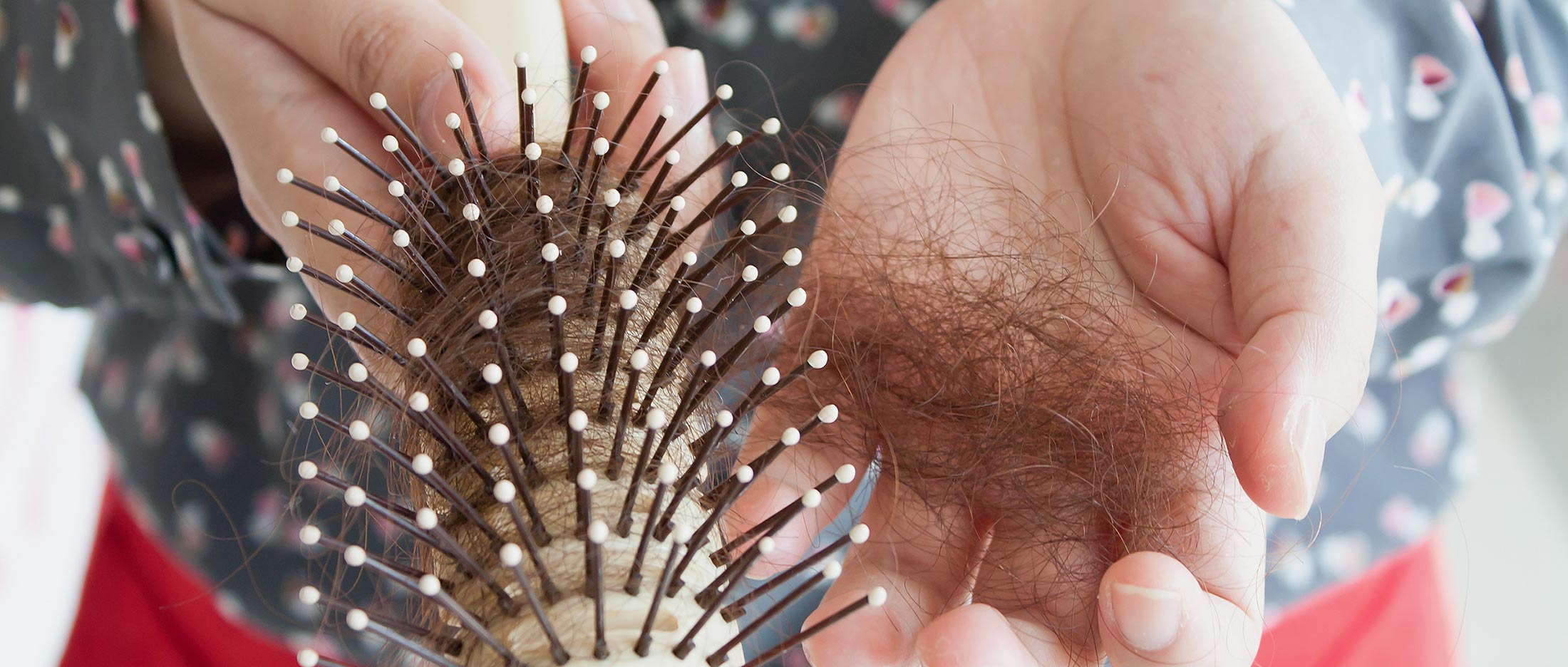
Understanding female hair loss
Peer reviewed by Dr Hayley Willacy, FRCGP Last updated by Dr Sarah JarvisLast updated 18 Sept 2017
Meets Patient’s editorial guidelines
- DownloadDownload
- Share
- Language
- Discussion
- Audio Version
- Add to preferred sources on Google
We women get period pains, labour and menopause. But at least, unlike men, we don’t have to worry about going bald. Or do we? It may be less common in women, but thinning hair is not entirely a male preserve.
How our hair goes through three ‘lifetime’ phases
I never cease to be amazed at how often women consult me about hair loss – mostly because when I check their hair, I can’t find anything wrong. But your crowning glory has a huge effect on your self-esteem. That means it’s hardly surprising that panic sets in when you start waking up with hair all over your pillow. In fact, if you’re a woman, it virtually never means you’re going to lose all your hair.
Your hair naturally goes through three phases in its ‘lifetime’:
The first is the growing phase, which lasts for three to five years.
Next comes the ‘shrinking’ phase, which lasts just a couple of weeks
Then the resting phase for three months or so. Towards the end of this, the hair follicle starts a new growing phase and pushes the old hair out if it hasn’t fallen out or come out on your hairbrush.
In some animals these phases happen at around the same time, which is why some dogs moult in summer, leaving your house covered in hair. Most humans lose a few hairs every day, although it can be more in times of stress.
Some kinds of cancer chemotherapy can stop the hair growing phase, which is why hair loss is an issue. Wearing a cold cap (literally an ice cap for your head) before treatment starts cuts the risk of this happening – if you are due to start chemotherapy, your cancer nurse can advise.
Causes of thinning hair in women
Some of the causes of female hair loss can include:
Stress, childbirth and crash diets, which can push your hair suddenly into the resting phase.
Certain medicines.
Going through menopause.
Having an underactive thyroid gland.
Being short of iron (even if you’re not anaemic).
Not enough high quality protein in your diet.
Your doctor may suggest a blood test to check your thyroid and iron levels if you are concerned about hair thinning.
What is alopecia?
The medical term for hair loss is alopecia. One kind – alopecia areata – causes patches of total hair loss with completely normal hair around. These patches can vary from small spots, less than the size of a 10 pence piece, to the whole scalp. Much less often, eyebrows, eyelashes, the beard area and even pubic hair can be affected. Alopecia areata is an autoimmune disease – your body’s immune system recognises part of your body as an enemy and attacks it. It only affects your hair and won’t affect your general health in any way. However, you are at slightly higher risk of other autoimmune conditions like underactive thyroid or rheumatoid arthritis. It can run in families, with men and women equally affected.
Does alopecia cause permanent hair loss?
The good news is that in alopecia areata, the hair follicles your hairs grow from aren’t permanently damaged, and many people regain a full head of hair within months. In fact, as long as less than half your scalp is affected, you have a four in five chance of full recovery within a year. The older you are when it starts, the less hair tends to be lost and the better the chance of regaining a full head of hair.
What are the treatments for hair loss?
Because alopecia areata doesn’t cause any other symptoms, treatment isn’t always necessary, especially if only small patches are affected and a change in hairstyle will hide the problem. For more extensive hair loss, steroid injections into your scalp may help. Steroid cream might also be tried, although it’s less effective.
In men, hair loss is often thought to be related to male hormone levels. In fact, men who go bald usually have normal testosterone levels, but the hair follicles become super-sensitive to testosterone, making the hair follicles shrink. Don’t forget the skin where hair has been lost is sensitive to sunlight and burns easily. That means hats and sunscreen from spring to autumn, even if you don’t think it’s sunny enough to burn!
Women also get hormone related, but it’s almost always general thinning rather than receding hairline or bald patch, and it does not lead to total baldness. For general thinning hair, you can buy a solution called ‘minoxidil’ from pharmacists – it’s not available on the NHS.
It is worth seeing your doctor if your hair starts thinning. Sometimes medications can be to blame. If underactive thyroid or iron deficiency are the cause, these can be treated.
With thanks to ‘My Weekly’ magazine where this article was originally published.
Patient picks for Hair and scalp

Skin, nail and hair health
Can dandruff and an itchy scalp lead to hair loss?
We're all familiar with dandruff; about half of us will experience it at some point. But for some people, a flaky scalp can be more severe, causing soreness, itchiness and even hair loss. So how do you know if it's more than just a bit of irritating dandruff? And what really works for getting rid of the flakes?
by Natalie Healey

Skin, nail and hair health
Common causes of an itchy scalp
If you tell someone you are scratching your head, with a bit of luck they will assume you are engrossed in a serious bit of cogitation. However, it is probably more likely that you are actually suffering from an itchy scalp. There are lots of reasons for our scalps to become irritated but here are a few common causes and what you can do about it.
by Dr Jessica Garner, MRCGP
About the authorView full bio

Dr Sarah Jarvis
Clinical Consultant
MA (Cantab), BM, BCh (Oxon), DRCOG, FRCGP, MBE
After training in medicine at Cambridge and Oxford, Dr Sarah Jarvis MBE became a GP.
About the reviewerView full bio

Dr Hayley Willacy, FRCGP
General Practitioner, Medical Author
MBChB (1992), DRCOG, DFFP, MRCOG (Part 1) MRCGP (2007), DFSRH (2013), MSc - medical education (2020)
Dr Hayley Willacy was an NHS GP working in northwest England, who retired from clinical practice in 2022 after 30 years.
Article history
The information on this page is peer reviewed by qualified clinicians.
Article also available in English, German, Spanish, French, Italian, Portuguese, Hindi, Hebrew, Arabic, and Swedish.
18 Sept 2017 | Latest version
Join the conversation
Share your thoughts or experiences with others in our patient communities.

Ask, share, connect.
Browse discussions, ask questions, and share experiences across hundreds of health topics.

Feeling unwell?
Assess your symptoms online for free
Sign up to the Patient newsletter
Your weekly dose of clear, trustworthy health advice - written to help you feel informed, confident and in control.
By subscribing you accept our Privacy Policy. You can unsubscribe at any time. We never sell your data.
More in skin, nail and hair health
- 8 causes of back acne
- Can vitamins really prevent hair loss?
- Could your face mask be causing your acne?
- UpdatedDoes getting good sleep really improve your skin?
- Does vaping age or damage your skin?
- Everything you need to know about baby eczema
- How the seasons affect your eczema
- How to manage skin issues at menopause
- Micellar water: skincare benefits and uses
- Protecting your skin from harmful pollution
- Should you wear sunscreen even when it's cloudy?
- The best ways to get rid of head lice
- The best ways to prevent and treat insect bites
- The warning signs of heatstroke and heat exhaustion
- Tick bites: how to recognise and treat
- What are the benefits of collagen, and can it prevent skin ageing?
- What are the common causes of summer rashes?
- What is vulvar dermatitis?
- When should I worry about an insect bite?
- Will a gluten-free diet help my child's eczema?