
Oral sex: what you need to know to stay healthy
Peer reviewed by Dr Sarah JarvisAuthored by Sally TurnerOriginally published 23 Aug 2019
Meets Patient’s editorial guidelines
- DownloadDownload
- Share
- Language
- Discussion
- Audio Version
- Add to preferred sources on Google
Oral sex is a regular and pleasurable part of many people's sex lives, yet misconceptions about the associated health risks are common. We talk to sexual health experts about how to stay healthy.
Sexual behaviour in Britain has changed substantially in the past 60 years and an increase in the prevalence of oral sex among partners is a significant part of this shift.
More than two thirds of participants in a 2016 Canadian study reported that oral sex was involved in their most recent sexual encounter, and other research has supported what many women already know - that receiving oral sex increases the odds of reaching orgasm.
The perils of porn
The prevalence of online porn has also encouraged the view that oral sex (received, controversially, primarily by men) is an expected part of every sexual encounter, with a designated ending. The recent Channel 4 documentary series Generation Porn highlighted the risks of getting semen in the eyes, a common hazard for female porn performers that can cause 'red eye'. Semen can temporarily irritate the sensitive mucosa of the eye, causing stinging and burning. But there are other risks, too.
"It is possible to contract sexually transmitted infections (STIs) such as chlamydia and gonorrhoea from getting genital secretions in your eye," says Dr Nicola Smith, a sexual health consultant based in London and Kent. "But this is a relatively rare occurrence."
It's also advisable to keep synthetic flavoured lubes, paints and certain foodstuffs away from the genitals and eyes - particularly chillies, spices and alcohol. Ouch.
Sponsored
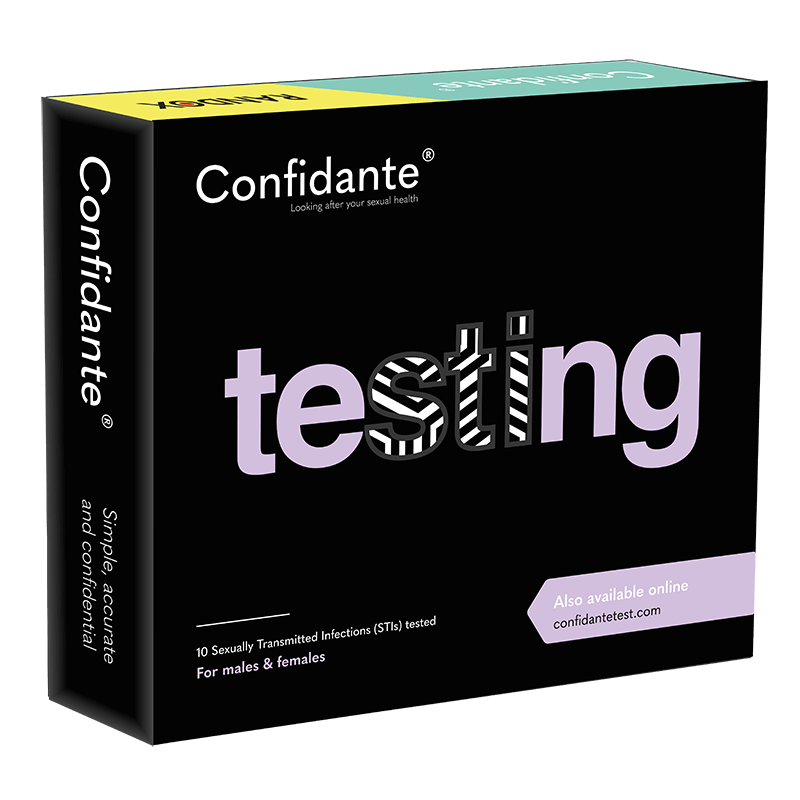
Confidante Home STI Test
Confidante is quick, easy, and discreet to use from purchase to results. Test for 10 common STIs including infections that do not show any symptoms, to provide a comprehensive profile of your sexual health.
How to safeguard your sexual health
Using condoms and dental dams will reduce the risk of STI transmission during oral sex. But whilst it's useful to highlight specific issues and infections that relate to oral sex, it is important to first look at the bigger picture says Dr Anna Pallecaros, who runs a specialist genitourinary medicine clinic at the Princess Grace Hospital in London.
"Our detection methods for STIs have moved on so much from having to grow organisms in a laboratory to minute detection with DNA targets," she explains. "Exposure to germs does not necessarily lead to transmission, nor transmission to disease. During sex - including oral sex - we share a whole ecosystem of organisms. These shared microbiota can influence each other, including the ability of an unwanted germ to cause disease."
So remaining sexually healthy is as much about one's own microflora and immune response as it is about a sexual partner's. Nevertheless, if you are concerned that you may have been exposed to an STI when giving or receiving oral sex, you can attend your local sexual health clinic for a check.
Thrush
"Thrush organisms are a normal occurrence in the mouth, the gut and the vagina", say Smith. Having a few yeast organisms is completely different to a thrush infection, where the yeast multiplies rapidly and reach numbers where it cause symptoms. This rarely happens (except in the vagina in women) in people whose immune system is functioning properly. Certainly the myth about 'systemic candida' as a common cause of bloating and other gut symptoms is just that - a myth.
However, some people can get an overgrowth of thrush organisms in the mouth. Again, this tends to occur where immunity is lowered, including local effects in people who use inhaled steroids without rinsing their mouths thoroughly. Otherwise, oral thrush tends to occur in babies, older people with dentures and in those with lowered immunity (such as HIV infection) or diabetes. "People need to stop worrying about passing thrush on," says Smith.
"It's highly unlikely someone would develop it through transmission from oral sex as they would most likely have candida as part of their healthy oral microbiome anyway. It only becomes a problem if it grows and gets out of balance and most people's immune systems would deal with it without issue."
It has been suggested that the enzymes that break down sugar in saliva may disrupt the vaginal microflora or alter the healthy pH of vulval tissue, allowing thrush organisms to grow out of balance. However, Smith says this is also unlikely and shouldn't put women off enjoying oral sex.
"It's possible it might be a contributory factor if you have recurrent thrush or a sensitive vulva, but you'd need to have a lot of prolonged oral sex with a massive amount of saliva for this to be an issue for most women. Your own vaginal microflora should correct any imbalance."
When washing the vulva, use lukewarm water, or an unperfumed emollient such as emulsifying ointment may be helpful. Using organic, pH-balanced lubricants such as Yes products may also be beneficial, but steer clear of douches and perfumed products.
Oral sex and STIs
"Many STIs, including chlamydia, gonorrhoea, trichomoniasis, syphilis and hepatitis A and B, can be transmitted through oral sex," warns Pallecaros. "While we don't want people to be fearful, it's important with HIV for example that people don't get the idea that it's a negligible risk."
HIV
HIV can be passed on orally, but the risk is low. If someone has bleeding gums or a cut or ulcer inside their mouth, the virus could potentially enter the bloodstream.
Gonorrhoea
"Gonorrhoea can infect the throat and pass to others through saliva - kissing and oral sex," says Pallecaros. "People don't usually get sore throats with gonorrhoea so wouldn't necessarily know they've got it unless tested."
Herpes
Herpes simplex types 1 and 2 can be transmitted from mouth to genitals and vice versa.
"If you get cold sores or have genital herpes, always avoid oral contact until after the sores have completely healed," advises Smith. "Even the tingle phase of a cold sore, or a sore that has scabbed over, can cause infection. Though most people with herpes know when they're infectious, it's the people that have very mild symptoms who could transmit it without knowing."
Chlamydia
"Chlamydia is a digestive tract organism so can infect the throat via oral sex, be swallowed, then become part of your flora, doing no harm in the digestive tract," says Pallecaros. "Positive rectal swabs are just as common in women as vaginal swabs. We want to know if it can pass from rectum to the genital tract, to then cause genital infection."
HPV and throat cancer
Mouth cancer and throat cancer are on the rise in the UK and much has been made of the possible causal link between these and the HPV group of viruses, which may be contracted and passed on through oral-genital contact. Some types of HPV cause visible warts on the genitals, but others are asymptomatic.
"Most people who have HPV in their ecosystem will not get oral cancer," reassures Pallecaros. "Our immune systems usually successfully process this very common family of viruses - there are over 200 different types of HPV - clearing the infection." Nonetheless, the risk is not non-existent.
An effective HPV vaccine is now offered to girls at the age of 13 years in UK schools, with the aim of preventing cervical cancer and possibly oral cancers from HPV exposure.
"And the good news is that, from September, 12-year-old boys will be offered the HPV vaccine too," says Smith.
There's currently a lot of research going on into how important the oral microbiome is in the development of oral cancer. "Over recent decades there have been very big changes in our oral microbiome with reduced diversity, just as with our gut flora," adds Pallecaros. "The question being asked at the moment is how important is that ecosystem in the mouth - bacteria, viruses, fungi - for HPV to produce a disease state."
Changes in our diets and overuse of antibiotics and antibacterial products are constantly changing our bodies' microbiomes. It's important that we think about keeping our microflora in balance, rather than obliterating any and all micro-organisms in the false hope that this will reduce our risk of infection. After all, many of these flora are beneficial in keeping us healthy.
Patient picks for Sexually transmitted infections

Sexual health
Is oral sex less risky than intercourse?
It's time for a serious chat about oral sex. You might think it's a danger-free zone compared to full-blown intercourse but, believe it or not, diseases can be spread by giving or receiving pleasure in this way.
by Dr Oliver Starr, MRCGP

Sexual health
What to do if you think you have an STI
Christmas is a time for giving, but some of the presents we receive are not always ones we want. I'm not talking about that pair of socks that continues to play 'Silent Night' long after you've gone to bed, or the jumper that appears to give you sparkly dandruff. No, I'm talking about sexually transmitted infections (STIs), the gifts that keep on giving.
by Dr Laurence Knott
About the authorView full bio
Authored by

Sally Turner
Freelance Journalist
BA Media Production
Sally Turner is a writer and broadcaster specialising in sexual health and women’s issues.
About the reviewerView full bio

Dr Sarah Jarvis
Clinical Consultant
MA (Cantab), BM, BCh (Oxon), DRCOG, FRCGP, MBE
After training in medicine at Cambridge and Oxford, Dr Sarah Jarvis MBE became a GP.
Article history
Article also available in English, German, Spanish, French, Italian, Portuguese, Hindi, Hebrew, Arabic, and Swedish.
23 Aug 2019 | Originally published
Authored by:
Sally TurnerPeer reviewed by
Dr Sarah Jarvis
Join the conversation
Share your thoughts or experiences with others in our patient communities.

Ask, share, connect.
Browse discussions, ask questions, and share experiences across hundreds of health topics.

Feeling unwell?
Assess your symptoms online for free
Sign up to the Patient newsletter
Your weekly dose of clear, trustworthy health advice - written to help you feel informed, confident and in control.
By subscribing you accept our Privacy Policy. You can unsubscribe at any time. We never sell your data.