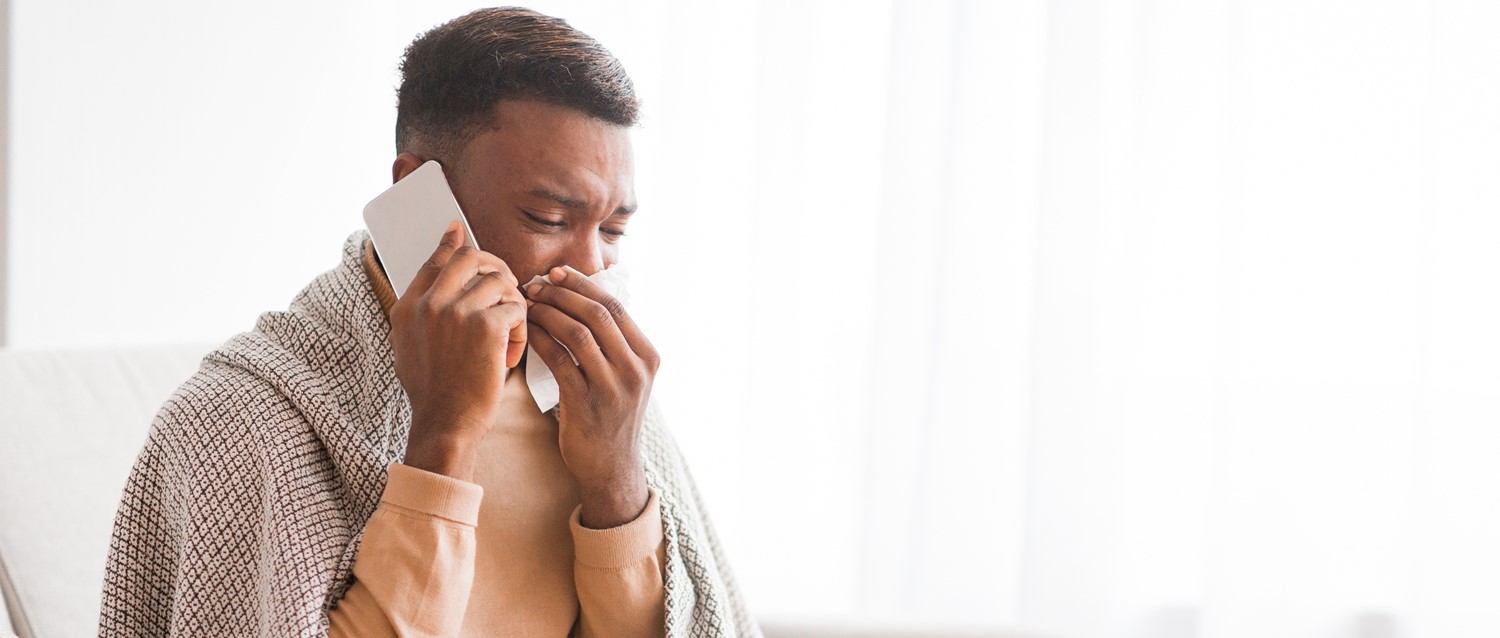
¿Por qué nos sentimos ansiosos por llamar para decir que estamos enfermos cuando realmente no nos sentimos bien?
Revisado por pares por Dra. Sarah JarvisÚltima actualización por Emily Jane BashforthÚltima actualización 14 Ene 2022
Cumple con las directrices editoriales
- DescargarDescargar
- Compartir
- Language
- Discusión
- Versión en audio
- Agregar a fuentes preferidas en Google
Los datos de los últimos 10 años muestran que los empleados tienen más probabilidades de estar enfermos los miércoles que cualquier otro día, siendo el martes el segundo más común. Entre 2016 y 2017, las empresas perdieron un promedio de 1,5 días por empleado los miércoles, siendo 2016 el año con más ausencias en miércoles. El primer lunes de febrero también ha sido denominado Día Nacional de la Baja por Enfermedad, ya que marca el día en que la mayor proporción de personas llama para decir que está enferma. Sin embargo, llamar para ausentarse por enfermedad puede causar una gran ansiedad.

Where does "sick day guilt" come from?
Many factors can contribute to fear of calling into work sick.
Human behaviour expert Claire Brummell says: "There is a legacy of fear-based management styles in this country. This means that many of us have experienced a situation with a manager where we have had our needs negatively impacted when we have needed time off work for being legitimately ill."
She explains how we may have been ridiculed, dismissed, disbelieved, demeaned or even threatened with unjust disciplinary action in order to coerce us into working, even when we are ill.
"Every time a manager has acted in a way that has been detrimental to our needs when we have called in sick, it has conditioned us to feel anxious. That's because, subconsciously, we fear that our needs will be compromised when we do the same thing in the future," says Brummell.
"Likewise, we may have seen that other employees have been treated poorly by managers for calling in sick. Even if we have not personally experienced an issue with it in the past, the awareness of a pattern of calling in sick and receiving a negative reaction can create that anxiety for the future if we do the same."
Concern about the impact on our colleagues if we are off sick may also play a part. If co-workers are already under pressure, we may be loath to add to their workload if our work cannot be postponed. In addition, if there is nobody to cover for us while we are away, we may be worried that urgent deadlines will be missed or dread the idea of returning to a mountain of work.
All this ansiedad and guilt surrounding sick days can lead to us as employees working when we are unwell, which can have consequences both for ourselves and for others. It could result in other colleagues becoming infected if germs are spread around a workplace, and it can cause an illness to worsen if we don't get the rest we need - leading to more time off at a later date.
Toxic productivity
Sick day guilt and the pressure to be constantly productive can mean employees only call in sick when we are "at death's door" and feel "deserving" of a sick day.
Throughout history, society seems to have had an obsession with productivity and getting stuff done. There's a bottomless well of advice, tips, tools and tricks on how to be more productive and manage your time efficiently. Productivity software alone accounts for an $133 billion (£97.7 billion) market, according to IBISWorld research.
Being over-productive is glamorised as the "the hustle", and it is often modelled by the super wealthy. Hustle culture has been propelled in recent years, particularly for the Generation-Z demographic. The pressures and expectations to be endlessly working, achieving, creating, moving and simply doing can lead to burnout: arguably, this pressure has heightened following advances in technology which mean we have constant access to online information and messages. In addition, these expectations can intensify the guilt of needing a sick day, even though it is impossible to be our most productive when we are unwell.
Why do we feel anxious about calling in sick?
Brummell says the presence of anxiety (that is not a clinically diagnosed condition) is almost always one of the below or a combination:
A reaction to an unmet need (or needs) from the past.
A reaction to an unmet need (or needs) in the present.
A fear that one or more of your needs will not be met in the future.
She says there are several needs that can be impacted in a situation like this, such as:
Security need
"If someone believes that their job might be at risk if they call in sick, this creates a fear that their security needs will be compromised in the future, as they will no longer feel safe and secure in their role and future income," Brummell says.
Value need
She adds that if someone is treated as if it is not acceptable to take time off from work to recover when they are genuinely sick, it implies that they are not worthy of getting what they need in order to heal.
"It sends a message that the business or their manager's wants and needs are more important than their physical well-being, making them feel undervalued."
Personal power
Brummell hypothesises that feeling they don't have a choice and that they have to work, even if sick, can cause employees to lose a sense of empowerment. This negative impact on someone's personal power need can make them feel out of control when they are working, despite knowing they should be resting and recovering.
Why do we feel guilty about needing time off?
"The feeling of guilt we experience in these situations is because we are conditioned as a society to view doing anything to prioritise our own well-being as selfish," suggests Brummell.
"This means that, even when we are physically in need of prioritising ourselves and our healing because we are genuinely ill, we still respond in a way that suggests we are doing something wrong. This further impacts our Value need, because it implies that we should still be prioritising other people, who are not worthy of being the priority, when we are genuinely ill."
She highlights the irony of this dynamic, since calling in sick may protect others from becoming ill and, as such, prevents a ripple effect on the business that would be created by many people needing sickness absence simultaneously.
"Not only is it not selfish to call in sick, it is Selfirst - the practice of meeting your own needs as a priority, in ways that do not do harm to others, and sometimes can benefit them. It is actually taking care of the needs of others as well."
Brummell stresses the importance of managers and employers reminding their staff it is both acceptable to call in sick when they are genuinely unfit for work, and actively encouraged. She says making this clear from the start of employment, and explicitly supporting their teams, minimises their fears for the future.
"Encouraging employees to do what is best for them, their team and the wider organisation creates a more pleasant working environment for everyone."
Selecciones del paciente para Salud en el lugar de trabajo

Salud general y estilo de vida
¿Cómo afecta el SII a las personas en el trabajo?
Balancing work with irritable bowel syndrome (IBS) can pose great challenges, particularly as IBS is often linked to anxiety and stress. IBS symptoms can take a real toll on a person's physical and mental well-being, especially when they might require accommodations but feel too embarrassed to confide in colleagues or employers who don't understand.
por Emily Jane Bashforth
Salud general y estilo de vida
¿Qué podemos aprender de las empresas más saludables de Gran Bretaña?
La mayoría de las empresas son conscientes de los vínculos entre la salud en el lugar de trabajo y la productividad. La lógica es clara: si los empleados están sanos, tomarán menos días de enfermedad y trabajarán de manera más efectiva el resto del tiempo. Sin mencionar el aumento en la satisfacción laboral cuando sienten que su empleador se preocupa por su bienestar.
por Abi Millar
Sobre el autorVer biografía completa

Emily Jane Bashforth
Redactora de artículos
NCTJ
Emily es una redactora de artículos destacados en Patient, escribiendo sobre una variedad de temas relacionados con la salud y el bienestar.
Acerca del revisorVer biografía completa

Dra. Sarah Jarvis
Consultora Clínica
MA (Cantab), BM, BCh (Oxon), DRCOG, FRCGP, MBE
Después de formarse en medicina en Cambridge y Oxford, la Dra. Sarah Jarvis MBE se convirtió en médica general.
Historial del artículo
La información en esta página es revisada por pares por clínicos calificados.
Artículo también disponible en Inglés, Alemán, Español, Francés, Italiano, Portugués, Hindi, Hebreo, Árabe, y Sueco.
14 Ene 2022 | Última versión
14 Ene 2022 | Publicado originalmente

Pregunta, comparte, conecta.
Navega por discusiones, haz preguntas y comparte experiencias en cientos de temas de salud.

¿Te sientes mal?
Evalúa tus síntomas en línea de forma gratuita
Suscríbete al boletín de Patient
Tu dosis semanal de consejos de salud claros y confiables, escritos para ayudarte a sentirte informado, seguro y en control.
Al suscribirte aceptas nuestros Política de Privacidad. Puedes darte de baja en cualquier momento. Nunca vendemos tus datos.
Más sobre salud general y estilo de vida
- Una guía sobre gafas de sol con protección UV
- Ser 'demasiado limpio' no es malo para tu salud, confirman los expertos
- ¿Puede el clima frío enfermarte? Y otros mitos del invierno
- Piel seca en invierno: lo que el frío puede hacerle a tu piel
- ¿Festival en el extranjero? Diviértete y mantente seguro
- Cómo aumentar tus niveles de vitamina D este invierno
- Cómo manejar la EPOC durante el invierno
- Cómo proteger tu salud mental en el lugar de trabajo como mujer negra
- Cómo decir no a una invitación de Navidad
- Cómo distinguir las diferencias entre los virus invernales en niños
- Cómo hacer ejercicio durante una ola de calor
- Ideas, preocupaciones y expectativas: una guía para completar el formulario en línea de su médico de cabecera
- ¿Es COVID-19 o gripe este invierno?
- Esto es lo que el clima frío le hace a tu corazón
- ¿Cuáles son los beneficios del colágeno y puede prevenir el envejecimiento de la piel?
- ¿Cuáles son las principales causas de ingresos hospitalarios durante la Navidad?
- ¿Qué es una sonrisa de prosecco? consejos para proteger tus dientes esta Navidad
- Por qué es tan importante conocer tu tipo de piel este verano